
Drive Jobs Through Innovation: Chief of Staff urges KNUST to commercialize research
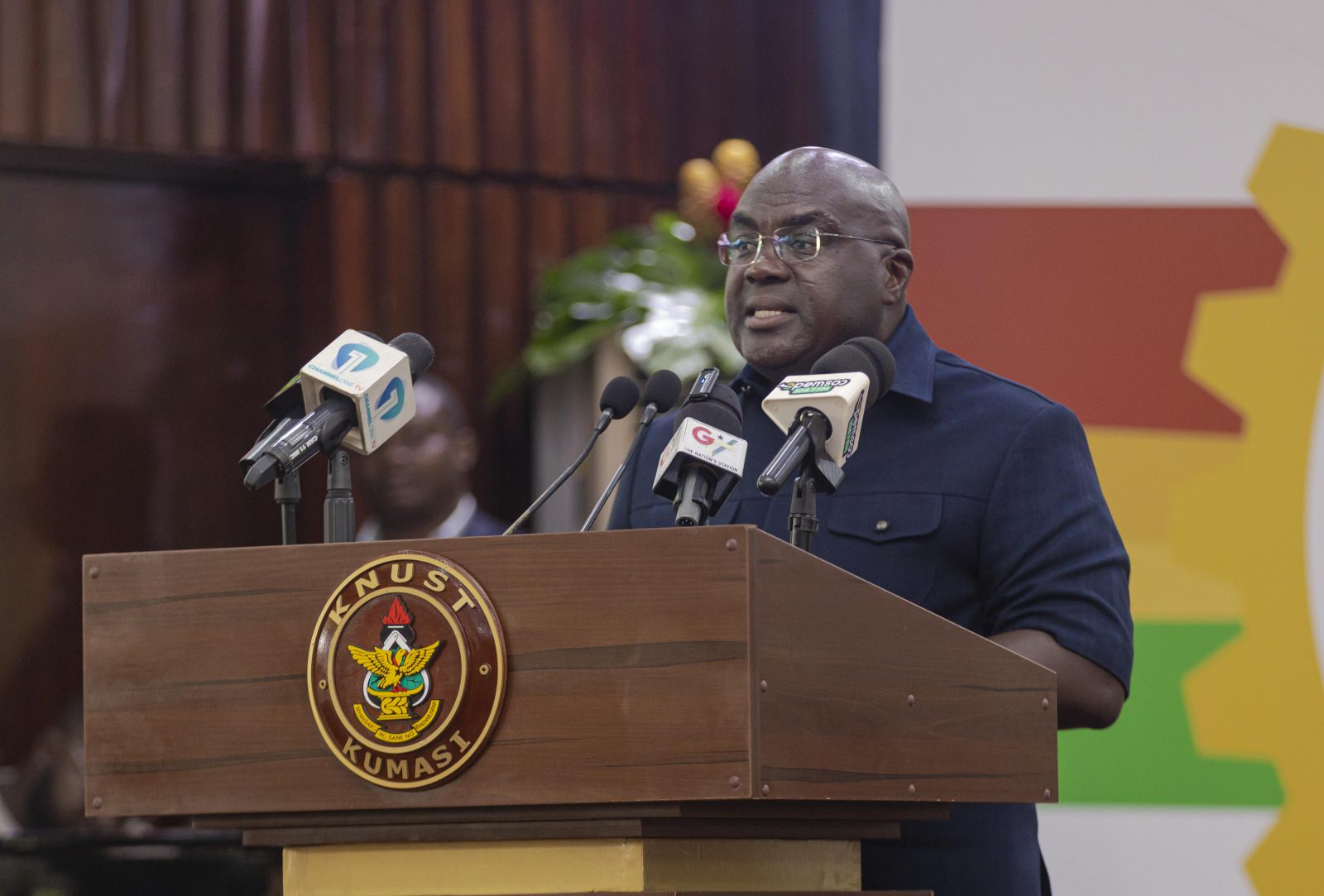
Chief of Staff, Dr. Julius Debrah, has challenged the leadership and faculty of the Kwame Nkrumah University of Science and Technology (KNUST) to pivot from traditional academic publishing toward aggressive, market-driven innovation aimed at tackling Ghana’s employment crisis.
Delivering a keynote address during a stakeholder summit in Kumasi, Dr. Debrah argued that the true measure of a university’s excellence in the modern era lies in its ability to spawn industries, not just award degrees.
He pointed out that while Ghanaian academia produces a wealth of valuable data, the lack of commercialization leaves the national economy relying heavily on imported technology and solutions.
“The era of doing research merely for academic promotion or library archives must come to an end,” Dr. Debrah declared. “We are asking KNUST to take the lead in converting intellectual property into tangible manufacturing plants, tech startups, and commercial farms that directly absorb our young graduates.”
To achieve this transformation, the Chief of Staff called for a structural overhaul in how tertiary institutions collaborate with the financial sector and corporate bodies. He urged universities to set up dedicated venture capital funds and specialized business incubators to help student innovators scale their ideas into viable commercial enterprises.
“If a student develops a practical technology in a laboratory here in Kumasi, there should be an existing framework that connects that breakthrough directly to private equity,” he noted. “We must build an ecosystem where our brightest minds are empowered to build companies, rather than lining up with resumes in search of limited public sector jobs.”
Stakeholders and faculty members in attendance acknowledged the call, noting that while funding for commercial-grade prototyping remains a major hurdle, aligning academic curricula with private sector needs is an essential step forward for the university’s mission.
The conference concluded with a call on policymakers to introduce tax incentives and strategic support for university spin-offs, ensuring that local research serves as the primary engine for Ghana’s future economic resilience.
