By Adnan Adams Mohammed, Financial and Economic Journalist and Human Right Advocate
Watch video:
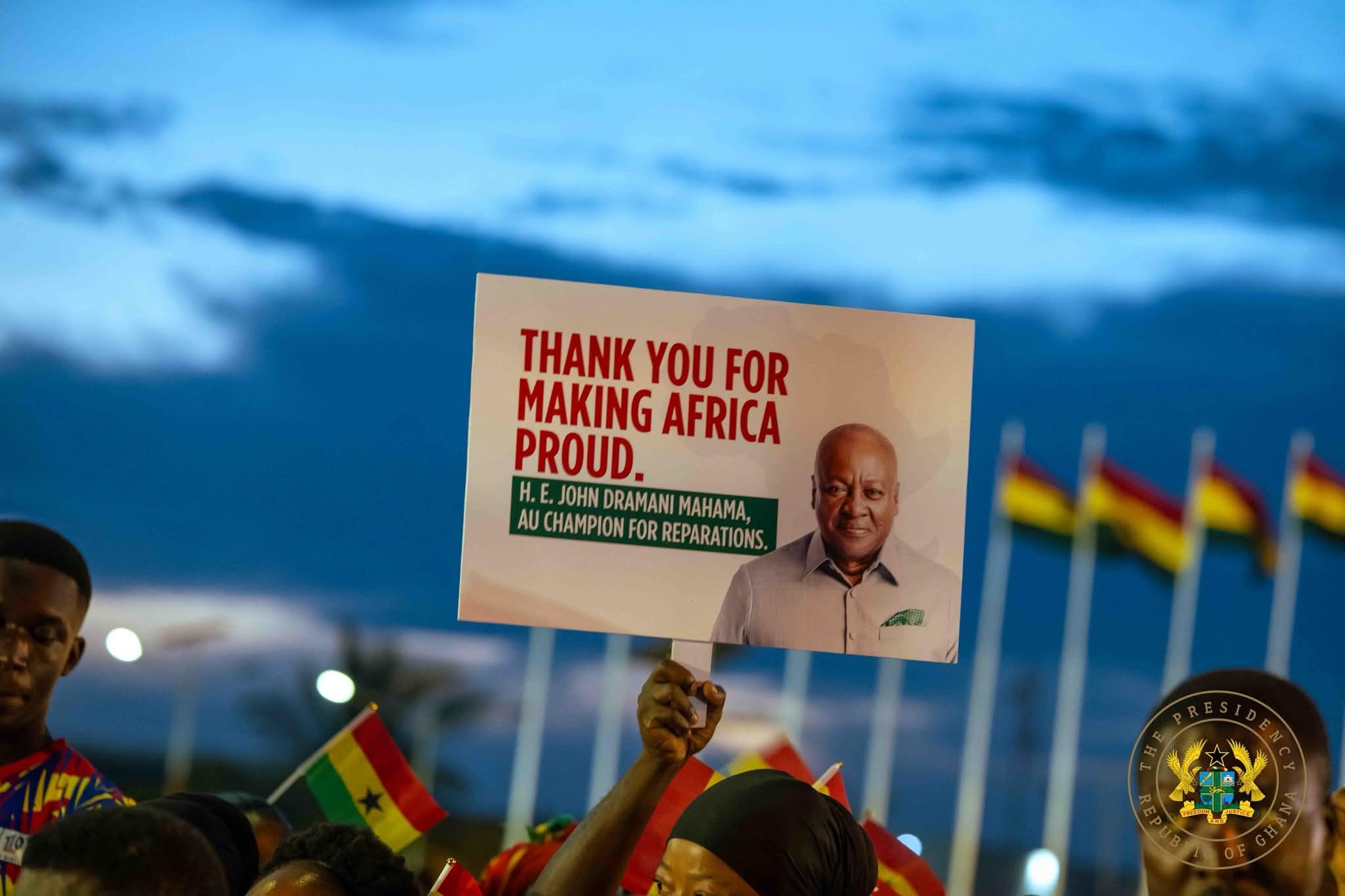
The Kotoka International Airport was charged with a palpable sense of national pride last night as a high-powered delegation, led by the Chief of Staff Julius Debrah, gathered to welcome His Excellency John Dramani Mahama following his historic mission to the United Nations General Assembly.
The atmosphere was one of celebration and solemnity, marking the successful adoption of a landmark UN resolution on Transatlantic Slavery and reparations, a diplomatic victory largely attributed to the “brave and wise leadership” of the President.
The Epicenter
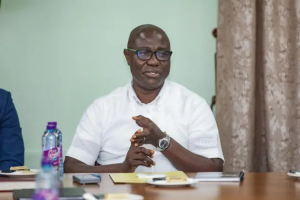
Chief of Staff Julius Debrah
At the center of the welcoming ceremony was Julius Debrah, the man long regarded as the administrative engine of the Mahama machinery. Dressed in a modest olive-green shirt, Debrah’s presence was a reminder of the strategic administrative support that has bolstered Mahama’s international standing.
Addressing the media and a throng of enthusiastic supporters, Mr. Debrah emphasized that the success at the UN was not merely a personal win for Mahama, but a monumental shift for the African continent. He noted that the administrative groundwork and the relentless pursuit of justice for the historical wrongs of the slave trade have finally found a global resonance.
“We are here to welcome a leader who does not just speak for Ghana, but for the conscience of the world,” Debrah stated, his voice steady with conviction. “The adoption of this resolution on reparations is a testament to what vision and meticulous planning can achieve on the global stage.”
A Historic Resolution
The resolution, which seeks to address the lingering legacies of the Transatlantic Slave Trade and paves the way for formal discussions on reparations, was a key highlight of this year’s UN session. Observers note that Mahama’s vocal advocacy and high-level lobbying were instrumental in building the consensus needed for the resolution’s adoption.
For Julius Debrah, whose tenure as Chief of Staff has been defined by a focus on efficient governance and results-oriented diplomacy, this triumph is the fruit of years of consistent policy positioning. His role in coordinating the administrative logistics and political strategy behind Mahama’s international engagements has been cited as a crucial factor in the former President’s continued relevance and influence.
National Pride
As H.E. John Mahama emerged to the cheers of the crowd, the synergy between the leader and his top administrative lieutenant was evident. The “Mahama-Debrah” partnership continues to demonstrate a formidable blend of charismatic leadership and backroom strategic depth.
The adoption of the UN resolution is being hailed by pan-Africanists and human rights advocates as a turning point in the quest for global racial justice. For Ghana, it reinforces its position as a moral leader on the continent.
As the convoy departed the airport, the message was clear: Ghana has returned to the forefront of global diplomacy, fueled by the bravery of a statesman and the unwavering administrative support of a dedicated team.
The Ghana Gold Board (GoldBod) has emerged as the overall winner at the prestigious Public Enterprises League Table (PELT) Awards, securing the coveted title of State-Owned Enterprise of the Year.
In addition to the top honour, GoldBod also won the Most Profitable State-Owned Enterprise award and was named the Overall Best Specified Entity, marking a significant achievement for the institution.
The annual awards, organised by the State Interests and Governance Authority (SIGA), recognise the performance and excellence of state-owned enterprises and specified entities across the country.
Receiving the awards on behalf of the institution, the Deputy Chief Executive Officer of GoldBod, Richard Nunekpeku, Esq., expressed appreciation to SIGA for acknowledging the Board’s performance.
“We are excited to receive this award and the third award of the night. On behalf of the Board, management and staff of the Ghana Gold Board, we wish to use the opportunity to thank SIGA for recognizing our performance over the years,” he said.
He reaffirmed GoldBod’s commitment to sustained excellence and continuous improvement, noting that the recognition would further inspire the institution to deliver on its mandate.
“We also want to remind all other companies, state agencies and enterprises that in as much as we have won this year’s award, we are not backing down; we are committed to growing and making sure that we achieve all the targets we set for ourselves in our performance contract with SIGA,” he added.
Mr. Nunekpeku further assured that the Board remains focused on maintaining its strong performance trajectory.
The recognition highlights GoldBod’s growing impact as a key state institution driving reforms in Ghana’s gold sector, with a focus on transparency, value retention, and sustainable resource management.
The Public Enterprises League Table Awards serve as a benchmark for assessing the performance of state institutions, promoting accountability, efficiency, and good corporate governance across the public sector.
AMG Global Travel has issued an official statement categorically denying social media reports of an armed attack at the Kaaba in Mecca. The travel agency, which coordinates pilgrimages for many Ghanaians, labeled the circulating posts as “AI-generated” and “misleading.”
The rumors, which surfaced during the final ten days of Ramadan, claimed an incident occurred during night prayers on the 26th night, a time widely associated with Laylat al-Qadr.
Ghanaian Pilgrims Confirmed Safe
In a press release signed by CEO Hajj Abdel-Manan Abdel-Rahman on March 17, 2026, the management reassured the public that there has been no security breach at the Masjid al-Haram.
”The posts circulating online are AI-generated and do not reflect any real events that occurred at the Holy Mosque,” the statement read. “There has been no attack at the Masjid al-Haram, and worshippers continue to perform their prayers peacefully and safely.”
The agency further confirmed that all Ghanaian pilgrims currently in the Holy City for the end of the Ramadan fast are safe and have not been affected by any security incidents.
Warning Against Misinformation
AMG Global Travel urged the general public to exercise caution and disregard unverified reports found on social media platforms. The agency emphasized the importance of relying on “verified, credible sources” for updates regarding activities in the Holy Cities of Islam.
”AMG Global Travel remains committed to the welfare, safety, and proper coordination of all our pilgrims,” the release stated, concluding with a prayer for the acceptance of the worshippers’ supplications during these final nights of Ramadan.
In the high-octane arena of Ghanaian politics, where rhetoric often outpaces results, a different kind of leadership is quietly maturing. It is a leadership that doesn’t need to shout to be heard, nor does it need to push to be felt.
It belongs to Hon. Julius Debrah—a man whose trajectory is increasingly seen not just as a political career, but as a blueprint for Ghana’s future governance.
From the bustling markets of Accra to the diplomatic corridors of international summits, the sentiment is coalescing: “Chief,” as he is affectionately known, is ready.
The Calm in the Storm
What sets Julius Debrah apart in a crowded political landscape is his precision. In an era of reactionary politics, Debrah is a strategist of “calm precision.” He possesses the rare ability to navigate complex governance hurdles without losing his footing or his temper.
His tenure in various high-ranking offices has been defined by a “people-first” philosophy. Whether he is engaging with grassroots organizers or consulting with global policy experts, the approach remains the same: listen deeply, analyze sharply, and act decisively. This balance of political intelligence and human insight has made him a bridge-builder in a time of deep partisan divides.
A Global Vision with Local Roots
Leadership in the 21st century requires a dual lens—one focused on the immediate needs of the Ghanaian citizen and the other on Ghana’s place in a rapidly evolving global economy.
Julius Debrah has spent years refining this dual perspective.
Locally: He remains grounded in the daily realities of the people, maintaining a deep, authentic connection to the youth and the working class.
Internationally: He is being prepared for the weight of future responsibilities, garnering respect from international partners who see in him a steady hand capable of steering the nation toward sustainable growth.
The Future is Purpose-Driven
The hashtag currently trending across social media, #JDISTHEFUTURE, is more than just a digital slogan; it is a reflection of a growing national consensus. Ghanaians are looking for a leader who offers a rare combination of wisdom, steadiness, and vision.
As the nation looks toward its next chapter, the focus is shifting toward those who have proven they can lead with purpose rather than just ambition. Julius Debrah stands at the forefront of this shift. He is a leader being prepared by experience, tempered by responsibility, and driven by a profound love for the Republic.
When the time comes for the next generation of leadership to take the mantle, Hon. Julius Debrah won’t just be stepping into a role—he will be fulfilling a destiny that he has meticulously and humbly prepared for.
”Leadership is not about the next election; it’s about the next generation. In Julius Debrah, Ghana finds a man who understands both.”
Employee advocacy is a strategic approach where employees promote an organization’s content, brand, and values by sharing them organically through structured digital programs. It represents a unique intersection where marketing and people management meet. While some organizations use staff as “actors” in content production, the core of advocacy is leveraging personal voices to break through corporate advertising clutter.
Despite being a proven strategy, advocacy is often left to the discretion and “goodwill” of individual employees without a system to measure impact. However, the statistical benefits of a well-structured program are significant:
Reach: Content shared by employees reaches 561% further than content shared through brand channels alone.
Engagement: Employee-shared content generates 8x more engagement.
Conversions: Leads generated through employee advocacy convert up to 7x more frequently, according to expert estimates.
The Power of Trust and Algorithms
The success of this strategy is rooted in human psychology and the technical design of digital platforms:
Human Authenticity: Audiences are drawn to the authenticity of personal voices and generally trust individuals more than brands.
Overcoming Resistance: Many consumers believe corporate marketing is always trying to “sell something,” leading them to selectively ignore organizational content. Employee storytelling helps reduce this mistrust.
Algorithmic Favor: Digital platforms prioritize individual voices and content with genuine social relevance over purely commercial material.
Humanizing the Brand: When employees interact with company content, they signal to the algorithm that the organization is human and social, which boosts overall visibility.
Impact on Talent Attraction and Retention
Employee advocacy is not just a marketing tool; it is a powerful way to manage a workforce and attract top talent.
Influencer Status: Participation in company content can turn employees into “celebrities” or influencers in their own right.
Increased Loyalty: When an employee’s personal identity becomes tied to the organization they represent, it strengthens loyalty and reduces turnover rates.
Prospective Talent: Organizations that showcase authentic employee stories become highly attractive to talent seeking meaningful opportunities.
Scaling for the Future
Regardless of size, organizations are constantly seeking ways to build “top-of-mind” visibility. Companies currently invest billions annually in advertising, yet metrics like impressions, engagement, and traffic remain core KPIs that are difficult to move through traditional channels alone. Implementing a structured program is the most effective way to scale this impact and move beyond inconsistent, unmonitored requests for staff to share content.
Samuel Boateng Osarfo, Communications Manager, HR Focus Africa
Media Advisor
A formal rebuttal has been issued in response to a petition seeking to block the confirmation of Mr. Ato Boateng as the Deputy Chief Executive (Finance & Administration) of the Ghana Cocoa Board (COCOBOD).
The rebuttal characterizes the petition, submitted by Hon. Vincent Ekow Assafuah, Member of Parliament for Old Tafo, as “much ado about nothing” and lacking substantive evidence of wrongdoing.
The controversy stems from a petition dated February 25, 2026, which called for Mr. Boateng to step aside due to his former role as CEO of Atlas Commodities Limited. However, supporters of the appointment argue the claims are based on “speculative leaps” rather than factual regulatory breaches.
Lack of Evidence of Conflict
The core of the rebuttal addresses the “baseless nature” of the allegations regarding Mr. Boateng’s professional history. Key points raised include:
No Current Ownership: The petition does not demonstrate that Mr. Boateng currently holds any shares in Atlas Commodities Limited.
Absence of Control: There is no evidence that he exercises executive control or decision-making power over the private company while serving in his official capacity at COCOBOD.
No Policy Interference: The rebuttal notes that the petition fails to show Mr. Boateng has participated in any official COCOBOD decisions that specifically benefit Atlas Commodities.
Financial Integrity: No instances of financial benefit accruing to Mr. Boateng from the operations of his former employer have been cited.
Constitutional and Professional Standards
While the original petition cited Article 284 of the 1992 Constitution regarding the conduct of public officers, the rebuttal argues this is a fundamental misinterpretation of the law.
The response clarifies that a legal conflict of interest requires a “real and present” personal interest,whereas the petition relies solely on past employment. It further asserts that “professional history is not a crime,” noting that disqualifying individuals based on prior sector experience would deprive the public service of essential expertise.
”To suggest that a person’s professional background constitutes a conflict of interest is to suggest that the public service should be devoid of industry experts. This is not only illogical but a disservice to the state.”
Addressing Allegations of Interference
The rebuttal also hits back at claims that Mr. Boateng attempted to interfere with records at the Registrar General’s Department (RGD) on February 20, 2026. It labels these claims a “distortion of facts,” arguing it is illogical to suggest an “abuse of office” at COCOBOD based on alleged actions at an entirely separate institution where Mr. Boateng holds no authority.
Conclusion
The statement concludes that the move to block the appointment is an attempt to stall a qualified candidate based on conjecture rather than a genuine pursuit of transparency.
It urges the Governing Board of COCOBOD and the general public to dismiss the petition due to its lack of proof regarding any current regulatory or constitutional breaches.
In a significant recognition of excellence beyond the traditional banking halls, the Managing Director of Agricultural Development Bank (ADB) PLC, Edward Ato Sarpong, has been honoured by the Project Management Institute Ghana (PMI Ghana) for his exceptional leadership and contributions to professional development.
The honour was bestowed upon the MD, following his insightful leadership lecture at the Institute’s latest monthly engagement sessions, held on Friday, February 27, 2026, at the Alisa Hotel in North Ridge.
The event brought together project management professionals who are members of the Institute. The event served as a platform for the ADB MD to share his extensive experience in organizational transformation and strategic leadership expertise. The MD’s presentation, among others, highlighted some key attributes of impactdul leadership such as; leadership that is purpose driven, discipline, leadership that activates consciousness, leadership that doesn’t seek followers but followers seek it, and leadership that is consistently learning. He noted that these attributes of leadership serve as cornerstones for impact and sustainable growth. He also indicated that those attributes have been key to ADB’s recent turnaround and the successes it’s now recording in the Ghanaian financial landscape.
A Testament to Leadership
The leadership of PMI Ghana praised Edward Ato Sarpong for his commitment to fostering a culture of excellence and for his willingness to mentor the next generation of Ghanaian professionals and leaders. According to the Institute, his (ADB MD) “impactful leadership” serves as a blueprint for executive management across various sectors.
Presenting the honour, the Institute noted:
”Ato Sarpong’s ability to navigate complex financial terrains while maintaining focus on human capital development and project success is exemplary. We are proud to recognize a leader who truly understands that banking is not just about numbers but about the people and projects that build a nation.”
Internal Pride
The session saw a strong turnout, including a number of ADB staff who are members of PMI Ghana. For the staff present, the recognition of their Managing Director was a moment of collective pride, reinforcing the Bank’s internal mantra of professional growth and service excellence even beyond banking.
The ADB delegation noted that the MD’s recognition underscores the Bank’s broader mission to contribute to Ghana’s socio-economic development through thought leadership and strategic partnerships.
*About ADB PLC*
Agricultural Development Bank (ADB) PLC remains a leader in the Ghanaian banking industry, with a renewed focus on agribusiness, corporate banking, retail banking, among others, contributing to wealth creation and economic growth through innovative financial solutions and service excellence. The Bank witnessed historical financial performance last year, setting the tone for achieving its strategic vision of being among the top three banks in Ghana, globally admired for its people, processes, and performance.
*About PMI Ghana*
The Project Management Institute (PMI) Ghana Chapter is the leading professional association for project management in the country, dedicated to promoting the profession and enhancing the skills of practitioners across all industries.
Adwoa Serwaa Bondzie, Acting Executive Secretary of Energy Commission
By Adnan Adams Mohammed
The President of the Republic of Ghana has appointed Adwoa Serwaa Bondzie as the Acting Executive Secretary of the Energy Commission. The appointment, which takes effect immediately, marks a significant leadership transition for the nation’s energy regulator.
Until her elevation to this role, Ms. Bondzie served as the Acting Deputy Managing Director of the Bulk Energy Storage and Transportation Limited (BOST), where she played a pivotal role in downstream energy management.
Official Transition
The formal announcement was communicated to the management and staff of the Energy Commission by the Board Secretary on Tuesday, February 10, 2026. Following the directive, Ms. Bondzie has officially assumed her duties, stepping into the role at a critical juncture for Ghana’s energy sector.
A Warm Welcome Amidst Reforms
The Board, management, and staff have reportedly extended a warm welcome to the new Acting Executive Secretary. Her arrival coincides with a period of intensive administrative and regulatory reforms aimed at modernizing the Commission’s operations.
Sources within the Commission indicate that the current Board has been providing rigorous oversight to ensure:
Regulatory Effectiveness: Streamlining policies to meet international energy standards.
Fair Administrative Practices: Enhancing transparency in internal and external dealings.
Human Resource Strengthening: Building the technical and professional capacity of the Commission’s workforce.
Strategic Outlook
With her background at BOST, Ms. Bondzie is expected to bring a wealth of operational experience to the Energy Commission. Her leadership will be vital as the Commission navigates the complexities of Ghana’s evolving energy landscape, focusing on both traditional power regulation and the shift toward sustainable energy solutions.
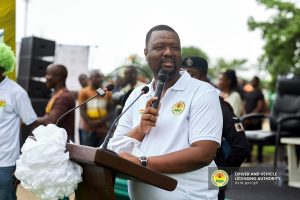
In fulfillment of his commitment to empower the rank and file of the National Democratic Congress (NDC), the Chief Executive Officer of the Driver and Vehicle Licensing Authority (DVLA), Julius Neequaye Kotey, has empowered over a thousand grassroots with jobs.
Popularly known as “Logas” and affectionately dubbed the “Grassroots Chief of Staff,” is being celebrated for overseeing the recruitment of over 1,000 contract staff to man newly established DVLA stations across the country.
The move has sent ripples of excitement throughout the country has been hailed by the party leadership and grassroots for such direct intervention in youth unemployment.
Action Over Excuses
Political observers and party loyalists have noted that while many officials often cite economic constraints as reasons for slow progress, Kotey has taken a proactive approach.
“I’m not one to make excuses for people, but we must speak the truth when we see it, one supporter noted” a member of the ruling party praised Julius Neequaye Kotey, saying he has proven his worth. “He has directly empowered our people with real opportunities instead of just promises.”
The recruitment drive is seen as a strategic move to not only improve the service delivery of the DVLA by expanding its footprint but to also ensure that the “footsoldiers” who represent the backbone of the party are not left behind.
A Wave of Appreciation
The news has sparked a wave of prayers and gratitude from party footsoldiers, many of whom have struggled to find stable employment.
”God bless him for looking out for the grassroots,” a beneficiary shared. “While others complain, he is delivering results. These are the kind of leaders who deserve our appreciation and prayers.”
Setting a Standard for Leadership
By filling these roles with local talent to manage the new stations, Kotey is being credited with bridging the gap between administrative leadership and the party’s grassroots base. This move is expected to boost morale within the NDC as the party looks toward future organizational goals.
As the new recruits begin their training and deployment, the consensus among the grassroots remains clear: Julius Neequaye Kotey is a leader who understands that the strength of a movement lies in the empowerment of its people.
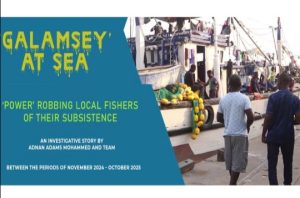
Excerpt of an investigative story by Adnan Adams Mohammed.
Full investigation video to be released soon…
For decades, the Ghanaian fisheries sector has been inundated with many allegations of fisheries crime related activities, which affects many fisher-folks who depend on the sea for their livelihood and the Ghanaian economy.
Despite generating over GHC 235 million in revenue in 2023 and 2024, according to the Ministry of Fisheries and Aquaculture data shared with this team through a Right To Information (RTI) request, the sector is plagued by allegations of fisheries crime, including overfishing and Illegal, Unreported, and Unregulated (IUU) fishing activities.
While the sector provides jobs for about 10% of Ghana’s population, it is faced with the double agony of thwarting the Sustainable Development Goals (SDGs) efforts while risking the European Union (EU) market ban for Ghana’s seafood and products.
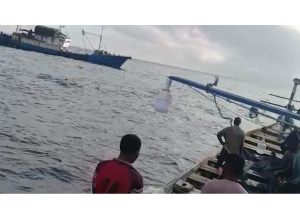
Canoe fishers at work
In the face of ‘unwatched’ fishing in Ghana’s sea which has contributed to the second yellow card (warning) by the European Union, yet, almost five years after, the country has done nothing much to reverse the trend, despite the previous Fisheries Minister, Mavis Hawa Koomson’s assurances.
It has been eight months, the current Fisheries Minister, Hon Emelia Arthur assumed office as the substantive minister, but she still catalogues the same challenges Ghanaian fisheries industry faces.
Emelia Arthur, Fisheries Minister
“The Yellow Card affects especially the industrial fishers who catch and export tuna, which brings in a lot of money, nearly $400 million to Ghana. So, we have to do the right things so that the trade will go on for the foreign exchange to come,” Emelia Arthur told the Parliamentary Appointment Committee in January this year, during her ministerial appointment.
The Human Cost of Unregulated Fishing
Local fishers, who depend on the sea for their livelihood, are bearing the brunt of these activities. Many have shared harrowing experiences of poor working conditions, low wages, and physical assault on industrial trawlers. Kwesi Odaadi, a former worker on a Chinese-owned trawler, revealed, “We Ghanaians working on the foreign vessels face poor conditions in our work onboard the vessels. We are paid not more than GH¢400 for periods between 30 to 45 days we spend at sea.”
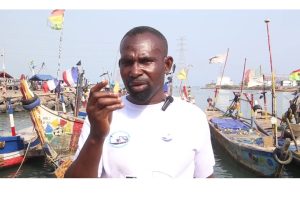
Ebenezer Yorke, President of Western Region CaFGOAG
“They sometimes physically assault us, especially when they give instructions and we do not understand due to language barrier.
“But, no one cautions them or intervenes for us. We reported these to the Fisheries Commission several times. This pushed us to contact the Trade Union Congress (TUC) some years ago with our grievances and upon their advice tried to form an industrial trawlers worker’s union but it could not materialize due to intimidation and victimization against some of our colleagues by the vessel owners”, Kwesi Odaadi added.
Work in Fishing Convention (C188)
These treatments are against the ‘Work in Fishing Convention (C188)’, developed by the International Labour Organization (ILO), adopted in 2007 but entered into force in November 2017 and can be described as fisheries-related crimes.
The C188 outlines a minimum standard for the employment of workers on fishing vessels, including minimum age, conditions of service, safety of workers, payments, repatriation, accommodations and other matters.
The aim was to help “tackle crimes that are associated with the fisheries sector”. But, it seems law enforcers in Ghana careless about laws the nation has adopted.
However, a local fisher at Tema fishing harbor, Adjety told us, “no laws work on Ghana waters we are left with our own destinies in the hands of the Chinese sophisticated foreign fishing vessels, which violate, intimidate the local canoes and trawlers at sea.”
Environmental Consequences
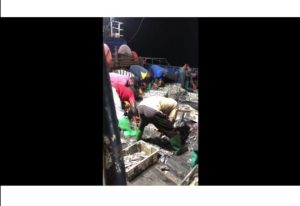
The environmental impact of unregulated fishing is equally alarming. Industrial trawlers are catching unwanted fish species, including fingerlings, and dumping them back into the sea, causing contamination and depleting fish stocks.
According to the Ministry of Fisheries, in a response to a question asked by our team through the RTI; industrial trawlers (foreign vessels) are supposed to catch “demersal fish species, which are typically found near the seabed.”
However, according to the Canoe and Fishing Gears Owners Association of Ghana the industrial trawlers are doing surface fishing, thereby catching fingerlings which are ‘unwanted fishes’ to them.
This has pushed local canoes and trawlers away from their traditional fishing grounds, threatening the livelihoods of thousands of Ghanaians.
Weak Oversight and Corruption
“The government is aware of the illegal activities of the foreign vessels. But, the excuse they give us is that, they pay license”, Ebenezer Yorke, Western regional chairman of the local canoes owners association (CaFGOAG).
Although the Fisheries Commission months ago suspended the licenses of four industrial trawl vessels for repeated violations, this is just the tip of the iceberg.
Fisheries Observers, who are crucial to monitoring and enforcing regulations, are highly vulnerable to corruption and intimidation. Three observers have lost their lives while on duty, and many more are reluctant to board vessels due to safety concerns.
“When you have these people on a vessel and they are not properly compensated you make them susceptible to all manner of influences”, the late former Board Secretary of the Ghana Industrial Trawlers Association (GITA), E.K. Ofori-Ani, told the team in an off-camera interview at his office in Tema earlier this year.
“If I go to sea a month and come back and you are going to give me about GH¢1000 and I can report an infraction on a vessel that will lead to a fine of about GH¢500,000 that the Fisheries Commission take, why wouldn’t I collude with the vessel operators or owner and take some money and fishes and kill the case? Mr Ofori-Ani quizzed rhetorically.
Politically-Motivated Corruption
Our investigations reveal that many Ghanaian-owned trawlers are linked to politicians, who have allegedly flouted regulations with impunity. The Beneficial Ownership (BO) data of these companies is mysteriously non-existent, raising questions about accountability and transparency in the sector.
The team specifically subjected two companies (suspected to be owned by some politicians) to BO verification from a source at ORC, but we were told they do not exist.
In a previous interview, the Deputy Company Inspector at the Office of the Registrar of Companies (ORC), Yayra Banini, indicated that the fisheries sector has not been on the radar at the moment with regards to BO disclosures because the sector is considered ‘not a high-risk’ area and so there will be the need for some amendments to the law.
“The fisheries sector is not really part of the high risk areas, so growing up we still do amendments to our regulations and add more to the list’’ Mrs Banini said.
Call to Action
The Ghanaian government must take immediate action to address these issues and protect the country’s fisheries sector. This includes strengthening regulations, improving working conditions for local fishers, and ensuring accountability for those responsible for these crimes.
The future of Ghana’s fisheries sector hangs in the balance.