
By Adnan Adams Mohammed
Micro, small, and medium-sized enterprises (MSMEs) in Ghana continue to be crippled by unfair credit allocation systems, preventing high-potential businesses from scaling operations and driving employment, Bank of Ghana Governor Dr. Johnson Pandit Asiama has warned.
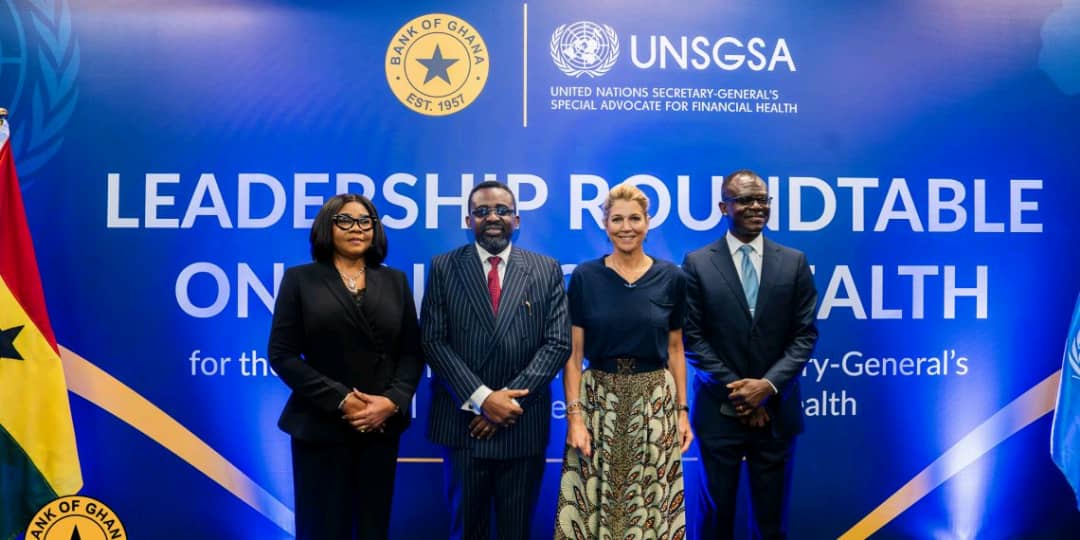
Speaking on Wednesday, November 4, 2026, at the Financial Health Leadership Roundtable at the Bank of Ghana headquarters in Accra held in the presence of UN Special Advocate for Financial Health, Queen Máxima of the Netherlands Dr. Asiama called for an urgent structural shift to level the playing field for small businesses seeking financing.
While acknowledging Ghana’s expansion in digital payment infrastructure, mobile money interoperability, and fintech solutions over the past decade, the central bank chief stressed that widespread digital access has yet to solve the credit gap facing local entrepreneurs.
“Through the conversations of financial access, there has been an important realization of a steady shift towards the translation into better financial health for households and businesses,” Dr. Asiama said. “Credit, when appropriately designed and delivered, enables households to invest in their futures and gives businesses the capital required to grow, innovate, and create jobs.”
Dr. Asiama highlighted MSMEs as the primary engine of Ghana’s domestic economy, pointing out that arbitrary risk barriers and rigid lending criteria frequently shut out creditworthy ventures.
“Across the country, MSMEs are creating jobs, driving innovation, and supporting livelihoods, yet many continue to face significant barriers in accessing finance,” he noted. “Too often, credit is unavailable to businesses with potential simply because of unfair mechanisms.”
To remedy this, the Governor urged financial sector stakeholders to deploy data-driven solutions, technology, and alternative credit evaluation models to eliminate market opacity and open sustainable funding channels for small enterprises, women-owned businesses, and smallholder farmers.
“Ultimately, bridging this financing gap requires us to leverage technology, data, and innovation to broaden credit access, reduce information asymmetries, and create pathways for viable businesses to access finance on fair and sustainable terms,” Dr. Asiama explained.
He challenged leaders from government, regulatory authorities, commercial banks, and international partners to move beyond high-level discussions and commit to measurable reforms.
“These questions require partnership across government, regulators, industry, and development institutions,” Dr. Asiama added. “I therefore encourage an open and action-oriented discussion. Let us identify the barriers that need to be addressed and the concrete commitments that can move us forward.”
