
Close Menu
News Guide Africa
    What's Hot

    Importers up in arms over proposed port overhaul …fears “Smart Port Note” System risks adding €380m in ‘red tape and bureaucracy’

    June 8, 2026

    The 45% Tomato crisis and the indigenous brand fighting to secure Ghana’s value chain

    June 8, 2026

    Ghana anchors Lithium Strategy on mandatory local processing and future battery ecosystem

    June 8, 2026
    Facebook X (Twitter) Instagram
    Trending
    • Importers up in arms over proposed port overhaul …fears “Smart Port Note” System risks adding €380m in ‘red tape and bureaucracy’
    • The 45% Tomato crisis and the indigenous brand fighting to secure Ghana’s value chain
    • Ghana anchors Lithium Strategy on mandatory local processing and future battery ecosystem
    • Aviamasters 2 Nocny Przewodnik po Archipelagu dla Pasjonatów
    • Agriculture, not mining, remains Ghana’s leading driver of deforestation – Forestry Commission Chief reveals
    • Ghana launches $3.5b ‘AgriConnect’ Compact to weaponize agric against youth unemployment
    • SSNIT moves to eliminate long queues with aggressive portal push and 7-day claim processing
    • GRA deploys ITAS to track wealth via 15 State Agencies …targets GH₵310bn revenue by 2028
    Facebook X (Twitter) Instagram
    News Guide Africa
    • Home
    • News
    • Politics
    • Agric and Environment
    • Sports
    • Mining & Energy
    • Lifestyle
    News Guide Africa
    Home » The 45% Tomato crisis and the indigenous brand fighting to secure Ghana’s value chain
    Agric and Environment

    The 45% Tomato crisis and the indigenous brand fighting to secure Ghana’s value chain

    Adnan AdamsBy Adnan AdamsJune 8, 2026No Comments6 Views
    Facebook Twitter Pinterest LinkedIn WhatsApp Reddit Tumblr Email
    Share
    Facebook Twitter LinkedIn Pinterest Email

    By Adnan Adams Mohammed

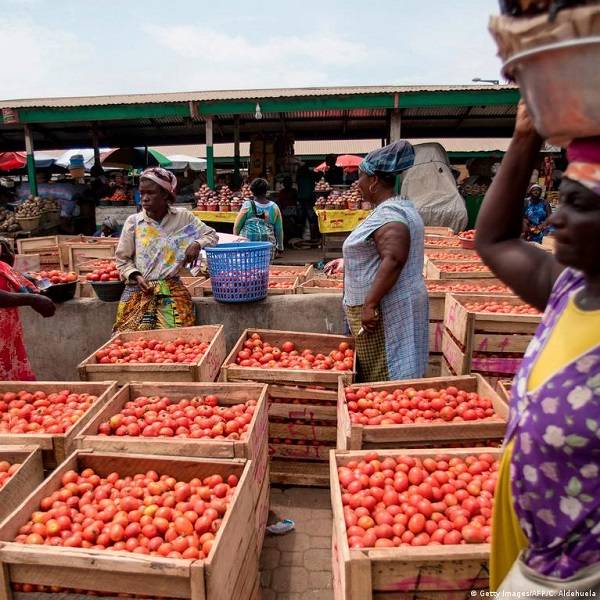
    Walk through any major food market in Accra, Kumasi, or Tamale during the peak harvesting season, and the visual is as familiar as it is heartbreaking: mountains of crushed, overripe tomatoes left to rot in wooden crates or dumped by the roadside.

    Despite being one of the largest consumers of tomatoes per capita in West Africa, Ghana finds itself trapped in an agricultural paradox.

    The nation wastes up to 45 percent of its domestic tomato production annually to post-harvest losses, yet continues to import hundreds of millions of dollars worth of processed tomato paste from Europe and Asia every year.

    Now, a homegrown Ghanaian agribusiness brand is aiming to disrupt this cycle, turning a massive systemic waste into a sustainable, localized economic asset.

    The Anatomy of a Food Security Crisis

    The structural inefficiencies plaguing Ghana’s tomato sector run deep. Smallholder farmers, primarily in the Bono East, Upper East, and Ashanti regions, rely heavily on seasonal rainfall and face a total lack of specialized cold storage transport. When the harvest hits all at once, the local market becomes aggressively flooded.

    Because fresh tomatoes have a highly volatile shelf life, farmers are routinely forced to accept exploitative, rock-bottom prices from traveling middlemen—popularly known as the “Tomato Queens”—or watch their entire livelihood spoil in the fields.

    “The fact that we are losing nearly half of what our hardworking farmers sweat to cultivate is not just a financial tragedy; it is a profound national food security failure,” noted Akosua Kyerewaa, an agricultural economist specializing in supply chain logistics.

    She explained that while successive governments have promised state-of-the-art factories to resolve the crisis, large-scale processing plants often collapse because they are poorly integrated with the smallholders or fail to compete with heavily subsidized foreign imports. “We don’t just need giant factories that sit idle for half the year. We need localized, agile processing solutions that can immediately absorb gluts at the farm gate,” Kyerewaa added.

    A Homegrown Answer to Post-Harvest Loss

    Stepping directly into this gap is a dynamic Ghanaian food processing brand determined to prove that the country’s tomato crisis can be solved using local innovation. By establishing a direct-purchasing network with smallholder cooperatives, the company bypasses predatory distribution chains and ensures that surplus tomatoes are salvaged long before they begin to deteriorate.

    Instead of trying to replicate the highly processed, preservative-laden pastes imported from overseas, the brand focuses on premium, naturally preserved tomato purees, diced blends, and indigenous sauces tailored specifically to the West African palate.

    “We looked at the statistics and realized that the answer to Ghana’s tomato dependency wasn’t across the ocean it was rotting in our own backyards,” stated the founder of the agribusiness initiative during a recent manufacturing showcase.

    By utilizing decentralized processing hubs closer to the farming centers, the company significantly minimizes the long, bumpy transit times in unventilated wooden crates that typically damage fresh produce. “Our mission is simple: we want to ensure that no single tomato grown by a Ghanaian farmer goes to waste. By processing these tomatoes locally, we are retaining wealth within our rural communities, creating manufacturing jobs, and offering consumers a fresher, healthier, and entirely indigenous alternative,” the founder emphasized.

    Rewriting the Market Narrative

    The push for local tomato processing arrives at a critical moment for Ghana’s macroeconomic recovery. With the Ministry of Finance strictly policing foreign exchange flight, reducing the national import bill for basic food items has become a matter of sovereign urgency.

    However, industry experts warn that processing the tomatoes is only half the battle; changing consumer behavior remains a significant hurdle. For decades, Ghanaian households and commercial caterers have been conditioned to prefer foreign-branded tomato pastes, which often contain added starch and artificial coloring to alter texture and appearance.

    “To truly win this battle, the Ghanaian consumer must actively choose homegrown quality over imported convenience,” a retail market analyst observed.

    Local processors are countering this by launching aggressive educational campaigns to show that natural, locally processed tomatoes preserve the authentic, rich flavor profile required for traditional dishes like Jollof rice and light soup.

    By fixing the broken links between farm gates and consumer kitchens, this homegrown movement is proving that with the right application of local capital and logistical ingenuity, Ghana can finally close its 45 percent waste gap transforming a seasonal crisis into a sustainable blueprint for continental food sovereignty.


    Ministry of Finance Ministry of Food and Agriculture (MOFA) tomato production
    Share. Facebook Twitter Pinterest LinkedIn Tumblr Telegram Email
    Adnan Adams
    • Website

    Related Posts

    Importers up in arms over proposed port overhaul …fears “Smart Port Note” System risks adding €380m in ‘red tape and bureaucracy’

    June 8, 2026

    Ghana anchors Lithium Strategy on mandatory local processing and future battery ecosystem

    June 8, 2026

    Agriculture, not mining, remains Ghana’s leading driver of deforestation – Forestry Commission Chief reveals

    June 8, 2026
    Leave A Reply Cancel Reply

    Top Posts

    BREAKING: Another helicopter crashes in Kenya, Several Feared Dead

    August 7, 20251,870

    Chief of Staff charges National Prayer Committee to innovate for national cohesion

    June 4, 2026888

    Alpha Energy to begin works on Namibia’s largest offshore diamond mines in October

    September 14, 2024885

    Exceptional client service: How two Kasoa GRA officials are redefining public relations

    May 22, 2026756
    Don't Miss
    Business, Small Business

    Importers up in arms over proposed port overhaul …fears “Smart Port Note” System risks adding €380m in ‘red tape and bureaucracy’

    By Adnan AdamsJune 8, 2026

    By Adnan Adams Mohammed  A deep rift has opened between Ghana’s maritime authorities and the…

    The 45% Tomato crisis and the indigenous brand fighting to secure Ghana’s value chain

    June 8, 2026

    Ghana anchors Lithium Strategy on mandatory local processing and future battery ecosystem

    June 8, 2026

    Aviamasters 2 Nocny Przewodnik po Archipelagu dla Pasjonatów

    June 8, 2026
    About Us
    About Us

    Newsguide Africa is a digital news platform dedicated to providing accurate, timely, and insightful coverage of the African continent. From business and technology to lifestyle and cultural heritage, we go beyond the headlines to offer context and a positive, authentic narrative for the global African diaspora and local readers alike.

    Facebook X (Twitter) Pinterest YouTube WhatsApp
    Our Picks

    Importers up in arms over proposed port overhaul …fears “Smart Port Note” System risks adding €380m in ‘red tape and bureaucracy’

    June 8, 2026

    The 45% Tomato crisis and the indigenous brand fighting to secure Ghana’s value chain

    June 8, 2026

    Ghana anchors Lithium Strategy on mandatory local processing and future battery ecosystem

    June 8, 2026
    Most Popular

    BREAKING: Another helicopter crashes in Kenya, Several Feared Dead

    August 7, 20251,870

    Chief of Staff charges National Prayer Committee to innovate for national cohesion

    June 4, 2026888

    Alpha Energy to begin works on Namibia’s largest offshore diamond mines in October

    September 14, 2024885

    © 2026 Newsguide Africa. All rights reserved.

    • Home
    • Science

    Type above and press Enter to search. Press Esc to cancel.