
By Adnan Adams Mohammed
In a major structural shift for Ghana’s agricultural economy, the Ghana Cocoa Board (COCOBOD) is finalizing an advanced homegrown funding regime that will fund cocoa purchases entirely through local investors.
The new framework aims to fully replace the long-standing tradition of offshore syndicated loans with a domestic commercial paper programme. The primary capital sources for the new architecture will tap directly into domestic pension funds, local commercial banks, and key private actors within the cocoa value chain.
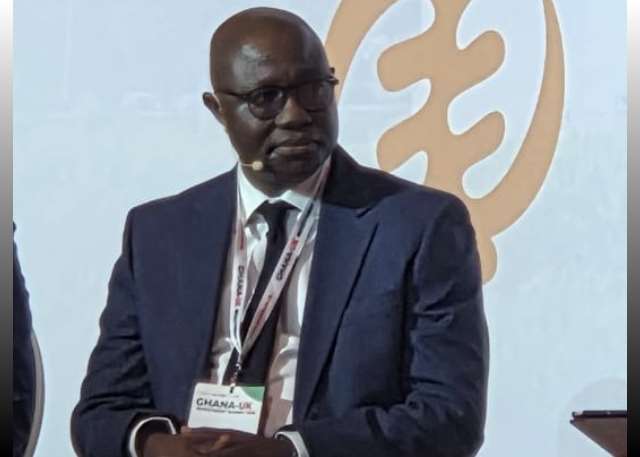
Speaking on the sidelines of the Ghana-UK Investment Summit in London, the Deputy Chief Executive Officer in charge of Finance and Administration at COCOBOD, Mr. Ato Boateng, revealed that the board has successfully engaged key transaction advisors to ensure a seamless rollout ahead of the upcoming crop season.
“We’ve made significant progress and have hired all the advisors we need to launch the issuance,” Mr. Boateng stated during the summit. “The advisors are working hard on the structure of the financing, which is almost finalised, to address all regulatory concerns raised by the relevant parties.”
Tapping into local pension wealth
The fundamental pillar of the domestic strategy centers on the country’s vast pension fund sector, which manages approximately GH¢100 billion in total assets. Under current investment regulations, these funds have the flexibility to allocate a substantial portion of their portfolios to safe, state-backed instruments.
Explaining the core philosophy behind the shift, Boateng emphasized the immense opportunity presented by domestic liquidity.
“The whole idea is for COCOBOD to raise funds internally, and we are looking at three different sources. The first source is pension funds,” Boateng explained. He further noted the scale of the available capital, stating, “We could potentially tap into 35% of the 100 billion cedis.”
Innovative partnerships with commercial banks
Beyond retirement funds, local commercial banks will form the second core pillar of the financing ecosystem. Acknowledging existing regulatory constraints and exposure limits within the banking sector, the Deputy CEO revealed that COCOBOD is deploying innovative structures to lower risk and expand capacity.
“We need to be very innovative because we also want banks to actively participate,” Boateng said. “As such, we will look at bringing in Development Finance Institutions to expand the lending capacity of the banks.”
The third and final pillar of the framework will focus on private placements targeted directly at players within the cocoa production line, including international trade buyers and local private operators. “We also want to bring in our industry stakeholders,” he noted.
Tailored to the cocoa purchasing cycle
To ensure the programme matches the physical trade realities of the sector, COCOBOD is designing a short-term, high-liquidity financial instrument. The institution is proposing a 270-day commercial paper instrument, which translates to a nine-month maturity period specifically tailored to fit the seasonal peak of cocoa harvesting.
“What we are proposing is a 270-day commercial paper, meaning a nine-month maturity. It is essentially a working capital facility because our season runs from September through January, which is when we purchase about 70% of our produce,” Boateng detailed.
To optimize efficiency and avoid the heavy burden of unutilized debt, COCOBOD plans to steer clear of lump-sum borrowing. Instead, the board will adopt a staggered, demand-driven funding schedule.
“The idea is to structure the funding in tranches so that we draw only what we need for purchases,” Boateng explained. “When the funds are no longer needed, we repay investors to ensure the money is used strictly for its intended purpose.”
A sovereign solution for financial stability
The official stressed that the programme is being developed in close consultation with market advisors and state regulatory authorities to guarantee a successful launch, asserting, “It will be entirely locally financed.”
This sweeping overhaul comes on the heels of broader fiscal reforms ordered by the government to clean up COCOBOD’s balance sheet, insulate the local currency from foreign exchange volatility, and guarantee prompt payments to Licensed Buying Companies (LBCs) and smallholder farmers. By shifting to a cedi-denominated commercial notes programme, the country expects to build deep financial self-reliance for its mainstay crop while completely eliminating the heavy interest and ancillary costs tied to external borrowing.
