
By Jerome K. Sam
On February 12, 2026, the Minister for Finance, Hon. Dr. Cassiel Ato Forson, acting on behalf of His Excellency President John Dramani Mahama, unveiled a strategic roadmap of reforms designed to rescue Ghana’s ailing cocoa sector.
For an industry that has served as the backbone of our economy alongside gold—bringing in vital foreign exchange and sustaining millions of livelihoods—these proposals represent more than just policy changes; they are a necessary resuscitation of a sector currently in comatose.

Jerome K Sam
The Crisis of the Old Guard
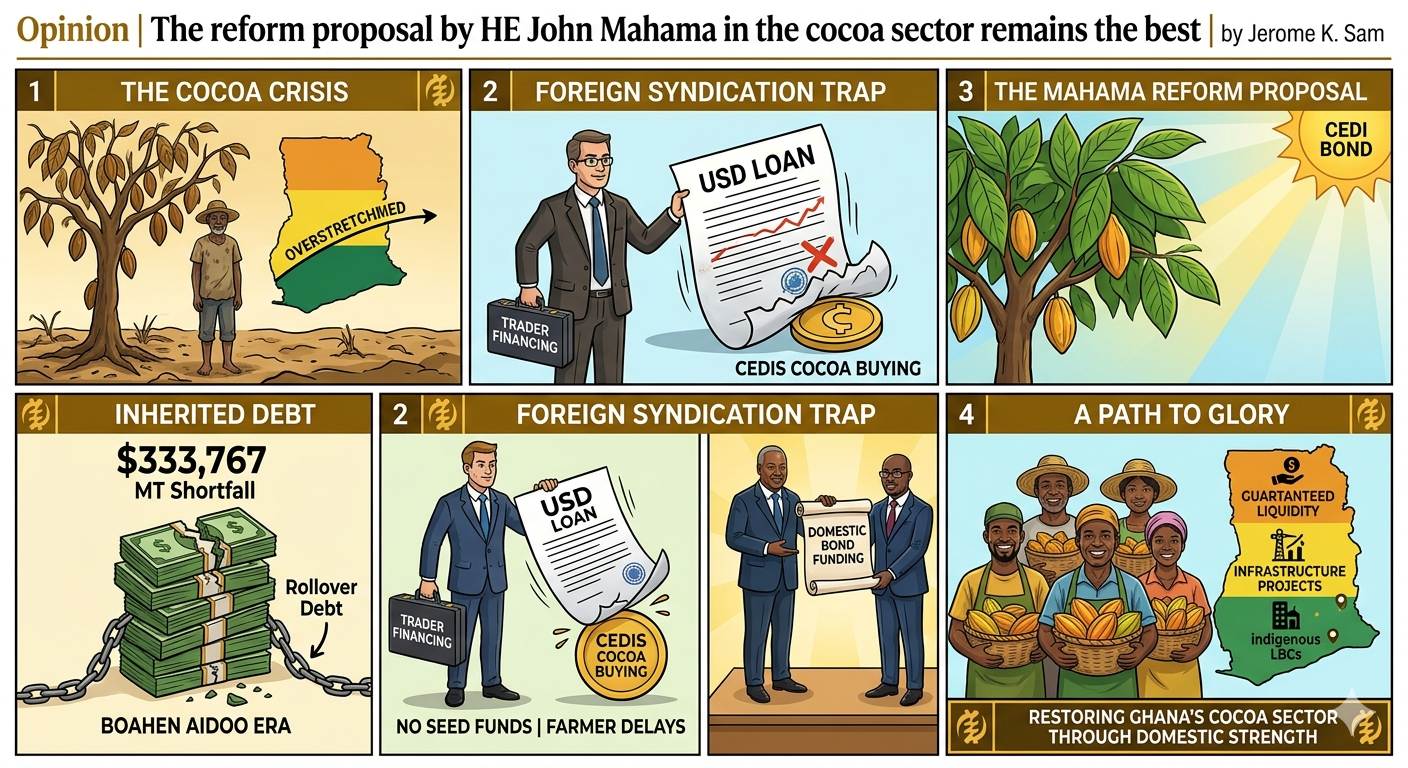
To understand the brilliance of the Mahama proposal, one must first look at the wreckage inherited. Under the previous leadership of Boahen Aidoo at Cocobod, contractual failures reached a breaking point. A staggering shortfall of 333,767 metric tonnes in cocoa bean supply obligations crippled Ghana’s credibility, leading to the loss of the traditional syndicated loan for the 2024/25 season.
While the Dr. Randy Abbey-led Cocobod managed to navigate the 2024/25 season by servicing 235,000 metric tonnes of that inherited rollover debt, the “stop-gap” arrangement with foreign traders left the industry vulnerable. This trader-led financing model meant:
- A lack of dedicated seed funds for Licensed Buying Companies (LBCs).
- The fate of cocoa purchases being left at the mercy of international buyers.
- Increasing farmer agitation due to payment delays.
- Ballooning debts for indigenous LBCs forced to pre-finance purchases.
A Paradigm Shift: Domestic Bond Funding
The centerpiece of the Mahama reform is a bold transition in the funding model: moving away from volatile, dollar-denominated foreign syndication toward domestically raised, Cedi-denominated bonds.
This shift is not merely administrative—it is a masterstroke of economic sovereignty. By raising funds locally, the government addresses five critical pain points:
- Guaranteed Liquidity: The “no money” syndrome will be cured. Cocobod will no longer wait for advances from abroad to pay our hardworking farmers.
- Debt Sustainability: By borrowing in Cedis, Cocobod eliminates the “exchange rate trap.” In the old model, every time the dollar appreciated, Cocobod’s debt unfairly ballooned. This new regime brings stability.
- Infrastructure Development: The availability of local cash ensures that cocoa-related projects—roads, warehouses, and social amenities—can be funded consistently.
- Job Security: Workers within the cocoa value chain are now assured of timely salary payments, fostering a motivated workforce.
- Reviving Indigenous Businesses: Perhaps most importantly, this regime will breathe life back into indigenous Licensed Buying Companies, allowing Ghanaian entrepreneurs to reclaim their stake in the industry.
A Path to Glory
It is evident that the Mahama-led government is not interested in cosmetic fixes. By tackling the structural funding flaws that have plagued the sector, the administration is laying the groundwork for a resilient, self-sufficient cocoa industry.
The transition to domestic bonds is a courageous step toward decoupling our national pride—cocoa—from the whims of international lenders. If implemented with the precision currently displayed by the Finance Ministry and the new Cocobod leadership, Ghana’s “Green Gold” is set to return to its glory days.
