
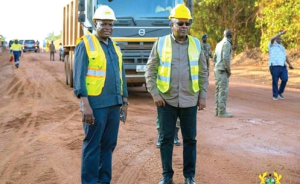
The Minister for Roads and Highways, Hon. Kwame Governs Agbodza, took a metaphorical sledgehammer to critics in Parliament on Tuesday, dismissing allegations of procurement irregularities within the government’s flagship Big Push Infrastructure Programme.
Addressing the House with a blend of data and defiance, the Minister described claims that the programme is driven by sole sourcing as “mischievous” and a total departure from the facts.

The Data Behind the Deals
In a bid to set the record straight, Hon. Agbodza provided a rare deep dive into the Ministry’s procurement books. He revealed that while critics have painted a picture of closed-door deals, the reality is far more competitive:
Open Tendering: Over 400 contracts have been awarded through open competitive bidding.
Sole Sourcing: Only 44% of major contracts were awarded via sole sourcing—a method the Minister defended as a legal necessity for speed.
Transparency: All contractual details are currently live on the Ministry’s official website for public scrutiny.
“It is misleading for any right-thinking person to conclude that the Ministry only relies on sole sourcing,” Agbodza told a hushed Parliament. “There is no abuse of the law. It is the exception, not the norm.”
Reviving the ‘Ghost’ Projects
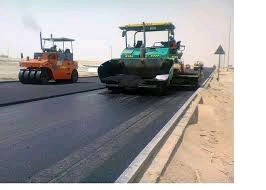
A significant portion of the Minister’s update focused on the GH¢14.88 billion rescue mission for abandoned infrastructure. According to the Minister, 23 major projects—including the Suame Interchange, Ofankor-Nsawam Road, and the Adenta-Dodowa Road—were inherited from the previous administration in a state of financial cardiac arrest.
By incorporating these into the “Big Push” and securing new financing, the government argues it prevented these critical arteries from remaining permanent construction ruins.
Speed vs. Red Tape
The Minister was candid about the government’s decision to bypass lengthy procurement hurdles for certain projects. He argued that strict adherence to standard timelines would have led to “cost escalations” and deepened the economic hardship of citizens living with deteriorated roads.
The Big Push currently spans 12 economic corridors divided into 54 lots, with over 2,000 kilometres of roadwork active across all 16 regions.
Guardians of the Purse
To counter “value for money” concerns, the Minister outlined a multi-layered defense system:
In-house Costing: Initial designs and costing are done by state agencies to save billions.
Independent Assessment: Contractor proposals undergo external value-for-money audits.
Measurable Pay: A strict “no work, no pay” policy is in place, supported by the Ghana Institution of Surveyors.
Clearing the Arrears
In a final jab at the opposition, Agbodza highlighted that the current administration is still cleaning up a GH¢40 billion debt pile inherited in 2024. He disclosed that the government has recently paid out GH¢11 billion to contractors—the largest arrears settlement in Ghana’s history.
“The Big Push is delivering the infrastructure Ghanaians demanded,” he concluded. “We must not allow misinformation to derail it.”
