
By Adnan Adams Mohammed
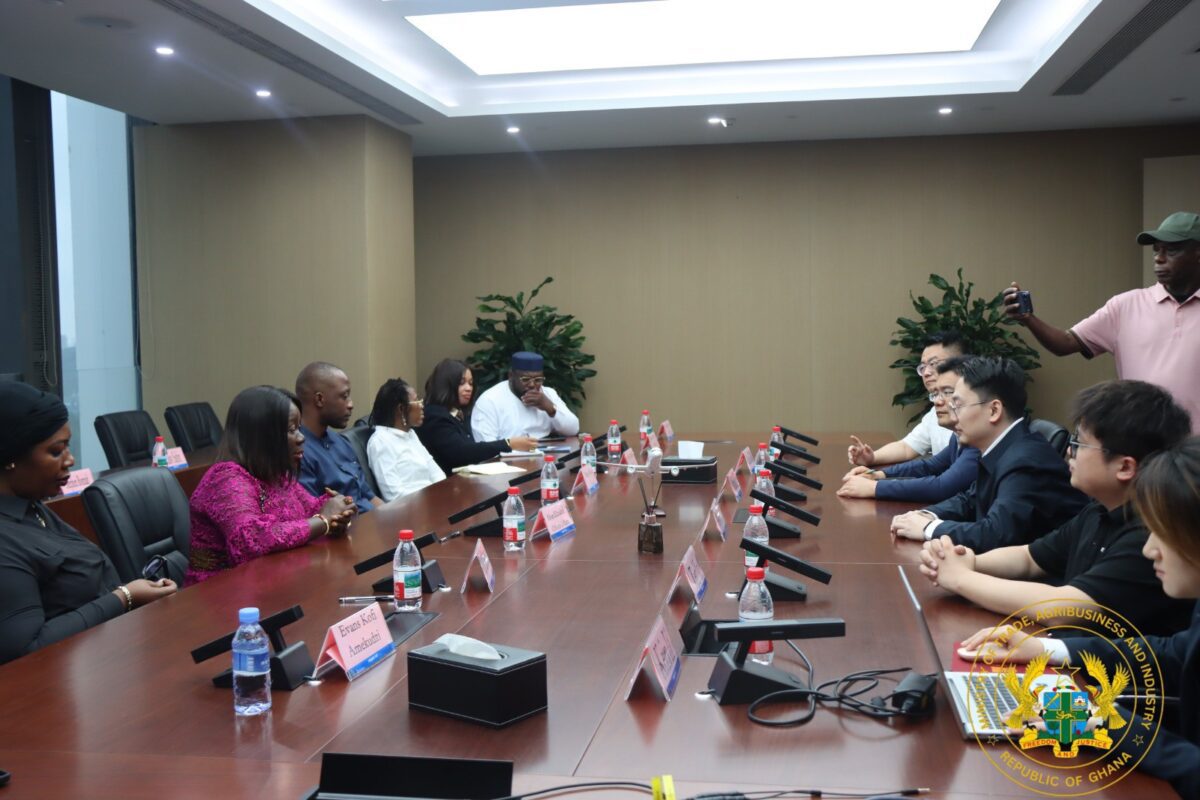
In an aggressive push to transform the nation’s industrial landscape and accelerate economic growth, Trade Minister Hon. Elizabeth Ofosu-Adjare is leading a high-powered Ghanaian delegation to the People’s Republic of China.
The mission aims to lock down multi-million-dollar partnerships in the industrial and agribusiness sectors by positioning Ghana as the continental gateway to the African Continental Free Trade Area (AfCFTA) market of 1.4 billion people.
Undertaken on the directive of President John Dramani Mahama, the diplomatic and economic offensive aligns with the government’s broader “Reset Agenda.” The mission is designed to shift Ghana away from raw material exportation toward a heavily mechanized, export-led economy.
The high-level delegation includes senior technical stakeholders from the Ministry of Food and Agriculture, the Volta Aluminium Company (VALCO), the Ghana Free Zones Authority, the Ghana Investment Promotion Centre (GIPC), and local private-sector conglomerate the Sentuo Group.
Courting Beijing: The agribusiness transformation
While addressing a forum of elite Chinese state corporations and private investors, Hon. Ofosu-Adjare made a compelling case for Ghana’s unique geostrategic advantage. She emphasized that investing in Ghanaian manufacturing guarantees unrestricted, duty-free tariff access to the entire African continent.
“Ghana is not just an isolated market of over 30 million people; we are the commercial capital of Africa and the literal gateway to a 1.4 billion-consumer market valued at over 3.4 trillion dollars under AfCFTA,” the Trade Minister declared. “We are inviting Chinese manufacturers to move beyond merely trading with us. Come and establish your production bases in Ghana, tap into our stable political climate, use our rich resources, and export to the rest of Africa.”
The delegation toured expansive industrial hubs in China’s Hubei Province, specifically inspecting advanced maize milling facilities, silo manufacturing plants, fertilizer production complexes, and chemical industrial parks. The focus on storage and milling infrastructure directly supports state ambitions to construct a self-sustaining domestic “maize economy.”
“Through strategic partnerships and industrial cooperation, Ghana will establish modern maize milling and silo infrastructure to buy, process, store, and export value-added products to the world,” President Mahama noted in an brief issued from Accra, reinforcing the mission’s scope. “We are laying the foundations for absolute food security and industrial input self-reliance.”
Deepening Gulf ties: Dubai Chamber touches down in Accra
Simultaneously, Ghana’s trade infrastructure is receiving a massive boost from the Middle East. The Dubai Chamber of Commerce recently dispatched a trade mission to Accra to engage key local trade institutions—including the Ghana National Chamber of Commerce and Industry (GNCCI), GIPC, and the Importers and Exporters Association of Ghana—to deepen investment cooperation.
Led by Salem Al Shamsi, the Executive Vice President of International Relations at Dubai Chambers, the bilateral talks centered on carving out direct communication lines between Emirati businesses and Ghanaian enterprises, with a strong focus on logistics, tech, and sustainable trade flows.
Stéphane Miezan, President of the GNCCI, expressed great optimism about what a structured relationship with the Gulf hub means for the local private sector.
“Our discussions focused entirely on building sustainable economic partnerships capable of supporting stronger trade flows between both markets,” Miezan stated following the closed-door sessions. “We want to see our local small and medium enterprises scaling up by forging direct joint ventures with Dubai-based companies.”
Translating diplomacy into tangible inflows
To ensure these international overtures yield actual economic dividends rather than remaining polite diplomatic gestures, the GIPC is moving swiftly to lower bureaucratic bottlenecks.
Commenting on the dual economic engagements with China and the UAE, the Chief Executive Officer of GIPC, Simon Madjie, underlined that the domestic private sector must prepare itself to absorb these coming capital injections.
“The engagement with Dubai Chambers and our ongoing mission in China are targeted at boosting private-sector participation,” Madjie explained. “GIPC is highlighting the concrete investment advantages, tax holidays, and free zone incentives available in Ghana. The key test now is ensuring these institutional engagements translate smoothly into concrete factory floors, export channels, and jobs.”
With the Trade Ministry actively coordinating these investment pipelines, analysts view this coordinated global outreach as a timely maneuver to stabilize the local currency, build domestic agricultural resilience, and establish Accra as the undisputed industrial heartbeat of West Africa.
