
By Adnan Adams Mohammed
Global financial dynamics and regional banking benchmark frameworks are facing major policy reviews as financial experts call for structural reforms to Ghana’s interest rate reference framework, while international credit rating agency Fitch Ratings boosts investor confidence across West Africa’s banking sector.
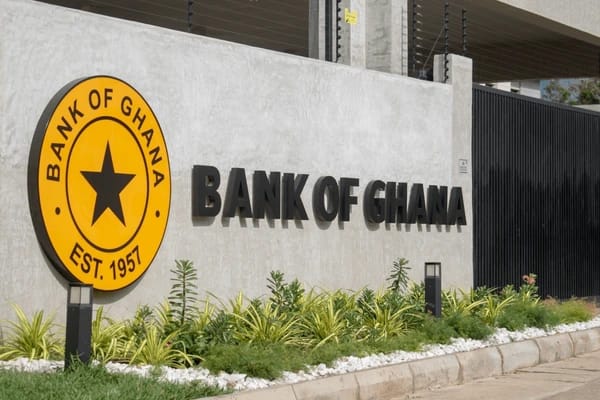
In a comprehensive financial assessment, finance scholars Professor Williams Kwasi Peprah of Andrews University and Fred Bortey Kyeremeh have made a strong case for overhauling the Ghana Reference Rate (GRR), urging central bank regulators to align lending benchmarks directly with commercial banks’ deposit costs rather than government borrowing rates.
Concurrently, Fitch Ratings has upgraded the Long-Term Issuer Default Rating (IDR) outlooks for 11 major financial institutions including Access Bank Plc, Zenith Bank Plc, United Bank for Africa (UBA), and Guaranty Trust Holding Company (GTCO) to Positive from Stable, signaling macroeconomic recovery across the sub-region.
Overhauling the GRR: Disconnecting Private Borrowing from Public Debt
The proposed reform of Ghana’s base lending rate comes amid concerns that government debt pressures are distorting private sector credit pricing. Under the existing GRR formula, 91-day Treasury bill yields account for a 40% stated weight, but reserve adjustments increase their effective leverage on the rate to over 51%.
In their published analysis, Prof. Peprah and Mr. Kyeremeh highlighted that Treasury bill yield volatility has accounted for nearly 79% of historical monthly fluctuations in the GRR over the past eight years, artificially inflating loan costs for local enterprises.
“The Treasury bill component has more leverage than it appears,” the authors noted. “Using Treasury bill yields in the GRR passes the government’s borrowing pressures on to businesses and households through bank lending rates, rather than directly reflecting banks’ own funding costs. The evidence supports a review of the benchmark’s weights and a test of a simple formula that directly includes banks’ deposit interest costs.”
To resolve the distortion, the financial analysts advocated for replacing the Treasury bill variable with an industry-wide weighted average cost of cedi deposits.
“BoG and the Ghana Association of Banks should specify whether the GRR measures funding costs, the opportunity cost of lending or monetary policy conditions,” they emphasized. “Every monthly GRR release should show both the stated weights and the effective sensitivities to headline rates so borrowers do not have to infer this distinction.”
Fitch Upgrades Major West African Banks to Positive
Providing a boost to regional financial stability, UK-based credit rating agency Fitch Ratings affirmed the Long-Term IDRs of nine commercial banks, two bank holding companies, and policy institutions at ‘B’, while upgrading their rating outlooks to Positive.
The rating action affects major pan-African lenders operating across Ghana and Nigeria, including Access Bank, Zenith Bank, UBA, GT Bank, First Bank of Nigeria (FBN), Fidelity Bank, FCMB, Wema Bank, and the Bank of Industry.
Fitch reported that the upgraded outlooks stem from broader policy reforms and strengthening sovereign credit profiles that reduce constraints on standalone banking performance.
“The Outlook revisions to Positive follow a similar action on the sovereign’s Long-Term IDRs, reflecting ongoing reform of the policy framework and increased confidence that momentum will not be disrupted,” Fitch Ratings stated in its official release. “The revision reflects our view that the sovereign’s credit profile and the operating environment may become less of a constraint on the issuers’ standalone creditworthiness.”
Fitch also noted that institutions such as First HoldCo Plc and First Bank of Nigeria have successfully restored full compliance with total capital adequacy ratio (CAR) requirements, reinforcing system-wide liquidity and financial resilience across the sub-region.
