
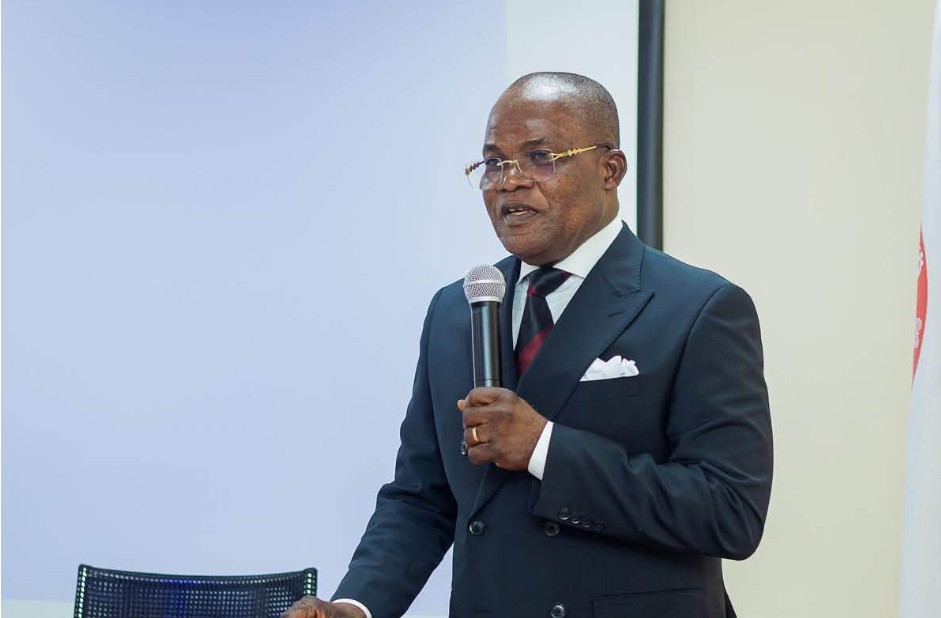
The Clerk to Parliament, Ebenezer Ahumah Djietror, has called on the Parliamentary Press Corps to actively highlight the institution’s severe infrastructure deficit and build public support for long-term expansion plans, including a new parliamentary chamber.
Speaking at a two-day professional development workshop organized by Parliament’s Media Relations Department in Accra, Mr. Djietror urged journalists to view themselves as key partners in strengthening democratic governance rather than mere external observers.
Addressing reporters, the Clerk emphasized that inadequate facilities and lack of designated workspace directly hinder journalists from delivering timely news to the public.
“We need to look critically at the infrastructure development. Don’t tell me forum non conveniens. The forum is convenient because you are the men and women with a pen whose functions, duties and mandates are to inform the public. The public should be appropriately informed,” Mr. Djietror stated.
Dismissing the misconception that parliamentary reporters work short shifts, the Clerk acknowledged the long hours journalists routinely spend monitoring proceedings in the House.
“Sometimes we are here for sixteen hours. You should be able to carry out your work, report appropriately, and timely reporting is also important,” he noted, explaining that the absence of proper work centers forces reporters to commute back to their offices before filing stories, ultimately delaying public access to crucial information.
Mr. Djietror charged the media corps to shift public perceptions surrounding parliamentary infrastructure projects, specifically referencing the backlash against the proposed new chamber complex in 2019.
“The net effect of what I’m saying is that you need to avert your mind to these challenges, so that the issues of ‘Drop That Chamber’ business should be a thing of the past. It is your responsibility. We are partners. Report appropriately. Let the public appreciate that, yes, we need it,” he urged.
The Clerk’s remarks revisit the debate from 2019, when public outcry under the #DropThatChamber campaign forced the Parliamentary Service Board to shelve plans for a proposed $200-million new chamber complex.
Linking the House’s development goals to Ghana’s commitments under the Open Government Partnership (OGP) and Open Parliament initiatives, Mr. Djietror noted that improving parliamentary facilities creates a better working environment for press freedom and public education.
“When Parliament thrives, when we have enough infrastructure, when the funding source of Parliament is robust and responsive, it affects you. Because the congenial environment that we create will facilitate and expedite your work,” he explained.
While urging journalists to uphold high ethical standards, Mr. Djietror clarified that advocating for institutional efficiency does not mean shielding the legislature from scrutiny.
“Your role as a media is not to create confusion but to better educate,” he said. “You can be very constructive and sometimes adopt a critical position without necessarily undermining the integrity of the institution.”
He concluded the session by challenging the Parliamentary Press Corps to leverage the workshop to sharpen their skills and support good governance, parliamentary democracy, and national development.
