Category: News

  • Businesses proffer solutions to escalating dollar rate

    Businesses proffer solutions to escalating dollar rate

    Adnan Adams Mohammed

    Ghanaian businesses are ‘up in arms’ against the uncontrollable escalating depreciation of the local currency, the Cedi against the major trading currencies, especially the U.S dollar.

    Currently, the Cedi is trading GHC7.15 to one U.S dollar on the forex market. This is up from about GHS 5.58 in the first quarter of 2021. The Cedi is ranked as the worst performing currency among 15 major currencies in Africa as the Cedi has depreciated 7.6 percent this year.

    To this, the Ghana Union of Traders (GUTA) has called on regulators of the forex market to fast-track the proposal of making the Chinese Yuan as the only trading currency when doing business with China. They believe such a move will reduce pressure on the Cedi because imports will not be done with US dollars as most Ghana’s import currently come from China because of their cheaper products and cost.

    “We can also do a similar clearing system with China where we send our local currency to the local banks, and they have a clearing system with the Chinese banks where they clear with the local currencies”, President of GUTA, Dr. Joseph Obeng, reacting to the current development explained the point that, Ghana could explore a clearing system with China similar to the Pan-African Payment and Settlement System.

    “I think this is the way forward, and central banks in Africa have started thinking in that manner. I think they have to fast track those initiatives that will lessen the pressure on the US dollar,” Dr. Obeng said.

    Apparently, the Association of Ghana Industries’s (AGI) President, Dr. Humphrey Ayim-Darke, thinks otherwise. He believes moves to reduce the import of finished goods will be in the best interest of the Cedi.

    He blamed traders importing finished goods for contributing to the struggles of the cedi.

    “They put pressure on the exchange rate because they demand it for finished products.”

    Mr. Ayim-Darke was responding to a member of the Traders Advocacy Group, Irene Odoom, who had said Ghanaian industries contributed to the struggle of the cedi because they imported raw materials.

    “Most of them don’t have the raw materials here in Ghana to do it,” Mrs. Odoom said on the show.

    “The machines you use, some are obsolete and for the end product, the prices are high,” she added.

    But Mr. Ayim-Darke retorted that the imports of industries still resulted in a net benefit to Ghana.

    “By virtue of their [traders] deeds, bringing only finished products, if you look at the value chain of value addition, it is limited.”

    “They don’t create enough jobs and the turnaround of their funds in the value chain is short. When you bring in raw materials, the value chain is longer,” he added.

    Mr. Ayim-Darke noted further that this “affects the exchange rate in terms of the deficit the BoG [Bank of Ghana] needs to shore up the currency.”
  • Fuel price spikes: NPA to remove taxes to manage prices

    Fuel price spikes: NPA to remove taxes to manage prices

    Adnan Adams Mohammed

    As consumers of petroleum products keep calling on government to intervene to help tame or reduce the rate of increase in prices, the National Petroleum Authority (NPA) has assured of a possible solution.

    The Authority indicates that, discussions are ongoing with the Ministries of Finance and Energy to find a manageable solution to the persistent rise in fuel prices.

    Within the past few weeks, prices of fuel at the pumps have consistently rise to hit an all-time high of about GHC8.30 per litre as at last week. Consumers have attributed the spikes to exchange rate escalation and too many taxes. But, NPA believes the discussions with the ministries will focus largely on the possible removal of some taxes on petroleum products.

    “We are also concerned, there are a lot of discussions we are having with the Ministry of Energy, and we are seeing if together with the Ministry of Finance, we will make some proposals,” Head of Pricing at the NPA, Abass Ibrahim Tasunti has said.

    Fuel prices at some fuel stations have crossed the GH¢8 per litre mark in the first week of March 2022 with predictions that the commodity will sell at GH¢9.00 per litre by close of the month.

    But Abass Ibrahim Tasunti maintains that the situation can be blamed largely on current happenings on the global oil economy; thus, the government will play a role in cushioning citizens.

    “For us, we don’t make the fiscal and economic policies for government on how we regulate the fuel industry because the pricing is done according to world formula. If you look at the taxes in the formula, they are approved by Parliament. So, if any of them are to be removed, it has to go back to Parliament.”

    In the meantime, the Minority in Parliament is demanding the immediate scrapping of taxes in the petroleum price build-up that have outlived their purpose.

    It argues that those taxes constitute about 40% of the price build-up on the products.

    Making a strong case for its removal, the minority said such a move would drastically reduce the price of fuel and subsequently relieve Ghanaians who have endured high prices of the products.

    “At the time the price of crude in the world was around US$30 we had a problem with the FPSO Kwame Nkrumah crude, so production came down.”

    “That is why the Special Petroleum Tax was introduced to help us rake in some revenue. In the 2016 budget, we had introduced sub-clauses that by 2017 this tax should be off and the reason is that by then, we would have sorted the issues with the FPSO Kwame Nkrumah”, Member of Parliament’s Mines and Energy Committee, Edward Bawah said.

    The Institute for Energy Security (IES) is also predicting a four percent increase in the prices of Liquefied Petroleum Gas (LPG), Diesel, and Petrol at the pumps in the first pricing window of March.

    A barrel of Brent Crude Oil which was going for about $66 a year ago, and $78 at the start of 2022, jumped 7.3% to $103.9 a barrel in February.

  • PIAC cautions Gov’t to negotiate better oil and gas contracts

    PIAC cautions Gov’t to negotiate better oil and gas contracts

    Adnan Adams Mohammed

    Assessing ten 10years of oil production in Ghana, the Public Interest and Accountability Committee (PIAC) has called on the government and petroleum agreement (PA) negotiators to do a better job for the citizens.

    The Committee tasks the government to adopt measures to thoroughly vet costs provided by international oil companies before PA are signed so as to help Ghana gain more from the oil and gas production.

    Commercial production of oil and gas in Ghana commenced in December 2010 following the discovery of the play-opening Jubilee Field offshore Ghana in 2007. Since then, oil and gas production and exports have provided a critical boost to Ghana’s economy over the past ten years. It has become a fundamental component of the country’s industrial strategy and transition to a middle-income country, acting as the lever to provide jobs and energy security.

    According to the report, “production will continuously decline if nothing is done through new in-fill developments on these existing fields or new fields coming on-stream”, the legally mandated oversight body cautioned. “We are advising the government to adopt a laser-like approach to cost monitoring as this, along with transfer pricing, is one of the major ways the State loses money in the industry.”

    The Committee believes there is a strong need for Ghana to fully vet costs provided by international oil companies as this ultimately goes to the heart of whether the country would get its fair share of revenues.

    To effectively operationalise this, PIAC is suggesting that the petroleum and transfer pricing units of the Ghana Revenue Authority be provided with adequate human resources and technical capacity to conduct audits effectively.

    The PIAC report titled, “Assessment of the Management and Use of Ghana’s Petroleum Revenues between 2011 and 2020”, assessed Ghana’s management and use of petroleum revenue between 2011 and 2020 in line with the requirements of Ghana’s Petroleum Revenue Management Act 2011 (Act 815, as amended by Act 893) and the Petroleum Revenue Management Regulations 2019 (L.I. 2381).

    Analysing the petroleum revenue receipts for the 10year period, PIAC stated that, The report further showed that three oil-producing fields, namely the Jubilee, Tweneboa Enyenrab Ntomme (TEN) and Sankofa-Gye Nyame (SGN), account for petroleum revenues as of the year end 2020. According to PIAC, an amount of US$31.22 billion dollars in value was generated from these fields in the ten-year period.

    From the amount, Ghana earned about $6.55 billion from oil and gas production as of the end of 2020, equivalent to 9.97% of Gross Domestic Product.

    Regarding the breakdown of the petroleum receipts by fiscal instrument, PIAC said carried and participating interest by far generated the highest share for Ghana, accounting for 58 percent or 3.8 billion dollars of the total revenue earned.

    On the allocation of petroleum revenue inflows, the report revealed the Annual Budget Funding Amount received the highest amount of $2.6 billion (40%) over the period.

    This is followed by the Ghana National Petroleum Cooperation receiving $2.0 billion (30%); the Ghana Stabilisation Fund (GSF) receiving an amount of $1.39 billion (21%) of total revenues; whereas the Ghana Heritage Fund (GHF) received $586 million (9%) of the total allocation.

    The report said the ABFA has been a critical financing source for the national budget.

    Nevertheless, while total benchmark revenue allocations to ABFA amounted to GHS9.41 billion (US$2.61 billion), allocations amounted to GHS8.51 billion (US$2.28 billion), leaving the balance being swept into the Consolidated Fund under the government’s Treasury Single Account (TSA) policy.

    In essence, ABFA investments have yielded some successes but its overall impacts have been minimal, delayed, or negligible.

    According to PIAC, many stakeholders believe that the ABFA has not delivered on its expectations in maximising the rate of economic development and enhancing the well-being of citizens.

    “Many of the challenges affecting the effective and efficient utilisation of petroleum revenues, especially the ABFA, are macro-fiscal in form. The potential for ABFA to deliver optimal outcomes is hinged on several underlying macro-fiscal factors, including the robustness of the existing systems for public financial management, efficient budget preparation, implementation, monitoring and evaluation, accountability, efficient macroeconomic management, among others. The evidence points to weaknesses in these underlying factors; hence the implementation of ABFA in the last decade has suffered from broader challenges associated with macro-fiscal management,” the statement said.

  • Inflation to rise further

    Inflation to rise further

    By Elorm Desewu

    With the recent hike in petroleum prices in the country, year on year inflation is expected to rise further in the coming month as it would have a severe impact on both food and non food inflation of the Consumer Price Index, (CPI) basket.

    The March fuel price increase will have a severe impact on spending patterns, even on food, as consumers spend less and move to cheaper alternatives.

    The country may experience an upward trend in the consumer price index (CPI) and food inflation in the short term. The fuel price remains the main driver of higher costs going forward.

    The latest forecast by the Bank of Ghana shows that inflation would likely remain above target in the near-term, driven by both external and domestic factors, and only return to target band in about four-quarters ahead. The key risks to the inflation outlook include: rising crude oil prices and its transmission to ex-pump petroleum prices and transportation costs, rising global inflation, food price uncertainties, and the fiscal outlook.

    The Monetary Policy Committee maintained the policy rate at 14.5 percent in an attempt to stem the rising inflation.

    Ghana’s inflation rate for the first month of the year – January has reached 13.9 percent, according to figures released by the Ghana Statistical Service, which is the highest in six years..

    The increase was attributed to rising prices in utilities namely (water, electricity) and transportation while the contribution of housing, water, electricity and gas to overall inflation increased by 4.6 percentage points from 17.5% recorded in December 2021 to 22.1% in January 2022.

    Month-on-month between December 2021 and January 2022 inflation was 2.1%. For the first time in seven months, non-food inflation exceeded food inflation (14.1% versus 13.7% respectively).”

    On the month-on-month basis, non-food inflation also exceeded food inflation this month (January 2022) by 0.2 percentage points (2.2% vs. 2.0%). Housing and Transport (which includes fuel) once again were the two divisions that recorded the highest inflation (28.7% and 17.4% respectively).

    On the regional front, Greater Accra has regained its lead in overall inflation with Upper West region recording the highest food inflation.

    Meanwhile, the latest development in Ghana’s inflation is likely to pressure the Bank of Ghana to review its policy rate upwards in the coming month.

  • Bullion van robberies: Two policemen shot dead; four other policemen arrested

    Bullion van robberies: Two policemen shot dead; four other policemen arrested

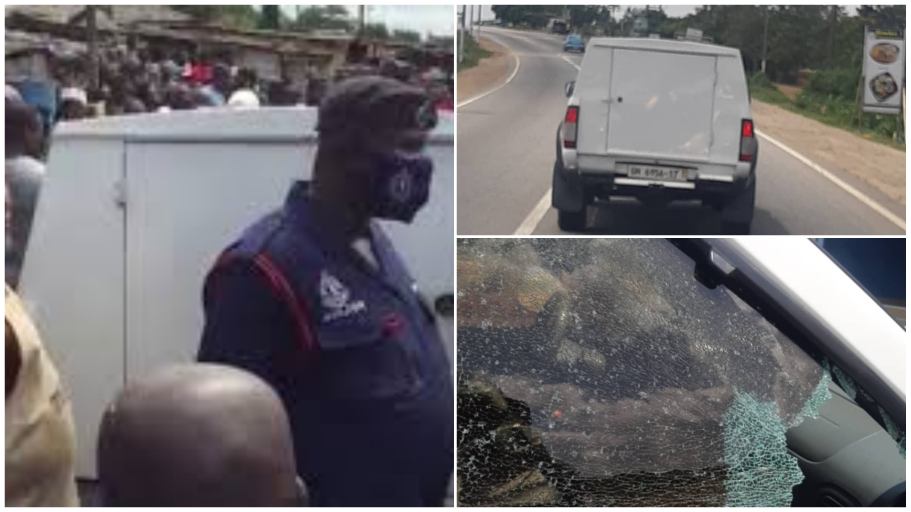
    The two policemen fingered in the recent bullion van robberies have been shot dead.

    They were shot during a raid at Borteyman near Ashaiman on Tuesday (March 8, 2022).

    Five other suspects in the bullion van robberies, four of whom are also policemen have been arrested and interdicted.

    They are expected to be arraigned on Wednesday.

    According to a police statement, there was an exchange of gunshots and the two policemen, No.58284 Constable Reindolph Gyimah Ansah and No. 53549 L/Co Stephen Kwaku Nyame who had earlier been arrested in connection with the Bullion Van Robberies, were shot and were pronounced dead on arrival at the police hospital where they were rushed for treatment.

    Some other suspects believed to have sustained gunshot wounds managed to escape from the scene, the police statement signed and issued by the Director General of Public Affairs, Deputy Commissioner of Police (DCOP), Mr Kwesi Ofori on Tuesday night (March 8, 2032) said.

    Below is a copy of the police statement

    UPDATE ON POLICE INVESTIGATION INTO BULLION VAN ROBBERIES

    The police have carried out an intelligence-led field raid at a hideout of the gang connected with the investigation into the bullion van robberies.

    During the raid at Borteyman near Ashiaman, there was an exchange of gunshots and two policemen, No.58284 Constable Reindolph Gyimah Ansah and No. 53549 L/Co Stephen Kwaku Nyame who had been arrested in connection with the Bullion Van Robberies, were shot and were pronounced dead on arrival at the police

    hospital where they were rushed for treatment.

    Some other suspects believed to have sustained gunshot wounds managed to escape from the scene.

    Further investigations have led to the arrest of five other suspects, four of whom are policemen.

    We are pursuing five other civilian suspects who have gone into hiding.

    The policemen involved have been interdicted and all the suspects, No. 58370 Const. Affisu Yaro Ibrahim, No 58355 Const. Richard Boadu, No. 58525 Const Rabiu

    Jambedu, No. 58586 Const Albert Ofosu and suspect Razak Alhassan (a civilian) will be arraigned before court tomorrow Wednesday, 9th March 2022.

    We are appealing to the public and health facilities within the Accra-Tema area to report to the police if they find any persons with gunshots wounds.

    We want to assure the public of our determination to continue to take the fight to criminals to ensure the safety and security of all persons. We urge anyone with

    relevant information to contact the nearest police station.

    We can win this fight if we work together.

    Source: Graphic online

  • Crude Prices To Spike Over $300 If Russia Oil Is Banned – Russian State Official warns

    Crude Prices To Spike Over $300 If Russia Oil Is Banned – Russian State Official warns

    Adnan Adams Mohammed

    Russian Deputy PM, Novak has warn that a ban on Russian oil would result in catastrophic consequences for global market according to Interfax.

    According to the Russian official, Europe is pushing Russia towards an embargo on gas deliveries through Nord Stream 1, which is currently filled to maximum capacity, although Moscow has not taken this decision yet. He warned that “no one would benefit from an embargo on gas deliveries through Nord Stream 1”, and replacing Russian oil deliveries to Europe would take longer than a year.

    As at Tuesday evening, Brent crude was trading at about $137.64 according to Refinitiv. But, addressing a potential ban on Russian oil, Goldman’s commodities team wrote overnight that Europe’s dependence on Russian oil imports, of c. 4.3 mb/d of which 0.8 mb/d comes from pipeline, suggests that such a coordinated response will likely take time, leaving the possibility for only a US ban in short order.

    “A global embargo on Russian oil could push prices over USD 300/bbl, although he said that Russia knows where it would re-direct oil to if Europe and US refuse it”, Novak said in article published on Zerohedge.

    While the headline of potential further US sanctions are likely to support prices, such a move would likely have negligible impacts on global crude and products markets. The US only imports a little over 400 kb/d from Russia at present (Dec-Feb average), already down from a peak of 770 kb/d in May-Jun 2021. As such, volumes this small are well within the market’s ability to redirect flows and as such Goldman expects minimal overall impact on crude fundamentals.

    Such statements will nonetheless likely continue to severely curtail Russian seaborne oil exports, due to the threat of additional sanctions or of public censure. Case in point, the sole purchase of a cargo on Friday was immediately followed by public reprobration, strongly disincentivizing further Western acquisition, with so far no sign of Chinese purchases either.

    This, Goldman concludes, “leaves risk to our $115/bbl short-term oil forecast clearly skewed strongly to the upside.”

  • Mould backs calls on gov’t to rebuild sinking funds 

    Mould backs calls on gov’t to rebuild sinking funds 

    Adnan Adams Mohammed

    A finance expert has backed the call by a former finance minister, Professor Kwesi Botchwey, on government to rebuild sinking funds to help in repayment of the country’s maturing Eurobond loans.

    The former Executive Director at Standard Chartered Bank, Alex Mould has said, currently the country is practising “cash accounting”, that is, “we pay as we go”. This is ok for steady payments but not good for intermittent large payments like EuroBond principal repayments.

    Ghana’s longest serving Finance Minister during a lecture on the economy at University of Ghana yesterday, March 7, 2022, cautioned current government to desist from collateralizing public revenue schemes among other policies that would further mortgage the future of the young generation. Noting that, for example, whoever takes the reins of government in 2025 will have to shed a whopping $1.5 billion in Eurobond principal payment within months of assuming office.

    “If we don’t rebuild sinking fund and we are unable to access international capital market to refinance our Eurobonds, then this could mean that the next government may default in its maturity Eurobond obligations in 2025”, Professor Botchwey said.

    Consequently, Mr Mould in his reaction to Prof Botchwey’s lecture affirmed that, “most governments don’t worry about the principal repayment because all they do is refinance it in the market that the bonds were originally issued.”

    The finance expert further noted that; in light of the country’s current economic predicament, “the Capital markets will be closed to us for a few years while we restore confidence in the inveators and get our credit rating up to levels that do not exclude some qualified investors from holding junk paper; and also, unless we are prepared to pay 13-14% interest rate,which is absurd and abnormal.

    “So we won’t go to refinance the chunk of debt maturing in 2025 in the Capital markets, and that’s why we have no other alternative than to rely on our bilateral and other financing from local banks, and also the reason we need to allocate some of our forex earnings from exports and remittances.”

    Mr Mould explained, “What this means is that, the forex available to market players will be reduced as we have we have to put some aside for the repayment of the principal that will become due especially in 2025.

    “And remember we shall have to buy this forex using cedis so government will be borrowing more cedis in the local capital markets and this will increase interest rates and also the exchange rate for Forex.”

    Meanwhile, Prof Botchwey, who proposed a number of wide-ranging measures to address the economic challenges confronting the country, said the current macro economic indicators, including the country’s debt to GDP ratio, inflation rate, drop in creditworthiness rankings, fast depreciation of the cedi against the US dollar, the rising cost of fuel among other indicators pointed to the fact that the nation was in economic crisis.

    “The crisis is here and if it is not resolved, it will lead to a catastrophe.” Prof. Botchwey, who served as Finance Secretary in the Military led Provisional National Defence Council (PNDC) Era as well as the Finance Minister during the National Democratic Congress civilian rule, all under late Jerry John Rawlings, said.

  • Ghana @65 catches eye of Putin amidst Ukraine invasion

    Ghana @65 catches eye of Putin amidst Ukraine invasion

    Adnan Adams Mohammed

    President of the Russian Federation, Vladimir Putin, has sent his congratulations Ghanaians on the occasion of the 65th year of independence celebration.

    Ghanaians yesterday, March 6, 2022, marked one of the ‘modest’ and ‘cost managed’ independence day celebration across the country.

    The Russian Embassy in Ghana, in a letter released on Twitter by Russian President Vladimir Putin emphasized the positive connections that exist between the two nations.

    He expressed the hope that the “bilateral dialogue and partnership meets the interests of our people, contributing to the peace and security on the African continent.”

    “I wish you good health and every success, as well as happiness and prosperity to all your compatriots,” the statement added.

    The Russian president’s message of congratulations came only days after his country started an invasion on Ukraine.

    As a result of the incident, Ghana and many other nations have been frantically attempting to evacuate their people who are now in Ukraine.

    Recently, the government of Ghana announced that it had achieved an agreement with the government of Russia to enable for the safe movement of Ghanaians, mainly students, who are now residing in the concentrated zones of the continuing conflict.

  • Understanding mismanagement of an economy in context: No excuses for Ghana’s “broke” economy

    Understanding mismanagement of an economy in context: No excuses for Ghana’s “broke” economy

    By Professor John Gatsi

    Economic management outcomes depend on many factors including leadership.

    It is unfortunate to think that putting together highly educated citizens or members of the political party in government means expected outcomes are certain.

    If that is the only factor in economic management, then throughout history the American, Russian, Japanese, Canadian, German, French economies for example would not have recorded recession ,depression, debt distress, financial distress and sectoral crises.

    Touting is not equivalent to expected delivery. When the economy was showing deep signs of vulnerability in the areas of huge debt and exchange rate volatility , the response was aggravated touting by mentioning names of people in government.

    Another sign before Covid -19 was that instead of deploying policies to support the efforts of the Bank of Ghana to manage the currency, the government usurped the constitutional mandate of the Bank of Ghana by establishing exchange rate management committee which could not deliver.

    It is time for government to publicly accept the fact that in currency management, there are internal and external factors which should be addressed with different strategies.

    Ghanaians are expressing disappointments in economic management outcomes in recent times. The government has joined the queue by saying the economy is broke without providing what makes the economy broke. The discussion has assumed some comparisons that should be corrected.

    There are some who think that if you are dealing with a global pandemic, issues relating to mismanagement do not arise. Some described the energy crises and the problems under the NDC as mismanagement because it was not caused by Covid-19 and the deep micro and macro level distress of the economy under the NPP is not mismanagement and that it is just because of Covid-19. This perspective is incorrect. It is possible that funds provided to tackle the pandemic have been managed in a manner that is not reflective of what should have been the case. Borrowing excessively in the name of Covid -19 without the willingness to conduct Covid-19 expenditure audit to ensure transparency, disclosures and accountability is a colossal fiscal mistake that will continue to strengthen the believe by people that mismanagement contributed to the crisis Ghanaians are experiencing now. The principles of accountability and confidence are not waived in the management of the economy during a pandemic. We all know that the pandemic has increased global fiscal deficit, public debt , cost structure of businesses among others including Ghana but does not in any way means zero corruption , responsible expenditure and accounting for funds disbursed are no longer requirements in public financial management.
    the
    Economic management during the pandemic has generally been expected to be difficult but it also came with faster access to funds to manage the economy. This easy access to available funds from national and international sources such as the IMF and World Bank was not available to the economic mangers under NDC when crude oil prices went down to the floor including gold and cocoa prices. Under Covid-19 economic management , on average gold, cocoa and crude oil prices are performing well and apart from 2020 , revenue has been encouraging. In the face of these facts, inability to convince Ghanaians that the results we are seeing is the best , means mismanagement is part of the financial distress of the country.
    Therefore , the argument that the financial distress is justified because it is the outcome of a global pandemic is not acceptable.

    It is sad that we seem to be attacking the credibility of individuals who were part of the NDC government as though they are not permitted to talk about the hardships and erosion of confidence in pandemic economic management and leadership of the country. It is most annoying that people who are holding juicy positions in government, sometimes in institutions that benefited from prudent and value for money application of public debts by the past government, are the ones doing this. Government should be encouraged that in times of widespread hardships, freedom of speech and expression provide reliable data as to how the people rate the government and perhaps areas around which new policies should be developed to address the needs of the people. Insulting and using vulgar words against people is an abuse of the privilege to serve Ghana in government.

    The economic management outcomes today are not merely pandemic outcomes but also a reflection of some level of mismanagement.

    Now, key government officials believe the economy is broke. Citizens are asking questions as to why “the economy is broke”?. Some genuinely do not believe Ghana is broke because a broke person who is not minded to stop or drastically cut down on offensive expenditure is mismanaging his life. The unwillingness to demonstrate real commitment to prioritizing necessary expenditure mirrors mismanagement. When these issues are addressed, then citizens will agree with government and reduce the degree of mismanagement tag.

    Insulting and threatening citizens who express their frustration about the hardships and erosion of incomes and economic opportunities is mismanagement of the privilege to serve.

  • Visa free traveling: Ghana signs new agreements with Malta, Qatar and 6 other countries

    Visa free traveling: Ghana signs new agreements with Malta, Qatar and 6 other countries

    Ghanaians who hold Diplomatic, Service and Official passports can now travel to about eight (8) countries without visa.

    The countries are Qatar, Jamaica, Suriname, Saint Kitts and Nevis, Saint Vincent and the Grenadines, Guyana, Venezuela and Malta, the Ghana Presidency noted in a tweet, on Thursday, March 3, 2022.

    https://twitter.com/GhanaPresidency?ref_src=twsrc%5Etfw%7Ctwcamp%5Etweetembed%7Ctwterm%5E1499404200815566849%7Ctwgr%5E%7Ctwcon%5Es1_&ref_url=https%3A%2F%2Fd-29088013112963513522.ampproject.net%2F2202230359001%2Fframe.html

    This means officials from these countries carrying Diplomatic, Service and Offical passports will be exempted from applying for visas when entering Ghana and vice versa.

    Also, according to the Presidency, some steps have been taken to improve on the service delivery pertaining to passport administration in Ghana and its missions abroad.

    The initiatives include the “purchase of generator sets for all 13 Passport Application Centers (PAC) in Ghana” and a “roll-out of E-Visa application hardware at our Missions abroad and at the Ghana Immigration Service.”

    SOURCE MyJoyOnline