Category: News

  • Adopt Local Content And Local Organic Use To Promote Agric In Ghana – CAGH to govt

    Adopt Local Content And Local Organic Use To Promote Agric In Ghana – CAGH to govt

    The Chamber of Agribusiness Ghana has indicated that, there is a spike in price of fertilisers as a result of the instability in Russia and Ukraine.

    The Chamber fears a shortage in fertilizer supply is imminent which could also create rising food costs.

    As the second-largest potash producer in the world, Russia is a key global fertiliser producer at a low cost with a huge volume of production. Ukraine is a global leader in grains export. Due to regional tensions and sanctions on Russia, fertiliser trade is already negatively affected.

    “In turn, farmers are cutting back on fertiliser use, which raises the cost of fertiliser for them”, the Chamber assessed in a press statement released, last week. “Food prices may rise as a result of lower agricultural output and reduced availability around the world. In the United States, food costs are already some of the most expensive.”

    The Chamber listed below some of the immediate effect of fertiliser supply disruption in Ghana and across Africa;

    1. Fertiliser prices have soared this year because of a lack of supplies and rising energy expenses

    2. The rising expense of food will be exacerbated if farmers continue to use more expensive fertilisers. It’s already starting to take its toll on farmers.

    3. Reduced application of fertilisers could have an effect on crop production and growth

    Recommendations

    1. Government should cushion fertiliser supply chain by waiving tariffs on certain category of fertilisers especially for the planting for food and jobs (PFJ) programme.

    2. Government should take a relook at the Cedi depreciation, fuel prices and general cost of living and waive nuisance taxes on these commodities to cushion consumers.

    3. Government should support local fertiliser producers like Omnifert Limited, a fertiliser company, a wholly-owned Ghanaian manufacturing company at Dawhenya, Best Fertiliser Company Limited which is under the one district, one factory initiative located at Asankare in the Ashanti Region, which commenced operation in January 2021 to increase their production lines to meet domestic demand.

    4. Invest and support commercial organic fertiliser producers like the Accra Compost and Recycling Plant and many others across the country.

    5. Implement new fertiliser recommendations and blends for the Guinea Savannah and Forest-Savannah Transition agro-ecological zones by the Soil Research Institute (SRI-CSIR) and other research institutes.

    6. Promote climate-smart agronomic practices and adoption of phosphorus-efficient cereal and grain legume varieties in the Guinea Savannah Agro-ecological zones.

    7. Promote the utilisation of rhizobium inoculants + phosphorus-based fertilisers for grain legume production in the Guinea Savannah Agro-ecological zones.

    8. Promote adoption of crop and site-specific fertiliser blends for smallholder farmers.

    9.Set up an Agriculture Resilience Fund to protect farmers as they produce food for the Country’s food security.

    *CHAMBER OF AGRIBUSINESS GHANA*

  • Bokpin backs Fitch; warns govt against drawing from reserves

    Bokpin backs Fitch; warns govt against drawing from reserves


    Adnan Adams Mohammed

    A senior economist has backed the recent position of Fitch, one of the international rating agency that, over drawing on the country’s international reserves in an attempt to stabilise the cedi will lead the economy into emergency theatre room.

    The professor of economics worried that, Ghana may have to go to the International Monetary Fund (IMF), against government’s will, eventually when the economy deteriorates further as a result of the escalating Cedi depreciation.

    Fitch Ratings in a podcast said Ghana’s international reserves position has become very reliant on Eurobond issuance. Indicating that, Ghana is not in a situation where the government needs to constantly roll over hard currency debt or whose debt market is wholly reliant on non-resident investors. In supporting the Fitch’s position, the University of Ghana economist noted that, a careful look at the template that Ghana sent to the IMF in 1965 under the watch of Dr Kwame Nkrumah, which is a reflection of what has been happening over the years, there’s only one thing left which is keeping us from going to the IMF right now and that has to do with the depreciation of the cedi.

    “If the Bank of Ghana decides to fight that, burn through our international reserves and once the international reserves deplete to a certain level, you have no choice than to go the IMF in an ambulance”, the economist, Prof Godfred Bokpin has said during a TV discussion, last week. “The effect of that is beginning to show on the cedi and what will happen now is that everybody is waiting to see to what extent can the Bank of Ghana defend the cedi with their international reserves.”

    “This was what we did in 2014 and somewhere in the middle of 2014, our net international reserves could only cover like 2 months of imports. When it gets to that point, you will have to make a call to the IMF,” he added.

    In its Fixed Interest Podcast Series in which Mr Toby Iles, Head of Middle East and Africa Sovereign Ratings featured Mr Jermaine Leonard, the Director at Fitch Sovereign and Lead Analyst for Ghana and Zambia, the agency said Ghana’s inability to access the international market played a major role in the country’s current downgrades.

    Talking about the drivers of the downgrade of Ghana’s ratings and the negative outlook, Mr Leonard said: “The key rating driver for the downgrade to B- and the negative outlook is the sovereign’s loss of access to international bond markets”.

    “We believe that not being able to issue Eurobond debt elevates some concerns regarding Ghana’s external liquidity, especially as we expect global financing conditions to remain tight for some time and it also exacerbates the existing weaknesses of Ghana’s public finances”.

    According to him, “Ghana is not in a situation where the government needs to constantly roll over hard currency debt or whose debt market is wholly reliant on non-resident investors”.

    In fact, Mr Leonard added, “Ghana ended 2022 with an international reserves position that we estimate at $7.9 billion and that is just above three months of current external payments and that is an improvement for Ghana”.

    “Ghana’s reserves averaged about two-and-a-half months of coverage over the previous ten years, so, that improved reserves position will allow Ghana to meet its external debt servicing payments in 2022”.

    “That said, Ghana’s international reserves position has become quite reliant on Eurobond issuance for replacement”, he pointed out.

    Continuing, he noted: “If you were to look at a historical chart of monthly reserves levels, you would notice the peaks and valleys that correspond to regular Eurobond issuance followed by the gradual drawdown on reserves until the next bond issuance”.

    “Also, non-residents do hold about 20 per cent of Ghana’s domestic government debt and that comes to just under US$6 billion. This is all medium- and long-term issuance, which limits the risk of capital flight but our concern is the slow and steady draining of reserves but then there is also a risk of foreign investors selling what they hold and taking their dollars out of Ghana, which would put further pressure on reserves”.

    The other concern, Mr Leonard mentioned, “is specifically about the public finances”, explaining: “Ghana has a medium-term debt sustainability issue that will necessitate a strong fiscal consolidation to get debt levels on a downward path but beyond just the level of debt, there are debt affordability issues; Ghana’s debt is more than five times its annual government revenue and yearly interest costs take up a little less than half of government revenue, so, few external financing options will mean an increased reliance on more expensive domestic debt and that will keep the interest burden high, making consolidation more difficult”.

    Asked about the prospects for new sources of external financing and the medium-term fiscal consolidation, Mr Leonard said: “Along with the drawing down of international reserves and the use of IMF SDRs, we do expect that the government will be able to find some additional external financing; this could come from private loans from international commercial banks, or, perhaps, an additional lending from official lenders – an IMF programme is a possibility. This would, also, likely open international capital markets to Ghana again. Ghana completed an IMF programme in 2019 but has been reluctant to return to a programme. That said, Fitch believes that it would be the most likely outcome if the government were to experience some real financing stress”.

    Importantly, he added, “I would note that we do not expect that this would be like Zambia, where IMF negotiations dragged on over the course of close to two years and only brought to fruition by a default event and a change in government”.

    “Regarding fiscal consolidation, we do expect to see a narrowing in the fiscal deficit but the problem of low government revenue and rigid fiscal structure will remain. Ghana’s 2020 budget forecast a reduction of the deficit to 7 per cent in 2022 and to 5.3 per cent of GDP by 2023. We believe that it is optimistic, our forecasts are for a narrowing in the fiscal deficit to around 8 per cent of GDP by 2023”.

    “Now, this should be a significant consolidation, as the overall fiscal deficit was 15 per cent of GDP in 2020”.

    Further, he said “we think that a good deal of the deficit reduction will come from COVID-related spending falling out of the budget and that the government will continue to face low domestic revenue mobilisation and that will present some challenges, as interest costs remain high and as the government continues to realise contingent liabilities from the energy sector”. In conclusion, he noted, “we do expect some fiscal consolidation but at a lower pace than what’s in the government’s medium-term fiscal framework and there are some notable risks that could materialise over that period”.

    On what could influence a stable rating and positive outlook for the country, Mr Leonard said: “On the positive side, that is what things could lead to a stabilisation of the rating? A resumption of access to international capital markets would be a big one and that could come from an IMF programme, or from a change in investor sentiments. Over the medium term, we will be paying attention to the international reserves position and whether Ghana can see a rise in non-debt creating flows like FDIs and we’ll also be paying attention to whether the government can implement its fiscal consolidation plan and put public sector debt on a downward path”.

    “In terms of negative rating sensitivities, here again, the reserves levels will be important as a measure of external liquidity and we’ll also be watching the government’s ability to source new external financing with which to meet its debt servicing obligations. Also, we will be paying attention to the level of fiscal consolidation that the government can achieve along with any signs of stress in the domestic debt market”.

    Fitch downgraded Ghana’s Long-Term Foreign-Currency Issuer Default Rating (IDR) to ‘B- ‘from ‘B’ with a negative outlook in January 2022. The downgrade of Ghana’s IDRs and negative outlook, the rating agency said, reflected the sovereign’s loss of access to international capital markets in the second half of 2021, following a pandemic-related surge in government debt.

    Fitch, in a report, said, “This comes in the context of uncertainty about the government’s ability to stabilise debt and against a backdrop of tightening global financing conditions. In our view, Ghana’s ability to deliver on planned fiscal consolidation efforts could be hindered by the heavier reliance on domestic debt issuance with higher interest costs, in the context of an already exceptionally high interest expenditure to revenue ratio.”

  • Russia-Ukraine Unrest: Implications for Ghana’s Agricultural Sector – CAGH assesses

    Russia-Ukraine Unrest: Implications for Ghana’s Agricultural Sector – CAGH assesses

    Adnan Adams Mohammed

    The Chamber of Agribusiness Ghana has assessed the exacerbation and ramifications of Russia-Ukraine crisis in a research paper released last week.

    The Chamber affirmed that, the crisis might be catastrophic, while the ripple effects could spread across a world currently recovering from pandemic supply chain disruptions.

    The paper written by Sebastian Alesane and edited by Kojo Ahiakpa fellow of Policy and Research Bureau at the Chamber of Agribusiness Ghana, indicated that from the range of grains, potash, metals, wood, and plastics—all of which are utilised in a wide range of products and by several businesses, from fertiliser producers to automobile manufacturers—are among

    Russia’s most important exports. When two elephants fight, the grass suffers, according to a well-known saying.

    “As of yet, the crisis’ impact on global trade has been most pronounced in the Black Sea, where Russian and Ukrainian ports serve as significant hubs for wheat and maize exports”, the researchers noted.

    As a result, the world’s second-largest grain exporting region has been practically closed down. It will take time to increase grain supplies, and the sheer volume that could be diverted as a result.

    Ukraine accounts for 16 % of global maize exports and 30 % of wheat exports – means developing countries that rely on imports could face major supply shocks due to the conflict and sanctions on Russia.

    For instance, Egypt, India and Turkey; all these countries rely significantly on Russia for everything from flatbread ingredients to natural gas and tourism, making them particularly vulnerable.

    Ghanaian farmers in particular rely on inorganic fertilisers imported from Europe for food production. Ghana imported 425.1 thousand metric tonnes of fertilisers in 2019, up from 315.2 thousand metric tonnes in 2018 (Statista, 2018).

    Fertiliser imports in 2017 were 444.2 thousand metric tonnes, the highest level ever. The most commonly imported fertiliser type into Ghana is nitrogen, phosphorus, and potassium (NPK) fertiliser. With an annual output of 10.4 million metric tons, Russia ranks fourth in the world for nitrogen fertiliser production (NationMaster.com, 2019).

    Russian natural gas reserve is roughly 47, 805 billion cubic meters (bcm) in 2022 and Russia is the world’s top natural gas producer, exporting approximately 196 billion cubic metres of gas each year (World Population Review, 2021).

    Chemicals, fertilisers, hydrogen, and a slew of other things rely on the world’s gas supply, and this Russian-Ukraine crisis threatens to disrupt global fertiliser supply significantly. We predict that this year’s supply will be even worse, making fertiliser scarce in Sub-Saharan Africa, which is always vulnerable to these shocks because we are a net importer

    of the commodity.

    This will be compounded by the impact of COVID-19 on fertiliser supply, which saw the lowest usage in 2020 because of supply constraints and production bottlenecks from producing companies. COVID-19 Africa Fertiliser Watch Dashboard developed by a partnership

    between the International Fertiliser Development Centre (IFDC), the African Fertiliser and Agribusiness Partnership (AFAP), Development Gateway, and AFRIQOM (AfricaFertiliser.org) allowed the fertiliser industry to have most ships at sea before the lockdown in 2020, which in a way markedly cushioned the fertiliser sector during the lockdown period.

    Fertiliser production and supply will be worse in 2022 than in the COVID-19 era based on current Russian-Ukrainian crisis and will be further exacerbated by economic sanctions imposed by the

    EU, NATO, the United States, Germany and other countries. Crop production and soil improvement in Ghana especially under the planting for food and jobs programme, which rely heavily on inorganic fertilisers, would be the severely hit.

    Sub-Saharan Africa can boost food production and reduce poverty if fertiliser use is greatly promoted.

    Ghana has the greatest fertiliser depletion rates in Africa, ranging from 40 to 60 kg of NPK fertiliser per hectare per year (Climate Change and Sustainable Development, 2020). In the

    southern sector of Ghana, March to May is the main season for crop cultivation, thus fertiliser application is inevitable and timely supply of the input will avoid the coming dangers of food shortages in the country.

    Policy recommendations to avert potential impacts on food security:

    The researchers recommended that, priority needs to be given to remedying the situation now to avoid a significant output setback in 2022 and 2023.

    “Investing in local production units will protect farmers in the event that critical imports fail to materialise. New fertiliser recommendations and blends for the Guinea Savannah and Forest-Savannah Transition agro-ecological zones by the Soil Research Institute (SRI-CSIR) should have extensive policy support for proper implementation of Integrated Soil Fertility Management with important stakeholder participation.

    “Additionally, the government mustencourage organic fertiliser producers through a purposeful and vigorous local production policy and subsidies to enhance production and protect smallholder farmers. In order for farmers to use local and indigenous methods to re-fertilise their soil, there must be alternatives to inorganic fertilisers such as composting and capacity building in biofertiliser formulation. Livestock and crop farming should be linked so that the livestock and crop farming can coexist, to ensure that the land is fertilised on a year-round basis with organic matter/biofertilisers. Implement deliberate policies that encourage farmers to grow staple crops (such as millet, maize, beans, groundnuts, yam and cassava) that require less amounts of inorganic fertilisers to grow.

    “COVID-19’s impact on the agrifood sector has resulted in significant production losses, which necessitates urgent action by the government to get additional supplies of fertiliser before planting season especially in the northern parts of the country.

    “Government should provide supports to importers to diversify fertiliser sourcing to shore up supply shortfall.”

    Policy recommendations for the northern sector

    The soils of the Guinea Savanna are infertile. Crop harvesting without replacement has compounds this challenge. However, legumes can access atmospheric nitrogen through symbiotic nitrogen fixation, which can be limited by poor native rhizobia and unavailability of other minerals, particularly phosphorus (O’Hara et al. 2002).

    Recent studies by Adjei-Nsiah et al. (2018, 2019 and 2021) recommend adoption and use of different phosphorus-fertiliser blends by farmers as option for grain legume production in the Guinea savanna agro-ecological zone of Ghana. Climate-smart agronomic practices and phosphorus-efficient cereal and grain legume varieties have been evaluated for use in the Guinea savanna agro-ecological zone by the International Institute of Tropical Agriculture (IITA) and Savanna Agricultural Research Institute (SARI-CSIR).

    “To boost grain legume yields in savanna agro-ecological zones of Ghana, utilising rhizobium inoculants + phosphorus-based fertilisers, cultivating adapted and improved varieties may be the most economically viable and low risk solutions for our farmers in the five northern regions (Adjei-Nsiah et al. 2018; 2021).

    “Government should consider implementing the fertiliser subsidy policy across board”, the researchers urged.

  • Fuel shortage imminent as cedi falls amidst oil prices spikes – Think-tank

    Fuel shortage imminent as cedi falls amidst oil prices spikes – Think-tank

    Adnan Adams Mohammed

    An energy think-tank has indicated that the country could experience a fuel shortage in the coming days.

    He said the shortage will be influenced by the depreciation of the cedi and the increase in oil prices on the international market.

    The Russia-Ukraine invasion induced unprecedented spike in crude oil and gas prices is troubling many economies. This, coupled with the escalating U.S dollar exchange rate to the local currency (Cedi) threatens petroleum products supply in the country.

    “I regret to announce this bad news. I hope it doesn’t happen. What we have observed over the past few months within the downstream sector of the Petroleum industry is that the depreciation of the cedi and the international oil price rise is impacting negatively on their working capital”, said, the Executive Director of Institute of Energy Security (IES), Nana Amoasi VII.

    “Between the last few weeks, the cedi has depreciated from about GHS 7.00 to GHS 7.4 giving a clear 40 pesewas on their business. If we are bringing the same quantity of 600 metric tones today, you will need GHS 7.40. That will amount to about GHS 4, 440 and so 30,000 metric tonnes in the next window, you will need an equivalent of about GHS 7.2 million. A clear depletion of wiring capital.”

    These factors,  according to him, will lead to the importation of less fuel into the system.

    “If the situation continues and it is sustained, we will see a fuel shortage,” he added.

    The Chief Executive Officer (CEO) of the Ghana Chamber of Bulk Oil Distributors, Senyo Hosi held a conflicting view.

    “Not at all, there won’t be an imminent shortage of fuel. I can understand their concern. It is legitimate. But we need to understand that this will not be the first time we will be working with prices around $1000 per metric tonne.

    “What we just have to do is to anticipate and make sure that we move credit alongside the same levels required to sustain prices.”

    He indicated that stakeholders have preempted the situation.

    “We have been proactive about this. We have been engaging the Central bank to deal with the issues of supply.”

    “We have also been engaging the NPA as well as the International oil traders to find ways to deal with the credit crunch that we may face because of the rising prices.”

    Fuel prices at some fuel stations have crossed the GH¢8 per litre mark in the first week of March 2022 with predictions that the commodity will sell at GH¢9.00 per litre by close of the month.

    The National Petroleum Authority (NPA) has already said discussions are ongoing with the Ministries of Finance and Energy to find a manageable solution to the persistent rise in fuel prices.

    It said the deliberations will focus largely on the possible removal of some taxes on petroleum products.

    “We are also concerned, there are a lot of discussions we are having with the Ministry of Energy, and we are seeing if together with the Ministry of Finance, we will make some proposals,” Head of Pricing at the NPA, Abass Ibrahim Tasunti earlier said.

  • Ukraine invasion: Another Nuclear Explosion at Chornobyl and Zaporizhzhya likely?

    Ukraine invasion: Another Nuclear Explosion at Chornobyl and Zaporizhzhya likely?

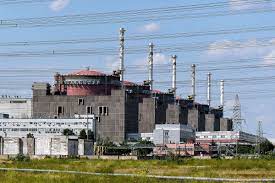
    The Chornobyl and Zaporizhzhya Nuclear Power Plants are under the control of the Russian invaders, the Kadyrov’s Chechens.

    Employees of these power plants continue to work on facilities but some unconfirmed reports say the Chechens are resorting to tortures for whatever reason and keeping the staff under constant observation.

    On March 9, it became known that due to the actions of the Russian scum, the Chornobyl nuclear power plant and the city of Slavutych were cut off from the electrical grid. This wouldn’t normally be a big deal, but in the current state of affairs, the cooling system of the nuclear fuel storage facility will very likely stop working, which could lead to a leak. And since the fighting continues, it is impossible to repair and restore the power.

    Just a quick reminder: the power plant was captured on the very first day of this horrific war. The staff no longer wants to leave because they understand what would happen. A few days ago, there was an attempt to bribe them with humanitarian aid, but the Ukrainians showed their unwavering patriotism and refused to take it.

    The Chornobyl nuclear material monitoring system has already stopped transmitting data to the IAEA. The Energodar NPP is also under the control of the Russian thugs, but at least it’s functioning. For now.

    So how long do we have till the backup generators run out of fuel? Assuming the Chechens don’t have any spare fuel left in their trucks, the experts say, it will take around 48 hours. This means by the time you’re reading this, the situation will either get better or we’ll be still inching towards a second Chornobyl ecological disaster.

    However, there’s still hope that the cold weather might help cool off the tanks. In this case, we have up to a week to fix the power lines. That is the best-case scenario aside from the terrorists giving up.

    The captured employees are patiently waiting for the Ukrainian army to come and save them, but in the meanwhile, they are fully cooperating with the Russian terrorists to prevent those idiots from doing even more harm.

    Let’s hope the good guys win before we have to find out if we’re doomed or not.

    Glory to Ukraine!

    Author: Yura Lysenko

  • Legal positivism, judicial decisions and fiscal policy implications: the 30th November, 2021 approval of the 2022 budget 

    Legal positivism, judicial decisions and fiscal policy implications: the 30th November, 2021 approval of the 2022 budget 

    By: Prof. John Gatsi

    There exist plethora of legal research findings indicating that judicial decisions are dominantly influenced by legal positivism paradigm or jurisprudential school of thought. A judge or the judiciary is at the heart of enforcing and applying  the law , therefore, the judge ‘s jurisprudential leaning is very important in deciding on a case.

    It was Montesquieu who eloquently explained that a judge or judicial panel is “the mouth of the law and the judge’s only role is to apply the law”. In the corridors of positivism, the written law is complete and comprehensive and does not need any external assistance such as historical, moral nor sociological developments to deliver justice. The positivists jurists believe in applying the written law as it is the purest form of justice. In this paradigm, the judge is variously described as mechanical, strict user of the law and a prisoner of the law to achieve the so called legal certainty .  Irrespective of the jurisprudential school of thought, Constitutional experts describe the Supreme Court as the court of policy . Meaning judicial decisions may reflect policy orientation of judges.

    If laws are made to correct history, to address social and human development, then legal realism should be the friend of justice. In many cases where the dogma of positivism influence public interest, political and developmental issues, the public reacts negatively to judicial decisions because the justice  thought to have been served may create instability or the matter being addressed, was not addressed satisfactorily per public assessment.

    Sometimes positivism produces judicial decisions  that negatively affect private investments by citizens and foreigners creating risky investment environment with long lasting painful investor experiences. In the  Exton Cubic case for example Article 268 of the 1992 Constitution was interpreted as though , it is the private investor who is expected to seek for parliamentary approval of the grant of mineral concessions. When this should have been the duty of the institution and ministry involved. If that is the case , then citizens can go to court to seek interpretation that per Article 174 Parliament did not approve the request to discontinue collection of fees at the various toll both before it was applied. It also means citizens can seek the interpretation of the court to the effect that the petroleum revenue management law does not allow the use of petroleum revenue in payment of fees but to physical infrastructure in education. Also , per article 181 of the Constitution and section 56 of the public financial management Act, prior approval must be received before issuing bonds to ensure those transactions are declared null and void.

    The judgment regarding the issue of whether or not a deputy speaker  of parliament presiding can vote, the Supreme Court Justices concluded that the 138 members on the majority side including deputy speaker presiding  who voted to approve the 2022 budget was valid.  The implication is that the E-levy was passed on 30th November 2021. It also means the 2022 budget was fully approved. Thus,  all the division, parliamentary disunity and possible erosion of cooperation is not the concern of the positivists.  The law  must be interpreted to throw its light of peace, stability and tentacles to shape public policy.  The fathers of separation of powers  preached independence of the organs of government to ensure  congruence of effort in the interest of the state.  The public cannot see unity among the organs of government. There is bruised relationship created between parliament and the judiciary given the comments attributed to parliamentarians. Now there is no need for consensus building in parliament and consultations with the public because because the public may consider the development unfortunate The cost of the atmosphere created by this decision , is much more than the  short term fiscal benefits. Winner takes all will return to parliament if a party wins majority with its negative outcomes. At another time l will deal with the implications and concerns if majority of rulings of the courts reflect policy orientation of the government or the opposition.  I do not intend to question why in the 2020 election petition, the Supreme Court stated the EC is an independent institution so cannot intervene. The citation of the constitutional authority to interpretation granted to the apex court is not meant to easily interfere with the almost 30years of self regulation without establishing stringent conditions that must exist to allow the judiciary to take steps to resolve challenges that parliament cannot ordinarily resolve .

    Positivists ayeeko . Legal realism we love to see your work in matters that have effects on policy.

  • Ibrahim Awal Celebrates Birthday With The Sick In Oti Region

    Ibrahim Awal Celebrates Birthday With The Sick In Oti Region

    Ibrahim Awal celebrated his 35th birthday to give thanks to almighty Allah for given him another  unpaid for 12 months in his life.

    Strong man, as he is known better behind his console, took his celebration to his home region Oti to visit some comrades who have taken ill for some time now there by making them inactive for their normal party works.

    Ibrahim Awal who sees leadership as a source of compassion and love for one another and more importantly to the needy, donated cash and bags of rices and bottles of water and other assorted materials to them and prayed for their early recovery from their ill-health

    On behalf of the families of the  sick comrades

    They were full of praises for Ibrahim Awal for setting the pace and urged others to emulate his kind gesture they saw his action as a medium that has the tendency of bringing and re-energizing the base for part unity

    He also gave thanks to some of the big man who supported his vision and they are: the Bissa Chief of Bortianor, His Royal Highness Suallah Saeed Sare; Hon Alhaji Habibu Dramani; Hon Nii Armah Ashitey; Hon John OK Bless; Hon Alhaji Osuman; Hon Naa koryoo; Hon Stephen Ofosu Agyare; and NDC Serial Callers and Texters Associatoin Executives.

  • Supreme Court ruling makes “mockery of Tuffuor” case – Prof Asare

    Supreme Court ruling makes “mockery of Tuffuor” case – Prof Asare

    Adnan Adams Mohammed

    A United States based Ghanaian Professor, Stephen Kwaku Asare, has reacted to the Supreme Court’s decision that allows the Deputy Speakers of Parliament to vote during proceedings in the House.

    The professor, popularly known as Kwaku Azar, expressed dissatisfaction with the decision and raised a number of weaknesses of the decision and its consequences on the future of the democratic dispensation of Ghana.

    “Overruling the standing order that requires the Speaker Pro Tempore to act as an unbiased umpire with no vote makes a mockery of Tuffuor and could very well be a Pyrrhic victory of style over substance”, Prof Asare intuited in an article shared on social media reacting to the ruling of the apex court.

    Read full statement below:

    Consider Order 225, which provides that “The Chairman [of a Committee] shall not have an original vote, but in the event of an equality of votes he shall give a casting vote.”

    Can the Supreme Court declare the order unconstitutional because it deprives the Chairman, therefore his constituents, of an original vote?

    I think not! Nor can the Court, in my opinion, invalidate the casting vote because it makes the Chairman a sole appellate judge of the committee’s decisions.

    In this regard, I agree with Justice Sowah, in the oft cited but hardly understood Tuffuor case, when he says “that the law and custom of Parliament is a distinct body of law and, as constitutional experts, do put it, “unknown to the courts.” And therefore the courts take judicial notice of what has happened in Parliament. The courts do not, and cannot, inquire into how Parliament went about its business.”

    Parliament and the Courts are coequal branches of government and neither can tell the other how to run its affairs.

    If Parliament, in its wisdom and consistent with the rules applicable to the Speaker, decides that a Speaker pro tempore should not take part in debates, vote, or should not caucus with his party on a matter pending while he presides, it is not for any Court to inquire into it just as it is not for Parliament to inquire into how Justices are chosen to sit on cases at the SC or why some cases are disposed of with alacrity and others seem to disappear into oblivion.

    Nor am I impressed by the argument that because a Speaker Pro Tempore represents a constituency, it is impermissible for him to be denied a vote while presiding.

    The Constitution itself makes provision for denying MPs the vote under certain circumstances. For instance, Article 104(5) provides that “A member who is a party to or a partner in a firm which is a party to a contract with the Government shall declare his interest and shall not vote on any question relating to the contract.”

    Just as Article 104(5) denies an MP the vote because of the clear conflict of interest, Parliament can reasonably demand that a Speaker Pro Tempore not be allowed to vote, debate or act as a biased umpire.

    To reason otherwise, is to invite the MPs to treat a Speaker Pro Tempore as an ordinary MP, not entitled to the respect and courtesies that are due to the office of the Speaker.

    Overruling the standing order that requires the Speaker Pro Tempore to act as an unbiased umpire with no vote makes a mockery of Tuffuor and could very well be a Pyrrhic victory of style over substance.

    #SALL is the cardinal sin of the 8th Parliament.

    Da Yie!

  • UTAG back to lecture halls after indefinite suspension of strike

    UTAG back to lecture halls after indefinite suspension of strike

    Adnan Adams Mohammed

    The National Secretariat of University Teachers Association Of Ghana has announced an indefinite suspension of strike action which lasted more than seven weeks.

    This was contained circular distributed its member branches across the country after a National Executive Committee of UTAG held an Emergency Meeting on Tuesday, 8th March 2022.

    “After careful assessment of the referenda results, interim agreements reached between UTAG and the Employer, and the various branch reports, the NEC of UTAG resolved to indefinitely suspend the strike action of 10th January 2022”, the circular signed by the Association’s President and Secretary noted.

    Read full statement below:

    INDEFINITE SUSPENSION OF STRIKE ACTION

    1. The National Executive Committee of UTAG held an Emergency Meeting on Tuesday, 8th March 2022, to among others, consider the outcome of the referenda on its decision to temporarily suspend the industrial action commenced on 10th January 2022. You may recall that the NEC of UTAG voted to temporarily suspend the strike action on Monday, 21st February 2022 to pave way for negotiations with the Employer to help meet some of the demands and address the concerns of UTAG.

    2. In the ensuing referenda, twelve (12) out of the fifteen (15) UTAG branches voted to reject the call for the suspension of the strike action, signifying their lack of trust in the Employer’s commitment to addressing their concerns and, thus, their resolve to continue with the strike action until their demands were met.

    3. At the meeting, the NEC of UTAG received reports from the various branches in relation to the branch meetings

    held on Friday, 4th March 2022. In general, the reports centred on the dissatisfaction of members on the arrangements put in place to address their demands. In this regard, the NEC of UTAG will endeavour to ensure that all concerns raised by members are reflected in whatever agreement to be signed between the Employer and UTAG.

    4. Notwithstanding the concerns raised, members also considered the interventions of the Parliamentary Select

    Committee on Education and the eminent persons, which led to the temporary suspension of the strike action, in accepting the proposals.

    5. Once again, the NEC of UTAG reiterates its awareness of the level of disappointment and dissatisfaction of

    members on the proposals to deal with the demands of members. However, the NEC of UTAG appeals to members to remain calm and accept these proposals as interim measures, as it works to ensure that they remain as such and ends in December 2022.

    6. The NEC of UTAG promises to monitor and police the full implementation of all agreements with the Employer, and to work with clear timelines and roadmaps to ensure that all promises and agreements are respected.

    There would no longer be reactionary measures but proactive interventions that would not wait till matters get out of hand before resorting to industrial actions.

    7. The NEC of UTAG is resolved to pursue the agreements for the Employer to implement the Market Premium and/or review the Single Spine Salary Structure in 2023, to help address concerns of poor Conditions of Services of the University Teacher in full.

    8. After careful assessment of the referenda results, interim agreements reached between UTAG and the

    Employer, and the various branch reports, the NEC of UTAG resolved to indefinitely suspend the strike action of 10th January 2022.

    9. We thank all members for their patience and support and pledge to act in a manner reflective of their mood at all times. We also thank all stakeholders for their support and action to help address the needs of the University Teacher. We wish all well as we demonstrate good faith by returning to the lecture halls to teach and call on the Employer to demonstrate same good faith by being committed to all agreements to help maintain industrial harmony. The days when the Employer treated UTAG with contempt and made promises that were not fulfilled are past. The NEC of UTAG would subject the Employer to strict proof and hold it accountable to every promise made and all signed agreements.

    Once again, we thank all our members for their support and wish them a pleasant 2021/2022 academic year.

    Prof Solomon Nunoo

    National President

    Dr Asare Asante-Annor

    National Secretary

  • Parliament voting procedure altered; Deputy Speakers can now vote 

    Parliament voting procedure altered; Deputy Speakers can now vote 

    In a unanimous decision earlier today, a seven -member panel of the apex court (Supreme Court) held that upon a true and proper interpretation of Article 103 and 104 of the 1992 Constitution, a Deputy Speaker who happens to be a member of Parliament does not lose his right to take part in decision making in Parliament.

    In view of the decision, the apex court held that the passing of the budget on November 30, 2021 in which Mr Joe Osei Owusu , the first Deputy Speaker counted himself as part of the quorum, was valid.

    Also, the court has struck down order 109(3) of the standing orders of Parliament which prevented a deputy speaker presiding from voting, as unconstitutional.

    The court gave the decision today after it dismissed a writ by a law lecturer, Justice Abdulai, who was challenging the decision of Mr Owusu to be counted as part of the quorum to pass the budget, Daily Graphic reporter, Emmanuel Ebo Hawkson was in the courtroom.

    The unanimous decision was given by Justices Jones Dotse, Nene Amegather, Prof Ashie Kotey, Mariama Owusu, Lovelace Johnson, Clemence Honyenuga and Yonny Kulendi.

    Justice Abdulai’s case

    The plaintiff was of the view that the 1992 Constitution does not allow a person presiding over proceedings in Parliament to have an original or casting vote, or to be part of a quorum.

    In support of his case, he relies on Article 102 of the 1992 Constitution which provides that “a quorum of Parliament, apart from the person presiding, shall be one-third of all Members of Parliament”, and Article 104 (1) which provides that matters in Parliament “shall be determined by votes of majority members present and voting, with at least half of all members of Parliament present.”

    He also cites Article 104 (2) of the 1992 Constitution which stipulates that: “The Speaker shall have neither original nor casting vote.”

    It is the case of Mr Abdulai that the First or Second Deputy Speakers of Parliament, when presiding, have the “same authority and mandate just like the Right Honourable Speaker”, and therefore cannot vote or be part of the quorum.

    A-G’s case

    The A-G disagreed with the plaintiff and argues that the quorum in Parliament formed under Article 102 is different from the quorum formed under Article 104 of the 1992 Constitution.

    It is the case of Mr Dame that the quorum under Article 102 is for the conduct of business in Parliament, and that is why Article 102 provides that it should be one-third of members.

    “Given that Parliament presently is made up of 275 members, the quorum under Article 102 for the conduct of its business is 92 MPs,” the A-G submitted.

    According to the A-G, based on the clear provision of Article 102, any person presiding, either the Speaker or Deputy Speakers, is precluded from being part of that quorum.

    On the other hand, the A-G is of the view that the quorum under Article 104 (1) which deals with the determination of matters through voting in Parliament requires at least half of all MPs, and such a quorum is not the same as the one in Article 102.

    Mr Dame contends that unlike Article 102 which precludes a “person presiding” from being part of the quorum, Article 104 (2) specifically precludes “The Speaker”.

    The A-G, therefore, holds the position that only the person elected as “The Speaker” of Parliament is barred from forming part of the quorum under Article 104 when presiding, and not Deputy Speakers who preside over proceedings.

    Writer’s email : emma.hawkson@graphic.com.gh