Category: News

  • Prepare to pay SHS fees as gov’t review FSHS policy and 15 others

    Parents and guardians who have their wards in Senior High Schools and and the recently graduated BECE candidate and yet to be posted to various SHS are to prepare to pay partial fees as government has announced plans to review the Free SHS policy amidst collapsing economy.

    This comes as government look for solutions to help hold the economy back from collapsing. The Information Minister, Kojo Oppong Nkrumah, yesterday announced that, all 16 flagship programmes of government will soon be reviewed to ensure their objectives are well achieved.

    According to him, it is one of the decisions taken during the three-day cabinet retreat at the Peduase Lodge in the Eastern Region to mitigate the economic difficulties in the country.

    Currently, the country is experiencing hikes in fuel prices and the growing depreciation of the cedi, adversely affecting the cost of goods and services.

    But Mr Oppong Nkrumah says the review of the programmes, among others, will help the government take some expenditure cuts.

    “All the 16 flagship programmes are up to be looked at. The President has directed that the flagship programmes should be protected and fully implemented to ensure that the impact is achieved. However, he wants it done within the constraints of item number two, which is the fiscal framework we are working with.

    “If based on the caps that we are working with we will have to rescope a particular flagship programme, we will do it and see how much we can achieve. So all the 16 are up for discussion; none is off-limit.

    “Only that the President has laid down the red line that we will not compromise on the fiscal consolidation agenda because our real problem over the years has been a year-on-year deficit going out of hand,” he said in an interview with Accra-based Citi FM, Monday.

    Meanwhile, the Finance Minister, Ken Ofori-Atta, is expected to address the nation this week to communicate key measures taken by the government amid the current challenges.

    A statement issued by the Information Ministry hinted that the update will include the reopening of land borders, the easing of Covid-19 restrictions, and measures to arrest the depreciating cedi.

    “President Akufo-Addo approved a number of far-reaching measures aimed at mitigating the depreciation of the cedi, ensuring expenditure discipline and providing relief in the face of the global fuel price hikes and inflation as well as ensuring that priority programmes meant to grow the economy are protected.

    “Government appreciates the efforts of all who contributed to a successful retreat and looks forward to the support of all Ghanaians in implementing the agreed measures,” the statement added.

  • StanChart okays policy rate tightening amidst resentment for ‘No IMF’ stands

    Adnan Adams Mohammed

    Standard Chartered Bank (StanChart) has said the Monetary Policy Committee of Bank of Ghana acted decisively to front-load its tightening in defence of the local currency (Ghana Cedi).

    The Bank believes that, the combined package of tightening, a policy rate hike that will raise the real policy rate despite accelerating inflation, along with the withdrawal of significant Cedi liquidity from the domestic market, should have a significant impact on the currency, providing a near-term reprieve from Cedi depreciation. A simultaneous announcement that Ghana plans to borrow US$2 billion through the syndicated loan market in order to replenish its foreign exchange (FX) reserves, should further boost sentiment, helping to stabilise the currency.

    Despite the Bank’s hope for better results of MPC’s decision on the economy, it expressed worry and resentment over the economic management team decision that failed investor expectations that Ghana might opt for the external anchor of an IMF programme to boost fiscal consolidation plans proved to be unfounded.

    “Nonetheless, markets will await the announcement of additional fiscal measures, expected later this week. These could yet shore up confidence, despite disappointment over Ghana’s plans not to seek an IMF programme”, StanChart said in a policy response circular it should and sighted on scoail media. “Investor expectations were disappointed, diverting some of the focus from the BoG’s forceful monetary policy response.” 

    While these monetary policy measures are welcome and demonstrate the BoG’s resolve to achieve macroeconomic stabilisation, other issues loom as markets await the announcement of additional fiscal measures, expected later this week. These could yet shore up confidence, despite disappointment over Ghana’s plans not to seek an IMF programme.  

    “Moreover, today’s tightening will – out of necessity – add to domestic debt service costs, further pressuring the fiscal outlook. Failure to pass a much-touted 175bps e-levy to date, as well as the partial reversal of some planned revenue reforms addressing benchmark values for imports, have taken a toll on investor confidence” StanChart noted. 

    The MPC yesterday increased the policy rate by 250 basis points to 17 percent. This is the first time the Central Bank has increased the key rate since November 2021.

    At a press briefing on Monday, March 21, 2022, the Governor of the Bank of Ghana, Dr. Ernest Addison said all is being done to check inflation. He attributed the upward review of the rate to the sharp rise in inflation as well as the upsurge in prices of goods and services as well as petroleum products.

    “Headline inflation has risen sharply to 15.7 percent in February 2022, and both headline and core inflation are significantly above the upper limit of the medium-term target band. The uncertainty surrounding price developments and its impact on economic activity is weighing down business and consumer confidence. The risks in the outlook for inflation are on the upside and include petroleum price adjustments and transportation costs, and exchange rate depreciation.”

    “Under these circumstances, the committee has decided to increase the policy rate by 250 basis points to 17 percent. The Bank’s latest forecast still depicts an elevated inflation profile in the near term, with inflation falling within the medium-term target band within a year”, he revealed.

    At this MPC meeting, the combination of tighter global financing conditions, sharp pressures on the exchange rate, and elevated inflation pose some policy challenges.

    “The Bank of Ghana will, effective, 1st April 2022, enforce the following measures in relation to universal banks: The cash reserve ratio has been increased to 12%, the capital conversation buffer has been reset to the pre-pandemic level of 3% making the capital adequacy ratio a total of 13% and the provisional rate for loans in the other loans exceptionally mentioned category, has been reset to the pre-pandemic level of 3%,” Dr. Addison added.

  • Cedi to stabilise as gov’t rebuild reserves with $2bn

    Cedi to stabilise as gov’t rebuild reserves with $2bn

    Adnan Adams Mohammed

    In spate of escalating exchange rate between the local currency (Cedi) and other major foreign trading currencies, especially the U.S dollar, government plans to build up the international reserves with US$2.0 billion.

    This, among other major economic recovery measures deliberated on and adopted during the crunch cabinet over the weekend at Peduase Presidential lodge, as hinted by government officials present at the meeting are expected to heal and restore credibility and confidence in the economy.

    The reliefs include tackling the rising fuel prices occasioned by the global economic turmoil from the ongoing Russia-Ukraine conflict, and measures to address the persistent rise in prices of goods and services.

    The meeting chaired by President Akufo-Addo tasked the Minister of Agriculture, Dr. Owusu Afriyie Akoto, roll out measures to arrest the rising inflation from food prices.

    Also, the Energy Minister, Dr. Matthew Opoku Prempeh and Minister of Finance, Ken Ofori-Atta, have been urged to put up measures to mitigate the rising cost of fuel and its attendant pressures on the cost of living.

    Other measures include the opening of the country’s land borders, easing of general COVID-19 restrictions, and measures to arrest currency depreciation.

    Sources at the Cabinet retreat also disclosed that COVID-19 tests will be scrapped for vaccinated passengers who are either entering or leaving the country whilst government will cut its expenditures significantly.

    In a tweet on Thursday, Minister for Information, Kojo Oppong Nkrumah, disclosed that the essence of the retreat was to enable government to proffer solutions to ease the burden on Ghanaians.

    “In the coming days details will be announced including when and how borders will be opened, the removal of some testing protocols, shoring up the currency and further cutting expenditures while ensuring growth,” the minister told pressmen on the sides of the retreat.

    It is expected that the President, Finance Minister, and other ministers as well as the Bank of Ghana, in the coming days, will provide details on the reliefs and the appropriate sectors.

    The reliefs are also expected to answer questions being posed by economic watchers on how the Government of Ghana will respond to the current global economic challenges.

  • Cashew market analysis: Africa’s share of EU market, production increase

    Cashew market analysis: Africa’s share of EU market, production increase

    By : Isaac Piyuori   

    For the first time since the 1970s, Africa’s share of the European cashew kernel market reached double digits in the 2021 cashew season. Africa’s share of the market increased to 11% in 2021, making it the second-largest exporter of cashew kernels into Europe behind Vietnam.

    Despite being the world’s largest producer of raw cashew nuts (RCNs), Africa’s share of the kernel market has remained within a single-digit percentage due to the low rate of local processing in the continent, which remains less than 10%.   

    Data available to the African Cashew Alliance (ACA), however, shows that from an export range of between 110,000 and 120,000 tons in 2020, Africa’s cashew kernels export into Europe increased to between 140,000 to 170,000 tons, representing 11% of the EU kernel market, in 2021.

    Vietnam, the highest cashew processor in the world, had the greatest share of the EU kernel market, with 77% of the market share. Indian exports accounted for 7% of the kernel market in Europe, Brazil held 2% of the market share while Indonesia and other smaller cashew processing countries had a 1% share of the market, respectively.

    Africa’s share of the United States cashew kernel market remained single digit, with only 5% of cashew kernel imported into the US coming from Africa. Vietnam dominated the US cashew kernel market as well with 89% shares while 3% of kernels in the US were imported from Brazil.

    Though Africa’s share of the major cashew markets remained low despite the continent producing almost 60% of global cashew in 2021, a cashew expert and consultant with the ACA, Jim Fitzpatrick, who presented these statistics at the maiden section of the ACA’s Global Market Encounter (GME) in 2022 held virtually on Wednesday, March 2, believes an 11% share of Europe’s market is progress and will improve with time. He highlighted that the increase in the market share is a result of an increase in local cashew processing in Africa, though still very low.

    Coordinator for Sector Organisation in the ACA, Fadel Karimou, believes Cote d’ Ivoire, has particularly made significant progress in encouraging local cashew processing.

    “The progress we see in Cote d’Ivoire is a result of deliberate government policies to increase local processing of cashew. The government has introduced several policies, including direct subsidies for local processors as well as a policy that preserves some number of RCNs for local processing,” he said in an interview.

    Another important contributing factor to the increase in Africa’s share of the market is that there has been a general improvement in food safety, traceability, and transparency in cashew processing in Africa. Through consistent sensitisation and technical support from organisations and projects, local processors have become more attentive to following international cashew processing guidelines. The ACA Seal, an industry mark that represents compliance with international quality, food safety, and labour standards, is, for instance, ensuring that processors follow the right processing procedures.

    With recognition by several international cashew buying organisations, including Intersnack, Caro nuts, OLAM, and Red River Foods, who are committed to buying ACA Seal approved kernels, African cashew kernels have gained acceptance and credibility in terms of food safety and quality in international markets.

    For a continent that produces more than half of global cashews, Fadel believes its share of the kernel market must improve. This means Africa must increase its local processing rate and this requires collective actions from both the governments and the private sectors. There need to be a deliberate policy on the part of governments to encourage local processing in the various cashew-producing countries. The right conditions should be created for investors to go into cashew processing and for the existing factories to process to capacity. Local banks need to support local processors with loans at reasonable interests and terms, Fadel highlighted.

    Generally, demand for cashew in the major cashew consumption countries remained positive in 2021.

    From a drop-in cashew consumption due to the impact of the pandemic which disrupted processing and affected consumption in the past two years, India, the greatest cashew consumer in the world, increased its cashew consumption by 10% in 2021, from around 275,000 tons to an estimated 290,000 tons. Though this is a clear indication that the Indian kernel market is recovering to the pre-covid era, particularly in 2019 where India’s consumption reached about 320,000 tons, an analysis of growth rate in a 10-year period shows that consumption growth in 2021 was 4% and below the average growth rate of 7% up to 2019, Jim analysed. He was however optimistic that with the gradual easing of Covid 19 restrictions in the Asian country, chances are high that cashew consumption will recover fully in 2022.

    Demand and consumption of cashew in Europe again followed its positive trend of a surge in the past few years. From about 160,000 – 170,000 tons in 2020, consumption of cashew in Europe increased by 3.8% in 2021.

    The United States, the largest import market for cashew in the world, ended 2020 with an incredible cashew import growth of 8%, the highest in ten years. This positive trend continued in 2021 as demand and consumption of cashew increased by 9.5%. Jim expects cashew demand to remain strong in the US in 2022.

    In China, demand and consumption of cashew also increased by 7.5%, with 85,000 tons of imports, according to Vietnamese export figures, and an annual growth rate of 12% in a ten-year period. Though China is not yet a giant market in the cashew industry, Jim believes it is a big market with a bigger potential to grow.

    Generally, with the positive consumer trends on the market, low level of prices, and the lifting of Covid 19 restrictions, especially in India, Jim expects demand for cashew to remain strong and recover to the average pre- Covid rate.

    “Overall, we expect in 2022 that consumption will turn back to the average. So, that means it will be positive in most of the markets. If we look at the market in general, we see very positive growth in the consumption of cashews worldwide,” Jim said.

    While Africa looks to increase its share of the international kernel market, it is important for local processors to develop the local markets. Africa consumes an insignificant percentage of global cashew. This is due to several factors, including lack of proper understanding of the health benefits of consuming cashew, poor marketing strategies on the part of local processors, and high prices of cashew. There is a need for proper media sensitisation on the health benefits of consuming cashew, and to debunk the many misconceptions about consuming cashew. Local processors should adopt strategic marketing methods to attract more local cashew consumers.  

    Africa remained the highest producer of global raw cashew nuts in 2021, producing over 60% of the world’s cashews. West Africa produced about 1.8 million tons, representing 50% of global cashew while East Africa produced 11%. The major highlight of 2021 cashew production was that Cote d’Ivoire recorded its highest ever RCN production, producing more than 1 million tons, remaining the largest producer in the world. Nigeria’s production in 2021 was estimated to be around 220,000 tons while Guinea Bissau produced around 230,000 tons of RCNs.

    Following the establishment of the Tree Crops Development Authority to regulate cashew and other three crop sectors in Ghana, cashew production in the country saw a slight increase and was around 120,000 tons while West African counterparts, Benin, produced around 130,000 tons of RCNs in 2021.

    In Asia, Cambodia increased its RCN production from an estimated 225,000 tons in 2020 to an estimated 350,000 tons in 2021. With the use of high yield varieties, the availability of a large area suitable for cashew, and a readily available and closer buyer in Vietnam, Jim analyses that Cambodian production could increase up to between 450,000 and 500,000 tons in 2022.

    From early indicators of the 2022 cashew season, production is expected to remain strong. West Africa’s production could increase to up to 2.9 million tons, data from the ACA shows. It also shows that though early crops in Cote d’ Ivoire are below expectation, the West African country will exceed 1 million tons. Nigeria’s production could be 15% lower than that of 2021 due to long harmattan. Production is therefore expected to be around 190,000 tons and 220,000 tons in Nigeria. Though Benin’s official estimate for the season is 200,000 tons, the data shows that production could remain around 130,000 tons in 2022. Production in Burkina Faso and Mali could be impacted by the weather. Forecast for production in these countries however remains positive as in Ghana, Guinea Bissau, Senegal, and Guinea. Guinea Bissau’s production could increase slightly up to 240,000 tons while Ghana could remain around 120,000 tons.

    Generally, global RCN production is expected to remain strong, between 3.8 million and 4.3 million tons in 2022. This is expected to be driven mainly by Cambodia and India, which are expected to recover from the Covid 19 impacts on production, according to Jim Fitzpatrick.        

    Cashew processing remained highly concentrated in Asia in 2021, where 90% of global cashews are processed. Vietnam remains the largest cashew processing country in the world, processing over 80% of the world’s cashew. Despite making some progress, especially in Cote d’Ivoire, cashew processing in Africa remains less than 10%. This could increase in 2022 as countries continue to put measures in place to encourage local processing, and through the support of development partners.     

  • New US Investments Unlock Trade Potential for Businesses in Ghana

    New US Investments Unlock Trade Potential for Businesses in Ghana

    By United States Embassy – Accra, Ghana

    U.S. Ambassador Stephanie S. Sullivan last week announced new co-investments by the U.S. Agency for International Development (USAID) totaling $4.2 million with five companies operating in Ghana.

    These projects, leveraged with private sector funds, will help these companies scale up operations, develop export opportunities, and create jobs.

    Ambassador Sullivan made the announcement during the U.S. Embassy’s Providing Opportunity for Women’s Economic Rise (POWER) program for women entrepreneurs from Ghana and the North American diaspora.

    As part of Women’s History Month, the Embassy, in collaboration with Howard University and the International Trade Centre, is hosting the Women’s Empowerment Lab.

    The program will help Ghanaian and American women entrepreneurs take advantage of the African Continental Free Trade Area (AfCFTA) and the African Growth and Opportunity Act (AGOA) to grow their businesses by seizing export opportunities while facilitating networking opportunities across the Atlantic.

    “The West Africa Trade and Investment Hub was created to help entrepreneurs like those participating in the Women’s Empowerment Lab take advantage of export opportunities. Ghanaian companies can export more than 6,500 goods duty-free to the United States today, and the AfCFTA opens up a $3.4 trillion market. These co-investments will help these companies access African and U.S. markets, while creating jobs here in Ghana,” said Ambassador Sullivan.

    Co-created at USAID/Ghana, the grants are aimed at deepening the United States’ commercial relationship with Africa in line with the Prosper Africa Initiative, the African Growth and Opportunity Act, and President Biden’s Build Back Better World initiative.

    USAID recently awarded $4.2 million in co-investment grants to five companies operating in Ghana under the West Africa Trade & Investment Hub (Trade Hub): AMAATI Company Ltd, DTRT Apparel, FreezeLink, Maphlix Trust, and Nuts 4 Growth. The grants build on USAID/Ghana’s work to drive large-scale development by supporting firms poised for catalytic growth. By leveraging USAID’s co-investments, these companies are expected to generate over $45 million in private investment, increase exports by $166 million, and create more than 2,000 new jobs, mostly for women and youth.

    Summaries of the five co-investment grants follow are below:

    AMAATI Company Ltd: A woman-owned, Ghanaian social enterprise that pioneered the revival of fonio, a nutritious African grain, AMAATI aims to support 5,800 landless women farmers in northern Ghana. USAID/Ghana’s $742,000 grant, together with private investments of $4.5 million, will help create a new West African global value chain for increased exports of fonio to North America and Europe, while generating income for 8,000 farmers. AMAATI will use American-made John Deere equipment and sell to Century Green and Mayaresa in the American market.

    DTRT Apparel: With a USAID/Ghana grant of $760,000, West Africa’s regional market leader in apparel manufacturing will leverage additional private investments to expand its existing garment manufacturing capabilities, with the goal of achieving more than $100 million in exports annually by 2025 and supporting more than 5,000 local workers. At least 2,000 new jobs will be created, mostly for women, as the company scales up its operations and expands its exports to large international clothing brands, including several leading U.S. companies.

    FreezeLink: Ghana’s leading third-party provider of temperature-controlled transport, warehousing, and engineering services, FreezeLink will receive a $767,000 USAID/Ghana grant to install affordable cold storage units to boost horticultural exports from Ghana and reduce vaccine spoilage, including for COVID-19 vaccines. USAID’s grant will catalyze $6.7 million in additional investment and boost exports by $11 million. FreezeLink will use refrigeration units for its trucks from American company Carrier and has partnered with Zipline, an American medical product delivery company.

    Maphlix Trust: A leading orange-fleshed sweet potato exporter in Ghana, Maphlix will use USAID/Ghana’s grant of $970,000 and private investments of $6 million to support 1,100 farmers and boost sales of value-added purée products addressing Vitamin A deficiency. Maphlix has American investors and will install $1.2 million of food processing technology from Sinnovatek, an American company, to process the purée. By 2024, Maphlix anticipates earning annual revenues of $4.4 million, of which 60 percent will be from exports.

    Nuts 4 Growth (N4G): An up-and-coming large-scale shea and soy processor, N4G will leverage a USAID/Ghana grant of $980,000 to catalyze additional private investment and help expand the incomes of 20,000 women soy farmers. Increasing the number of women within its out-grower program, expanding its pool of international buyers, and boosting production capacity through upgraded machinery, N4G expects to achieve $30 million in shea butter exports to the U.S. and E.U. markets by April 2024. N4G supplies American firm Bunge and relies on American lab equipment manufactured by Agilent and BrandTech Scientific. This equipment uses high-performance liquid chromatography and nuclear magnetic resonance to monitor and ensure purity in food, air, and water during factory operation.

    Africa can adopt renewable energy on a massive scale and save billions along the way

    When it comes to building the future of energy in Africa, the decisions facing the continent’s leaders today are nothing less than of historical importance. More than anything else, energy systems are the very fabric of business and society. Countries across Africa want to make good on their objective of building huge amounts of new generation capacity to anticipate on vast increases in energy demand and set the continent on the path of growth and development it deserves.

    Africa knows where it needs to go. The big question is how. And more specifically: what is the most cost-effective energy mix that can be built to deliver all the new electricity capacity that is needed? Wind, solar, gas turbines, coal, gas engines… numerous options are available, but there is only one sweet spot.

    For the past decade and more, world-class engineers and analysts at Wärtsilä have tapped into their deep bench of experience in the African energy sector to answer these very questions, country by country. We have mobilized state-of-the-science, technology-neutral energy modelling techniques, and took all local technical constraints, all technologies, and natural resources into account. Multiple energy mix scenarios have been developed and compared. We ran the models rigorously and the numbers have spoken. They reveal cost differences of mind-boggling magnitude between the various energy strategies possible.

    When it comes to the choice of energy technologies, keeping an open mind, free from preconceptions, is paramount. Technologies that can be right for Europe considering its existing infrastructure, population density, or natural resources, can be wrong for others. Each country, each region, must find its own optimal way to building its energy system. Many African countries have however one important point in common: maybe more than anywhere else, the models indicate that the best path to building the most cost-optimal energy system is to maximize the use of renewable energy.

    One fact must be established once and for all. The cost of renewable energy equipment has decreased very rapidly in recent years, and when this equipment runs on Africa’s massive solar and wind resources, what you have is a cost per KW/h produced that beats all other electricity technologies hands down. If you add to this the fact that most electricity grids on the continent are relatively underdeveloped, favouring renewable energy over traditional power generation like coal or gas turbine power plants becomes a no-brainer.

    Although relatively ambitious renewable energy targets have been set by governments across the continent, it does not always go far enough. Contrary to what some industry and political leaders may believe, maximizing the amount of renewable energy that can be built in the system is by far the cheapest strategy available, while at the same time ensuring a stable, reliable network.

    In Africa, renewables must become the new baseload. And yes, renewables are intermittent. But combining them to flexible power generation capacities will guarantee the stability of the grid and save billions of dollars along the way.

    It would be misguided to consider the intermittency of renewables as a showstopper. It is not, provided they are paired up with highly flexible forms of electricity generation like gas engine power plants.

    To maintain a balanced system, flexible back-up and peak power must be available to ramp up production at the same rate that wind or solar production fluctuates, but also to match the fluctuating energy demand within the day. The systems must be able to respond to huge daily variations in a matter of seconds or minutes.

    Gas engine power plants are the only source of backup generation that is designed to do just that. They will keep the system safe, while allowing the grid to accommodate huge amounts of cheap renewable energy. For Senegal alone, to take only one example, the studies reveal a $480 Million difference in total system cost over the next 15 years between a system incorporating lots of renewables combined to flexible gas engines, and a system built around inflexible thermal generation and minimal renewable capacity.

    Renewables and flexible gas are the two pillars of a winning energy strategy for Africa. Similar studies conducted on other African countries indicate that this energy mix strategy will provide efficiencies worth billions of dollars continent-wide over the next few decades.

    Highly ambitious renewable energy objectives in Africa are not only achievable, but they are also the soundest and cheapest strategy for the successful electrification of the continent. Making the smart strategy decisions will lead to more resilient electricity systems and offer vastly superior whole-system efficiencies.

  • Growing Ghana’s E-commerce; a catalyst for economic development

    Growing Ghana’s E-commerce; a catalyst for economic development

    By: Stanbic Bank

    The fourth industrial revolution, which is wholly anchored on technological advancement and innovation opened up vast opportunities in different areas of economies around the world.

    Social, economic, and commercial lives have seen remarkable developments with the rise of the internet, technology, and digitization. In Ghana, the pioneering of mobile money in 2009 has been revolutionary in this regard.

    The World Bank has recognized Ghana as the fastest growing mobile money market in Africa over the last 5 years. This growing trend of mobile money penetration has been a catalyst for the booming e-commerce industry in the country. The industry has been growing steadily over the past decade and has evolved over time to become the mainstay for many small and medium scale enterprises (SMEs) in Ghana.

    Besides mobile money, several factors have contributed to the emergence of e-commerce in Ghana chief among which is the level of internet penetration. According to Kepois, a social media research organization, internet penetration in Ghana is among the highest in the West African sub-region.

    Out of a population of 32.06 million people, 16.99 million (53.0%) are active internet users, meaning that well over half of Ghanaians are on the internet at one point or the other. This is a huge opportunity and many users have taken advantage of this to either start businesses or expanded their businesses to include online channels.

    From Instagram to WhatsApp, Snapchat to TikTok, there are millions of Ghanaians, both young and old, using the opportunity to trade in goods and services on these platforms with payments enabled mainly through mobile money and other electronic payment mediums. Online retail outfits have become a core part of the modern Ghanaian lifestyle.

    Furthermore, the Ghana Interbank Payment and Settlement Systems (GhIPSS) launched an internet payment gateway to enable holders of domestic Automated Teller Machine (ATM) cards to make payments and purchases online. Subsequently, the launch of the ‘gh-link E-commerce will promote e-commerce and enhance the services needed in the e-commerce value chain.

    The benefits of this new trend of doing business are enormous. Digitization and e-commerce have unlocked the entrepreneurial spirits of many Ghanaians, making it a major source of employment and revenue generation avenue for them. Many of Ghana’s young population have found stable employment leveraging the benefits of the internet, mobile money, and apps to unlock new opportunities to connect demand and supply sides of the economy through e-commerce.

    E-commerce has also allowed businesses to diversify their offerings and expand their business operations from hitherto fixed operating times to 24/7 operations with increasing productivity and value extraction.

    Traditional businesses that hitherto used to conduct business physically have expanded their portfolios of services and products in response to evolving consumer demands through e-commerce. Today, banks, insurance companies, restaurants, and grocery shops have online options that deliver the same, if not better, services to customers and clients with less stress.

    In terms of public revenue generation, government becomes a beneficiary through the widening of the tax net to capture businesses operating within this segment. The Ghana Revenue Authority (GRA) has announced that it intends to introduce an e-commerce tax in April this year to rake in some GHS 2.4 billion. When done effectively, this could possibly have a huge positive impact on domestic tax mobilization by the government to bring us closer to the desired tax to GDP ratio of our peers.

    To fully realize the benefits of e-commerce in Ghana, however, the government must dialogue with other stakeholders, to shape e-commerce and the digital economy by defining the rules that shape and govern the sector. This is a huge challenge that will involve adapting existing policies, laws, and regulations to cater to this emerging and growing trend of e-commerce in Ghana.

  • Ghana Deploys Hardware Wallets for CBDC – ‘eCedi’

    Ghana Deploys Hardware Wallets for CBDC – ‘eCedi’

    By: Sujha Sundararajan

    Ghana’s central bank is deploying hardware wallets and other devices for CBDC.

    Notably, around 43% of Ghana’s population does not have access to a bank account. The bank is looking to improve financial inclusion with the use of eCedi.

    Bank of Ghana (BoG) has proposed using hardware wallets for its central bank digital currency (CBDC) dubbed ‘eCedi.’ The bank intends to make eCedi available for those who do not have a bank account or even internet access.

    In a design paper released on Tuesday, Africa’s largest gold producer said that the digital currency should “compliment” mobile money. According to the central bank, eCedi needs to be as intuitive as possible and seeks to improve financial inclusion.

    “eCedi usage has to be as easy and intuitive as possible. Consumers should be able to make a payment in the minimum number of steps, with a minimum required level of technical literacy.”

    The release noted that the BoG had designed two types of wallets for its CBDC. Hosted wallets managed by financial institutions will require access to the internet.

    According to World Bank data, these hardware wallets work in offline mode, given only 53% of Ghana’s individuals were internet users as of 2019. In January 2021, only 15.7 million individuals had access to the internet from Ghana’s total population of 31.40 million. Around 43% of Ghanaians do not hold a bank account.

    Additionally, the banking regulator said that eCedi transactions would be free of additional costs, unlike mobile-money transfers that come with a transactional fee.

    Offline eCedi was first introduced in October 2021 through smart cards – physical cards embedded with a chip, similar to debit/credit cards.

    Kwame Oppong, head of fintech and innovation at the BoG, emphasized that the offline functionality will enable Ghanaians, who lack reliable access to electricity and internet connectivity, to embrace the country’s CBDC.

    Ghana has positioned itself at the forefront of exploring and adopting a CBDC, cryptocurrencies such as BTC, and other digital assets in the West African region.

    It quickly follows south-central African nation Zambia in looking into the merits of a CBDC to promote financial inclusion. Zambia said that it is close to finishing research and implementing a CBDC by the end of the fourth quarter.

    Nkatya Kabwe, Assistant Director at the Bank of Zambia, told Bloomberg in February,

    “The research results will form part of the input in the policy considerations on whether to introduce a central bank digital currency in Zambia”

    Besides, eNaira marks the first African CBDC in circulation, issued back on October 25, 2021, regulated by the Central Bank of Nigeria. Digital currency serves as both a medium of exchange and a store of value.

    It offers better payment prospects in retail transactions when compared to cash.

    Growing Ghana’s E-commerce; a catalyst for economic development

    By : Stanbic Bank

    The fourth industrial revolution, which is wholly anchored on technological advancement and innovation opened up vast opportunities in different areas of economies around the world.

    Social, economic, and commercial lives have seen remarkable developments with the rise of the internet, technology, and digitization. In Ghana, the pioneering of mobile money in 2009 has been revolutionary in this regard.

    The World Bank has recognized Ghana as the fastest growing mobile money market in Africa over the last 5 years. This growing trend of mobile money penetration has been a catalyst for the booming e-commerce industry in the country. The industry has been growing steadily over the past decade and has evolved over time to become the mainstay for many small and medium scale enterprises (SMEs) in Ghana.

    Besides mobile money, several factors have contributed to the emergence of e-commerce in Ghana chief among which is the level of internet penetration. According to Kepois, a social media research organization, internet penetration in Ghana is among the highest in the West African sub-region.

    Out of a population of 32.06 million people, 16.99 million (53.0%) are active internet users, meaning that well over half of Ghanaians are on the internet at one point or the other. This is a huge opportunity and many users have taken advantage of this to either start businesses or expanded their businesses to include online channels.

    From Instagram to WhatsApp, Snapchat to TikTok, there are millions of Ghanaians, both young and old, using the opportunity to trade in goods and services on these platforms with payments enabled mainly through mobile money and other electronic payment mediums. Online retail outfits have become a core part of the modern Ghanaian lifestyle.

    Furthermore, the Ghana Interbank Payment and Settlement Systems (GhIPSS) launched an internet payment gateway to enable holders of domestic Automated Teller Machine (ATM) cards to make payments and purchases online. Subsequently, the launch of the ‘gh-link E-commerce will promote e-commerce and enhance the services needed in the e-commerce value chain.

    The benefits of this new trend of doing business are enormous. Digitization and e-commerce have unlocked the entrepreneurial spirits of many Ghanaians, making it a major source of employment and revenue generation avenue for them. Many of Ghana’s young population have found stable employment leveraging the benefits of the internet, mobile money, and apps to unlock new opportunities to connect demand and supply sides of the economy through e-commerce.

    E-commerce has also allowed businesses to diversify their offerings and expand their business operations from hitherto fixed operating times to 24/7 operations with increasing productivity and value extraction.

    Traditional businesses that hitherto used to conduct business physically have expanded their portfolios of services and products in response to evolving consumer demands through e-commerce. Today, banks, insurance companies, restaurants, and grocery shops have online options that deliver the same, if not better, services to customers and clients with less stress.

    In terms of public revenue generation, government becomes a beneficiary through the widening of the tax net to capture businesses operating within this segment. The Ghana Revenue Authority (GRA) has announced that it intends to introduce an e-commerce tax in April this year to rake in some GHS 2.4 billion. When done effectively, this could possibly have a huge positive impact on domestic tax mobilization by the government to bring us closer to the desired tax to GDP ratio of our peers.

    To fully realize the benefits of e-commerce in Ghana, however, the government must dialogue with other stakeholders, to shape e-commerce and the digital economy by defining the rules that shape and govern the sector. This is a huge challenge that will involve adapting existing policies, laws, and regulations to cater to this emerging and growing trend of e-commerce in Ghana.

  • GRA increases export charges to US$450

    GRA increases export charges to US$450

    By Adnan Adams Mohammed

    The Ghana Revenue Authority, (GRA), Customs Division has taken a draconian decision to increase export charges in the country.

    According to GRA, any goods above 300 kilograms would attract a disinfection fee of US$450 from the previous US$20 which commenced on 16th March, 2022. This is in attempt to meet its revenue target for the year.

    But, the aggrieved exporters that Economy Times spoke to have described the new directive as very unfortunate and would discourage exports in the country.

    “The government needs the dollar to build it reserves and if we don’t increase our exports, how can we bring in more dollars to build a strong reserves”, they quizzed, saying that it would be very prudent for the government to reconsider this decision and draw the directive immediately.

    This is an indirect way of killing our business which would have effect our ailing economy, they said.

    Exports in Ghana decreased to US$1272.90 Million in December from US$1297.80 Million in November of 2021.

    Ghana’s main exports are gold, cocoa beans and timber products. Others include tuna, aluminum, manganese ore, diamonds and horticulture. It’s main exports partners are Netherlands, Burkina Faso, South Africa and United Kingdom.

  • Defining Citizenship On Ethnic Affiliation Or Language: The Nonsense Must Stop!

    Defining Citizenship On Ethnic Affiliation Or Language: The Nonsense Must Stop!

    By Adnan Adams Mohammed

    Who Is A Ghanaian: 

    According to the Citizenship Act 2000 (section 7):

    “A person is a citizen of Ghana by birth if he was born on 7th January 1993 or born after that date in or outside Ghana and at the date of his birth either of his parents or one grandparent was or is a citizen of Ghana.”

    Per this legal definition, every Ghanaian who attained 21 years on after January 7th, 2022, is a Ghanaian by birth. It does not matter the ethnic affiliation, ability to speak or understand any acclaimed Ghanaian dialect.

    With such simple, straightforward and concise definition of who is a Ghanaian, yet, some of us, Muslims Right Activist, have recorded a series and continuous observations and complains made with grave concerns at which some state officials and individuals are abusing the legal and civic right of citizenship verification of some Ghanaians.

    It is sad and an act of highest level of ignorance for a ‘supposed’ trained state official to verify the nationality of a person based on ethnic affiliation or ability to speak a known local language or dialect.

    It has been observed that, these acts of human right and identity abuse are commonly perpetuated by state officials during national identification registration exercise and passport acquisition at the Passport Office, National Identification Authority, Electoral Commission, Birth and Death Department who are supposed to be well trained and well versed in definition and use of best approach to ascertain to verify nationality of some suspicious persons. Their officials commonly ask the registrant, who mostly Muslims, of their hometown or tribe or the Ghanaian language they can speak before approving or disapproving their nationality.

    Mostly, these officials harass, intimidate, abuse physically and sexually some targeted group of persons, especially Muslims and those whose ethnic affiliation is not from Ghana.

    Muslims in Ghana, especially our women, have suffered more than enough of continuous and deliberate religious discrimination, harassment and oppression either at the school, workplace, Ghana card registration centers, passport acquisition offices and sometimes in public places such as in ‘trotro’ and intercity buses where pastors Christianised every passenger in the bus.

    In spite of several attempts Muslims in the country have used diplomatic means to draw attention of human right institutions on the increasing violation of Muslims right in the country, we still on daily basis receives complaints of Muslims being treated like aliens in Ghana by supposed religious leaders among whom are elders, pastors, Reverend Fathers, priests and members of one religious denomination to the other. Contrary to what the biblical scriptures expect the genuine believers in the Scriptures must act and behave towards all mankinds and animals.

    Tema Passport Office Assault Case On A Muslim Lady:

    The recent sad event of a Muslim’s right violation happened at the Tema Passport Acquisition office where a Ghanaian Muslim lady was subjected to a humiliating abuse and assault by an immigration service officer paid by the taxes of the same lady he and other accomplices treated and assaulted like how some cruel people will attack a goat that eats his or her last available food.

    The innocent victim, Maryam who has her great grandparents being Ghanaians was subjected to sexual harassment, beatings, kicking, dragged on the floor, her hair cover and footwears removed and seized in the full glare of black Ghanaians and no much attempt were made to save her including a police officer on duty. (Her narration is attached)

    Why is there so high prejudice among passport office and NIA officials that most Muslims are not Ghanaians?

    Cases of Allegations of Sexual Abuse:

    There has been some cases where these unscrupulous and unprofessional officials at passport office had told another officer who was a Muslim, after he questioned him why he was intimidating a Muslim lady, the interviewing official replied that, the Muslim ladies are beautiful and neat so he just want the lady to meet him later outside office before he will approve her for the passport.

    Mostly, some Muslim ladies of other ethnic group not listed as one of the main Ghanaian ethnic group have been subjected to public humiliation, intimidation and harassment, so they feel vulnerable and succumb to all kind of demands from the official who ‘unscrupulously and criminally’ use their position to demand sexual favors from the innocent Ghanaians who are victims of institutionally-created biasness towards their citizenship right.

    The Case of Fulanis, Hausas, Zabrama’s and Songhai’s

    Mostly, people in Ghana from these West African ethnic group but have their grandparents even born or migrated to Ghana during their youth age married and gave birth in Ghana and now having grandchildren in Ghana, have had their children and grandchildren’s citizenship as Ghanaians denied or challenged wrongfully.

    They are deliberately and wholesomely labeled as foreigners. They mostly will have to go through a lot of frustrations and humiliating approach of proving and defending their citizenship.

    Questions begging for answers: 

    Why must a Ghanaian be intimidated and assaulted, by a ‘supposed trained and educated officer’, before his or her nationality can be ascertained.

    Do the Immigration Service officers at the passport office and NIA registration centers have a different definition or approach to ascertain the nationality of who is a Ghanaian contrary to the laws of Ghana?

    Is the Immigration Service having a challenge of training their officers adequately before posting them? If so, then that institutional challenge must be addressed immediately to avoid bringing embarrassment to the Immigration Service.

    Where are the ‘people of conscience’? Why is it a crime to be a Muslim in Ghana? Is it a crime to want to dress and appear modest in a hijab dressing? What is the crime of the Muslim woman?

    The way forward: 

    It is about time we are publicly made aware, if Passport Office and Immigration Service officials have a different definition or approach of determining who is a citizen of Ghana, if so, then they should let us all know that immediately.

    It will be prudently and judiciously right for the whole world to know, if citizenship is in anyway determined by just being able to only speak a local dialect or belonging to the few listed tribes in Ghana?

    The prejudice that, every Muslim is a suspected foreigner in the minds of Passport Office and Immigration Service officials must be completely erased from their memory.

    We Muslims and non-affiliated Ghanaian ethnic groups do not want to hear any issue of harassment, abuse or intimidation by any state official against a Muslim on issue of nationality. Inasmuch as we do not stop any official from performing their duties of ascertaining a nationality of any Muslim in a diplomatic and humble manner.

    Signed:

    Adnan Adams MohammedExecutive Director, MUYAD Social Services

    PDF Copy attached below:

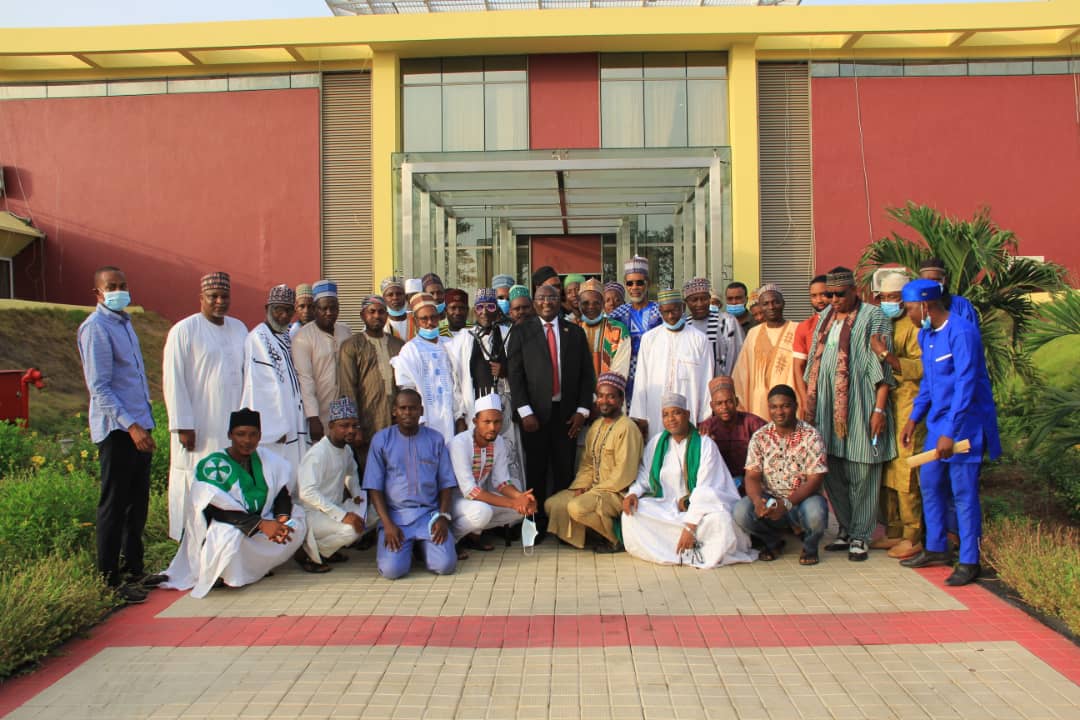
  • Issue Fulanis With The Ghana Card – Veep Directs NIA

    Issue Fulanis With The Ghana Card – Veep Directs NIA

    By Abubakar Garba Osuman

     The Vice President, Dr Mahamudu Bawumia, has directed the National Identification Authority (NIA) to ensure Fulanis are captured and issued with the Ghana Card.

    Dr Bawumia made this known when he met the leadership of the National Council of Fulani Chiefs at the Jubilee House.

    According to the Vice President, the NIA will deploy its personnel to Fulani communities across the country to conduct the registration exercise. “We arrived at this arrangement when I recently met personnel of the NIA,” he explained.

    Dr Bawumia said that he has received several complaints from Fulanis of Ghanaian descent that whenever they apply for documents such as passport, Ghana Card, and even the National Health Insurance Card, they are denied. “It is time anomaly such as this is rectified once and for all,” he assured them.

    “When you have a Ghana Card your will have access to other documents such as passport,” he reiterated.

    The President of the National Council of Fulani Chiefs, Chief Iddrisu Bingle, said an issue of concern to them is the failure of personnel of some state institutions to accept Fulanis as an integral part of the Ghanaian society. It is on this ground that they are refused to be issued with national documents.

    He reiterated the fact that “the presence of our ancestors in the country dated back to over 300 years. And as part of their contribution to the development of the country, our forebears had served in the security agencies, some of them were also farmhands on cocoa plantations as well as unskilled labour in other sectors of the economy.”

    The leader of the Fulani therefore demanded the recognition of the roles their ancestors played in the development of the country.  

    “Not only that but we want to state that we are an integral part of the Ghanaian society. Because, apart from Ghana we have no place we call home,” Chief Bingle stated.

    Again, the Fulani leadership bemoaned how their people are attacked, maimed and killed. And in some situations, their villages burnt to ashes. “As for killing of cattle, it is a sad normal occurrence.”

    But the Fulani leadership admitted that, as any community of people, there are bad nuts among them. They thus expressed their readiness to collaborate with the security agencies in exposing perpetrators of criminal activities within their fold.  

    The Vice President however, assured them of the preparedness of the Government to ensure the security of every citizen.

    Dr Bawumia said that the former Emir of Kano, His Royal Highness Sanusi Lamido Sanusi, urged him to engage the Fulani in the country in order to address some concerns raised by the group.

    This took place when the former Emir of Kano called on the Vice President in Accra in December 2021.

    “It is therefore heart-warming to have the opportunity to meet with you today.” The Fulani, according to the Vice President, is the largest group in West Africa and are found in almost all countries in the sub-region, including Ghana.