Category: News

  • E-Levy for loans: Akufo-Addo ministers caught deceiving Ghanaians

    E-Levy for loans: Akufo-Addo ministers caught deceiving Ghanaians

    Adnan Adams Mohammed

    Key ministers in the current Akufo-Addo/Bawumia government are on deliberate spree of deceit to hide the truth about the initiation of the Electronic Transaction Levy (E-Levy).

    Within a period of a week, two ministers have contradicted themselves exposing how deceitful the government is with regards to the E-Levy policy. As a Deputy Minister for Finance, a week ago denied E-Levy wass going to be used by government as collateral to access additional loans.

    In a categorical statement to deny the rumour by the minority in Parliament, Mr. John Ampontuah Kumah stated; “It is not true that the government is going to collateralize e-levy and all that, we are going to have enough revenues to be able to properly deal with the country’s development challenges, for example, to pay contractors working on our roads,” he stated.

    Speaking to journalists in Kumasi, Mr Kumah described those assertions as lies and malicious propaganda being peddled by people opposed to the introduction of the levy to create disaffection for the government.

    Apparently, as shocking as it was and it will be to the NPP government, the Minister for Roads and Highways revealed on the floor of Parliament that, the government may securitise proceeds from the yet-to-be approved e-levy to raise revenue to construct more roads.

    “Government is looking forward to the passage of the e-levy that will bring in greater revenue that will be securitised and then used to raise bonds if possible”, in answering questions in Parliament on Friday, Kwasi Amoako-Atta said

    “The government in its wisdom has proposed the passage of the e-levy to bring in more revenue to build the road infrastructure of our country for all of us,” he also said.

    Responding to the Minister’s comments in parliament, MP for Cape Coast South, Kweku Ricketts Hagan, said the Roads Minister has revealed the government’s true intentions for the controversial levy.

    “As they have factored in the E-levy, the government will still be borrowing up until 2025, which is what they have in the budget.”

    “They have demonstrated here today that they actually want the e-levy to go and do more borrowing,” he added.

    Mr. Hagan stressed that the government would have to answer for its handling of the e-levy

    “We want them to understand that they have to be accountable for all the things that they are doing. If not today, it will be tomorrow.”

    Ghana’s total public debt stock stands at GHs 332.4 billion, as of May 2021.

    That figure brought Ghana’s debt to Gross Domestic Product ratio to 76.6 percent.

    The e-levy seeks to impose a 1.75 per cent levy on some electronic transactions such as mobile money transfers from accounts on one same Electronic Money Issuers (EMI), Mobile Money transfers from accounts on one EMI to a recipient on another EMI and transfers from bank accounts to mobile money accounts.

    Also transfers from mobile money accounts to bank accounts and bank transfers originating from a bank account belonging to an individual will also attract the levy.

    However, the announcement of the policy in the 2022 budget by the Finance Minister, had met stiff opposition, especially from the Minority in Parliament, and other groups and individuals.

    They argue that the new tax policy if allowed to be implemented will bring untold hardships on Ghanaians who are already suffering severe economic hardships.

  • SONA postponed as Parliament wait for a new date from Jubilee House

    SONA postponed as Parliament wait for a new date from Jubilee House

    The State of the Nation Address (SONA) expected to be delivered by the President today, March 3, 2022, as initially scheduled has been postponed.

    The postponement of the address was announced in Parliament by Deputy Majority Leader Alexander Afenyo-Markin, who explained that a new date will be set after engagements with the Presidency.

    Article 67 of the Constitution of Ghana enjoins the President to deliver a message on the state of the nation to Parliament.

    It states, “The President shall, at the beginning of each session of Parliament and before a dissolution of Parliament, deliver to Parliament a message on the state of the nation.”

    The President, Nana Akufo-Addo, is expected to account the achievements, prospects and challenges faced by his government for the past and the coming financial year.

  • Russia-Ukraine war: the likely and unlikely spillovers to affect Ghana and beyond 

    Russia-Ukraine war: the likely and unlikely spillovers to affect Ghana and beyond 

    Adnan Adams Mohammed

    The world at large are keeping their fingers crossed and preparing for spillover from the Ukraine invasion by Russia and the possible sanctions from United States of America and European Union.

    Although, the likely and unlikely spillovers could be felt in the short and medium term, especially in the energy sector, Ghana is told that any increase in oil prices will be in the short term in the $100-110 per bbl range and that the year average will stay between $80-90 per bbl  and as such the world market oil prices will not be the dominant factor in determining our fuel pump prices.

    A finance and energy analyst has assured Ghanaians to lose no sleep as the fallout from the Ukraine invasion will have no immediate effect on prices of our petroleum products. Rather, he advised the managers of the economy and the forex market regulators to put in measures to control the escalating exchange rate as witnessed in the past few weeks.

    “Although Ghana is vulnerable to world oil prices spikes, any such spikes will be temporary as the market players shall adjust for any shortfalls and speculations that could contribute to the spike. Rather, our concerns should be more of the forex exchange of which we have more control”, Alex Mould, former executive director of Standard Chartered Bank and past CEO Ghana National Petroleum Commission has posited. “The untamed and recent runaway Cedi to dollar exchange rate is what is going to be the main contributor of increased fuel prices in Ghana in the short and long term.”

    Although, current price as of yesterday, Tuesday, March 1 2022, at 23:00GMT, the Brent crude price had jumped to US$107, Mr Mould asserted it is an expected temporary situation mainly due to speculators while supply and demand data takes time to surface. Adding that, the global crude price will still fall within the revised forecasted benchmark price of US$85 per barrel for 2022 unless in a situation where NATO joins the conflict which will then prolong the consequence of the crisis.

    Initial forecast for 2022 by analysts prior to invasion was at $75 per bbl

    On the forecasts, there are two schools of thought: a temporary blip and year average remains in 80-90 range, or a permanent new highs over $100.

    Many analysts suggest It will correct itself soon; as soon as some agreement is reached; but the highs we see will only be prolonged if NATO get into the conflict.”

    Consensus by most researchers is that the supply effect is not going to be immediate, although they have expected over supply of crude oil on the market because Iran oil will be available soon.  They have now increased their 2022 forecast for the average price of Brent oil from US$75 to US$85 per barrel.

    The spike we see where price is up over US$100 for the first time since 2014  is just a response by speculators and traders who believe that the Russia-Ukraine crisis is going to cause a supply and demand problem, but there is excess supply in the world.

    While Russia, Saudi and USA each produce about 12 million barrels per day, 

    U.S consumes the most oil in the world and Russia exports about 4 milion barrels a day. Saudi Arabia and other OPEC members have the capacity to increase exports by over 5 million barrels per day enough to augment the more than Russia’s 4 million export.

    Europe’s vulnerability

    Meanwhile, there are issues to do with Russia not supplying gas to Europe, because Europe need that gas badly.

    Europe and U.S are not going to put sanction on gas in the short term. However, Europe is receiving gas and oil supply from other Asian countries just to ensure that Putin will not hoard knowing that we are at the peak of the winter. This is where it will be disaster in Europe. Most people cannot switch from gas to liquid maybe Diesel or Crude Oil to power their plants or for heating in their houses. It is only Germany, really, that the capacity to gear up to do that.

    “Europe is very vulnerable as we speak and Putin and U.S know that; the Biden administration announced that they will not put sanctions on Russia’s oil because that will hurt U.S consumers directly and not Putin. But knowing U.S, and how they are quick to  change their policy, this view could change soon”, Mr Mould juxtaposed.

    The other issue is the corporate concern where there are a lot of companies in Russia own by U.S and Europe citizens.

    Possible collateral damage from sanctions on Russia

    Already, President Biden has announced a “first tranche” of economic sanctions on two Russian banks with about US$80 billion in assets and five Russian oligarchs and their families, and prohibited U.S. entities from purchasing Russian sovereign debt.

    More sanctions are expected to follow in response to what Biden said is a “needless act of aggression against Ukraine and global peace and security.” The forthcoming sanctions could include restrictions on major Russian banks that would dramatically affect Russia’s ability to conduct international business.

    Severe U.S. sanctions could drive up prices for everyday Russians or cause Russia’s currency or markets to crash. Because the U.S. does not rely much on trade with Russia, it is somewhat insulated from direct consequences. Europe is more directly affected. But certain sectors of the U.S. economy rely on highly specific Russian exports, primarily raw commodities.

    “The premise of sanctions is to hurt the other guy more than you hurt your own interests. But that does not mean there will not be some collateral damage,” said Doug Rediker, a partner at International Capital Strategies.

    Global markets could drop

    The invasion rattled investors which sent the prices of traditional investment safe havens higher, with gold up more than 1.5% overnight.

    “Markets are fundamentally not prepared for a land war in Europe in the 21st century,” Rediker said. “It’s something people just have not contemplated.”

    The U.S. stock market has already been unusually volatile in recent weeks, churning over inflation, moves by the Federal Reserve to curb its stimulus programs and the looming conflict in Ukraine.

    “Historically, the market has bounced back relatively quickly after geopolitical events. That’s what’s most likely today too, analysts say, so the effect on people with 401(k) accounts may be short term”, an article by Becky Sullivan on the npr.org said.

    “But if the conflict causes long-lasting disruption of energy markets and other exports, investors could rethink that conventional wisdom.

    “You’re potentially at a point where not only are we looking at Russia potentially invading Ukraine and sanctions and countermeasures, but you are also looking at a rise of China that doesn’t necessarily agree with the American perspective on the world anyway,” Rediker said last week, before the invasion. “Are we looking at a point in which some of the major premises that people take for granted have to be reassessed?”

    Other industries to be affected

    Russia is a major exporter of rare-earth minerals and heavy metals such as; titanium used in airplanes. Russia supplies about a third of the world’s palladium, a rare metal used in catalytic converters, and its price has soared in recent weeks over fears of a conflict.

    Ukrainian economic output and industry will likely be significantly disrupted. The country is a major source of neon, which is used in manufacturing semiconductors.

    As a result, U.S. officials have warned various sectors, including the semiconductor and aerospace industries, to brace for supply chain disruptions.

    Fertilizer is produced in major quantities in both Ukraine and Russia. Disruptions to those exports would mostly affect agriculture in Europe, but food prices around the world could rise as a result.

    Russia could launch disruptive cyberattacks

    Subtlely, Russia could respond to U.S. sanctions through cyberattacks and influence campaigns.

    Already, various federal agencies, including the Treasury and the Department of Homeland Security, have warned of possible cyberattacks on targets like big banks and power grid operators.

    “They have been warning everyone about Russia’s very specific tactics about the possibility of attacks on critical infrastructure,” Katerina Sedova, a researcher at Georgetown University’s Center for Security and Emerging Technology, told NPR.

    Russian cyberattacks have targeted Ukraine relentlessly in recent years, including attacks on the capital city of Kyiv’s power grid in 2015 and 2016. But a major escalation could shift focus to U.S. targets.

    An escalated war  would likely spark a refugee crisis

    The invasion could send 1 million to 5 million refugees fleeing Ukraine, U.S. officials and humanitarian agencies have warned.

    “It will be a continent-wide humanitarian disaster with millions of refugees seeking protection in neighbouring European countries,” Agnès Callamard, secretary-general of Amnesty International, said last month in statement.

    Poland, which shares a border with Ukraine and is already home to more than a million Ukrainians, would likely see the most refugees. Polish Interior Minister Mariusz Kaminski said his country was preparing for an “influx of refugees” from Ukraine.

    At the largest scale, a refugee crisis would not be contained to Europe, the U.S would likely see refugees seeking asylum too.

  • Putin addresses Russians and world on invasion of Ukraine

    Putin addresses Russians and world on invasion of Ukraine

    Full text: Vladimir Putin’s address on Russia’s invasion of Ukraine

    Citizens of Russia, friends,

    I consider it necessary today to speak again about the tragic events in Donbass and the key aspects of ensuring the security of Russia.

    I will begin with what I said in my address on February 21, 2022. I spoke about our biggest concerns and worries, and about the fundamental threats which irresponsible Western politicians created for Russia consistently, rudely and unceremoniously from year to year. I am referring to the eastward expansion of NATO, which is moving its military infrastructure ever closer to the Russian border.

    It is a fact that over the past 30 years we have been patiently trying to come to an agreement with the leading NATO countries regarding the principles of equal and indivisible security in Europe. In response to our proposals, we invariably faced either cynical deception and lies or attempts at pressure and blackmail, while the North Atlantic alliance continued to expand despite our protests and concerns. Its military machine is moving and, as I said, is approaching our very border.

    Why is this happening? Where did this insolent manner of talking down from the height of their exceptionalism, infallibility and all-permissiveness come from? What is the explanation for this contemptuous and disdainful attitude to our interests and absolutely legitimate demands?

    The answer is simple. Everything is clear and obvious. In the late 1980s, the Soviet Union grew weaker and subsequently broke apart. That experience should serve as a good lesson for us, because it has shown us that the paralysis of power and will is the first step towards complete degradation and oblivion. We lost confidence for only one moment, but it was enough to disrupt the balance of forces in the world.

    As a result, the old treaties and agreements are no longer effective. Entreaties and requests do not help. Anything that does not suit the dominant state, the powers that be, is denounced as archaic, obsolete and useless. At the same time, everything it regards as useful is presented as the ultimate truth and forced on others regardless of the cost, abusively and by any means available. Those who refuse to comply are subjected to strong-arm tactics.

    What I am saying now does not concerns only Russia, and Russia is not the only country that is worried about this. This has to do with the entire system of international relations, and sometimes even US allies.

    The collapse of the Soviet Union led to a redivision of the world, and the norms of international law that developed by that time – and the most important of them, the fundamental norms that were adopted following WWII and largely formalised its outcome – came in the way of those who declared themselves the winners of the Cold War.

    Of course, practice, international relations and the rules regulating them had to take into account the changes that took place in the world and in the balance of forces. However, this should have been done professionally, smoothly, patiently, and with due regard and respect for the interests of all states and one’s own responsibility.

    Instead, we saw a state of euphoria created by the feeling of absolute superiority, a kind of modern absolutism, coupled with the low cultural standards and arrogance of those who formulated and pushed through decisions that suited only themselves. The situation took a different turn.

    There are many examples of this. First a bloody military operation was waged against Belgrade, without the UN Security Council’s sanction but with combat aircraft and missiles used in the heart of Europe. The bombing of peaceful cities and vital infrastructure went on for several weeks.

    I have to recall these facts, because some Western colleagues prefer to forget them, and when we mentioned the event, they prefer to avoid speaking about international law, instead emphasising the circumstances which they interpret as they think necessary.

    Then came the turn of Iraq, Libya and Syria. The illegal use of military power against Libya and the distortion of all the UN Security Council decisions on Libya ruined the state, created a huge seat of international terrorism, and pushed the country towards a humanitarian catastrophe, into the vortex of a civil war, which has continued there for years.

    The tragedy, which was created for hundreds of thousands and even millions of people not only in Libya but in the whole region, has led to a large-scale exodus from the Middle East and North Africa to Europe.

    A similar fate was also prepared for Syria. The combat operations conducted by the Western coalition in that country without the Syrian government’s approval or UN Security Council’s sanction can only be defined as aggression and intervention.

    But the example that stands apart from the above events is, of course, the invasion of Iraq without any legal grounds. They used the pretext of allegedly reliable information available in the United States about the presence of weapons of mass destruction in Iraq. To prove that allegation, the US Secretary of State held up a vial with white power, publicly, for the whole world to see, assuring the international community that it was a chemical warfare agent created in Iraq.

    It later turned out that all of that was a fake and a sham, and that Iraq did not have any chemical weapons. Incredible and shocking but true. We witnessed lies made at the highest state level and voiced from the high UN rostrum. As a result we see a tremendous loss in human life, damage, destruction, and a colossal upsurge of terrorism.

    Overall, it appears that nearly everywhere, in many regions of the world where the United States brought its law and order, this created bloody, non-healing wounds and the curse of international terrorism and extremism. I have only mentioned the most glaring but far from only examples of disregard for international law.

    This array includes promises not to expand NATO eastwards even by an inch. To reiterate: they have deceived us, or, to put it simply, they have played us. Sure, one often hears that politics is a dirty business. It could be, but it shouldn’t be as dirty as it is now, not to such an extent. This type of con-artist behaviour is contrary not only to the principles of international relations but also and above all to the generally accepted norms of morality and ethics. Where is justice and truth here? Just lies and hypocrisy all around.

    Incidentally, US politicians, political scientists and journalists write and say that a veritable “empire of lies” has been created inside the United States in recent years. It is hard to disagree with this – it is really so. But one should not be modest about it: the United States is still a great country and a system-forming power.

    All its satellites not only humbly and obediently say yes to and parrot it at the slightest pretext but also imitate its behaviour and enthusiastically accept the rules it is offering them. Therefore, one can say with good

    reason and confidence that the whole so-called Western bloc formed by the United States in its own image and likeness is, in its entirety, the very same “empire of lies.”

    As for our country, after the disintegration of the USSR, given the entire unprecedented openness of the new, modern Russia, its readiness to work honestly with the United States and other Western partners, and its practically unilateral disarmament, they immediately tried to put the final squeeze on us, finish us off, and utterly destroy us.

    This is how it was in the 1990s and the early 2000s, when the so-called collective West was actively supporting separatism and gangs of mercenaries in southern Russia. What victims, what losses we had to sustain and what trials we had to go through at that time before we broke the back of international terrorism in the Caucasus! We remember this and will never forget.

    Properly speaking, the attempts to use us in their own interests never ceased until quite recently: they sought to destroy our traditional values and force on us their false values that would erode us, our people from within, the attitudes they have been aggressively imposing on their countries, attitudes that are directly leading to degradation and degeneration, because they are contrary to human nature. This is not going to happen. No one has ever succeeded in doing this, nor will they succeed now.

    Despite all that, in December 2021, we made yet another attempt to reach agreement with the United States and its allies on the principles of European security and NATO’s non-expansion. Our efforts were in vain. The United States has not changed its position. It does not believe it necessary to agree with Russia on a matter that is critical for us. The United States is pursuing its own objectives, while neglecting our interests.

    Of course, this situation begs a question: what next, what are we to expect? If history is any guide, we know that in 1940 and early 1941 the Soviet Union went to great lengths to prevent war or at least delay its outbreak. To this end, the USSR sought not to provoke the potential aggressor until the very end by refraining or postponing the most urgent and obvious preparations it had to make to defend itself from an imminent attack. When it finally acted, it was too late.

    As a result, the country was not prepared to counter the invasion by Nazi Germany, which attacked our Motherland on June 22, 1941, without declaring war. The country stopped the enemy and went on to defeat it, but this came at a tremendous cost. The attempt to appease the aggressor ahead of the Great Patriotic War proved to be a mistake which came at a high cost for our people.

    In the first months after the hostilities broke out, we lost vast territories of strategic importance, as well as millions of lives. We will not make this mistake the second time. We have no right to do so.

    Those who aspire to global dominance have publicly designated Russia as their enemy. They did so with impunity. Make no mistake, they had no reason to act this way. It is true that they have considerable financial, scientific, technological, and military capabilities.

    We are aware of this and have an objective view of the economic threats we have been hearing, just as our ability to counter this brash and never-ending blackmail. Let me reiterate that we have no illusions in this regard and are extremely realistic in our assessments.

    As for military affairs, even after the dissolution of the USSR and losing a considerable part of its capabilities, today’s Russia remains one of the most powerful nuclear states. Moreover, it has a certain advantage in several cutting-edge weapons. In this context, there should be no doubt for anyone that any potential aggressor will face defeat and ominous consequences should it directly attack our country.

    At the same time, technology, including in the defence sector, is changing rapidly. One day there is one leader, and tomorrow another, but a military presence in territories bordering on Russia, if we permit it to go ahead, will stay for decades to come or maybe forever, creating an ever mounting and totally unacceptable threat for Russia.

    Even now, with NATO’s eastward expansion the situation for Russia has been becoming worse and more dangerous by the year. Moreover, these past days NATO leadership has been blunt in its statements that they need to accelerate and step up efforts to bring the alliance’s infrastructure closer to Russia’s borders. In other words, they have been toughening their position. We cannot stay idle and passively observe these developments. This would be an absolutely irresponsible thing to do for us.

    Any further expansion of the North Atlantic alliance’s infrastructure or the ongoing efforts to gain a military foothold of the Ukrainian territory are unacceptable for us. Of course, the question is not about NATO itself. It merely serves as a tool of US foreign policy. The problem is that in territories adjacent to Russia, which I have to note is our historical land, a hostile “anti-Russia” is taking shape. Fully controlled from the outside, it is doing everything to attract NATO armed forces and obtain cutting-edge weapons.

    For the United States and its allies, it is a policy of containing Russia, with obvious geopolitical dividends. For our country, it is a matter of life and death, a matter of our historical future as a nation. This is not an exaggeration; this is a fact. It is not only a very real threat to our interests but to the very existence of our state and to its sovereignty. It is the red line which we have spoken about on numerous occasions. They have crossed it.

    This brings me to the situation in Donbass. We can see that the forces that staged the coup in Ukraine in 2014 have seized power, are keeping it with the help of ornamental election procedures and have abandoned the path of a peaceful conflict settlement. For eight years, for eight endless years we have been doing everything possible to settle the situation by peaceful political means. Everything was in vain.

    As I said in my previous address, you cannot look without compassion at what is happening there. It became impossible to tolerate it. We had to stop that atrocity, that genocide of the millions of people who live there and who pinned their hopes on Russia, on all of us. It is their aspirations, the feelings and pain of these people that were the main motivating force behind our decision to recognise the independence of the Donbass people’s republics.

    I would like to additionally emphasise the following. Focused on their own goals, the leading NATO countries are supporting the far-right nationalists and neo-Nazis in Ukraine, those who will never forgive the people of Crimea and Sevastopol for freely making a choice to reunite with Russia.

    They will undoubtedly try to bring war to Crimea just as they have done in Donbass, to kill innocent people just as members of the punitive units of Ukrainian nationalists and Hitler’s accomplices did during the Great Patriotic War. They have also openly laid claim to several other Russian regions.

    If we look at the sequence of events and the incoming reports, the showdown between Russia and these forces cannot be avoided. It is only a matter of time. They are getting ready and waiting for the right moment. Moreover, they went as far as aspire to acquire nuclear weapons. We will not let this happen.

    I have already said that Russia accepted the new geopolitical reality after the dissolution of the USSR. We have been treating all new post-Soviet states with respect and will continue to act this way. We respect and will respect their sovereignty, as proven by the assistance we provided to Kazakhstan when it faced tragic events and a challenge in terms of its statehood and integrity. However, Russia cannot feel safe, develop, and exist while facing a permanent threat from the territory of today’s Ukraine.

    Let me remind you that in 2000–2005 we used our military to push back against terrorists in the Caucasus and stood up for the integrity of our state. We preserved Russia. In 2014, we supported the people of Crimea and Sevastopol. In 2015, we used our Armed Forces to create a reliable shield that prevented terrorists from Syria from penetrating Russia. This was a matter of defending ourselves. We had no other choice.

    The same is happening today. They did not leave us any other option for defending Russia and our people, other than the one we are forced to use today. In these circumstances, we have to take bold and immediate action. The people’s republics of Donbass have asked Russia for help.

    In this context, in accordance with Article 51 (Chapter VII) of the UN Charter, with permission of Russia’s Federation Council, and in execution of the treaties of friendship and mutual assistance with the Donetsk People’s Republic and the Lugansk People’s Republic, ratified by the Federal Assembly on February 22, I made a decision to carry out a special military operation.

    The purpose of this operation is to protect people who, for eight years now, have been facing humiliation and genocide perpetrated by the Kiev regime. To this end, we will seek to demilitarise and denazify Ukraine, as well as bring to trial those who perpetrated numerous bloody crimes against civilians, including against citizens of the Russian Federation.

    It is not our plan to occupy the Ukrainian territory. We do not intend to impose anything on anyone by force. At the same time, we have been hearing an increasing number of statements coming from the West that there is no need any more to abide by the documents setting forth the outcomes of World War II, as signed by the totalitarian Soviet regime. How can we respond to that?

    The outcomes of World War II and the sacrifices our people had to make to defeat Nazism are sacred. This does not contradict the high values of human rights and freedoms in the reality that emerged over the post-war decades. This does not mean that nations cannot enjoy the right to self-determination, which is enshrined in Article 1 of the UN Charter.

    Let me remind you that the people living in territories which are part of today’s Ukraine were not asked how they want to build their lives when the USSR was created or after World War II. Freedom guides our policy, the freedom to choose independently our future and the future of our children. We believe that all the peoples living in today’s Ukraine, anyone who want to do this, must be able to enjoy this right to make a free choice.

    In this context I would like to address the citizens of Ukraine. In 2014, Russia was obliged to protect the people of Crimea and Sevastopol from those who you yourself call “nats.” The people of Crimea and Sevastopol made their choice in favour of being with their historical homeland, Russia, and we supported their choice. As I said, we could not act otherwise.

    The current events have nothing to do with a desire to infringe on the interests of Ukraine and the Ukrainian people. They are connected with the defending Russia from those who have taken Ukraine hostage and are trying to use it against our country and our people.

    I reiterate: we are acting to defend ourselves from the threats created for us and from a worse peril than what is happening now. I am asking you, however hard this may be, to understand this and to work together with us so as to turn this tragic page as soon as possible and to move forward together, without allowing anyone to interfere in our affairs and our relations but developing them independently, so as to create favourable conditions for overcoming all these problems and to strengthen us from within as a single whole, despite the existence of state borders. I believe in this, in our common future.

    I would also like to address the military personnel of the Ukrainian Armed Forces.

    Comrade officers,

    Your fathers, grandfathers and great-grandfathers did not fight the Nazi occupiers and did not defend our common Motherland to allow today’s neo-Nazis to seize power in Ukraine. You swore the oath of allegiance to the Ukrainian people and not to the junta, the people’s adversary which is plundering Ukraine and humiliating the Ukrainian people.

    I urge you to refuse to carry out their criminal orders. I urge you to immediately lay down arms and go home. I will explain what this means: the military personnel of the Ukrainian army who do this will be able to freely leave the zone of hostilities and return to their families.

    I want to emphasise again that all responsibility for the possible bloodshed will lie fully and wholly with the ruling Ukrainian regime.

    I would now like to say something very important for those who may be tempted to interfere in these developments from the outside. No matter who tries to stand in our way or all the more so create threats for our country and our people, they must know that Russia will respond immediately, and the consequences will be such as you have never seen in your entire history. No matter how the events unfold, we are ready. All the necessary decisions in this regard have been taken. I hope that my words will be heard.

    Citizens of Russia,

    The culture and values, experience and traditions of our ancestors invariably provided a powerful underpinning for the wellbeing and the very existence of entire states and nations, their success and viability. Of course, this directly depends on the ability to quickly adapt to constant change, maintain social cohesion, and readiness to consolidate and summon all the available forces in order to move forward.

    We always need to be strong, but this strength can take on different forms. The “empire of lies,” which I mentioned in the beginning of my speech, proceeds in its policy primarily from rough, direct force. This is when our saying on being “all brawn and no brains” applies.

    We all know that having justice and truth on our side is what makes us truly strong. If this is the case, it would be hard to disagree with the fact that it is our strength and our readiness to fight that are the bedrock of independence and sovereignty and provide the necessary foundation for building a reliable future for your home, your family, and your Motherland.

    Dear compatriots,

    I am certain that devoted soldiers and officers of Russia’s Armed Forces will perform their duty with professionalism and courage. I have no doubt that the government institutions at all levels and specialists will work effectively to guarantee the stability of our economy, financial system and social wellbeing, and the same applies to corporate executives and the entire business community. I hope that all parliamentary parties and civil society take a consolidated, patriotic position.

    At the end of the day, the future of Russia is in the hands of its multi-ethnic people, as has always been the case in our history. This means that the decisions that I made will be executed, that we will achieve the goals we have set, and reliably guarantee the security of our Motherland.

    I believe in your support and the invincible force rooted in the love for our Fatherland.

    Source: Bloomberg  
  • Gov’t direct banks to delay February salaries 

    Gov’t direct banks to delay February salaries 

    News Desk Report

    Information gathered by www.newsguideafrica.com can confirm that, banks have been directed to delay crediting the salary accounts of ‘some government workers’ for the month of February. 

    As at 15:40 GMT on March 1 2022, some nurses and interior ministry workers confirmed this news portal that, though they have been paid on their payslip, but their banks accounts are empty. 

    This confirms a notice being circulated on social media and sighted by this news portal. The notice did not indicate the writer’s institution or authority but copied to the Controller and Accountant General’s Department indicated that, banks have been directed to suspend payment of salaries until further notice.

    “Salary payment for all public sector workers is suspended until further notice”, part of the notice captured. 

    “CAGD has made payment already for the month of february since 25th february 2022 but in response to the directives all banks were asked to suspend disbursment until futher notice.”

    Attempts to speak to Ghana Association of Bankers was not successful as the senior official called on phone told our reporter that he is busy and cannot talk now after the reporter introduced himself as a news editor of this portal. 

    Also, a call to absa bank toll free line to check why the delay in payment of salaries as at yesterday, February 28 2022, the customer representative answered that, her checks reveals the bank has revealed the salaries and processing them . partai togel

    Read full statement below:

    ATTENTION! ATTENTION! ATTENTION! 

    Kindly note that, with orders from the government of the Republic of ghana all salary payment for all public sector workers is suspended until further notice. CAGD has made payment already for the month of february since 25th february 2022 but in response to the directives all banks were asked to suspend disbursment until futher notice.

    We apologise for any inconvenience.

    Cc

    Controller and Accountants General Department.CAGD

    Republic of ghana

  • Adwoa Sarfo E-Levy voting private jet cost almost GHC1.0mn-Okudzeto

    Adwoa Sarfo E-Levy voting private jet cost almost GHC1.0mn-Okudzeto

    Read full article below:

    Hon Sam Okudzeto Ablakwa writes

    It is surprising that the focus of many including Civil Society Organisations in the series of Adwoa Asafo revelations has been on the alleged GHS120,000.00 transfer into her bank account from the Chief of Staff.

    The cost of the private jet used to ferry her from the USA to Ghana which is much higher than the GHS120,000.00 cannot be ignored.

    We now know that a Gulfstream G-550 registered HB-JOE and operated by Premium Jet AG based in Belgium was the executive aircraft chartered to bring in Hon. Adwoa Safo for her vote on the obnoxious E-Levy.

    It cost US$4,800 an hour to rent the HB-JOE.

    With an 11-hour flight distance, payment of reposition fees (as it flew from Belgium to pick her up in the States), payment of one-way fees (as the business jet flies back home empty), crew per diem fees, landing and wait-time fees; it cost a staggering US$140,000.00. At today’s exchange rate, that is GHS948,500.00

    It is most intriguing that an economy which is said to be broke can lavish a fantastic GHS948,500.00 plus GHS120,000.00 (a total of GHS1,068,500.00) just for one E-Levy vote. Imagine what our country can do with 1million Cedis in the midst of our economic challenges, NABCO demonstrations and labour agitations?

    The dubious claim that Adwoa Sarfo’s flight cost was paid for by her friends is most insulting. Who are these friends? What is their motivation? Why do these friends want the unpopular E-Levy passed so badly? What do these friends expect in return? What are the tax records of these friends? Why are these friends being shielded?

    How ironic, that the political tradition that in time past roundly rejected the reported kindness of President Rawlings’ friends will today be boldly canvassing a bizarre kind of friendship support.

    The Office of Special Prosecutor must look into the entire GHS1,068,500.00 expenditure for Adwoa Safo’s E-Vote and not only the GHS120,000.00 deposited in her account.

    The current composition of Ghana’s 8th Parliament should lead us to a patriotic, mature and frugal path of consensus building in the national interest; and not the present embarrassing spectre of opting for an extremely partisan, destructive, wasteful, small-minded and reckless road to perdition.

    May God save us. 🙏🏽🇬🇭🙏🏽

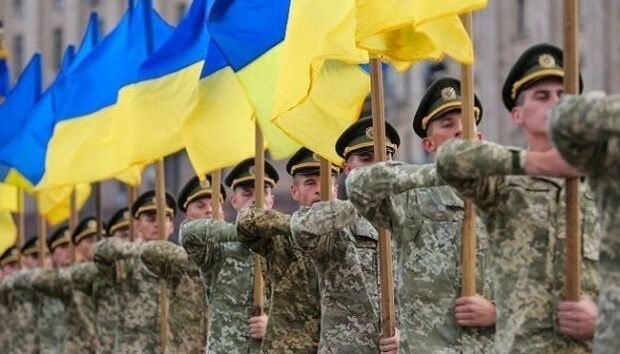
  • Ukraine Bank Opens Special Account to Raise Funds for Ukraine’s Armed Forces

    Ukraine Bank Opens Special Account to Raise Funds for Ukraine’s Armed Forces

    The National Bank of Ukraine has decided to open a special fundraising account to support the Armed Forces of Ukraine.

    The central bank’s decision comes after the Ukrainian government imposed martial law throughout Ukraine in response to armed aggression by Russia and the renewed threat to Ukraine’s independence and territorial integrity.

    NBU Governor Kyrylo Shevchenko announced the opening of this special account in his 24 February video address.

    The number of the special account: UA843000010000000047330992708

    This account accepts multiple currencies. It has been established and opened to receive transfers from international partners and donors in both foreign currency (U.S. dollars, euros, UK pounds) and hryvnias.

    Support the Armed Forces of Ukraine!

  • Suppression of Opposition Voices: NDC petitions Commonwealth Secretariat

    Suppression of Opposition Voices: NDC petitions Commonwealth Secretariat

    The National Democratic Congress (NDC) has petitioned the Commonwealth Secretariat to investigate and subsequently sanction the current administration over what the party calls bad governance and abuse of human rights.

    At a press briefing in Accra today, Monday, the General Secretary of the NDC, Johnson Asiedu Nketia, said the petition is to draw the attention of the international body to instances of abuse of the judiciary, political persecutions, and abuse of human rights.

    Mr Nketia noted these acts are against the norms and practices of members of the Commonwealth of Nations.

    “Since assuming power in 2016 the message of physical violence against political opponents that President Nana Addo Dankwa preached and championed before 2016 General Election has turned into structural institutional and systematic forms of violence in the form of human rights violations, harassment and political persecution against members and supporters the National Democratic Congress,” the NDC General Secretary, told the media in a press conference.

    He continued: “Significantly, buffer institutions such as the judiciary whose core mandate is to mediate between the interest of opposing parties, and ensure the promotion of the rule of law and the promotion of individual liberties have become systematic enfeeble with the attendance of loss of public confidence in these institutions,”

    Apart from political opponents, several journalists have been arrested and detained under the governing New Patriotic Party.

    Recently, Accra FM’s presenter, Kwabena Bobbie Ansah was arrested for the publication of false news and offensive conduct, while Power FM’s Oheneba Boamah Bennie was jailed for two weeks and fined GH¢3,000 for contempt of court.

    There have been countless calls on President Akufo-Addo to let his actions reflect his support for the promotion of human rights.

  • Editorial: Beneficial Ownership Transparency: strong stakeholders collaboration needed

    Editorial: Beneficial Ownership Transparency: strong stakeholders collaboration needed


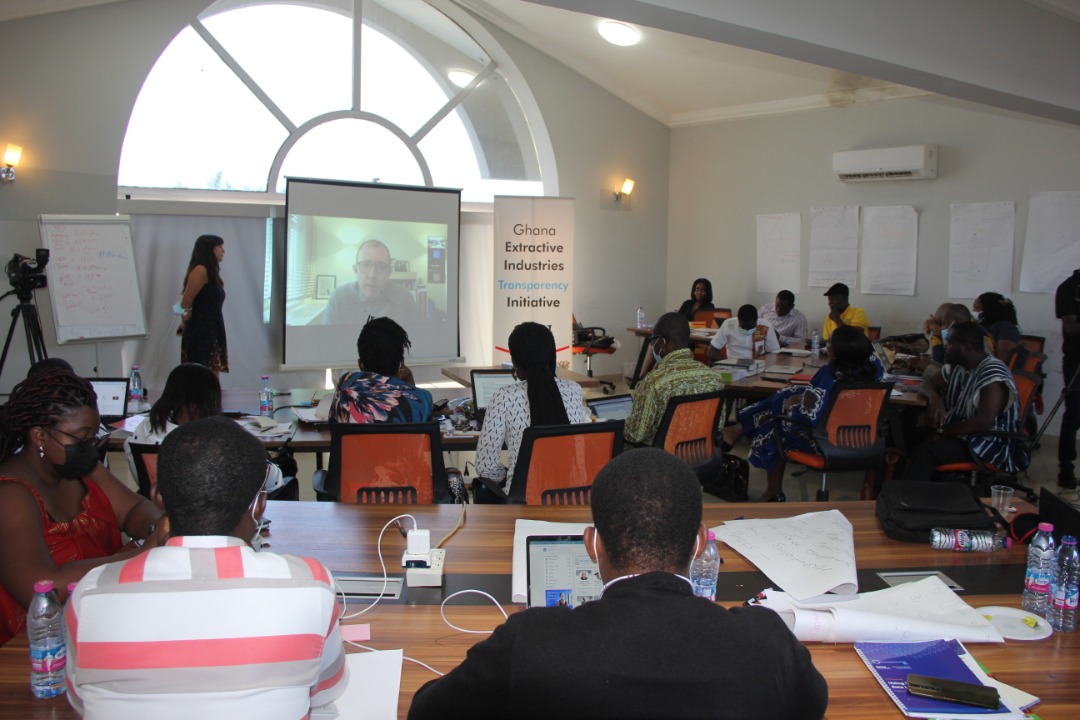
    Last week, some selected Civil Society Organisations and journalists were trained on how to deepen efforts on educating the public and unearthing ‘dubious-minded’ business owners on Beneficial Ownership Transparency (BOT). 

    The four day intensive training was among other intent to raise awareness on the existence and importance of quality and timely Beneficial Ownership (BO) data, and share skills, tools and methodologies to analyse and use these data to improve natural resources advocacy and governance in Ghana.

    The program organised by Opening Extractives (OE), in collaboration with the Registrar General’s Department and the Ghana Opening Extractives National Steering Committee, improved the investigative and data analysis knowledge base of CSOs and journalists through series of capacity building and training sessions. 

    “BO is intended to unveil the true natural persons who have interest and benefit from a company. Over the years that has not been our main target”, Samuel Osei Bekoe, a consultant to the Opening Extractives Programme intuited. “Our target has been legal owners of companies. But for Ghana’s commitment to transparency and accountability under the EITI and European Union charter, we have to do ownership disclosure.”

    The economist and governance expert listed some of the benefit of BOT in the extractive sector will help investors and stakeholders know whom they do business with to avoid potential tax avoidance and transfer pricing situations which has dire consequence on a country’s development agenda as it deprives state of needed revenue. 

    The Opening Extractives (OE) Programme is a global initiative aiming to transform the availability and use of beneficial ownership data for effective governance in the extractive sector. The programme combines political and technical engagement, to support countries implementing beneficial ownership reforms and to enable the use of the data by governments, civil society and companies.

    In September 2021, the Government of Ghana committed to implementing and accelerating beneficial ownership disclosure and data use by joining the OE Programme. The Government’s commitment to improve corporate ownership disclosure is aimed at promoting a transparency and conducive business environment and addressing corruption (particularly tax evasion, avoidance and illicit financial flows) in a bid to increase domestic revenue mobilization.

    To improve the governance of natural resources, Ghana signed onto the Extractives Industries Transparency Initiative (EITI) in 2003 and was admitted as an implementing country in 2007. Since joining the EITI, Ghana has disclosed 10 EITI Reports covering fiscal years between 2004-2018. Ghana EITI reports have included other significant information related to transparency in the extractive industry, such as revenues, contracts, production and crude oil sales.

    In 2020, countries participating in the EITI were required to disclose beneficial owners of mining, oil and gas companies. The government enacted the 2019 Companies (Amended) Act, which mandates the Registrar General’s Department (RGD) to collect and maintain a comprehensive beneficial ownership (BO) register for all sectors, including the extractive industry. Ghana EITI reports have also included ownership information, albeit with limited details and coverage.

    Despite the political commitment and progress to institutionalise disclosure of beneficial owners, existing information is not yet fully publicly available, nor has it been analysed by data users interested in the field. Opportunities therefore remain to maximise the impact of beneficial ownership by improving not only the quality of BO data disclosed but also the accessibility and usability of the information.

    We at Economy Times believes that, for the country to reap the maximum benefit from the Beneficial ownership disclosure, all stakeholders; multilaterals, state institutions, CSOs and journalists must collaborative effectively and resourcefully to pursue the outlined strategies.

  • Ghana gets New Country Partnership Framework from World Bank   

    Ghana gets New Country Partnership Framework from World Bank   

    Adnan Adams Mohammed

    The Government of Ghana and World Bank Group’s (WBG) Board of Executive Directors concluded a discussion on a new five-year Country Partnership Framework (CPF) for Ghana for 2022 to 2026. 

    The CPF prioritizes investments in human capital, job creation, economic diversification, building a resilient health system, and fostering a greener and more inclusive society.

    Ghana has achieved considerable economic and social progress in the past 30 years. It achieved middle-income status in 2011 because of strong, sustained economic growth, averaging over 5 percent since the early 1990s. This was supported by a stable democracy and driven largely by gold and cocoa exports and the development of substantial oil and gas reserves.  It achieved the first Millennium Development Goal (MDG) of halving poverty from 52.7 percent (1993) to 23.4 percent (2016). However, the pace of poverty reduction has slowed in recent years, and inequalities in some areas continue, particularly in some northern areas of the country.

    “The World Bank Group is happy to support Ghana’s economic recovery plan. The CPF is aligned with Ghana’s Coordinated Program of Economic and Social Development Policies and will support the Government of Ghana in creating a competitive environment for the private sector to flourish and play a greater role in job creation particularly for youth,” said Pierre Laporte, World Bank Country Director for Ghana, Liberia and Sierra Leone. “The World Bank Group, through the CPF, will also support policies and programs that aim to strengthen digital transformation for improved service delivery and productivity, improve governance, and promote greater inclusion, including strengthening women’s economic empowerment.”

    The CPF will support Ghana in its COVID-19 and medium-term development agenda.  It is designed around three mutually reinforcing focus areas, namely: Enhancing Conditions for Private Sector Development and Quality Job Creation; Improving Inclusive Service Delivery; and Promoting Resilient and Sustainable Development. Exploiting the opportunities of digital transformation will be a cross-cutting theme. The $4.5 bn CPF was prepared jointly by the World Bank, the International Finance Corporation (IFC) and the Multilateral Investment Guarantee Agency (MIGA).

    The social and economic impact of the COVID-19 crisis has been significant. Ghana was one of the earliest countries in Africa to announce social distancing measures, including school closures and cancelling of mass gatherings, complemented by aggressive testing and recently a strong vaccination program. These measures – while saving lives – came at a heavy economic cost in the immediate term. The CPF will address the immediate as well as medium-term implications of the COVID-19 crisis in line with the Ghana Coronavirus Alleviation and Revitalization of Enterprises Support program and lay a path on how the World Bank, IFC, and MIGA, will leverage their relative strengths to partner with Ghana for stronger development outcomes.

    “To stimulate diversified private sector growth and create secure jobs, the World Bank Group will support a competitive environment for enterprise development,” said Kyle Kelhofer, IFC Senior Country Manager for Benin, Ghana, Liberia, Sierra Leone, and Togo.  “IFC will continue to work closely with the Government of Ghana and the private sector to provide investment and advisory services to expand access to finance for small businesses and entrepreneurs, enhance agribusiness productivity, and support Ghana’s sustainable industrialization.” 

    “The CPF focuses on improving the investment climate and enacting regulatory reforms. Succeeding in these reforms would be critical for accelerating private sector development,” said Merli Baroudi, MIGA’s Director of Economics and Sustainability.

    The CPF will move towards larger and more cohesive and transformational interventions, potentially across multiple sectors, that align closely to strong government programs and with greater use of results-based financing, where appropriate. It is designed to be flexible, especially during its early years of implementation, with an early review of progress to accommodate needed changes for a post COVID-19 recovery.