Category: News

  • Lorry fares adjusted 15% upwards amidst global petroleum price hikes 

    Lorry fares adjusted 15% upwards amidst global petroleum price hikes 

    Adnan Adams  Mohammed

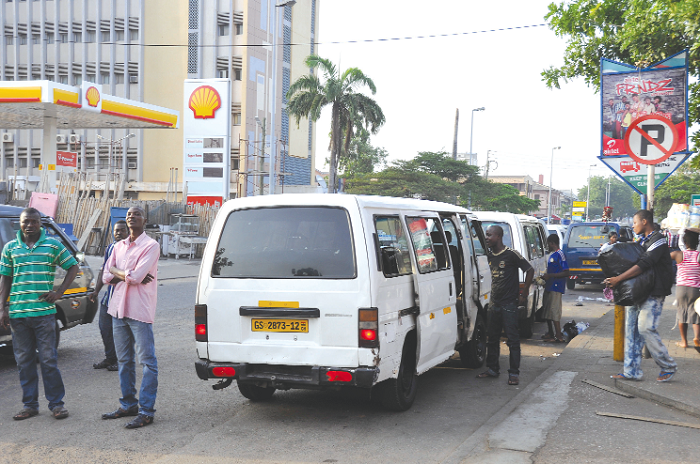
    From  last week Saturday, February 26, 2022, commercial road transport operators in the country  have increased transport fares by 15 percent.

    The fare adjustment comes after months of agitation by the commercial drivers calling on the government to intervene to reduce prices of fuel at the pumps but could not get any results as prices rather kept on rising week by week. Also the fare increase is justifiable as current Russia-Ukraine war has triggered oil prices to jump on fears that the crisis will disrupt supply chains across the world.

    As at last week, futures of Brent crude, the international benchmark, reached a seven-year high of almost $98 (£72) after Russia recognised breakaway rebel regions in Ukraine’s east as independent states. But, in the situation where, Russia is the second largest exporter of crude oil after Saudi Arabia and  also the world’s top producer of natural gas, then the world should expect worst of fuel prices domestically. 

    The border tensions may have “substantial implications”, Sue Trinh of Manulife Investment Management said. Sanctions forcing Russia to supply less crude or natural gas would have “important impact on the global economy.” 

    The transport unions further noted that, the increased fares was in line with the administrative arrangement on public transport fares and comes after intense negotiations with stakeholders and in consideration of the plight of drivers, commuters and the general public. 

    But, an economist has noted that stakeholders should expect the upcoming 15% increase in transport fares as announced by the Road Transport Operators, to increase national inflation in the coming months.

    “The point is that with the rising cost of living and fuel prices, drivers will certainly ask for an increment in fares. If you, however, look at the non-food basket of inflation, transport accounts for about 10.1%. That tells you that it will slightly affect other things like food and other things, but it won’t lead to a major shake-up in the national inflation rate”, Head of the Economics Division at the Institute of Statistical, Social and Economic Research, at the University of Ghana, Prof. Peter Quartey has said. “It will lead to some inflation but it shouldn’t be major.”

    Prof. Quartey further expressed hope that the impact of the transport fares increase on inflation will be dampened with an increase in food production.

    “The impact of the rise in transport fares can be dampened if our food production increases. You know inflation is caused by demand and supply-side factors, so if the supply side improves, it will dampen some of these occurrences. It might not erode it completely, but it will dampen any hikes. And we’ve seen the rains coming in and the likes, so production of some food items should mitigate the impact of transport fares on inflation.”
  • Rising NPLS: Real estate players share causes antidotes 

    Rising NPLS: Real estate players share causes antidotes 

    Adnan Adams Mohammed

    Players in the real estate sector has shared their concerns leading to the rising Non-Performing Loans (NPLs) in the construction sector attributing the phenomenon to the lack of attractive mortgages in the country.

    Bank of Ghana recent data has revealed that, a total of GHC2.086 billion was written off as bad debt by banks operating in Ghana. Of this, the construction sector performed worst, with NPLs for the sector increasing by 13.6 percentage points to 35 percent during the review period.

    The inability to pay back loans by borrowers within the period of review was attributed with COVID-19. The NPL ratio in the banking sector increasing from 15.5 percent in August 2020 to 17.3 percent in August 2021. This was disclosed by the central bank’s Domestic Money Bank’s Income Statement.

    “When we build the houses, we use loans and other types of finances. We invest in acquiring land banks, and yet we can’t sell the houses, and this is what causes the issue of unpaid loans in our sector”, Patrick Ebo Bonful, President of the Ghana Real Estate Developers’ Association (GREDA) shared. “So the issue has to do with the lack of a mortgage, a mortgage that can serve the purpose. The tenures of the mortgages given here in this country are too short.”

    “We are hoping to get mortgages with tenures as high as 15 years, 20 years, and 25 years. When the tenures are long, it means the monthly payments will be bearable and affordable for most people. So we need to have a serious conversation on the way forward with mortgages once and for all,” he added.

  • GRA Board Chair objects Ofori-Atta on ‘Ghana is broke’ excuse 

    GRA Board Chair objects Ofori-Atta on ‘Ghana is broke’ excuse 

    Adnan Adams Mohammed

    The immediate past Board Chair of Ghana Revenue Authority has objected to an official comment from the Finance Minister purporting that the country has no financial resources to pursue its budgetary allocations and developmental agenda.

    Prof Stephen Adei in his reaction to the minister’s comment expertly indicated that, despite the current challenges the economy is going through, Ghana cannot be said to be a ‘broke nation’ but in a short-term economic crisis. 

    In his relentless effort to justify the need for Ghanaians to accept the passage of the Electronic Transaction Levy (E-Levy) into law despite stiff opposition, Ken Ofori-Atta speaking at a town hall meeting last week in the Upper West regional capital, said, although the demand for salary increment by public sector workers is legitimate, the country has no money. Indicating that there is the need to generate more money because the country has no money, thus the need for all to support government’s proposed tax on electronic transactions (E-levy).

    “It is a short-term economic crisis, nobody should deny that one. It is a fact”, the former Rector of the Ghana Institute of Management and Public Administration (GIMPA) said in an interview last week.

    “I think we have a good country with a good future but we have a short-term challenge; it is quite obvious. We know that at the end of last year, the fiscal deficit was 12.1 per cent, inflation has started climbing up to 12.6 per cent; the currency, which was quite stable – in fact, two years ago, we were the best-performing currency in Africa; I think – is now depreciating very fast; I think the latest, even the official one is about 6.8 per cent [at the bureau]; petrol prices have almost doubled, recently there was a Fitch downgrading of the rating of Ghana to B-.”

    However, he warned: “If we don’t manage it well, it can lead us into trouble but I don’t think that we can say that the country is broke”.

    “Let me quote former Senior Minister Yaw Osafo Marfo; when he was a Minister of Finance, one day he said, ‘Na who cause am?’”

    Apparently, Mr Ofori Atta justified his ‘Ghana is broke’ excuse noting that; “I look at teachers and civil servants for example, and I will be the first to admit that the salaries are indecent, nobody will argue with that. At the same time, it is 60 per cent of all the revenue we collect from 700,000 people [go into salary payment,] that is also a fact.

    “So yes, there is a legitimate demand for more and there is a legitimate reality that there is no money. So what do we do as a society? Then you ask me to give you more salary, which is fine, then I say, but it is your colleague civil servants who collect the money, so how can you responsible for collecting the money, not collect it and then tell me to give you the money. That will be another issue.”

    A few weeks ago, international rating agency (Moody’s) downgraded Ghana’s long-term issuer and senior unsecured debt ratings to Caa1 from B3 and changed the outlook to stable from negative.

    Moody’s said on Friday, 4 February 2022: “The downgrade to Caa1 reflects the increasingly difficult task the government faces addressing its intertwined liquidity and debt challenges”.

    “Weak revenue generation constrains government’s budget flexibility, and tight funding conditions on international markets have forced the government to rely on costly debt with shorter maturity”, Moody’s noted.

    Moody’s said its projection shows that more than half of the country’s revenue will go into the payment of interests for the next few years, and proposals by the government to fix the challenge does not seem to be feasible, especially given the fragile post-pandemic environment.

    “While Ghana’s external buffers and moderate external debt amortisation schedule in the next few years afford the government a window of opportunity to deliver on its strategy, balance of payments pressures will build up the longer government’s large financing requirements have to rely on domestic sources,” it noted.

    Apart from the long-term issuer and senior unsecured debt downgrade, Moody’s also downgraded Ghana’s bond enhanced by a partial guarantee from the International Development Association (IDA, Aaa stable) to B3 from B1, “reflecting a blended expected loss now consistent with a one-notch uplift on the issuer rating.”

    It also lowered Ghana’s local currency (LC) and foreign currency (FC) country ceiling to respectively B1 and B2 from Ba3 and B1.

    “Non-diversifiable risks are appropriately captured in an LC ceiling three notches above the sovereign rating, taking into account relatively predictable institutions and government actions, low domestic political, and geopolitical risk; balanced against a large government footprint in the economy and the financial system and current account deficits,” Moody’s said in its report.

    About a month before the Moody’s rating, Fitch also downgraded Ghana’s Long-Term Foreign-Currency Issuer Default Rating (IDR) to ‘B-’ from ‘B’ with a negative outlook.

  • Banks happy…as the cedi falls

    Banks happy…as the cedi falls

    By Elorm Desewu

    Some commercial banks in the country are happy in the wake of the speed depreciation of the country’s fait currency, the cedi, as it increases their net foreign assets in cedi terms.

    Like virtually everyone else, the banks publicly clamour for exchange rate stability but in reality they prefer at least some degree of cedi depreciation because it increases the value of their net foreign assets in cedi terms. 

    This by itself, increases a bank’s balance sheet size; but sometimes they go a step further and realize the profits derivable from the change in value by selling those foreign assets and thus earning foreign exchange translation gains.

    The Ghana cedi has depreciated by 4.70% to the US dollar within 45 days of 2022. It is the second worst performing currency in Africa, among 15 top performing currencies.

    It is presently trading at GHC7.15 to one US dollar on the forex market.

    The conditions that triggered the persistent depreciation of the cedi during the latter part of last year is expected to  persist till the end of the first half of 2022, Databank Research has projected.

    The local currency, it said, remains vulnerable to foreign portfolio outflows amidst the elevated import demand.

    The heightened uncertainty around Ghana’s fiscal outlook worsened the local currency’s woes in the latter part of 2021.

    “We expect these conditions to persist in first-half of 2022 in addition to corporate import demand as Ghana’s economy rebounds”, it said.

    According to the Monetary Policy Committee, (MPC), Ghana’s Gross International Reserves as at December 2021 stood at US$9.7 billion equivalent to 4.4 months of import cover. This compares with a reserve position of US$8.6 billion (4.0 months of import cover) at the end of 2020. 

    The Gross Reserves have since increased to US$9.9 billion as at 28th January 2022. The strong reserve position provided some buffers for the local currency in 2021. Cumulatively, while the Ghana Cedi depreciated by 4.1 percent and 3.1 percent against the US Dollar and Pound Sterling, respectively in 2021, the Ghana Cedi 5 appreciated by 3.5 percent against the Euro. In the same period of 2020, the Ghana Cedi recorded depreciations of 3.9 percent, 7.1 percent, and 12.1 percent against the US Dollar, the Pound Sterling, and the Euro, respectively.

  • Deepening BOT: watchdogs trained to save public purse

    Deepening BOT: watchdogs trained to save public purse

    About 25 Civil Society Organisations and some journalists have been trained on how to deepen efforts on educating the public and unearthing ‘dubious-minded’ business owners on Beneficial Ownership Transparency (BOT). 

    The four days intensive training was among other intent to raise awareness on the existence and importance of quality and timely Beneficial Ownership (BO) data, and share skills, tools and methodologies to analyse and use these data to improve natural resources advocacy and governance in Ghana.

    The program organised by Opening Extractives (OE), in collaboration with the Registrar General’s Department and the Ghana Opening Extractives National Steering Committee, was to improve the investigative and data analysis knowledge base of CSOs and journalists through series of capacity building and training sessions. 

    “BO is intended to unveil the true natural persons who have interest and benefit from a company. Over the years that has not been our main target”, Samuel Osei Bekoe, a consultant to the Opening Extractives Programme intuited. “Our target has been legal owners of companies. But for Ghana’s commitment to transparency and accountability under the EITI and European Union charter, we have to do ownership disclosure.”

    The economist and governance expert listed some of the benefit of BOT in the extractive sector which will help investors and stakeholders know whom they do business with to avoid potential tax avoidance and transfer pricing situations which has dire consequence on a country’s development agenda as it deprives state of needed revenue. 

    The Opening Extractives (OE) Programme is a global initiative aiming to transform the availability and use of beneficial ownership data for effective governance in the extractive sector. The programme combines political and technical engagement, to support countries implementing beneficial ownership reforms and to enable the use of the data by governments, civil society and companies.

    In September 2021, the Government of Ghana committed to implementing and accelerating beneficial ownership disclosure and data use by joining the OE Programme. The Government’s commitment to improve corporate ownership disclosure is aimed at promoting a transparency and conducive business environment and addressing corruption (particularly tax evasion, avoidance and illicit financial flows) in a bid to increase domestic revenue mobilization.

    To improve the governance of natural resources, Ghana signed onto the Extractives Industries Transparency Initiative (EITI) in 2003 and was admitted as an implementing country in 2007. Since joining the EITI, Ghana has disclosed 10 EITI Reports covering fiscal years between 2004-2018. Ghana EITI reports have included other significant information related to transparency in the extractive industry, such as revenues, contracts, production and crude oil sales.

    In 2020, countries participating in the EITI were required to disclose beneficial owners of mining, oil and gas companies.The government enacted the 2019 Companies (Amended) Act, which mandates the Registrar General’s Department (RGD) to collect and maintain a comprehensive beneficial ownership (BO) register for all sectors, including the extractive industry. Ghana EITI reports have also included ownership information, albeit with limited details and coverage.

    Despite the political commitment and progress to institutionalise disclosure of beneficial owners, existing information is not yet fully publicly available, nor has it been analysed by data users interested in the field. Opportunities therefore remain to maximise the impact of beneficial ownership by improving not only the quality of BO data disclosed but also the accessibility and usability of the information.

    Some of the participants
    During training session
    Some participants and organizers of the training in a pose
  • Cedi depreciation: gov’t tasked to resolve disparity in interbank and forex retail rates

    Cedi depreciation: gov’t tasked to resolve disparity in interbank and forex retail rates

    An economist with an investment bank in the country has admonished government to work harder to improve upon the credibility of the country’s fiscal regime in order to attract more foreign exchange into the country.

    Happenings on the currencies market is not a desirable activities as it could worsen the plight of the Ghanaian currency which has been ranked as second worst performing currency on the continent. Currently, the Dollar is selling at around GHC6.1 on the interbank foreign exchange market and selling around GHC6.91 at some forex bureaus.

    Currency and financial analysts explain that the indication of a stable market is when the difference between the two markets is between 15 and 20 pesewas but in this case, it is currently more than 80 pesewas. In the past few years, the foreign exchange rates (especially for the US dollar provided by the Bank of Ghana) have been significantly different from the rates one would get on the forex exchange retail market. This phenomenon, according to analysts, the widening gap between the rates on the two markets is quite normal within the first quarter of a year, however, they are attributing developments in this quarter to high corporate demand for US dollars, and US Dollar demands associated with crude oil purchases among others.

    “If the evidence of half-year review shows that we are able to contain the fiscals to match the revenue performance to the point where investors may be convinced we may start to win our credibility back and who knows the market might again be opened to us, even if not for Eurobond we will see foreign investors coming back to the local market which will be a good source of reference also on the local market”, an Economist with Databank, Courage Boti, said alluding to the fact that, the government will have to gain the confidence of investors in order to prevent such a situation in the second quarter.

    “The dynamics are not too clear now, it all depends on government and how they execute the fiscal agenda going forward”.

    The Ghana cedi has depreciated by 4.70% to the US dollar with only 45 days into the year, as pressure mounts on the local currency. This ranks it the second worst performing currency in Africa, among 15 top performing currencies.

    Financial analysts are concerned that speculations relating to the government’s handling of its debt and its ability to raise the needed revenue to honour its obligations among others are leading to high demand for the United States Dollar on the retail market and widening the gap between the rates on the interbank market and the foreign exchange retail market.

    Mr Boti attributed the cedi’s problem to upside risks to the economy including high debt and interest payments, inadequate revenue and rising expenditure. This has led to selling pressures by investors in Ghana’s international bonds and the lack of access to the international capital markets.

    This moved the credit rating agencies, Moody’s and Fitch reviewed Ghana’s credit worthiness downwards within a space of a month. The revised credit rating has however complicated Ghana’s capacity to borrow from the international bond market, whilst paying higher interest or premium on existing bonds to investors.

  • Gov’t slashes SOEs to be listed on GSE from 15 to 7 amidst continuous losses

    Gov’t slashes SOEs to be listed on GSE from 15 to 7 amidst continuous losses

    Adnan Adams Mohammed

    Government’s earlier intention to dilute its ownership in about 15 State Owned Enterprises (SOEs) as reported later part of last year, have been slashed down to seven (7) after the committee’s report.

    The listing on Ghana Stock Exchange of the yet to be known 7 SOEs is expected to happen this year. This was announced after a committee (made up of GSE and State Interest Governance Authority officials) set up to review of the performance of these state entities engaged the media last week.

    The GSE last year at the 10th Ghana Economic Forum indicated that, 15 SOEs were to be listed after their analysis and assessment of these enterprises. With regards to the poor performance of the SOEs, President Akufo-Addo, last month vented his displeasure on the heads of SOEs to end the continuous posting of losses since 2015. According to the 2020 Auditor General’s report, the SOEs posted losses of over 200% between 2018 and 2019. While the total of 126 SOEs, valued at GH¢110 billion, recorded GH¢5.3 billion losses in 2020 alone.

    “The GSE and SIGA have formed two committees, a steering and a technical committee. And throughout the whole of last year, we worked to review about 30 companies. Out of that we came out with the first shortlist of about 18 companies, and we have narrowed it down to the first 7 companies that we believe are market-ready”, Deputy Managing Director of GSE, Abena Amoah noted during a meeting with the media in Accra. “The move forms part of efforts to make state entities profitable and capable of contributing significantly to the development of the country.”

    Since many of these companies are owned by the government, there are some of them in the larger group that are in joint ventures with other private sectors. So cabinet approval was needed before the companies could be listed, she indicated.

    “We have done a paper and presented it to the Ministry of Finance. It will go to the shareholder which is Government of Ghana through the Ministry of Finance and the Minister of Public Enterprises to approve these first seven so that they can decide and accept them. Again, we are working with our brokers to ensure this happens.”

  • Recent arrests of journalists an attempt by Akufo-Addo to put fear in Ghanaians who oppose e-levy – NDC

    Recent arrests of journalists an attempt by Akufo-Addo to put fear in Ghanaians who oppose e-levy – NDC

    The opposition National Democratic Congress (NDC) says the recent arrest and detention of some journalists in the country is an attempt by the government to instill fear in Ghanaians opposed to the E-levy.

    According to the NDC, the government is orchestrating the arrests to douse the impact of the ‘Yentua Demonstration’ against the E-levy.“The NDC assures the despotic regime of Akufo-Addo, that we shall not relent in our effort both within and outside Parliament to stop the introduction of e-levy,” the party said in a statement issued on February 11, 2022.In the last few weeks, three journalists have been arrested and subsequently prosecuted by the police for various alleged offenses while one other was allegedly assaulted by police officers in the Western Region.

    This, the NDC said is contradictory to the ‘President’s claim’ as a human rights activist.“There has been sharp deterioration in the expression of the right to free speech under the Presidency of a personality whose claim to fame as a human rights activist, was his work on the repeal of the Criminal Libel Law when he was an Attorney General. Recent events, however, exposes the duplicity and hypocrisy of Mr. Akufo-Addo. In short President Akufo-Addo speaks from both sides of his mouth,” the party said.

    The statement added that “we are deeply worried by the loud silence of the moral society, large section of Civil Society Organisation and rather surprisingly the Ghana Journalists Association, whose members are under siege.”

    The NDC further called on Civil Society Organisations and the Ghana Journalist Association to speak against the recent police arrests and detention of journalists.Onua TV’s Morning Show host, Blessed Godsbrain Smart was detained by National Security Operatives after he had been granted bail by the court following his arrest over extortion.He was detained along with another staff, Eric Dadzie Copperfield, popularly called DJ GH Boy who is also facing charges of abetment to extort.

  • I’ll be very careful supporting #FixTheCountry openly – Manasseh Azure

    I’ll be very careful supporting #FixTheCountry openly – Manasseh Azure

    Anti-graft campaigner, Manasseh Azure, has indicated his hesitation to openly support the #FixTheCountry Movement following the arrest of one of their conveners.

    Oliver Barker-Vormawor, a convener of the movement has been arrested and is facing charges of treason following an alleged ‘coup-inciting’ comment he made on social media.

    His comment was in reaction to footage of an e-levy designed cake which was cut during the 65th birthday celebration of the Majority Leader, Osei Kyei Mensah Bonsu.

    According to Manasseh, Barker-Vormwaor’s statement is “very reprehensible and I think it is extremely unfortunate.”

    “And what he has done beyond the legality and everything else is really hurting the movement he’s leading because from now onwards I will be very careful in pushing for, or supporting FixTheCountry Movement openly which I’ve always done because I don’t know the intention of those people leading it – some people like him. And so I think it is very unfortunate,” he said on JoyNews’ PM Express, Monday.

    He explained that though it may seem Mr. Barker-Vormawor is in no position to carry out a coup, his comments could encourage potential coup plotters to go ahead with their nefarious plan.

    “If you look at every coup maker, they often want to look at the atmosphere. Every one of them wants legitimacy. Are the people in this country ready for a coup? And that is the psychology with which they proceed to act.

    “If they know overwhelmingly that Ghanaians will not support a coup it will be very difficult for them to do it. But if they know well FixTheCountry movement, young people they’re all clamoring to a coup they will sit somewhere and say well if we strike we’re going to get people to support us.

    “So it goes beyond what that individual has said or what he can do, but it also has to do with the kind of atmosphere, the kind of mentality that you prepare the minds of coup makers. He may have nothing to with it, but somebody somewhere is sitting down waiting for the most opportune time to act,” he explained.

    “So what he has said is extremely unfortunate, condemnable and I admire his work so much but this is not something I’ll ever support,” he reiterated.

  • NALAG President Hopeful Thanks Members For Warm Reception

    NALAG President Hopeful Thanks Members For Warm Reception

    Hon. Kusi Kwaku Eric, NALAG President Hopeful, is grateful to all members for the warm reception accorded him by members during his tour in all the sixteen regions of Ghana.
    The Adansi North District Chief Executive (DCE) indicated that,the way and manner he was welcomed anywhere he went during his tour cannot be underestimated.
    He is however grateful to every single soul who showed him love and made time for the engagement.
    “I’m much honored to be received by my able assembly members, presiding members and above all, my colleagues MMDCEs for their timely support in making time to listen to my vision statement.”He added.
    According to him, anything that he has outlined in his vision statement would be delivered when he becomes the president of the association.
    He emphasized that ,the welfare of Hon. members would be his  number ONE priority, God willing if he is  given the nod.
    “There is strength in numbers and NALAG has the numbers. Therefore, let us use our numbers to push for our own welfare.” The affable District Chief Executive has included in his vision statement.
    Hon.Kusi Kwaku Eric has also promised to make NALAG ‘the People’s NALAG’ (People Centred) which is possible and is possible for him to work as such.
    Again,he will ensure the flow of information to Hon. Members on regular basis. 
    Speaking to this online portal at Akomadan yesterday in the Ashanti region,the workaholic District Chief Executive hinted that Sub-structures in the association  would work effectively when he is elected president of NALAG.
    “I’m poised to make NALAG vibrant, relevant, demand driven and not only an executive one but adaptive too. 
    There will be a team work and all-inclusive governance. ‘One man show’ will be a thing of the past, God willing and Watch out for NALAG TV.”He concluded.