Category: News

  • Mould, Assibey-Yeboah charge gov’t to start IMF bailout process now

    Mould, Assibey-Yeboah charge gov’t to start IMF bailout process now

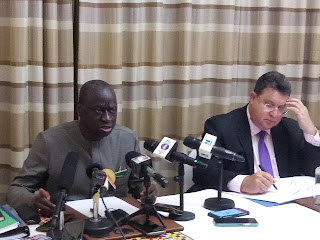
    Adnan Adams Mohammed In the wake of calls on the government to abandon the idea of forcing an Electronic Transaction Levy (E levy) on Ghanaians against all odds and massive opposition from the citizens, a former Chair of the Finance Committee of Parliament, Dr. Mark Assibey Yeboah, is urging the government to reconsider its decision not to go back to the International Monetary Fund (IMF) in the face of the country’s dwindling revenues. The former New Patriotic Party Member of Parliament for New Juaben South and a member of the current governing party maintains that, the government’s insistence on passing the E-Levy to shore up its revenue target is not right, given the existential economic challenges. His position which is against his party’s decision of not returning to the IMF for financial support but will look at prioritizing domestic revenue generation through the implementation of the E-Levy, has generated a lot of concerns and debate. The Finance Minister, Ken Ofori-Atta has indicated that, going to the IMF again will have dire economic implications. But, in an interview with a former finance, banking and energy industry expert for his take on the ramification for going to the IMF said, it will restore discipline in the fiscal system which will intend restructure the economy for better outlook in the bond market. “IMF will ensure discipline and that will bring credibility back”, Alex Mould, former Executive Director at Standard Chartered Bank and CEO of Ghana National Petroleum Corporation (GNPC) in a question and answer session with Economy Times. “They can become disciplined and reduce the expenditure especially the discretionary expenditures are focused on the Manifesto policies that do not increase the Gross Domestic Product.”

    “IMF don’t lend much but act as credit “derivative “ where’s bilateral and other multi-laterals are under the “IMF umbrella” and seek such comfort to “assist” either by extension of tenor, Grace period on interest payments, and sometimes haircuts (though rare) and additional funds.” Below is the full Q&A: ET: Q1i. What does going to the IMF actually mean? 1ii. What do we gain by returning to IMF? 1iii. Does IMF “bail” a country out? What exactly does that mean ? 1v. What is the alternative if we do not go into an IMF Programme ? Alex Mould: By going to IMF, the managers of the economy can become disciplined and reduce the expenditure especially the discretionary expenditures are focused on the Manifesto policies that do not increase the Gross Domestic Product (GDP). IMF will ensure discipline and that’s bringing credibility back. So yes, If a country is disciplined then no need for IMF IMF don’t lend much but act as credit “derivative “ where’s bilateral and other multi-laterals are under the “IMF umbrella”and seek such comfort to “assist” either by extension of tenor, Grace period on interest payments , and sometimes haircuts (though rare) and sometimes additional funds The only way out for them are as follows; Refinance principal that is amortized. Issue here is capital markets are “closed to Ghana. Our bonds are trading at 70% of their Par value (100%), yield is now 12.5%. If Ghana goes to capital markets today the interests rate will be 12.5%. So they won’t go (or can’t go). ET: Q2i. Can’t Ghana manage its own affairs out of this situation on its own without going to the IMF? 2ii. Can’t Ghana raise anymore debt on its own without going to the IMF? 2iii. Does IMF impose any conditionalities? 2iv. How are these conditionalities arrived at? 2v. Is Ghana as a going concern bankrupt or going into an ICU? Alex Mould: TOP 20 LIST OF THE MOST INDEBTED NATIONS IN THE WORLD. 1. USA ($18,286 trillion) 2. UK ($7,499 trillion) 3. France ($5,250 trillion) 4. Germany ($5,084 trillion) 5. Netherland ($4,124 trillion) 6. Luxembourg ($3,900 trillion) 7. Japan ($3,408 trillion) 8. Italy ($2,285 trillion) 9. Ireland ($2,236 trillion) 10. Spain ($2,036 trillion) 11. Canada ($1,791 trillion) 12. Switzerland ($1,699 trillion) 13. Australia ($1,563 trillion) 14. China ($1,437 trillion) 15. China Hong Kong ($1,416 trillion) 16. Singapore ($1,300 trillion) 17. Belgium (($1,194 trillion) 18. Sweden ($938 billion) 19. Austria ($629 billion) 20. Norway ($623 billion) TOP 10 MOST INDEBTED AFRICAN NATIONS TO CHINA, IMF AND WORLD BANK. 1. Angola ($25 billion) 2. Ethiopia ($13.5 billion) 3. Kenya ($7.9 billion) 4. Republic of Congo ($7.5 billion) 5. Sudan ($6.4 billion) 6. Zambia ($6.5 billion) 7. Cameroon ($5.5 billion) 8. Nigeria ($4.8 billion) 9. Ghana ($3.5 billion) 10. DR. Congo ($3.4 billion) SOURCE: World Bank Annual Report for 2021. From the data above we can deduce that, the issue is not about the quantum of a country’s debt. It’s about the quantum of debt relative to your earnings from taxes and even more specific is the sustainability of your payments of your debt service from your unencumbered revenue without going to borrow again to pay for paying your debt service. The fear they have of going to IMF is that, IMF will only go into agreement with Ghana government on a program of discipline. Note this, IMF never imposed anything on a government. The government provides their plan, a Performance Improvement Plan (PIP), which the IMF agree. The IMF only monitors that they follow their own plan. ET: Q3i. Why are we in the position we find ourselves since we just came out of an IMF Programme? 3ii. What were we supposed to do? 3iii. What did we do wrong after coming out of the last programme to send us back to the IMF again? Alex Mould: Issue here is that, capital markets are “closed to Ghana. Our bonds are trading at 70% of their Par value (100%), yield is now 12.5%. If Ghana goes to capital markets today the interests rate will be 12.5%. So they won’t go (or can’t go). Ghana could not manage its expenditure very well and generating much less revenues. This forced the government to resort to borrowing incessantly. So, the fiscal deficit and debt accumulation kept widening. Ghana’s current outlook on the debt market is not positive. The Market never lies. Our debt price has dropped 30%. Why is Capital markets saying so? Are they wrong? The price dropped far before Fitch released the bomb. The market players (investors) always knows before the rating agencies report their findings. Rating agencies only report numbers already known to the market. Why is it that Nigeria and Ivory Coasts – our immediate peers- Bond prices are close to par (100%). First of all let’s get the numbers right. GDP is not government income; it is total income in the country. Government income is about 12-16% of GDP. 2022 Domestic Tax income is going to be about GHS74 billion. Total debt is GHS350 billion (approx) and goes up even if they don’t do anything because 50% of it is in US Dollars and when the Cedi depreciates our debt gets bigger. The debt service is principal and interest Interest debt service is GHS37.5 billion and Wages and compensation is GHS36 billion. These two expenditures are greater than our Domestic tax revenue. Principal repayment this 2022 is about US$8 billion but in 2025 will be over US$22 billion. That is when the problem will arise if we can not get into the capital markets to refinance and get the bilaterals and multi-laterals to support us.

  • Ghana’s trade surplus narrows to US$1b

    Ghana’s trade surplus narrows to US$1b

     By Elorm Desewu 

    Ghana’s trade surplus has narrowed significantly recording a surplus of USw$1.1 billion representing 1.6% of Gross Domestic Product ( GDP) compared to a surplus of US$2.0 billion which was 2.8% of GDP in 2020. 

     The decline in the trade surplus was due mainly to increased imports as the economy rebounded. 

     Total exports were estimated at US$14.7 billion in 2021, compared with US$14.5 billion in 2020. On a year-on-year basis, the lower total export growth of 1.8 percent was driven by a 25.2 percent contraction in gold receipts as production volumes declined by over one million fine ounces during the year.  

    Cocoa and crude oil receipts, however, grew by 20.3 percent and 35.6 percent respectively.

     Total imports, on the other hand, increased by 9.7 percent year-on-year to US$13.6 billion compared with US$12.4 billion. 

    The growth in imports was attributed to a 43.8 percent growth in oil and gas imports. Of this, refined petroleum products increased by almost US$1 billion over the year reflecting the rebounding of the economy from the pandemic restrictions in 2020. The lower trade surplus, together with higher investment income outflows stemming from increased in interest payments, and higher profits and dividend repatriation, resulted in a current account deficit of US$2.5 billion representing 3.3 percent of GDP in 2021, higher than the deficit of US$2.1 billion which 3.1 percent of GDP recorded in 2020. The capital and financial account recorded a surplus of US$3.3 billion based on higher inflows from foreign direct investments, portfolio flows, and the IMF-SDR allocation. Significant inflows into the financial and capital account in 2021, more than offset the deficit in the current account, resulting in an overall Balance of Payments surplus of US$510 million compared with a surplus of US$377.5 million recorded in 2020. Gross International Reserves as at December 2021 stood at US$9.7 billion equivalent to 4.4 months of import cover. This compares with a reserve position of US$8.6 billion 4.0 months of import cover at the end of 2020. The Gross Reserves have since increased to US$9.9 billion as at 28th January 2022. The strong reserve position provided some buffers for the local currency in 2021. Cumulatively, while the Ghana Cedi depreciated by 4.1 percent and 3.1 percent against the US Dollar and Pound Sterling, respectively in 2021, the Ghana Cedi appreciated by 3.5 percent against the Euro. In the same period of 2020, the Ghana Cedi recorded depreciations of 3.9 percent, 7.1 percent, and 12.1 percent against the US Dollar, the Pound Sterling, and the Euro, respectively.

  • Banks profit growth dip

    Banks profit growth dip

    By Elorm Desewu

     Banks’ year on year profitability growth have declined recording 22.1 percent or GHC7.4 billion compare with 27.2 percent in 2020.

     Notwithstanding the decline in the profit growth, the industry remained solvent with the average industry Capital Adequacy Ratio (CAR) of 19.6 percent which is well above the 11.5 percent regulatory minimum threshold.

    Core liquid assets to short-term liabilities was 25.9 percent in December 2021 compared with 27.8 percent a year ago. Net interest income grew by 14.5 percent to GH¢12.8 billion, lower than the growth of 20.9 percent a year ago partly due to decline in interest rates.
    Net fees and commissions however recorded a 24.8 percent growth to GH¢2.9 billion, compared with 5.0 percent last year, reflecting continued recovery in trade finance-related and other businesses of banks.
     This resulted in a 14.6 percent growth in total operating income to GH¢17.4 billion, compared with 17.9 percent growth last year. Operating costs increased by 14.2 percent, higher than the 8.2 percent growth for same period in 2020.
     Loan loss provisions however contracted by 4.7 percent as at end-December 2021 from the 28.0 percent growth recorded a year ago, following the reversal of over-provisioning at the height of the pandemic in 2020.
     The performance of the banking sector in 2021 pointed to sustained growth in assets, deposits, and investments alongside improvements in the financial soundness indicators. In the year, total assets grew by 20.4 percent to GH¢179.8 billion as at December 2021. Asset quality however continued to reflect the general pandemic-induced repayment challenges as well as some bank-specific loan recovery challenges. From the peak of 17.3 percent in August 2021, the Non Performing Loans (NPL) ratio eased further to 15.2 percent at end-December 2021. Comparatively, the NPL ratio was 14.8 percent in December 2020.
  • Interest rates remain unchanged

    Interest rates remain unchanged

    Interest rates in the country are expected to remain steady, after the seven member Monetary Policy Committee, (MPC) decided to hold the policy rate at 14.5 percent for the next couple of months. According to the Committee chaired by the governor of the Bank of Ghana, (BoG), Ernest Addison, the dynamics associated with the November 2021 policy rate hike are yet to be fully transmitted and expects the decisive implementation of the fiscal correction measures, especially the 20 percent cut in expenditure to help moderate the upside risks to the inflation outlook, hence the need to hold the policy rate. The policy rate is the rate at which the banks borrow from the central bank and also serves as a benchmark in setting the Ghana Reference Rate. After falling to 7.5 percent in May 2021, inflation increased throughout the second half of the year, ending December 2021 at 12.6 percent. Non-food inflation went up from 9.2 percent in May 2021 to 12.5 percent in December 2021 while food inflation, over the same period rose sharply, moving from 5.4 percent in May 2021 to 12.8 percent in December 2021. The upward trajectory of inflation in the second half of 2021, reflected food supply challenges, rising crude oil prices, and some pass-through effects of exchange rate depreciation in the last quarter. At 12.6 percent for December 2021, headline inflation had moved outside the upper band of the medium-term target by 2.6 percent. 8. In line with the increases in headline inflation, underlying inflationary pressures, measured across all the Bank’s core measures of inflation, also increased over the period. The main core inflation measure, which excludes energy and utility, increased from 7.3 percent in May 2021 to 11.8 percent in December 2021. In addition, the weighted inflation expectations index, which captures inflation sentiments of consumers, businesses, and the financial sector, also picked up significantly in December 2021. On the money market, interest rates reflected mixed trends across the yield curve. The 91-day and 182-day Treasury bill rates declined to 12.49 percent and 13.19 percent respectively in December 2021, from 14.08 percent and 14.13 percent respectively, in December 2020. Similarly, the rate on the 364- day instrument decreased marginally to 16.46 percent from 16.98 percent over the same comparative period. However, rates on the 2-year and 5-year bonds increased to 19.75 percent and 21.00 percent respectively, from 18.50 percent and 19.85 percent respectively, while rates on the 3-year, 6-year, 7-year and 10-year bonds broadly declined. The rates on the 15-year and 20-year bonds, however, remained unchanged at 19.75 percent and 20.20 percent respectively, over the same comparative period. The weighted average interbank rate declined further to 12.68 percent from 13.56 percent, induced by persistent structural liquidity on the interbank market. This transmitted to the retail end of the market, and average lending rates of banks declined marginally to 20.04 percent in December 2021 from 21.20 percent recorded in the corresponding period of 2020.

  • Moody’s downgrades Ghana’s rating to Caa1; outlook stable

    Moody’s downgrades Ghana’s rating to Caa1; outlook stable

    Adnan Adams Mohammed Moody’s Investors Service (“Moody’s”) has downgraded the Government of Ghana’s long-term issuer and senior unsecured debt ratings to Caa1 from B3 and changed the outlook to stable from negative. The international rating agency has also downgraded the senior unsecured MTN programme ratings to (P)Caa1 from (P)B3 and the backed senior unsecured debt rating to B3 from B1. The downgrade to Caa1 reflects the increasingly difficult task the government faces in addressing its intertwined liquidity and debt challenges. “Weak revenue generation constrains government’s budget flexibility and tight funding conditions on international markets have forced the government to rely on costly debt with shorter maturity”, according to Moody’s report last week. Moody’s estimates that, “interest payments will absorb more than half the government’s revenue over the foreseeable future, which is exceptionally high compared to peers at all rating levels.” As a remedy, the government has proposed sharp fiscal consolidation and a switch to borrowings from external partners on more favourable terms. However, the strategy comes with sizeable implementation risks, especially in a still-fragile post-pandemic environment and while international market creditors price in very wide risk premia. While Ghana’s external buffers and moderate external debt amortization schedule in the next few years afford the government a window of opportunity to deliver on its strategy, balance of payments pressures will build up the longer government’s large financing requirements and have to rely on domestic sources. The stable outlook balances Ghana’s significant fiscal challenges, large refinancing needs and constraints on access to funding against the government’s pre-pandemic track record of relatively effective policy delivery and maintenance of a variety of funding sources. Ghana’s institutional framework and dynamic economy remain key credit supports, with economic growth forecasts of around 5% over the medium term. Concurrent to the rating downgrade, Moody’s has also downgraded Ghana’s bond enhanced by a partial guarantee from the International Development Association (IDA, Aaa stable) to B3 from B1, reflecting a blended expected loss now consistent with a one-notch uplift on the issuer rating. Finally, Moody’s has lowered Ghana’s local currency (LC) and foreign currency (FC) country ceiling to respectively B1 and B2 from Ba3 and B1. Non-diversifiable risks are appropriately captured in a LC ceiling three notches above the sovereign rating, taking into account relatively predictable institutions and government actions, low domestic political, and geopolitical risk; balanced against a large government footprint in the economy and the financial system and current account deficits. The FC country ceiling is maintained one notch below the LC country ceiling, reflecting constraints on capital account openness and fiscal policy effectiveness against robust foreign exchange reserves buffers and an average monetary policy effectiveness. Moody’s projects that Ghana’s government debt ratios will continue to deteriorate in the next few years with extremely weak debt affordability significantly constraining policymaking. Moody’s estimates that government debt ended 2021 at 80% of GDP while interest payments alone consumed half of government revenue that year (positioning Ghana with the second largest ratio among Moody’s rated sovereigns). Given Ghana’s still low average income at about $6000 per capita at Purchasing Power Parity and demands on social spending, very weak debt affordability constrains the government’s scope of policy action, intensifying the policy trade-off between servicing debt and delivering services to the Ghanaian population. Moody’s projects that the government will improve its primary balance by a cumulative 3% of GDP over 2022-24. The government’s own fiscal consolidation plan presented in November 2021 sets more ambitious targets, supported by new revenue measures worth 3% of GDP, some of which have since been opposed in Parliament. The government has announced a 20% cut in primary spending, equivalent to a 4% cut on a year-on-year basis or 16% in real terms, to compensate for any shortcoming in the government’s revenue measures package. Such an unprecedented fiscal tightening will be socially, economically, and politically challenging to implement. Moreover, Moody’s factors in further fiscal pressure from interest payments in the short term as the deterioration in funding conditions recently observed is unlikely to reverse until the government demonstrates to investors that significant fiscal consolidation is underway. Both domestic and external factors underpin Moody’s assumption that debt costs will remain high, including high inflation (at 12.6% most recently) and Moody’s expectation of tighter monetary policy globally. Ghana’s borrowing needs remaining elevated, at around 30% of GDP annually, mean higher borrowing rates will quickly translate into higher interest costs. Ultimately, Moody’s expects that a higher interest bill in 2022 and 2023 will offset the improvement in the government’s primary balance, thereby maintaining double-digit fiscal deficits (in cash terms) with a concomitant increase in the government’s debt . The government of Ghana’s capacity to access sufficient funding sources at manageable costs to meet large funding needs has deteriorated. The government’s external funding options have narrowed and, for the time being, appear limited to official sector sources or financing secured with the support of the official sector. This implies a greater reliance on domestic borrowing, primarily sourced from the banking sector at a cost that has recently increased to high levels. Ghana’s fiscal reserves, including in the various petroleum funds remain very small and therefore not suited to provide funding in times of stress. Ghana’s constraints on external funding come at a time when external debt service requirements in foreign currency are contained, thereby limiting short-term government liquidity risks. Foreign exchange reserves at $9.3 billion as of October 2021 according to the IMF (equivalent to 8 months of imports) provide a buffer to meet external debt flows. However, over the medium term, the government’s external liquidity profile will likely erode unless Ghana is able to restore its access to a wider range of external borrowing sources, including international markets. This, in turn, will rely on the ability of the government to demonstrate a track record of delivering on its fiscal consolidation objectives. The stable outlook balances Ghana’s significant fiscal challenges, large financing needs and funding constraints against the government’s pre-pandemic track record of relatively effective policies and maintenance of a variety of funding sources. On the downside, the constraints to policymaking posed by interest payments absorbing such a large proportion of the budget, risk undermining growth and, over time, social stability. However, while the capacity of the government to reduce its borrowing needs is limited, in 2022-23 refinancing will be primarily for local currency debt, providing a time-window for the government to deliver on its fiscal consolidation strategy and engender confidence that may restore its access to a broader range of external funding sources. Meanwhile, Ghana’s institutional framework and dynamic economy remain key credit supports. The government built a track record of meeting fiscal targets in the years preceding the pandemic-related shock in 2020, managing to consolidate its primary balance by 4.5% of GDP between 2016 and 2019. Improvements to Ghana’s personal and property tax systems and customs will likely continue and help the government in its efforts to improve tax compliance. Finally, the country’s strong growth potential from multiple sources both in the oil and non-oil sectors underpins Moody’s expectation for growth in the range of 4.5-6% over the medium term. Ghana’s ESG Credit Impact Score is highly negative (CIS-4), reflecting
    its high exposure to social risks. Resilience to environmental and social risks is weak, constrained by low wealth and high debt levels. Ghana’s credit profile is moderately exposed to environmental risks (E-3 issuer profile score). The cocoa sector is a large contributor to GDP, exports and employment and being demanding in water, it exposes the country to climate changes and especially droughts. Ghana is exposed to water management risks stemming from a lack of access to potable water in some areas. The weight of the agricultural sector exposes the economy to weather-related disruptions and the effects of climate change. The exposure to social risk is high (S-4 issuer profile score), driven by limited access to quality housing and education, especially in rural areas. Risks related to health and safety and access to basic services are moderately negative. While the government has put in place measures aimed at reducing poverty and inequality and strengthening social safety nets, its fiscal challenges constrain its scope for meaningful reduction in social risks given more than half of government revenue is consumed by interest payments. Governance is highly negative with a G-4 issuer profile score. Overall, Ghana’s institutions have shown some effectiveness. Moody’s has lowered the governance issuer profile score to reflect domestic revenue mobilisation challenges and significant constraints on fiscal policy effectiveness reflected by very weak debt affordability. The authorities have undertaken some institutional reforms on the revenue and competitiveness front, which will take some time to produce results. GDP per capita (PPP basis, US$): 5,799 (2020 Actual) (also known as Per Capita Income) Real GDP growth (% change): 0.4% (2020 Actual) (also known as GDP Growth)Inflation Rate (CPI, % change Dec/Dec): 10.5% (2020 Actual) Gen. Gov. Financial Balance/GDP: -10.8% (2020 Actual) (also known as Fiscal Balance)Current Account Balance/GDP: -3.1% (2020 Actual) (also known as External Balance) External debt/GDP: 45.7 (2020 Actual)Economic resiliency: ba3 Default history: No default events (on bonds or loans) have been recorded since 1983.On 01 February 2022, a rating committee was called to discuss the rating of the Ghana. The main points raised during the discussion were: The issuer’s institutions and governance strength, have decreased. The issuer’s fiscal or financial strength, including its debt profile, has decreased. Moody’s could downgrade Ghana’s ratings if it expected that the government will face heightened difficulty in covering its funding needs, increasing the likelihood of default. This could be evident in a sharper increase in interest rates than currently expected by Moody’s and could result from underperforming fiscal results. Moreover, there would be downward pressure on the ratings should Ghana’s currency, the cedi, weaken significantly with limited scope for a reversal. Conversely, Moody’s would likely upgrade Ghana’s ratings if fiscal consolidation proceeded more rapidly, resulting in much more favourable funding conditions for the government and indicating stronger policy credibility. Evidence that government’s funding options have broadened sustainably would also provide a path back to a higher rating level.

  • Govt misses fiscal deficit target

    Govt misses fiscal deficit target

    By Elorm Desewu The government’s fiscal deficit has widened further, recording an end year deficit of 9.7 percent o Gross Domestic Product, (GDP), slightly higher than the target of 9.4 percent of GDP for 2021. Total revenue and grants for 2021 was 15.4 percent of GDP. Domestic and tax revenue also recorded 15.2 percent and 12.6 percent of GDP respectively. Total expenditure was 25.1 percent of GDP for 2021. Capital expenditure was 3.5 percent at the end of 2021. The net domestic financing was 5.4 percent of GDP. For the 12months period of 2021, the primary balance was in deficit of 2 percent of GDP. The 2021 and medium-term fiscal policy framework was based on Government’s broad macroeconomic objective of restoring and sustaining macroeconomic stability with a focus on fiscal consolidation and debt sustainability over the medium-term. This objective was to be accomplished through deepening of structural reforms to support socio-economic transformation, especially through the implementation of reforms to increase revenue mobilisation and ensure efficiency and effectiveness of public finances. The 2021 Mid-Year Fiscal Policy Review of the 2021 Budget revised the fiscal deficit target to 9.4 percent of GDP down from the 9.5 percent set in the 2021 Budget. Similarly, the primary balance target was revised to -2.0 percent of GDP from -1.3 percent. This was on the back of revisions in GDP projections, adjustment in interest payments, and in the allocation for compensation of employees to reflect the 2021 negotiated public sector wage adjustments.

  • Ghana’s Heritage Fund record -1.7% on RoI

    Ghana’s Heritage Fund record -1.7% on RoI

    The total return on investment for the Ghana Heritage Fund (GHF) has recorded a -1.76% at end of 2021 compared to 4.66% recorded at the end of 2020. The two-year annualized return on investment was 1.40%, while the three-year annualised return on investment was 2.87%. For the second half of 2021, the difference between the U.S. 10-year Treasury note yield and the 2- year note yield tightened from 121.74% in June 2021 to 77.40% at the end of H2 2021. The 3-month Treasury bill rate fell by 0.01 bps from 0.04% to end H2 at 0.03%. The U.S 10-year Treasury note yield increased by 4 bps from 1.47% in June 2021 to 1.51% in December 2021, the 30-year Treasury bond yields decreased by 11 bps within the same period, while the yield of the 2-year note rose by 48 bps from 0.25% in June 2021 to 0.73% at half-year-end leading to a modest steepening of the yield curve. This was at the result of Covid-19 pandemic, persistent inflation expectations, some of the reasons accounting for this steepening of the yield curve are, accelerated vaccination campaigns, reduced social distancing, signs of stronger consumer spending, and tighter monetary policy communications. The net increase in yields during H2 led to a decrease in the capital appreciation of bonds as prices fell. In H2 2021, the Ghana Petroleum Funds returned a net realised income of US$5.40 million compared to US$8.93 million in H2 2020. The Ghana Stabilisation Fund contributed 9.9% or US$0.53 million to total net income compared to US$0.88 million in H2 2020 whilst GHF contributed 90.1% or US$4.87 million compared to US$8.05 million in H2 2020. The GPFs reserves at the end of H2 2021 was US$971.43 million (GHF was US$726.54 million and GSF was US$244.89 million) compared to US$844.78 million in H2 2020 (GHF was US$644.79 million and GSF was US$199.99 million). In H2 2021, a total amount of US$433.01million comprising lifting proceeds of the Ghana Group, surface rentals, interest on PHF account and corporate income taxes were received into the PHF (PHF at the end of H1 2021, held a balance of US$60.66 million, bringing total amount to US$493.47 million). Total petroleum revenue distributed was US$478.35 million. GNPC received US$129.99 million, ABFA received US$197.62 million whiles GSF and GHF received an allocation of US$105.52 million and US$45.22 million respectively during the period under review. A balance of US$15.32 million remained in the PHF account as at 31st of December 2021. The total amount received into the PHF account for H2 2021 was US$433.01 million (Crude oil lifting total of US$285.92 million and other total income of US$147.09 million The Petroleum Holding Fund Account (PHF) at the end of H1 2021, held a balance of US$60.66 million which comprised 60th lifting proceeds of US$60.46 million from Jubilee field, a mandatory balance of US$0.20 million and PHF overnight interest of US$0.0014 million, bringing the total amount to be distributed in H2 2021 to US$493.47 million. The total amount distributed from the PHF during the period was US$478.35 million. This consists of lifting proceeds from the 60th Parcel (received in H1 2021 but distributed in H2 2021), 61st and 62nd parcel from Jubilee totalling US$198.46 million, 19th TEN lifting amount of US$70.49 million and the 8th and Over lift from SGN totalling US$77.42 million, and other incomes totalling US$131.98 million. GNPC received an amount of US$129.99 million for CAPI and EFC in H2 2021 compared to US$118.24 million in H2 2020. Total amount received by ABFA for H2 2021 was US$197.62 million compared to US$103.87 in H2 2020. The Ghana Stabilisation Fund and the Ghana Heritage Fund received US$105.52 million and US$45.22 million respectively in H2 2021 compared to US$65.77 million and US$28.19 million respectively received in H2 2020. ABFA has received a total of US$2,899.66 million representing 40% of the total revenue while GNPC has received a total amount of US$2,232.15 million equivalent to 30% of total revenue. GSF and GHF have each received an amount of US$1,546.45 million (21%) and US$653.68 million (9%) respectively. Total lifting proceeds and other income distributed to ABFA, GNPC, GSF and GHF from inception to the end of December 2021 amounted to US$7,332.14 million The Petroleum Holding Fund Account (PHF) at the end of H2 2021, held a balance of US$15.32 million which comprised a mandatory balance of US$0.20 million, PHF overnight interest of US$0.0072 million and corporate income tax of US$15.11 million.

  • Bogoso explosion: stakeholders disagree on Maxam’s closure

    Bogoso explosion: stakeholders disagree on Maxam’s closure

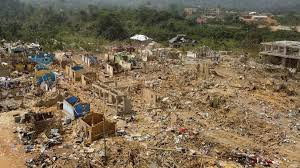
    Adnan Adams Mohammed The Government’s decision to order for the closure of Maxam Ghana Limited and Jocyderk Logistics Limited has attracted mix reaction by major stakeholders in the gold mining industry. A Senior Manager in charge of Mining at AngloGold Ashanti Iduaprim mines, Steven Asante Yamoah believes the closure of Maxam Company Limited will have adverse impact on the operations of over six mining companies in the country. Although, he supports the Minerals Commission’s decision to regulate the manufacture and transport of explosives following the Appiate disaster, he wished the closure decision is reconsidered. But, the Minister of Lands and Natural Resources has justified that it is important the companies do not operate until investigations are completed. “They (Maxam) supply AngloGold Ashanti, Chirano mines, Persus Mines, Ghana Manganese Company, Adamus Mining Limited and Awaso Bauxite. So this directive will have significant impact on our industry if we don’t put in remedial actions immediately”, Steven Asante Yamoah expressed in an interview last week. “So we are working through the Minerals Commission and other explosive suppliers in the country to see how we close this gap during this period.” “Our first expectation as industry players is the enforcement of the regulation. Though the directive will have far-reaching consequences on the industry as far as production is concerned, we are in support of it because it is consistent with the laws of the land. We will work closely with the regulator and also the service providers to make sure that we reduce the impact of this directive to the bearers minimum”, he said. However, a letter from the Ministry to the Minerals Commission revealed that preliminary investigations showed that Maxam Ghana Limited sub-contracted Jocyderk Logistics Limited, a company registered by the Minerals Commission, to transport the said explosives on behalf of Maxam Ghana Ltd. “I recently met the Ghana Chamber of Mines, and they have given me a breakdown of the impact the suspension will have on their work and on the national economy. I’m not oblivious of that, I’m fully aware. The reason why this decision was taken was so that we are not groping in the dark so that we understand the issues at the base level. We don’t want the scenario where we allow them to work, and then another explosion occurs”, the letter signed by Samuel Abdulai Jinapor indicated. “The responsible thing to do in circumstances like this is that you put a halt on the operations of the company until such a time you are reasonably satisfied that even if you were to lift the suspension, you would not have an immediate recurrence of this incident. So that’s the reason for the suspension,” he added. Meanwhile, touching to the performance of Maxam Company Limited which is a Spanish entity, the Senior Manager at AngloGold Ashanti Iduaprim mines, said Maxam has for over 30 years been offering responsible mining support services in explosives to several mines including Anglogold Ashanti hence their sudden closure will have a significant impact on their productivity. “We started business with them for almost 30 years now and we have kept them on our mines, being in partnership for all this while. So in terms of their performance, I have no reservation. Of course, being an entity that aspires to excellence, sometimes you identify a shortcoming and you fix them within the shortest possible time…and that shows how as a service provider they respond to improve the area of safety and compliance to regulations.” “So I have no reservations that they are a good service provider. However, as the Minerals Commission has earlier said, the closure is in the interest of all of us, thus, industry, the service provider and the country to make sure that during this period we go into the matter to find out what happened“, he added. Consequently, the Western Regional Manager of the Minerals Commission, Isaac Mwinbellen, after handing over the shutdown documents to Maxam’s Plant Manager, Emerald Takyi, noted that Maxam Limited cannot be blamed for any wrongdoing until investigations into the incident are completed. “We have not completed investigations, and we cannot say that Maxam has gone wrong in any of this. We are still going through investigations. Remember that the Police are also doing their investigations on the spot.” “Till we put all these pieces together and look at the requirements, then we will be able to tell who is culpable and who is not. But at this stage, we cannot tell who is culpable or not. We are still in the process of investigations. Until investigations are completed, we cannot say someone is culpable or not.” Besides Maxam Company Limited, there are other mining explosive makers and suppliers like AEL Mining Services from South Africa and Solar Nitro as well as Wilep Supply and RedBlock who are rather agents that provide explosive services to the mining industry in the Western Region.

  • E-levy: gov’t intensifies sensitization amidst strong opposition

    E-levy: gov’t intensifies sensitization amidst strong opposition

    Adnan Adams Mohammed The Government has doubled its effort on public sensitization as it holds town hall meetings on intended introduction of the ‘controversial’ Electronic Transactions Levy (E-levy) bill. The exercise forms part of a series of engagements the government has planned with the aim of explaining the importance of the E-levy as well as taking feedback and inputs from relevant stakeholders on the levy. It also says the feedback will inform the government on the implementation of the levy. This comes in the midst of strong opposition from majority of the citizens and the minority in parliament. Latest to register its displeasure is the Concerned Central Market Traders Association in Kumasi in the Ashanti Region. According to them, the e-Levy will have a negative effect on their businesses if introduced and have called on the government to rescind its decision to get parliament to pass the bill. The association which has described the 1.75 percent electronic transaction levy proposed by government as a “lazy man’s” approach wants the tax net widened instead, to get more people to pay taxes. “To me, I think the government is lazy because in Ghana, we have so many people who don’t pay tax so the government should open the tax net, and catch more people inside the net. So he’ll get more money to develop Ghana than the cheap way they’re trying to use”, Chairman for the Concerned Central Market Traders Association, Frank Antwi, speaking in an interview on a radio station bemoaned the effect the levy will have on their businesses as its members rely on the use of Mobile money to transact business. “When you talk about trading in Kumasi here, our customers always come from nearby villages so sometimes they call you and send you momo to buy them the goods. “So what you do is, you just get the goods prepared for them. E-Levy, it [will] create problems for us, so the government should sit and think again.” The first town hall meeting, held in Koforidua last week, featured; Minister for Finance, Ken Ofori-Atta, Minister for Communication and Digitalization, Ursula Owusu-Ekuful, Minister for Information, Kojo Oppong Nkrumah and Deputy Majority Leader, Alexander Afenyo-Markin. The E-levy is a new tax measure introduced by the government in the 2022 Budget on basic transactions related to digital payments and electronic platform transactions. A charge of 1.75% will apply to electronic transactions that are more than GH¢100 on a daily basis. Ken Ofori-Atta last week gave hints of the planned town hall meeting during a press conference. He said the government is convinced about the need for the e-levy and how it encapsulates the idea of burden-sharing for Ghana’s development. Meanwhile, some sections of citizens want the government to reduce the 1.75 percent if it would not cancel the entire levy.

  • E-levy is ‘most nuisance tax’ – Terkper

    E-levy is ‘most nuisance tax’ – Terkper

    Adnan Adams Mohammed A former minister of finance has described embattled Electronic Transactions Levy policy (E-Levy)as the most nuisance of all nuisance taxes in the history of Ghana’s economic management. The former minister takes strong opposition against the most controversial tax policy in the fourth republic governance of Ghana. In a statement reacting to a ‘false’ publication alleging his endorsement for the e-levy, the minister described the e-Levy as a nuisance tax by taxing “savings” in electronic wallets government is among others. “Discriminating against savers using electronic ‘wallets’, instead of banks and pillows, to save. This offends the principle of fairness in taxation”, Seth Terkper objected in his statement released last week. He added that, e-levy will be “compelling customers to pay tax on the “wallet” transfers but the same tax does not apply to those using cheques and other conventional means; and engaging in double or multiple taxation of savings that may have attracted the conventional taxes already.” Below is the full statement: My attention has been drawn to publications and news reports alleging my endorsement of the e-levy proposal in the 2022 budget statement. I wish to state that my position, including a presentation I made at PFM-Tax Africa event 2 day ago and reported by various national media, has been consistent on the issue. 2. Ghana’s Tax Structure: In the four decades since the launch of the Economic Recovery Programme or Structural Adjustment Programme (ERP/SAP) in 1983, Ghana has NOT had a tax instrument that taxes savings and investments. 3. Taxing savings and investment: In a recent tweet I quizzed: what difference does it make if Ghanaians kept their savings (which may have attracted taxes already) under their pillows, or in a bank or in a “e-wallet” (purse) on their phones? In the case of the pillow and bank, they do not pay a tax until the money withdrawn is (a) used to set up a business to turn a profit (income tax) or (b) buy consumer goods and services and pay, mainly, VAT, excise and tariff or customs duty. Why then tax the equivalent savings taken from the phone ‘wallet’ before one uses it to set up a business and make profit or buy goods to attract the VAT etc? 4. E-levy: “most nuisance of nuisance taxes”: I have used this expression already to describe the e-levy because, by taxing “savings” in electronic wallets government is among others, a. Discriminating against savers using electronic ‘wallets’, instead of banks and pillows, to save. This offends the principle of fairness in taxation. b. Compelling customers to pay tax on the “wallet” transfers but the same tax does not apply to those using cheques and other conventional means; and c. Engaging in double or multiple taxation of savings that may have attracted the conventional taxes already (as noted below). 5. Likely tax E-Levy on Loans in e-Wallets: The last point may go to such ridiculous extent as paying e-levy on business loans in a bank account, for which, the bank uses its “wallet” to make transfers to customers. A rather ‘nice’ way to promote investments and reduce the cost of doing business? 6. Taxing fees and commissions: It is legitimate for owners of “savings” to (a) pay an “expenditure tax” on the commissions or fees that Banks and Telcos charge them for the “service rendered” in making the transfer; and “income tax” on the interest earned. The Banks and Telcos also pay “income tax” on the fees and commissions that form part of the profit they make. The dilemma facing the government is that, unless the taxes mentioned are exempt by law, it is already collecting these taxes described, discussed in detail below. 7. Our Conventional Taxes: as noted, Ghana has had a tax regime that, in the main, consists of the following handles or instruments. a. Income Tax: corporate income tax (CIT) earned by incorporated entities as well as personal income tax (PIT) earned by employees on salaries or wages and profit earned by uninncorporated persons. b. Value Added Tax (VAT): this expenditure tax is paid on taxable (or non-exempt) supplies of goods and services, whether imported or produced locally. c. Import Duty or Tariffs: this expenditure tax is paid on only imported goods, hence it protects local industries (note another controversy surrounding “benchmark” values and the tussle between AGI and GUTA). d. Excise Duty: a punitive expenditure tax paid, in addition to VAT and tariffs, on what is considered by some as ‘harmful’ products such as alcohol and tobacco as well as on petroleum products and some luxury items. e. Levies: these are special purpose income and expenditure taxes that mimic any one of the above categories and never on savings. 8. Conclusion: The Telcos pay VAT on taxable goods and services but the government abrogated the VAT on non-core financial services in 2017. Why impose another tax or levy on other finance sector savings, not just expenditures? As with the “blocking” of input VAT (on supplies to registered businesses) for NHIL and GETFund levy, there will be no credit/offset or refund for the e-levy. Is it time to overcome the “kumipreko” blues, call the e-Levy a VAT increase and stop distorting our well established tax regime with numerous levies in addition to “capping”? Most importantly, Ghana’s rationale tax regime has always had elaborate provisions to PROMOTE, NOT DELIBERATELY PUNISH, savings and investments. Signed: E. Seth Terkper