Category: News

  • ‘Renewables are a good investment’ – UK Commissioner advocates for Africa renewables

    ‘Renewables are a good investment’ – UK Commissioner advocates for Africa renewables

    Adnan Adams Mohammed

    The United Kingdom’s Trade Commissioner for Africa has added his voice to the numerous speakers drawing the attention of energy sector investors to the great opportunities in Africa’s renewables.

    The Commissioner reiterated the fact that renewables are bringing down cost of energy generation amidst the challenging times for fossil fuels which has been witnessing surging prices on the international market.

    The Trade expert agreed that, renewables represented a significant investment opportunity for international as well as domestic companies, and assured of UK’s commitment to investing in Africa’s green-energy potential.

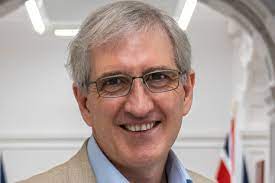
    “Renewables are a good investment,” John Humphreys said delivering a keynote address at the Green Energy Africa Conference, yesterday in Cape Town, South Africa. “Renewables are bringing down the overall cost of energy, and making business more efficient, which makes it an increasingly attractive investment.”

    “With a growing population and an economy worth $2.4 trillion, there are huge opportunities across African emerging sectors such as technology, clean energy and sustainable infrastructure,” said Humphreys. “We are excited to be growing the UK-Africa relationship in these industries.”

    The Green Energy Africa Summit plays its role in driving enabling environments to ensure foreign direct investment is deployed into game-changing projects that will reduce the energy deficit and provide energy access across the continent.

    GEA Vice President of Energy & Government Relations, Paul Sinclair, speaking at the event said, the views of business leaders supported the mission of the Summit to improve sustainable energy access in a way that made business sense.

    “We completely agree that there are great opportunities in low-carbon energy,” he said. “This event is all about enabling investment into new energy projects, providing energy access and shaping the future of Africa.”

    Also speaking at the event, Rand Merchant Bank (RMB) CEO, Emrie Brown, said the Private power is booming as she identified a growing trend for metros and private companies to either generate their own power, or to source it from third parties, as power opportunities expanded beyond the traditional state utility generators.

    Brown said only a fraction of Africa’s energy potential was currently being exploited – in areas such as hydropower, solar, biomass, wind and geothermal energy.

    “Domestic and international capital must be mobilised for innovative financing in Africa’s energy sector with a focus on renewable energy. Electrification efforts need to be open to private-sector investment and innovations, such as solar energy and battery storage, which have made a tremendous impact in enabling access for millions of poor and underserved households.”

    Brown said the challenge of Africa’s energy transition was twofold: managing the risks to vulnerable communities directly impacted by climate change, while at the same time supporting the people whose lives are inextricably linked to the fossil fuel industry, and for whom that transition represents a direct threat to the livelihoods.

    “The greatest challenge is to deliver the vision of a just transition – a more socially inclusive society, which has managed the social risk of the change and sees the economic opportunity that the change brings,” she said.

  • Hooting At President Akufo-Addo.. A Reflection Of The Mood Of Ghanaian Youth – Statement

    Hooting At President Akufo-Addo.. A Reflection Of The Mood Of Ghanaian Youth – Statement

    PRESS STATEMENT

    27th September, 2022

    BOOING OF PRESIDENT AKUFO-ADDO AT GLOBAL CITIZENS CONCERT WAS A REFLECTION OF THE MOOD OF GHANAIAN YOUTH.

    We at the National Democratic Congress (NDC) have followed with interest, discussions around the fallouts from the Global Citizens musical concert held last weekend at the Black Stars Square in Accra.

    Of particular notice was the reported booing of President Akufo-Addo by the crowd that had gathered from all walks of life on that fateful day. Indeed, both the traditional and social media space has been awash with videos of the said incident in which the charged-up crowd, predominantly made up of young people, are seen hooting at the President who had made an appearance to deliver a keynote address. 

    Ironically, while President Akufo-Addo appeared excited and was heard proclaiming: “Ëwiase nyinaa aba Ghana”, to wit, the whole world was in Ghana, the youth would have none of that, as their joy and the electric atmosphere suddenly dissipated into an expression of anger and disapproval at the sight of their President.

    The events of that day were unprecedented, as no sitting Ghanaian President, at least under the Fourth Republic, has ever been subjected to such ridicule and embarrassment.

    Ordinarily, it is the business of the Akufo-Addo/Bawumia government and their handlers who by now should have come to terms with the reality of the difficult times Ghanaians are living in and that the action of the youth reflects an overwhelming vote of no confidence in their crass misgovernance and mishandling of the affairs of our dear nation. 

    Sadly but unsurprisingly, we have become aware of some irresponsible and ludicrous attempts by NPP hirelings and lickspittles to blame the booing of President Akufo-Addo at the said event on the NDC. This latest attempt by the NPP to blame the NDC for the monumental embarrassment that befell President Akufo-Addo at the Global Citizen musical concert is not only insulting to the sensibilities of Ghanaians but also underscores the fact that this government and their hired apologists are simply oblivious of our present reality or perhaps they are underestimating the anger of the Ghanaian people. 

    A hungry man, is an angry man, it is often said, but this plain truth is lost on the Akufo-Addo/Bawumia government. The frustrations expressed by the youth on that fateful day perfectly reflects the excruciating and frustrating times Ghanaians presently find themselves.

    It bears reminding the ruling New Patriotic Party that the struggles of the youth are a microcosm of the daily ordeal of the Ghanaian people who must find ways to survive at a time inflation is 33.9%, with prices of goods and services skyrocketing every day. The youth expressed in the clearest terms, the daily struggles of the vast majority of our people who wake up every passing day with no hope of where their next meal is going to come from. Those young people simply gave voice to our daily struggles with unbearable prices of fuel at the pumps, high cost of living in the country. 

    Today, our economy lies in tatters having been plunged into an unsustainable public debt through reckless spending and excessive borrowing most of which have been spent on consumption by the Akufo-Addo/Bawumia government. Unemployment rate continues to raise and currently stands at 13.4%, the highest in nearly thirty years, despite championing lofty and grandiose rhetorics such as NABCO, YouStart, One District, One Factory, among others. 

    The fact that Ghana has a very youthful population, with the very active youth bracket between the ages of 15 and 24 years adding up to nearly over six million people according to the 2020 Population and Housing Census, should dawn on President Akufo-Addo that anything short of prioritizing an agenda to create sustainable and meaningful jobs will not be countenanced by the young people of this country.

    Clearly, the youth of Ghana have long lost faith in President Akufo-Addo and can no longer take his empty rhetorics. Ghanaians in general can no longer identify with President Akufo-Addo and Vice President Alhaji Bawumia who continue to mismanage the economy and abuse the public purse with reckless abandon. They have no trust for leaders who continue to lie to them and have shown no genuine desire to address their worsening living conditions. This is the hard truth that the Akufo-Addo/Bawumia government must come to the terms with. 

    Any attempt to belittle the spontaneous angry protest of such a vastly heterogeneous crowd is to turn a deaf ear on the felt needs of the Ghanaian people. The mess that this NPP-Akufo-Addo/Bawumia government has brought upon Ghanaians will not be solved by farcical blaming of political opponents. It is about time government woke up to smell the coffee.

    Signed,

    Sammy Gyamfi Esq.

    (National Communications Officer)

  • Ghana’s debt to hit 100% of GDP as govt consolidates all debt

    Ghana’s debt to hit 100% of GDP as govt consolidates all debt

    Adnan Adams Mohammed

    As part of Ghana Government and International Monetary Fund (IMF) negotiation, the country’s debt is likely to hit 100 percent of Gross Domestic Product (GDP) as government has agreed to consolidate all its debt.

    The IMF has asked government to include, energy sector debt, GETFund, Sinohydro, and cocoa loans to the public debt. The country’s debt stock increased to US$393.4 billion, 78.3 percent of GDP as at June, 2022.

    The current debt is minus the energy sector debt, GETFund, Sinohydro, and cocoa loans which the IMF have asked government to add to the total debt stock.

    “Our debt is unsustainable making debt restructuring unavailable!”, Dr Ato Forson, ranking member on finance has said in a social media post.

    He preceded his comment with an information that, “After calling the minority names because I insisted they add ESLA and GETFund bonds plus cocoa bills and Sinohydro to the public debt, Government has finally agreed as part of the IMF negotiations to add all of them! Our public debt to GDP is now about 100%.”

  • Confirmed: ‘haircut’ of investors funds imminent as gov’t plans debt restructuring

    Confirmed: ‘haircut’ of investors funds imminent as gov’t plans debt restructuring

     Adnan Adams Mohammed

    An official source has confirmed an imminent ‘haircut’ of investors funds in Government of Ghana (GoG) issued domestic long and short-term debt instruments. 

    This means that, investors who have invested their private funds in Ghana government’s Treasury notes may only receive  a fraction, according to a widely circulated warning note by a Bloomberg publication. 

    The fraction, according various analyst, is currently pegged at 60-70 percent of investors total principal and interest invested. But, a finance and energy analyst, Alexander Kofi-Mensah Mould has further indicated that, what is yet to be established is if, at some later date, this haircut will apply to US$ denominated Eurobonds issued by GoG outside Ghana on the international Capital Markets;  the markets are mute on this but the Eurobonds are trading for 40 cents to the dollar (That is, a haircut of 60%). This unpleasant news confirms a publication of this paper earlier this month which indicated a possible ‘haircut’ of investors funds in government debt instruments. 

    “Any attempt by government to give investors a haircut on their investment principle will result in Ghana not being able to go to the Capital markets for many years to come”, Mr Mould, in that publication said.

    However, reacting to the confirmation to his earlier warner and caution to government on the implications of the possible ‘haircut’ alarm, the former Executive Director of Wholesale Banking at Standard Chartered Bank, asked the government to provide a solution that does not penalize Ghanaian citizens and rather favors foreign investors, that is, if they have no option but to give a hair cut to Investors – and to be fair to all Ghanaians in attempt to rebuild the collapsing economy. 

    “If you are bankrupt with ideas of how to meet your debt service and the only way is by reducing people’s savings,  then you need to be fair and also institute a haircut in government payroll as well”, He fumed when reacting to the Blomberg publication on the imminent ‘haircut’ of domestic debts by government.

    “It is absolutely unfair to penalize a group of Ghanaians that have decided to invest as a means of saving for future expenditure, and the poor pensioners who have put their trust in our government and invested in T-Bills, T-Notes and Bonds issued by GoG.  

    Mr Mould went on to reveal that “Not to be left out of this “haircut” are all workers of this country who have placed their funds, by law, in Pension Funds (including SSNIT and other private pension fund managers) who have invested in T-Bills and Bonds issues by GoG; Mr Mould alarmed that, the manner in which the government has planned to restructure it’s domestic debt will directly affect the banking sector negatively with banks posting losses, and also the pensions sector where the funds people have in their pensions being reduced significantly.

    Bank losses will affect their stock market prices with investors of these stocks posting instant losses; “Doing so will cause serious harm to the banking sector. People will lose confidence in saving – Without savings, there will be no funds for companies to borrow and Many businesses will grind to a standstill. This will lead to layoffs and an increase in unemployment ” Mr Mould also stated that this is just the beginning and he wont put it past this government, who seem bankrupt with ideas and desperate, to do the impossible in the near future  –  to inflict a similar haircut on salaries of government workers and also citizens’ bank account balances. 

    The Blomberg publication captured that, “the country’s largest debt investors including local banks and pension funds are preparing to engage in discussion on debt reorganization that could entail extension of maturities and haircuts on principal and interest payments, according to people familiar with the matter, who asked not to be identified because they are not authorized to speak publicly.” 

    Meanwhile, in the earlier publication on the ‘haircut’ of investors funds as published by this paper, Mr Mould cautioned that, “Any attempt by government to give investors a haircut on their investment principle will result in the Ghana not being able to go to the Capital markets fo many many years to come.”  

    “This also could be resisted by many investors and there could be lawsuits by investor blocks which could drag Ghana’s current credit crunch; this option is like a road to perdition and only reserved for the non salvageable economies in the world.” The finance analyst tabled some alternative ideas on how the ‘Nana Akuffo Addo/Dr Mahmoud Bawumia government ‘ could resort to on addressing the glaring default in it’s debts as he enumerated the following options during the interview on how government could deal with the imminent credit crunch it faces. 

    “In the discussions with the IMF, GoG will be required to bring a performance improvement plan (PIP), which should focus on government reducing its expenditure and increase its  revenue in the short term for the next two years to stabilize the fiscals, while IMF holds the government’s hand to seek some reprieve from Creditors (local and International) on its debt service. 

    “The first part, reducing expenditure could take the form of  the rationalization of employment in the public and civil service (ie reducing staffing and staff costs) and most likely a freezing any increases in salaries and freezing employment in non-critical and non-core sectors for a few years, as well as not embarking on any projects or capital expenditure that can wait a few years. 

    “Another area is that, the NPP government will be asked to focus on is in curtailing most of the politically-lead programs/projects which will not lead to any substantial increase the GDP in the short term.” The outspoken former government appointee noted that, the government needs to determine whether the current challenge it faces is a structural one or if it’s pure mismanagement (where drivers of fundamentals remain strong) since the antidotes to curing both differ. He furthered his assertion indicating that, “I see the problem akin to what we had in Blackstars a few months ago: Do you change the coach or all the players?” 

    He lay the blame squarely on President Akufo Addo for keeping, an investment banker (Ken Ofori-Atta) as the finance minister, instead of appointing an astute finance guru, or an astute commercial banker, both of whom may have better knowledge of the financial credit market as well as financial risk management, to salvage the mess the wonton-borrowing Ken Ofori Atta has created.

  • National Muslims Conference and Matters Arising…. What is Behind the Agenda?

    National Muslims Conference and Matters Arising…. What is Behind the Agenda?

    An Episode from Adnan Adams Mohammed

    We one day woke up to a bell of a new Muslim so-called “mouthpiece” birthed in a grand style with much assurance of a new Ghana for Muslims.

    A year is gone yet, the new era for Muslims right in Ghana has no new voice in stories, except the old chapping voices, which have been championing the national interest of Muslims.

    Much questions are begging for clarification and answers in the “New Era of a New Mouthpiece and Voice for Muslims”:

    1. Are we for unity for the interest of Muslims in Ghana? Or, we are for an agenda to champion a political and or tribal interest?
    • I thought the some of the promoters of the “Mouthpiece and Voice for Muslims in Ghana” know COMOG; in fact, I want to believe that some of them were part of the journey that started and arrived at the destination of the creation of COMOG! Is it that COMOG does not represent the unity of Muslims in Ghana, so much so that Muslims in Ghana stand in need of another group of Muslims to come out with a UNITY PLATFORM for Muslims?
    • What happened to the Wesley Girls’ SHS “No Prayer, No Fasting, No Islam on Campus” brouhaha? We all laid low because all Muslims were told to stay off and wait for the intervention of our honorable Muslim Caucus in Parliament. A year is gone past, but nothing has been heard of from the Parliamentary committee meetings that we were told were taking place; if there was any meeting at all!
    • Our own school, Islamic SHS in Kumasi had some of their students brutalized, tear-gased and humiliated when all they demanded for was action to be taken on the highway in front of their school to stop the loss of precious young lives of students as passing vehicles impatiently knock and run over them rampantly. This became a national issue and the discussions raged on. Yet, the “burgeoning New Mouthpiece and Voice” for Muslims was not heard. The quiet silence beggars belief! Our very Muslim MPs who are supposed to be our defenders when it comes to Fundamental Human Rights as enshrined in our 1992 Constitution chicken out and left us all looking on sheepishly like orphans with no one to look to for a justice society that respects proper human diversity.
    • The “Mouthpiece and Voice of the new era Muslims” have been missing on the LGTBQ+ advocacy. Are the “Mouthpiece and Voice of the new era Muslims” afraid to be heard on this serious national issue which Islam vehemently prohibits?
    • Can the affairs of Muslims in Ghana be run like a political party? Whose interest are we seeking and serving? That of Muslims and Islam, or that of some politicians?
    • We were assured of financial stability and support for Islamic activities and projects! One year is gone! What is the story?
    • Are we as Muslims allowing ourselves (parochial and tribal interest) to be continuously humiliated as if we are foreigners in Ghana?

    What is going wrong?

    Who else has sharper eyes, wider ears and longer nose to see clearer, hear and smell the unpleasant future drawing nigh on Muslims in Ghana!!!

    Had I known, is always at last!!!

    Must we always seat, wait for the unpleasant things to happen before we start wailing, lamenting, complaining and blame-gaming?

    Proactiveness and tactfulness can win Muslims a lot of the continuous humiliating battles in Ghana.

    Thank you.

    A Patriotic and Activist Muslim

    Adnan Adams Mohammed (+233 24 465 3664)

  • Cedi depreciation: structural policies being worked on to change contributory factors – BoG

    Cedi depreciation: structural policies being worked on to change contributory factors – BoG

    Adnan Adams Mohammed

    As the local currency, the Cedi, is still experiencing the worst rate depreciation against the U.S dollar, the Bank of Ghana says it has started investing in structural policies aimed at changing Ghanaian behaviours that contribute to the devastating situation.

    The Central Bank indicates that, the structural policies are mainly targeted at curbing or managing positively the Ghanaian appetite for foreign foods.

    The Head of Financial Stability at Bank of Ghana explained that, with more and more Ghanaians developing a taste for foods that are not grown in the country or whose local productions are not enough to meet local demand, for instance rice, it puts a lot of pressure on the cedi as majority of the food consumed needs to be imported.

    “When I was growing up, the staple food of the Ghanaian was corn, kenkey, cassava, plantain. Now what is the staple food of the Ghanaian? The staple food of the Ghanaians is rice”, Dr. Joseph France said during a TV discussion last week.

    “So you change your appetite, and what your appetite has changed to, you import. Growing up we eat mangoes, we eat oranges, we eat pawpaw, now what do we have? We have apples, and you know, name all of them. All of these are imported.

    “So you come up with structural policies and structural policies grind slowly to change the behavior of the Ghanaian to food that we have here that we grow here than putting pressure on the currency, because we import the apples, we import the berries and then all of them. We don’t plant them here, these are temperate fruits.

    “We don’t eat the mangoes anymore. The mangoes get rotten, we don’t have the appetite for them. We have the appetite for rice and the rice we import them. We don’t grow as much as we can here, and our appetite has changed.”

    “So these are some of the structural policies that will be put in place to gradually bring the Ghanaian around and also to help consume what we grow here and not what we have to use the limited foreign currency to import. So gradually we will get there,” he added.

  • T’ Bills now selling at 31%

    T’ Bills now selling at 31%

    Adnan Adams Mohammed

    Investors in Treasury Bills (T’Bills) are happily cashing-in on the 182-Days Bills as it is now trading at 31.05 percent as at, last week, September 10, 2022.  

    The auction results as released by the Bank of Ghana indicate that government exceeded its target for the 13th week running. But, this comes with at a higher repayment cost. The sales were oversubscribed by 35% to the tune of GH¢2.287 billion.

    The continuous rise T’Bills rate, one of the most secured and risk free investment, will likely affect commercial banks loan’s to domestic borrowers as most of the banks will prefer to invest their deposits taking in a secured, yet, with high returns. Since inflation begun rising about five months ago, interest rates have been escalating consistently to compensate investors.

    “The 91-day Treasury bill went for 29.48%, compared to 29.04% the previous week, whilst the 182-Day T-bill traded at 31.05%, as against 30.22% the earlier week”, the auction results captured.

    Although, investors showed more interest in the 3-months bill that of the 6 months bill also witnessed significant interest this time around.  

    GH¢860.92 million worth of the bids came from the 182-day bill. ¢815.70 million were however accepted.

    For the 91-day bill, ¢1.427 billion of the bids were tendered in, but ¢1.410 billion were accepted.

    The target for this auction was ¢1.682 billion.

      Securities Bids Tendered (GH¢) Bids Accepted (GH¢)

      91 Day Bill  1.427  billion 1.410 billion

    182 Day Bill  860.92 million 815.70 million

    Total 2.287 billion 2.225 billion

    Target 1.682 billion

  • Policy rate to rise further

    Policy rate to rise further

    By Elorm Desewu

    With the steady surge in year on year inflation, the seven member Monetary Policy Committee, (MPC) of Bank of Ghana is likely to hike the policy rate further for next couple of months, as they commence their bimonthly meeting this week.

    Investors may be compelled to sell their cedi holdings, if the MPC committee decides to hold the policy rate at 22 percent.

    Inflation is expected to rise further as the increase in electricity and water tariffs have taken effect from September 1, 2022 coupled with a just announced 30% increase in commercial road transport fares scheduled for September 21, will exert intense upward pressure on inflation for this month. togel toto

    As inflation rises, inevitably so will interest rates and thus the cost of business financing.

    The policy  rate is the at which universal banks borrow from the central bank as their last resort and also serves as a bench mark in setting the Ghana Reference Rate.

     As a result of the inflation targeting, the BoG was forced to hike its MPR by 750 basis points since May this year, to 22% currently. This has drastically raised the cost of borrowing for government and businesses alike and will unavoidably curb Ghana’s economic growth.  But the central bank sensibly points out that strong economic growth is not sustainable with inflation so high anyway.

    This year, a combination of rising global energy prices, the reversal of capital inflows into Ghana by foreign bond investors and the inability to access the Eurobond market for hitherto customary annual forex funding has led to a 35% depreciation of the cedi against the United States dollar during the first eight months of this year, this fuelling import inflation.

    But the BoG has banked it hopes on the US$750 million Afreximbank loan as well as the pending US$1.3 billion cocoa syndicated loan to shore up it’s reserves and also stabilize the cedi.

  • Be transparent with any Instrument that bothers on Muslims – Elements in government cautioned

    Be transparent with any Instrument that bothers on Muslims – Elements in government cautioned

    Adnan Adams Mohammed

    The National Muslim Stakeholder Consultative Forum held in Accra, last week, cautioned all elements in government who are prompting to promote any kind of Executive or Legislative Instruments bothering Muslims to be transparent and cautious.

    In the communiqué issued at the end of the forum organised by the Coalition of Muslim

    Organizations, Ghana (COMOG) in association with the Conference of Regional Chief Imams of Ghana

    which was held under the auspices of His Eminence the National Chief Imam, the forum highlighted five key points that needs urgent attention of the Muslims in the country and the government.

    The forum was attended by over 15 Stakeholder Organizations and Institutions (SOIs) known among the Muslim leadership.

    “The promoters of a proposed Executive Instrument (EI) or Legislative Instrument (LI) for Muslims in Ghana must be transparent and share their proposals for approval by the Muslim Stakeholder Organizations and Institutions (MSOIs) before presenting same to the President or Parliament, respectively, for possible consideration of enactment into a law”, the Communiqué as signed by Hajj Abdel-Manan Abdel-Rahman, COMOG President/Forum Coordinator for the Forum Chairman, Nana Alhaj Yussif Fanyanamah, Chief of Kintampo and Acting President of National Council of Zongo Chiefs.  

    It was also discussed at the Forum that, unity among all the Muslim denominations and groups were key for national peace and cohesion building.

    Attached is the full Communiqué:

  • Gov’t adds GH¢7.14bn to its debt

    Gov’t adds GH¢7.14bn to its debt

    Adnan Adams Mohammed

    Government, through the Bank of Ghana, has increased its domestic debt by GH¢7.148 billion through the sale of Treasury bills in August 2022.

    The sales realized were about 39.70% more than its target of GH¢5.117 billion, largely used to refinance maturing debts.

    However, the rising interest rates deepen investor interest in the short-term securities.

    The yield on the 91-day Treasury bills increased to 28.61% at the end of August 2022 (+227 basis points).

    The clearing rates for 182-day and 364- day maturities were however 29.94% (+188 basis points) and 29.52% (+167bps) respectively.

    Meanwhile, the government will this week raise ¢1.682 billion across the 91-day to 182-day Treasury bills.

    The funds will be used to refinance total maturities worth ¢1.567 billion.

    Due to increased sovereign risk, investors reduced their exposure to Government of Ghana bonds, increasing demand for T-bills.

    The Treasury exceeded its target for last week’s T-bill auction with a target-coverage ratio of 1.03, raising ¢1.776 billion.

    The Treasury accepted all bids with a discount rate quote of 26.50%-27.47% for the 91-day, 25.33%-26.84% for the 182-day, and 22.50%-23.20% for the 364-day.

    The 91-day bill cleared at 29.05% (+43bps), with the 182-day and 364-day bills settling at 30.23% (+29bps) and 30.02% (+49bps).

    T-bills sale begun the year with a yield of 12.52% for the 91-day bill and 13.19% for the 182-day.

    Government was expected to borrow ¢4.59 billion as fresh funds in the second quarter of this year to finance part of its budget.

    This was higher than the ¢3.78 billion borrowed in the first three months of 2022.

    Chunk of the monies were expected to have come from the 91-day and 182-day Treasury bills.