Category: News

  • Ghana’s US$3bn IMF bailout to be approved in Q4 – Fitch Solutions

    Ghana’s US$3bn IMF bailout to be approved in Q4 – Fitch Solutions

    Adnan Adams Mohammed

    Fitch Solutions has predicted that the International Monetary Fund (IMF) will approve the US$3 billion balance of payment (BoP) support package for Ghana in the 4th quarter of this year.

    The financial support which is expected to come in tranches, according to Fitch, at least US$1.0 billion dollars may be released to Ghana government by the end of the first quarter of 2023.

    Finance Minister, Ken Ofori-Atta, early last month revealed that, Ghana could get about US$3 billion from the IMF higher than the initial US$1.0 billion dollars the government wanted.

    “An IMF financial package of US$3.0 billion, which we expect to be approved in quarter 4, 2022, should alleviate pressure on Ghana’s external position in 2023”, Fitch Solutions foretold last week in its latest report on the country dubbed “Ghana’s Private Infrastructure Investment Set For Medium-Term Recovery”.

    “Ghana’s weak external position to strengthen on expected IMF deal, despite a widening balance of payments deficit caused by large financial account outflows, we believe that an expected IMF deal will help to support Ghana’s external position in 2023”.

    However, some analysts believe a Fund programme will not be approved until at least the end of quarter one, 2023.

    This is because the Fund is yet to conduct a Debt Sustainability Analysis (DSA) on Ghana’s debt.

    In the first quarter of 2022, capital and financial outflows increased by 188.7% year-on-year to $690 million, driven by net portfolio reversals and outflows of Foreign Direct Inflows.

    Combined with the country’s current account deficit, Fitch Solutions, said this has resulted in an overall balance of payments deficit of US$934 million in the first quarter of 2022, as against a deficit of $430 million in quarter one, 2021.

    “We expect net capital flows to remain in negative territory over second-half of 2022, given deteriorating investor sentiment towards Ghanaian assets, as reflected by the currency sell-off and rising bond yields. At the same time, Ghana is unable to tap international capital markets to finance the deficit, and this is putting downward pressure on its foreign exchange reserves, which have fallen to $7.7 billion in June, from $9.8 billion in January [2022].”

  • BoG awaits US$2.05b to shore up reserves

    BoG awaits US$2.05b to shore up reserves

    By Elorm Desewu

    The Bank of Ghana is expecting a total of US$2.05 billion in the next couple of months to shore up the country’s Gross International Reserves.

    Already, the US$750 million loan from the African Export Import Bank (AFREXIMBANK) has hit the accounts of BoG and now waiting for the US$1.3 billion cocoa syndication loan.

    The BoG is hopeful that this money would help the central bank to build a strong reserves, imrpove on the country’s balance of payment and also stabilize the local currency, the cedi which has continue to depreciate since the beginning of this year.

    it is likely that the country reserves would hit a record high of US$9.75billion if all the monies hit the central bank’s account.

    The Gross International Reserves declined significantly to US$7.7 billion at the end of June 2022, equivalent to 3.4 months of import cover, compared with US$9.7 billion which was 4.3 months of imports at the end of December 2021.

    The decline in the reserve buffer, alongside unfavourable global financing conditions, exerted significant pressures on the foreign exchange market. On the interbank forex market, the

    Ghana Cedi cumulatively depreciated against all the three major currencies; 19.2 percent against the US dollar, 8.8 percent against the Pound Sterling, and 10.0 percent against the Euro as at July 20, 2022.

    Parliament approved a plan by the government to borrow up to $750 million from the African Export-Import Bank for the 2022 budget.

    The loan proceeds are expected to make room for the country to reduce domestic borrowing and put it in a stronger position to support the local currency.

    The government is on course to seek a funded program with the International Monetary Fund after a decision early in the year to cut budget expenditures by as much as 30% failed to stem a sell-off in its international bonds.

    Ghana’s recent debt woes were caused by a sweeping clean-up of the banking sector, energy-sector loans, the impact of the coronavirus pandemic and the fallout from Russia’s invasion of Ukraine, driving its debt ratio to 78.3% of gross domestic product at the end of June from 76.6% at the of December, 2021. The country hopes to receive about $3 billion from the IMF program to enhance the home-grown policies it is already implementing.

  • Shell, Exxon, others to withdraw billion-dollar Nigerian lawsuits

    Shell, Exxon, others to withdraw billion-dollar Nigerian lawsuits

    Shell, Exxon, others to withdraw billion-dollar Nigerian lawsuits

    Shell Plc, ExxonMobil Corp., Chevron Corp. and Equinor ASA plan to withdraw multibillion-dollar lawsuits against Nigeria’s state energy company after finalizing new terms for deepwater oil production in Africa’s largest crude producer.

    In letters to two New York federal judges on Aug. 22, the oil majors said they had agreed to settle with the Nigerian National Petroleum Co. and will terminate ongoing litigation once the new arrangements take effect. The move came 10 days after the firms renewed leases with the Nigerian government and production-sharing contracts with the NNPC for the permits at the heart of long-running disputes over the allocation of crude.

    Equinor and Chevron filed a suit in the US four years ago asking a court to enforce a $1.1 billion award issued by an arbitration tribunal against the NNPC in 2015. Shell and Exxon initiated similar proceedings in New York in 2014 over a $1.8 billion arbitration award. Both penalties followed allegations by the majors that the NNPC took crude beyond its entitlement under contracts signed in 1993 that were designed to incentivize the companies to develop deep offshore blocks.

    Lawyers for Equinor and Chevron asked the judge to suspend the case until the end of October “to allow sufficient time for the conditions to be satisfied and for the settlement agreement to become effective.” Once that happens, the companies “expect to withdraw this action,” the letter said. Exxon and Shell anticipate being able to do the same after 60 days, they said in a separate letter.

    The extension of Equinor’s license on Aug. 12 “was an important milestone” that “secures continued production and cash flow,” a spokesman said by email. “All outstanding disputes in Nigeria have also been resolved” as part of the renewal agreement, he said. Shell and Chevron declined to comment while Exxon and the NNPC didn’t immediately respond to requests for comment.

    Source: Bloomberg

  • NDC in Kroboland to sympathize with brutalised indigenes

    NDC in Kroboland to sympathize with brutalised indigenes

    For Immediate Release:       

    28th August, 2022    

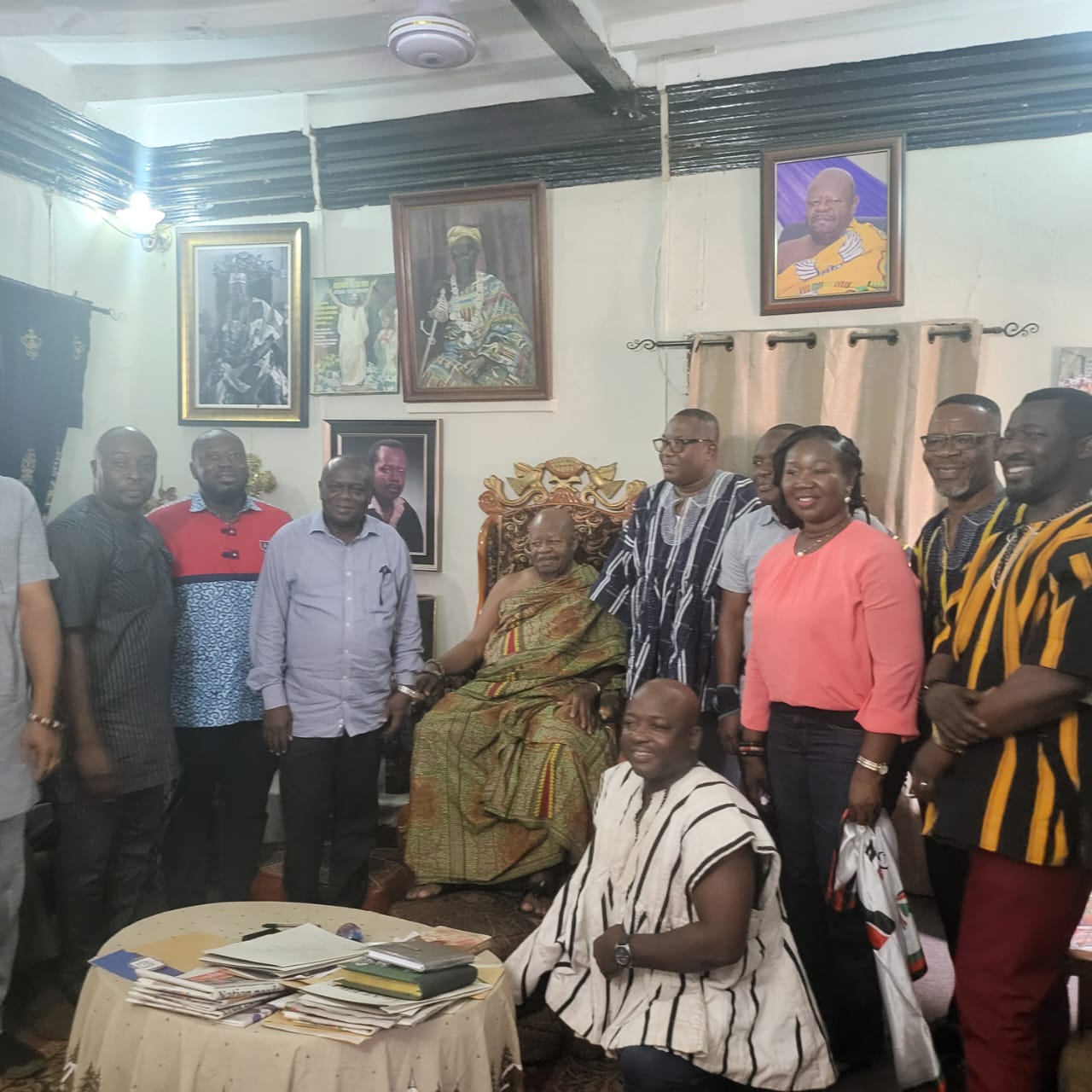
    NATIONAL LEADERSHIP OF NDC VISITS  LOWER MANYA AND YILO KROBO AREAS IN THE WAKE OF RECENT IMPASSE WITH THE ECG.

    The National Leadership of the National Democratic Congress (NDC) paid a working visit to the Lower Manya and Yilo Krobo areas yesterday as part of our ongoing membership drive and reorganization activities in the Eastern Region .

    This visit comes in the wake of a recent standoff between indigenes of these communities and the Electricity Company of Ghana (ECG), which resulted in the latter disconnecting electricity supply to these areas for several weeks.

    Having followed developments in the Krobo enclave and interacted with the Chiefs and people of the area, the party has become aware of the longstanding impasse between residents and the ECG over the installation of prepaid meters, which not long ago degenerated into violent protests, leading to loss of lives in process.

    The party’s leadership is appalled at how a simple process of installing prepaid meters for residents in these communities has been badly managed by the Akufo-Addo government, the Ministry of Energy and Management of the Electricity Company of Ghana. We hold the view that the military-backed forced installation of prepaid meters in the area without proper community engagement and sensitization was completely unnecessary. .

    The recent crisis has brought economic activities in the Krobo area to a halt and exacerbated the hardships the people in the area are already reeling under. Hospitals were forced to shutdown leading to loss of lives, while schools, businesses and households all bore the brunt of the nearly one month freeze on electricity supply to these areas.

    The NDC condemns in no uncertain terms vgovernment’s high-handed approach to resolving these issues and the brutalities meted out to innocent citizens in the area by the military. And we sympathize with the residents of these communities who have been at the receiving end of such mistreatment by the government through its agents.

    We call on government to as a matter of urgency withdraw all military personnel who have been deployed to the Krobo area in order to ease the unnecessary tension and give way for citizens to go about their normal lives freely. The Akufo-Addo/Bawumia government must change its modus operandi and adopt a humane approach in addressing the “Kroboland”- ECG crisis.

    Signed.

    Hon. Samuel Ofosu Ampofo

    National Chairman, NDC

  • BoG launches Regulatory and Innovation Sandbox

    BoG launches Regulatory and Innovation Sandbox

    The Bank of Ghana has launched its Regulatory and Innovation Sandbox developed in collaboration with EMTECH Solutions Inc. following a successful pilot implementation.

    This is in line with the Bank’s commitment to continuously evolve a conducive regulatory environment that fosters innovation, financial inclusion and financial stability.

    The Regulatory Sandbox is an opportune tool for harnessing the potential of technology to develop an efficient and inclusive financial service industry without risking financial stability.

    According to statement issued by the Bank and signed by the Secretary of the Bank, Sandra Thompson, it will serve as an enabling framework for small scale, live testing of innovations by innovators (operating under a special exemption, allowance, or other limited, time-bound exception) in a controlled environment under the regulator’s supervision.

     It aims at, among others, fostering a deeper understanding of innovative products, services and business models by the regulator, allowing for potential improvements to legal and regulatory requirements to encapsulate emerging technologies, and ensuring careful monitoring and containment of any risks that may emerge.

    The Regulatory Sandbox is open to all licensed financial institutions (Banks, Specialized Deposit-taking Institutions, Payment Service Providers, Dedicated Electronic Money Issuers, Financial Holding companies and other Non-Bank Financial Institutions) and unlicensed FinTech start-ups that have innovative products, services or business models that meet the Regulatory Sandbox requirements.

    Innovations eligible for the sandbox environment will have to satisfy any of the following broad categories: 1. New digital business models not covered explicitly or implicitly under any current regulation; 2. New and immature digital financial service technology; and 3. Innovative and disruptive digital financial service products that have the potential of addressing a persistent financial inclusion challenge.

    Over the past two (2) years and during the pilot, the use of digital financial services among Ghanaians has recorded remarkable increase on account of a raft of enabling policies introduced by the Bank and the Government of Ghana under the national digitalization agenda.

    At the same time, the restrictions imposed on movement of persons as part of the COVID-19 containment measures have spurred the adoption of digital financial services among individuals, businesses, government ministries, departments and agencies.

     Similarly, the adoption of emerging technologies such as artificial intelligence, machine learning, and data analytic tools is accelerating among Ghanaian financial service providers with enormous opportunities for innovative products and services including chatbot, Know Your Customer (KYC) and Customer Due Diligence (CDD) solutions, anti-money laundering and fraud monitoring platforms, credit scoring for digital credit products and customer-centric product designs.

    Within the domain of Bank of Ghana, the digital version of the Ghanaian currency, the eCedi, has the potential of boosting innovation in digital financial service and further enhancing digitalization of the financial service industry when mainstreamed. On the other end of the digitization spectrum, blockchain appears to hold significant promise for use in mainstreaming financial service delivery though the technology is yet to mature.

    Nevertheless, the Bank of Ghana took a bold decision and admitted a blockchain solution into its Regulatory and Innovation Sandbox during the pilot stage; a further evidence of its commitment to innovation.

    The Regulatory Sandbox Framework, user guide and access link to the platform can be found on Bank of Ghana website to provide guidance and accessibility to interested licensed and unlicensed financial or non-financial institutions.

    Bank of Ghana through this initiative, affirms its commitment to provide the enabling environment for innovation to promote financial inclusion, and facilitate Ghana’s digitization and cash-lite agenda.

  • Cedi Depreciation: gov’t confused, experts rehash old proposals

    Cedi Depreciation: gov’t confused, experts rehash old proposals

    Adnan Adams Mohammed

    As Ghana’s local currency is rated the worst performing currency in the world which has left the government in a confused state with its monetary policy controls.

    The Cedi has depreciated more than 35 percent on the interbank rate and more than 42 percent on the forex bureau market. The Cedi currently sells at about GHC9.20 to U.S $1.0 at forex bureas.

    The president of the Ghana Union of Traders Association (GUTA) has called on the Bank of Ghana (BoG) to relax the laws on transacting business in dollars at the banks.

    “Doing business in forex is like calling for an audit so many people shy away from doing legitimate business with the banks in dollars”, Dr. Joseph Obeng

    “The laws in dealing with forex at the banks are time-consuming and too cumbersome which has resulted in the booming black market for the exchange of dollars in the country. A lot of people including foreigners now go to the black market to deal in forex in blatant disregard of the laws on forex in the country.

    “In other jurisdictions, if you have to change forex, an identity like a passport is needed but here the market is free for all,” he lamented.    

    This, he explained has contributed to the fast depreciation of the cedis.

    Which has badly affected businesses, contributing to the swindling of the working capital of business people in the country.

    “Now you need about one million Ghana Cedis to be able to do business worth one hundred thousand dollars because the dollar is being bought at GHS10”, he bemoaned.

    He suggested a review of the country’s investment laws adding that this has also contributed to capital flight which in the end has pushed the depreciation of the cedi

    Consequently, the Vice President of GUTA, Clement Boateng argued that some of the foreign firms and traders are importing huge products into the country, which they do not even keep half of the proceeds.

    “Foreigners are doing about 85% of the imports into this country. At the end of the day, this poses a threat to our foreign reserve as they equally take all the profits out of the country”.

    “This also has to do with our investment laws, which need to be revised”, he added

    Meanwhile, members of the association in the coming days will protest against some issues impacting ion their businesses, including the falling value of the cedi and the high lending rate.

    Also, the Executive Director of Danquah Institute, Dr. Antoinette Tsiboe Darko has rehasd calls on the appropriate authorities to speedily put in place measures to reduce the dollarisation in the economy.

    According to her, the pricing of goods and services in dollars is a structural defect which has worsen the economic challenges confronting the country.

    She compares the situation to our neighboring francophone countries and maintains that the CFA appreciates better than the Cedi.

    “We have structural issues which speak to the issues we are currently facing. We have a dollarized economy. It is something that has historically gone with us and we keep going along with it. When you go into a Francophone country, it is the CFA that comes to fore when you want to buy something but how come that in Ghana it is the dollar that is mentioned first?. This is something that we have to fight to make sure that the dollar economy is minimized so that we can have confidence in our own cedi”, she said in an interview, last week.

  • Bank of Ghana to widen its scope on cryptocurrency

    Bank of Ghana to widen its scope on cryptocurrency

    The Bank of Ghana has assured stakeholders of its preparedness to sanitize the digital space with respect to cryptocurrency.

    The Central Bank admits that in the initial stages of the new digital currency, there was a gap, however, the regulator has braced itself to make it cleaner while building public interest.

    Speaking at the MTN MoMo Stakeholder forum under theme, ‘The impact of the Central Bank’s digital currency on future monetary policy and digital payments’, the Assistant Director in charge of Fintech and Innovation at the BoG, Clarence Blay, maintained that the digital position of his outfit is in consonance with global standards.

    Clarence Blay highlighted issues of the financial challenge confronting the banking sector in the past in relation to the digital space.

    He said, “We understand the philosophy that brought this thing into being, more of a libertarian philosophy following the 2008 and 2009 financial crisis. We have to work together to have a clean the system.”

    He further stated that “Based on our regular surveillance and global monitoring, we decided to explore central banks digital currency in deep.”

    The Bank of Ghana currently believes that the industry is moving towards the deeper financial space.

    However, in April, 2022, the Central bank issued cautionary directives to banks and other financial entities in its dealings in crypto currency trade and other unregulated investment schemes.

  • Policy Rate Hike: experts differ on effectiveness to control inflation

    Policy Rate Hike: experts differ on effectiveness to control inflation

    Adnan Adams Mohammed

    The Bank of Ghana last week increased the monetary policy rate by a further 3 percentage to 22 percent from 19 percent purposefully to control the frog-leaping consumer inflation.

    Financial experts have expressed verified opinion in their response to a question on whether the policy rate could be an effective measure to tame the galloping inflation which currently is around 31.7%.

    A Finance Lecturer and Associate Professor with Andrews University in Michigan, USA, in reacting to the increase in the Central Bank’s policy rate rate said, the monetary authority should have put a cap on the amount government borrows, so far as it has put a limit on the primary reserves of banks, although he welcomed the policy rate hike.

    “So far as the Central Bank has put a limit or has increased the primary reserves for banks, it must also put a cap on the amount [borrowings] government withdraws from its account which is called debt monetization or printing of money”, Dr Williams Peprah suggested.

    According to him, the printing of money is one of the major impacts on increasing inflation, “so, I was hoping that the Central Bank will address the issue”.

    He however said “the Bank of Ghana’s monetary policy decision of increasing the rate to 22% is a good thing that we need now in the country. Because, we’ve noticed the disparities between the monetary policy rate, inflation rate, and treasury bill rate.”

    “At the moment, the Treasury bill rate is hovering around 27% and the difference between that one and the monetary policy rate is worrisome. So moving it up to 22% is something that will be able to address the issue”.

    On the Central Bank’s decision to boost the supply of foreign exchange into the economy and help stabilise the cedi, Dr. Peprah said the Central Bank should not limit it to only three industries (mining, oil and banking), but also to the other sectors of the economy.

    “The Central Bank should not limit its discussions to only these three industries, but also to the service sector by focusing on telecommunications, because the firms hold some foreign exchange exposure.

    Indeed, the cost of borrowing already will go up as I have mentioned because banks are now pegging their cost of funds to the Treasury bill rate and not the monetary policy rate”.

    Contrary, a Partner at Deloitte Ghana, Yaw Lartey has expressed his worries about the increased policy rate, saying it will not address the rising inflation rate, but rather shoot up cost of borrowing.

    According to him, though the monetary policy rate historically has helped to manage inflation, the current economic situation proves otherwise.

    “So, we know that historically, the monetary policy rate has been used to manage inflation, particularly in an attempt to mop up excess liquidity from the market where necessary. However, in this particular situation, we do not believe that the increase in monetary policy rate will help manage inflation. And this is so because in the last four months, the Ghana Statistical Service has released inflation rate which points out to the fact that imported inflation is the key driver”.

    “So imported inflation has outpaced domestic inflation. When you have imported inflation, it is very difficult to use monetary policy to manage it because a lot of it is driven by factors that are beyond the control of the market forces, particularly within the country”, he added.

    Mr. Lartey advised the government to address the rate of depreciation of the cedi if the country wants to fight inflation.

    “So, what government should focus on is to manage the rate of depreciation if it really want to deal with imported inflation. We should ensure that the cedi is stabilised or strengthened against major trading currencies because a lot of the imported inflation is driven by the fact that they’re importing some commodities; and when the local currency depreciates, we don’t have to spend more to import those commodities”.

    He argued that addressing the cedi’s depreciation will help protect people’s investments, adding that the current rate of return on the money market is less than 28%, lower than the inflation rate of over 31%.

    “And the benefits, we are likely to get is that people’s investments have been protected. So, as we speak we initially projected an inflation rate of 8% inflation. Now we have revised it to 28%. What that means is that any return on investment is less than 28% will be a negative return.”

    “Currently, Treasury bills are trading at about 27%. This year’s inflation is about 31%. And anybody who’s investing at 26% whether any of Ghana’s security is getting a negative return on investment,” he added.

    Mr. Lartey however urged the Bank of Ghana to make more funds available for financial institutions to help mitigate the cost of borrowing, and consequently reduce the cost of doing business.

    Apparently, the Head of Economics Department at the University of Ghana, William Baah-Boateng has commended the Bank of Ghana (BoG) for its swift approach to increase the policy rate by 300 basis points to 22%, after an Emergency Monetary Policy Committee meeting.

    Dr. Baah-Boateng in an interview indicated that had the BoG not intervened, the country’s inflation rate would have been 100%.

    “In economics, there is something we call counterfactual so if the problem is coming and they don’t even step in at all, perhaps we would have been in the 100’s,” he said.

    Currently, year-on-year inflation shot up to 31% in July 2022, latest data from the Ghana Statistical Service (GSS) has revealed.

    However, the cost of borrowing is expected to go up significantly, and consequently, increase cost of living and doing business.

  • Tariffs increment: stakeholders challenge PURC amidst economic hardship

    Tariffs increment: stakeholders challenge PURC amidst economic hardship

    Adnan Adams Mohammed

    The Public Utilities Regulatory Commission (PURC) has justified the upwards review of utility tariffs.

    PURC’s justification comes in the midst of stiff opposition from major stakeholders and the citizenry. The Commission, last week announced a 27.15% increase in tariff for electricity and 21.55% increase in water tariff effective September 1, 2022.

    Business owners and ordinary citizens have all agitated against the upward adjustment at the time that economic hardship is biting everyone in the country.  Describing the situation as harsh, the Chief Executive of the Ghana National Chamber of Commerce and Industry (GNCCI) pointed out in an interview that, businesses were expecting moves that will reassure them—not a further increase in their cost of production.

    “If we continue increasing the cost of production for businesses, it will get to a time they will fold up and ask their workers to go home. The unemployment rate will get worse”, Mark Badu-Aboagye worriedly said.

    Mr. Badu-Aboagye argued that with the current situation of Ghana’s macro-economic indicators, government is expected to be sensitive to businesses.

    “There is a likelihood that a lot of businesses are going to run at a loss. Businesses are expecting policies that would rather bring some relief as inflation and interest rates go up. The tariff increment is going to raise the cost of production in the country”, he said.

    Providing some recommendations, Mr. Badu-Aboagye appealed to government to engage businesses regularly to understand the current challenges faced by the private sector.

    Earlier this, the utility companies including the Electricity Company of Ghana and Ghana Water Company Limited proposed an increase in tariffs by 148% and 334% respectively. The PURC had to do a nationwide stakeholders consultation before arriving at the current decision.

    Meanwhile, the Director of Regional Operations at the Public Utilities Regulatory Commission (PURC), Alhaji Abukari Jabaru has explained that, every tariff has a control period and the last control period of the commission had expired.

    “The last tariff had a two-year control period but had expired and because it had expired they [utility companies] were obliged to submit a proposal based on the guidelines that were submitted to them”.

    “Originally they [utility companies] submitted a five-year tariff control proposal but had to go on with the three-year plan,” he said.

    Apparently, the Chamber of Independent Power Producers (IPPs), Distributors and Bulk Consumers have challenged the Public Utilities Regulatory Commission (PURC) to ensure that consumers get value for money from the power consumed, but not pay for the inefficiencies of the Electricity Company of Ghana (ECG).

    The Chief Executive of the Chamber, Elikplim Komla Apertorgbor, in an interview to ascertain his reaction to tariffs increment said, ECG must live up to expectations and settle all its indebtedness to the key stakeholders within the electricity value chain.

    “I will like to challenge the regulator, the PURC to ensure consumers get real value for their money and not pay for ECG’s inefficiencies. Enough of commercial and technical loses, enough of these stories”.

    He mentioned that “let them up their game and provide us the best of service. I must commend PURC again and for the resolve to lower tariffs for the small and medium scale industries. On a first side, it is a great push and support for the local industries to thrive well in the competitive space.

    “In the midst of unimaginable economic conditions, the tariff adjustment has become inevitable especially when the underlying price determinants are out of control. The most important thing is for ECG to make the required revenue and settle the key stakeholders in the electricity supply value chain.

    “It will interest you to know that ECG as of the end of July this year has accumulated up to $908 million to the IPPs alone. So, it is important to make the required revenue to settle this debt”, Mr. Apertorgbor pointed out.

    Consequently, the Minority in Parliament in a statement signed and released last week by Ranking Member on Parliament’s Mines and Energy Committee, John Jinapor, intuited that the increase in utility tariffs by the Public Utilities Regulatory Commission (PURC) will only exacerbate the current high cost of living.

    According to Mr. Jinapor, the increase will also “worsen the plight of the already impoverished Ghanaian.”

    “Prior to the electricity tariff increments, petroleum products at the pumps have witnessed a colossal increment of about 100%. So far the Energy Debt Recovery Levy has seen an increase of 20%; the Price Stabilization and Recovery Levy is up by 40%.

    “The Unified Petroleum Pricing Formula has been increased by 164%, whilst the BOST margin has been increased from three pesewas to nine pesewas representing a 200% increase. As if this is not enough, the fuel marking margin levy has also been increased by another 233%.

    This is against the background that the volume of petroleum products consumed has increased by 35% from 4 billion litres to 5.5 billion litres.”

    In this regard, he stated that “We are of the strongest conviction that Government can and must do something to cushion Ghanaians who are going through unimaginable hardships with ever-worsening poverty levels under the Akufo-Addo/Bawumia-led government.”

    Mr Jinapor further clarified that the 27 per cent increase in electricity does not apply to every consumer.

    “A critical look at the tariff structure as announced reveals that all residential consumers who fall between 0-300 kWh bracket have witnessed a price increase from GHp/kWh 65.4161 to GHp/kWh89.0422, representing an increment of almost 34%.

    “It should be noted that the bulk of residential consumers fall within the 0-300 kWh bracket and will therefore be adversely affected by the 34% adjustment,” he stated.

  • Cedi’s free fall; sharp inflation rise push policy rate to 22%

    Cedi’s free fall; sharp inflation rise push policy rate to 22%

    By Elorm Desewu

    The speed depreciation of the fiat currency, the cedi and sharp rise in year on year inflation have compelled the Monetary Policy Committee, (MPC) of the Bank of Ghana to hike the policy rate by 300 basis points to settle at 22 percent from 19 percent.

    This means that cost of credit to households and the private sector would rise steadily in the next couple of months.

    But in a swift attempt to stem the rising inflation as well as the speed depreciation of the cedi, the BoG has raised the primary reserve requirement of banks from 12 percent to 15 percent which is to be implemented in a phased manner: i. 13 percent from 1 st September, 2022 ii. 14 percent by 1st October, 2022 iii. 15 percent by 1st November, 2022

    Additionally, to boost the supply of foreign exchange to the economy, the Bank of Ghana is working collaboratively with the mining firms, international oil companies, and their bankers to purchase all foreign exchange arising from the voluntary repatriation of export proceeds from mining, and oil and gas companies. This will strengthen the central bank’s foreign exchange auctions.

    According to the BoG, the Ghana Cedi has depreciated by 25.5 percent year-to-date, reflecting the Ghana specific situation, including the challenging financing of the budget from both domestic and external sources, downgrading of sovereign credit rating, non-residents disinvestment in local currency bonds, and loss of reserve buffers.

    The US Dollar has strengthened against all major currencies. From the beginning of the year to date, the pound sterling has weakened against the US dollar by 12.4 percent while the Euro has also weakened by 11.8 percent. Countries similar to Ghana (Ghana’s peers) are all experiencing sharp depreciation to date.

    Recent developments in the foreign exchange market showed elevated demand pressures, reflecting among others, continued heightening of uncertainties in the global economy, rising inflation in many advanced economies and the resultant coordinated tightening of monetary policy stance by major central banks. This has further tightened global financing conditions with significant implications for Emerging Markets and Developing Economies (EMDEs), especially for those with weak fundamentals.

    The latest consumer price index release showed that the headline inflation accelerated further for the eleventh consecutive month to 31.7 percent in July 2022, from 29.8 percent in June 2022. This was driven by both food and nonfood price pressures.

    Food inflation rose to 32.3 percent in July 2022 from 30.7 percent in June 2022. Similarly, non-food inflation increased to 31.3 percent from 29.1 percent in June 2022, contributing 55 percent to the rise in headline inflation in July 2022.

    The above developments have translated into relatively strong underlying inflationary pressures. The Bank’s core measure of inflation, defined to exclude energy and utility indices, increased to 30.2 percent in July 2022 from 28.4 percent in June.

    On month-on-month basis, headline inflation rose by 3.1 percent in July 2022 compared with 3.0 percent in June 2022. The increase in monthly inflation was underpinned by increases of 3.3 percent and 3.0 percent in food and non-food inflation respectively.