Category: News

  • NDC condemns Akufo-Addo govt’s lawlessness and arbitrariness in the name of sim card re-registration

    NDC condemns Akufo-Addo govt’s lawlessness and arbitrariness in the name of sim card re-registration

    Read Full Press Statement:

    For Immediate Release

    10th September, 2022

    THE AKUFO-ADDO GOVERNMENT MUST STOP THE LAWLESSNESS AND ARBITRARINESS IN THE NAME OF SIM CARD RE-REGISTRATION.

    The National Democratic Congress has observed with great concern the new wave of challenges that have bedeviled the ongoing mobile SIM re-registration exercise by the Akufo-Addo/Bawumia government. The party notes with utter dismay that right from the time this Government, through the Ministry of Communications decided to undertake a re-registration of mobile SIM cards of Ghanaians sometime in 2021, the exercise has been fraught with chaos and arbitrariness occasioned by the incompetence of the Ministry of Communications and the National Communications Authority.

    We are appalled that this objectionable impunity has reached an alarming point where the mobile SIM cards of innocent Ghanaians including those who have already undertaken the said re-registration are being restricted, thereby rendering many of our citizens incommunicado, helpless and frustrated.

    We hold the view, that this simple exercise of linking SIM Cards to the Ghana card of subscribers to check crime among others, could have been easily done by extracting the biometric data of persons who have registered for the Ghana card from the National Identification Authority and matching same with the database of the Telecos. The NIA has made this point, the NDC’s Minority Group in Parliament and Civil Society Organizations have backed same.

    Yet, the obstinate Ursula Owusu and the NCA will just not listen to these voices of reason but have chosen to make a fetish of a simple exercise of linking SIM cards to Ghana cards, thereby subjecting Ghanaians to needless long queues, loss of valuable working hours and sleepless nights.

    It is an indisputable fact that the re-registration of mobile SIM cards policy and its attendant sanctions that are being meted out to Ghanaians by the Ministry of Communications and the National Communications Authority are neither backed by the SIM Registration Regulations, 2011 (L.I 2006) nor the National Identity Register Regulations, 2012 (L.I 2111) or any law in force in the country. The decision by these entities to restrict the SIM Cards of Ghanaians including those who have already re-registered their SIM Cards is therefore unlawful, irresponsible and unacceptable to say the least.

    The NDC condemns in no uncertain terms this arbitrariness and recklessness on the part of the Minister of Communications and the NCA. Such mishandling and crass bungling of a simple exercise such as the ongoing SIM card re-registration can only be supervised by incompetent and clueless public servants like we have at the helm of the Ministry of Communications and the NCA.

    While we commend and encourage legal actions filed by citizens of the country who have been affected by the reckless SIM Card restrictions, we call on the Parliament of Ghana, particularly the Parliamentary Select Committee on Communications to call the Minister of Communications and the NCA to order in line with its oversight responsibility over these state entities. The lawlessness being displayed by the Minister of Communications, Ursula Owusu and the NCA must be halted now.

    Signed,

    Hon. Johnson Asiedu Nketia

    General Secretary

  • Cedi begins to recover after free fall

    Cedi begins to recover after free fall

    By Elorm Desewu

    The Ghana cedi has begun to recover after it has depreciated against the major trading currencies since the beginning of this year.

    But just last week, the Cedi appreciated against the greenback as the US$750 million loan from the African Export Import Bank (AFREXIMBANK) has hit the accounts of the Bank of Ghana (BoG).

    The cedi is also expected to appreciate further in the wake of the first tranche of the annual cocoa syndication loan which would hit the accounts of the BoG next month.

    Last week on the Interbank, Cedi was trading against the dollar at a buying price of 8.2284 and a selling price of 8.2366.

    However, at a forex bureau in Accra, the dollar was being bought at a rate of GHC9.79 and sold at a rate of GHC9.98.

    Against the Pound Sterling, the Cedi was trading at GHC9.5820 and a selling price of GHC9.5924. At a forex bureau in Accra, the pound sterling was being traded at GHC11.10 and sold at a rate of GHC11.60.

    The Euro was trading at a buying price of GHc8.2867 and a selling price of GHC8.2950. At a forex bureau in Accra, Euro was being bought at a rate of GHC9.55 and sold at a rate of GHC9.85.

    The cedi has dropped more than 38% this year making it the worst performing currency after Sri Lanka’s rupee among 150 economies tracked by Bloomberg.

    “Ghana’s assets are facing pressure and this is common across high-yield emerging markets,” said Yvette Babb, a Netherland’s based fixed-income portfolio manager at William Blair International “The move, however, has been particularly pronounced in Ghana.”

    Investors have dumped the cedi and the nation’s bonds this year as concerns about the impact of a global slowdown in demand for commodities such as cocoa have risen. Those movements fed an inflationary surge and pushed Ghana to begin talks with the IMF in July over an assistance package of as much as $3 billion.   

    The Bank of Ghana earlier last month increased its benchmark interest rate by the biggest margin on record to 22% to slow the decline. A depreciating currency will add to the import bill of a country that purchases most of its fuel from abroad and has been struggling with inflation at the highest levels since 2003.

  • GSS survey estimates 49% of Ghanaians facing food insecurity

    GSS survey estimates 49% of Ghanaians facing food insecurity

    Data from the 2022 Annual Household Income and Expenditure Survey has revealed that 49.1 percent of the Ghanaian population was food insecure in the first quarter of the year.

    This represents 15.1 million of the 30.8 million persons in Ghana. The percentage however dropped by 7 percentage points to 42.1 percent in the second quarter; 13 million of the total Ghanaian populaces.

    The prevalence of food insecurity is higher in rural areas than urban areas. The Greater Accra Region recorded the lowest food insecurity with a percentage of 27.2 percent, while the Upper East Region saw the highest of 73.7 percent.

    In the first quarter of the year, the prevalence of food insecurity in four regions in the northern part of the country; Savannah (58.8%), Upper West (61.8%), North East (65.6%) and Upper East (73.7%) were more than twice that of Greater Accra Region (27.2%).

    It is also observed that all regions experienced a reduction in food insecurity between quarters 1 and 2 except for the Upper West Region which saw an increase from 61.8 percent to 55 percent.

    Meanwhile, Oti and Western North regions experienced the largest declines of 19.6 and 18.7 percentage points respectively.

    Severe food insecurity

    Between quarters 1 (12.3%) and 2 (6.4%), severe food insecurity reduced by almost half. The decline is higher for rural households.

    Prevalence of severe food insecurity is highest in North East Region (32.9%) and lowest in Eastern Region (7.3%).

    Nine regions record higher severe food insecurity prevalence than the national prevalence (12.3%).

    About the Survey

    The Annual Household Income and Expenditure Survey is the first nationally representative high-frequency household panel survey in Ghana.

    The Survey, conducted by the Ghana Statistical Service, is being conducted to obtain quarterly and annual data on household final consumption expenditure and a wide scope of demographic, economic and welfare variables including statistics on labour, food security, multi-dimensional poverty and health status for research, policy, and planning.

    The maiden publication presents highlights from the first and second quarter food insecurity, multidimensional poverty, and labour statistics reports.

    It is defined as a situation of “limited or uncertain availability of nutritionally adequate and safe food or limited or uncertain ability to acquire acceptable foods in socially acceptable ways”. (United States Department of Agriculture, 2000)

    Moderate Food Insecurity – People experiencing moderate levels of food insecurity will typically eat low-quality diets and might have been forced, at times during the last three months, also to reduce the quantity of food they would normally eat.

    Severe Food Insecurity – People facing severe food insecurity have likely run out of food, experienced hunger and, at the most extreme, gone for days without eating.

  • Over 2,500 dormant coys to be delisted from Companies Register

    Over 2,500 dormant coys to be delisted from Companies Register

    The Office of the Registrar of Companies (ORC) has begun processes of striking out 2,584 dormant and defaulting Companies from its Companies’ Register.

    This exercise is being carried out in accordance with Section 289 of the Companies Act, 2019 (Act 992) which connotes that a Company can be stricken off the Companies Register for failing to file its Annual Returns on time or failing to notify the Registrar of Companies of a change in the Company’s Registered Office and Principal Place of Business.

    In a statement issued, last week, the ORC stated that the exercise which will continue to the end of December 2022, is part of the second phase of the clean-up exercise which began in the early part of the year.

    “These dormant Companies failed to comply with the directive issued by the Registrar of Companies for all Companies to file their Annual Returns and Financial Statements or risk being stricken off the Companies Register. The Office has already stricken off 2,788 Companies and made them inactive during the first phase of the clean-up exercise out of the over 100,000 dormant Companies earmarked for the strike off,’ the statement noted.

    “This means that those dormant companies cannot be electronically searched on or carry out any changes on their Company information in the Register awaiting a full winding up after 12 years. Such Companies can only be restored by an Order of the High Court to the ORC within 12 years after the publication of the strike off in the Companies Bulletin,” it added.

    The affected Companies include Private/Public Companies Limited and Unlimited by Shares, Private/Public Companies Limited by Guarantee (Schools, Churches, Associations, Unions, Fun Clubs etc.), Professional Bodies and External Companies.

    The ORC is also urging all defaulting and dormant Companies whether in operation or not, to file their Annual Returns by 30th December, 2022 to avoid being removed from the Companies Register by the end of the year, 2022.

    Furthermore, Companies and Businesses registered between 1960 to 2011 and are yet to carry out updates of their records with the ORC dubbed ‘re-registration’ are encouraged to do so by the end of the year.

    N5Companies are entreated to change their Auditors who have served for 6 years in compliance to the provisions of the Companies Act to avoid sanctions.

    “Note that the penalty for late filing of Annual Returns is GH¢450.00 and fees for filing Annual Returns and Beneficial Ownership information remains GH¢50.00 and GH¢60.00 respectively,” it said.

  • Debt restructuring unavoidable as liquidity challenges persist – Research

    Debt restructuring unavoidable as liquidity challenges persist – Research

    Ghana’s external debt restructuring may now be hard to avoid, despite government’s reluctance to touch sovereign Eurobonds in any such potential exercise, according to several market participants polled by Singapore based financial research firm, REDD Intelligence.

    “Ghana is a country that is promising a lot but is always under-delivering; the government hasn’t been able to turn the economy around”, it said in its latest report on Ghana.

    Mark Bohlund, Senior Analyst at REDD Intelligence, first pointed to a likely need for Ghana’s sovereign debt restructuring back in October 2021, but general market chatter about its inevitability has intensified only over the last month, after the country formally approached the International Monetary Fund (IMF) for help.

    In the latest REDD CEEMEA podcast, the team at the research firm discussed Ghana’s increasingly troubling debt situation and challenges of including domestic debt in any potential restructuring, and looked at collective action clauses in Ghana’s sovereign Eurobonds.

    “ After many months of hoping the country would be able to increase its revenue streams and tighten its fiscal policy to avert a looming balance of payments crisis, most international investors are now reluctantly assessing a potential timing and format of an expected debt exercise. The key next step will be a debt sustainability assessment from the IMF, which is expected by the end of 2022 or in early 2023, and will help determine if the country has a liquidity or a debt sustainability issue, agreed two sovereign strategists and the fund manager”.

    It added that “the market consensus is that the African nation [Ghana] is unlikely to regain market access any time soon, with or without an IMF programme. With just over $7 billion of total international reserves and no major external debt repayments until 2025, Ghana likely has up to 12 months before it runs out of liquidity, agreed all three”.

    Furthermore, REDD Intelligence said an economic programme from the IMF could happen in the first quarter of 2023, as the country has to pay $1 billion Eurobond coupons annually over the next few years.

    Liquidity or solvency problem?

    REDD Intelligence Market Strategist said the country must adopt two main scenarios.

    In the first scenario, the country has a liquidity problem and therefore the IMF programme discussions will then focus on delivering primary surplus, restoring macro-stability, and regaining market access by 2025, when $1.5 billion in Eurobond maturities are due.

    In the second scenario of Ghana having a solvency problem, the strategist expected a protracted restructuring — either through the G20 Common Framework, similar to Chad, Ethiopia and Zambia, or a classical default, similar to Sri Lanka.

    In its July 2021 Article IV on Ghana, the IMF stated that public debt is sustainable so long as the authorities’ medium-term consolidation plan is rigorously and credibly implemented to improve the primary balance, put debt on a declining trajectory, and ensure market access.  

     “I expect a more classical default scenario with a trigger happening as early as first quarter 2023,” the strategist said.

    According to this strategist, the IMF could still engage in programme discussions and sign off on a programme under its lending into arrears policy.

    This would require Ghana to stay current on its multilateral commitments, while negotiations with the private sector would need to be in good faith but will likely be protracted.

  • So Who Must Criticize The Judiciary?

    So Who Must Criticize The Judiciary?

    BY: Godwin Ako Gunn

    30/08/22

    There is something negative with aspects of our culture. It breeds timidity in the youth. It takes away boldness and frankness from elders. To speak out against corruption, abuse, thievery and rots in society is a Civic responsibility.

    People who see no evil, hear no evil and speak no evil have suddenly resurrected from the dead to attack a responsible call for the judiciary to rise up and redeem it’s sinking image.

    Let a young man say it, the clarion call will be, they are disrespectful. A former president says it, he is a statesman he shouldn’t say so !!! The media says it, they are from montie fm !!!

    Who are we? Is our culture not making us hypocrites?

    Ah well let’s all do hero worshipping and die unfulfilled. For me, I have nothing more to add, not because of fear, but I am dedicating myself to hard work and prayers for better days ahead !!!

    *Kun fa Yakun*

  • Eurobonds and treasuries investors jittery over possible ‘haircut’

    Eurobonds and treasuries investors jittery over possible ‘haircut’

    Foreign and domestic investors in Government of Ghana’s (GoG) Eurobonds and treasury bills are jittering over rumours of that, their principal investments might be given a ‘haircut’ as they mature.

    This means, the investors will receive only a fraction of their investments. Further to the meaning of the ‘haircut’, is that, the investors will receive some pesewas to each Cedi (for GoG Treasury Investors) they invested in and/or cents to each dollar (for Eurobond Investors) of their principals invested.  

    According to financial analyst, it is a deadly idea to be conceived in the first place by GoG not to talk of the implementation. One of the renowned analyst warned that, any of such move may result in Ghana not being able to go to the capital markets for many years to come.

    “Any attempt by government to give investors a haircut on their investment principle will result in the Ghana not being able to go to the Capital markets fo many many years to come”, former Executive Director at Standard Chartered Bank, Alex K. Mould has warned in an interview.

    “This also could be resisted by many investors and there could be lawsuits by investor blocks which could drag Ghana’s current credit crunch; this option is like a road to perdition and only reserved for the non salvageable economies in the world.”

    However, the analyst tabled some alternative ideas on how the ‘Nana Akuffo Addo/Dr Mahmoud Bawumia failed government ‘ could resort to on addressing the glaring default in it’s debts.

    Mr Mould enumerated the following options during an interview on how government could deal with the imminent credit crunch it faces; “In the discussions with the IMF, GoG will be required to bring a performance improvement plan (PIP), which should focus on government reducing its expenditure and increase its  revenue in the short term for the next two years to stabilize the fiscals, while IMF holds the government’s hand to seek some reprieve from Creditors (local and International) on its debt service.

    “The first part, reducing expenditure could take the form of  the rationalization of employment in the public and civil service (ie reducing staffing and staff costs) and most likely a freezing any increases in salaries and freezing employment in non-critical and non-core sectors for a few years, as well as not embarking on any projects or capital expenditure that can wait a few years.

    “Another area that, the NPP Govt will be asked to focus on is in curtailing most of the politically-lead programs/projects which will not lead to any substantial increase the GDP in the short term.”

    The outspoken former government appointee noted that, the question the government needs to address is, if the challenge is a structural one, or if it’s pure mismanagement (where drivers of fundamentals remain strong) as the antidotes to curing both differ.

    He furthered his assertion indicating that, “I see the problem akin to what we had in Blackstars a few months ago: Do you change the coach or all the players?”

    This portal promise to bring our readers (Part 2) of the interview which will deal with the challenges government faces with Creditors and the debacle Creditirs holding GoG securities have.

  • Alex Mould in mother’s hometown, Ejuratia: “It is soo peaceful here”

    Alex Mould in mother’s hometown, Ejuratia: “It is soo peaceful here”

    As the excruciating economic hardship hangs the neck of the hustlers in the cities of Ghana and the, especially unemployed, it provides opportune time for looking back to home.

    That was exactly what the ‘unemployed’ Alex K. Mould, an energy and financial analyst, did last week. He took the opportunity to visit his mother’s hometown.

    A journey that has increased the ‘touch on his humility nerves’ and awaken his advocacy voice for demanding accountability and social development for the less developed communities from government officials. His term as Ghana National Petroleum Corporation’s (GNPC) Chief Executive ensured fair distribution of social development through the GNPC Foundation across the country.

    As much as he enjoyed his ‘reveler journey’, the rate of underdevelopment faced most of the Ghanaian rural areas, most of them which are not far from the peri-urban centers, was just unbearable to his sight.

    He shares his experience with www.newsguideafrica.com.

    Read below his experience as he narrated:

    “In my mother’s village Ejuratia, Afigya Kwabre South, it is sooo peaceful here I keep wondering why I do not spend more time here.

    “Only the 5:30 community radio that has a loudspeaker beside my window that blasts most times propaganda that annoys me.

    “The food is sooo fresh. The people have a lot of ‘tolee’ (folktales).

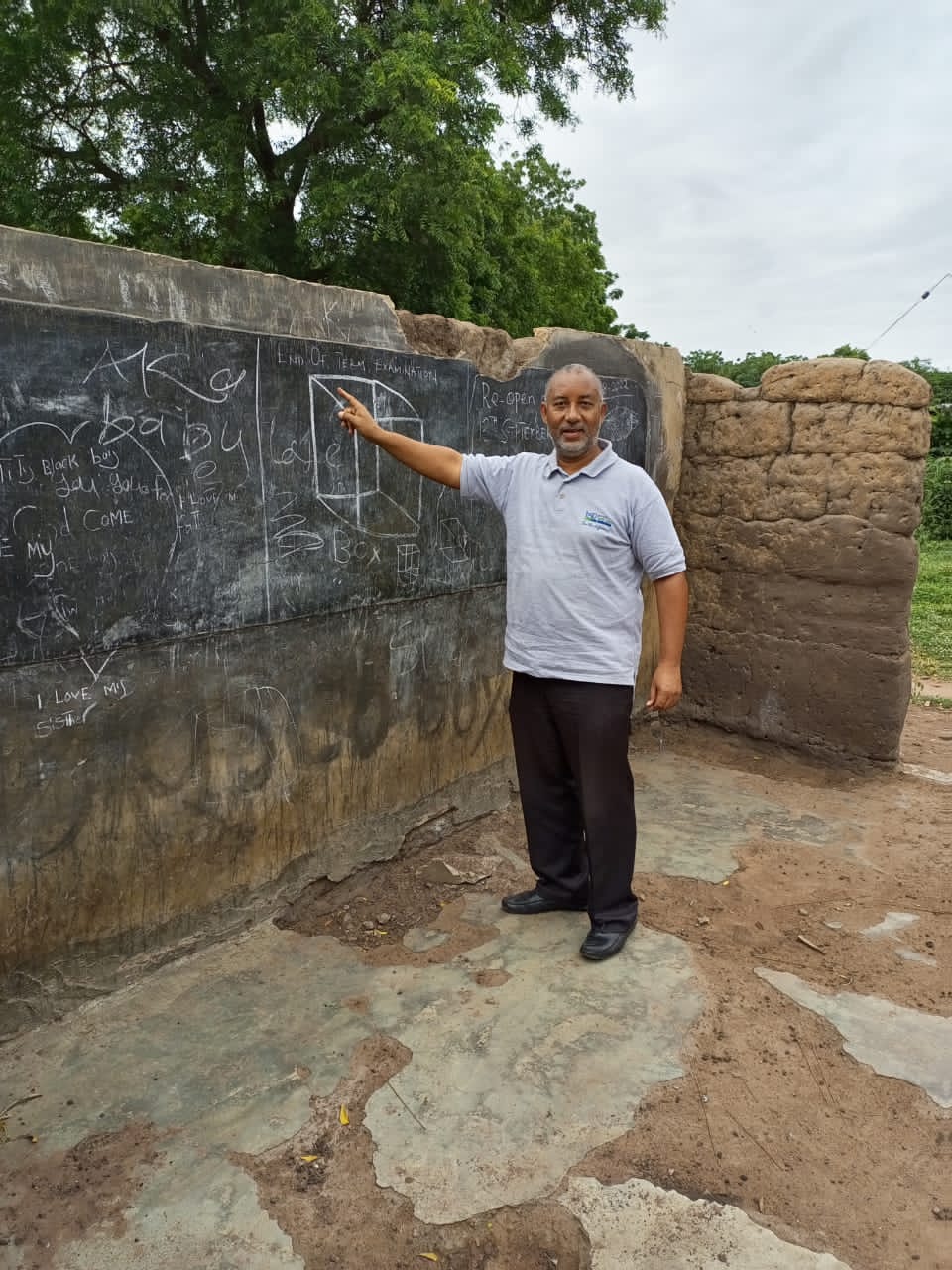
    “It’s so sad to see many communities located very distant from the peri-urban areas that have so little – terrible roads in tough terrain; schools located many kilometers away, and if there are schools they would be under trees or broken mud houses with no roofs: no clinics or Community Health Planning & Services (aka CHPS) compounds, or the nearest would be 10 to 20 km away.

    “There is so much we have to do for our communities; but these would not cost the nation a lot if we stop these bad practices s.a state capture, bad procurement practices and overbloating of contracts to provide services

    “Just raising the bar so that each community has the bare minimum should be the objective of all of us – not only the governments, but all of us.

    “We the people need to advocate for our communities.

    “That’s what politics is about – advocating for those that do not have a voice so that the resources of this country are shared on an equitable basis so that we raise the bar of the standard of living or each citizen.”

  • Gov’t bags US$1.9bn in taxes, royalties, other disbursements in 2021 from Newmont

    Gov’t bags US$1.9bn in taxes, royalties, other disbursements in 2021 from Newmont

    Adnan Adams Mohammed

    Newmont Ghana has reported that, it paid about US$1.9 billion in taxes, royalties, and other disbursements to the government in 2021 .

    It also indicated that, it injected about US$10.8 billion directly into the economy out of which  US$3.6 billion was spent on operating costs.

    Newmont Corporation published its inaugural Taxes and Royalties Contribution Report, continuing its commitment to transparency by detailing the significant contributions made to host communities and governments. The Multinational mining company says, it aims to deliver shared value for the company, its shareholders, as well as employees, host communities and countries through its operations and activities including its tax and royalty payments.

    “We believe that transparency is a prerequisite for building credibility and trust with stakeholders,” said Newmont’s President and CEO Tom Palmer.

    “We recognise that we have a responsibility to generate shared value from the minerals we extract by contributing our due part through taxes and royalties, job creation and economic development within host communities and countries in which we do business.”

    In 2021, Newmont’s direct economic contributions across its operations totalled $10.8 billion and included:

    · $3.6 billion in operating costs,

    · $1.3 billion in employee wages and benefits,

    · $1.4 billion in capital spend,

    · $2.6 billion in payments to providers of capital,

    · $1.9 billion in taxes, royalties and other disbursements to governments, and

    · $21.9 million in community investments.

    Newmont is the world’s leading gold company and a producer of copper, silver, zinc and lead.

    The company says its “world-class portfolio of assets, prospects and talent is anchored in favourable mining jurisdictions in North America, South America, Australia and Africa”.

    Newmont is the only gold producer listed in the S&P 500 Index and is widely recognised for its principled environmental, social and governance practices.

    The company is an industry leader in value creation, supported by robust safety standards, superior execution and technical expertise.

    Newmont was founded in 1921 and has been publicly traded since 1925.

  • Cedi to loose 43% value to U.S. dollar in 2022 – Fitch Solutions

    Cedi to loose 43% value to U.S. dollar in 2022 – Fitch Solutions

    Adnan Adams Mohammed

    Fitch Solutions has projected that the local currency, the Cedi will depreciate in value of about 43 percent to the US dollar by end of this year.

    The investor firm is also projecting a 30.1% fall in value of the cedi to the dollar in 2023. This means, the woes of the cedi will not get better anytime soon.

    Disclosing this in its latest report on the country dubbed “Ghana’s Private Infrastructure Investment Set For Medium-Term Recovery”, it said, the continuing investor concern over the country’s large fiscal deficits puts downward pressure on the cedi.

    “We expect weakness for the Ghanaian cedi to persist throughout the near term, as we currently forecast the currency to depreciate by 43% and 30.1% against the US dollar in 2022 and 2023, respectively”.

    “We expect that Ghana’s inflation rate will remain high in the near term in the face of spiking global food and fuel prices and as continuing investor concern over the country’s large fiscal deficits puts downward pressure on the cedi”, it added.

    Again, it pointed out that the currency’s weakness will keep revenue risks elevated for foreign investors dependent on revenue streams in local currency.

    This is despite an expected $2 billion inflows from the Afrexim Bank and COCOBOD syndicated loan.

    Furthermore, it said in the light of the reliance of Ghana’s construction industry on imports, the cedi’s weakness will add to upward pressures on prices of construction materials from existing supply chain disruptions.

    This, in turn, will further contribute to increased project costs and potential investment delays in the near term.

    “In 2021, Ghana’s trade deficit for iron and steel products is estimated to have exceeded $1.2 billion, up from an estimated deficit of over $780 million worth of iron and steel products in 2020. In light of the Ghanaian construction industry’s reliance on materials imports, we expect that the cedi’s weakness will add to upward pressures on construction materials prices from existing supply chain disruptions. This, in turn, will further contribute to increased project costs and potential investment delays in the near term”.

    The cedi has since the beginning of the year lost about 36% in value to the dollar, according to Bloomberg.

    It depreciated by a little over 4% last week, starting the week at ¢10.10 pesewas to the American ‘greenback’.

    This has drastically shot up the prices of some goods and services, increasing both the cost of doing business and living in the country.