Deloitte, an assurance and advisory firm, has given its take on the approach Africa nations need to adopt to achieve effective energy transition.
The international firm believes that the transition from traditional fossil fuels to cleaner energy needs to be through a gradual process while adopting energy mix approach up to the year 2050.
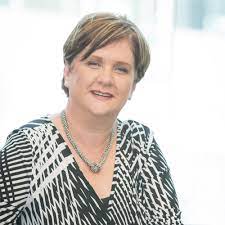
As a follow-up interview on the topic “Creating the perfect investment conditions for Foreign Direct Investments into the African energy sector: where is the money?” moderated by a partner at Deloitte at the just ended Africa Oil Week Conference in Cape Town, South Africa, Jenny Erskine noted that, Africa is partly ready for the transition agenda, in spite of the infrastructure and investment challenge it has, the continent has the needed resources (sun, wind, cobalt, lithium) that are greener and can be tapped easily to start the process to greener energy.
“Mining the cobalt, lithium and other minerals could pollute the environment, but it can lead to the net zero carbon emission as the output of those minerals are need to manufacture materials needed for the energy transition”, the Oil and Gas Sector Leader for Deloitte Africa, Jenny Erskine said in an interview.
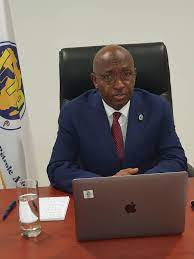
However, Claude Illy, a partner at Deloitte with finance expertise and based in South Africa, reiterated in the zoom interview that, effective mining policies must be looked at and streamlined to ensure better mining mechanisms are put in place to protect the environment and regulate the industry.”
While adding that, “governments must take action to create enabling environments for investors to ensure transparent, fair investments that favors both parties.”
Looking at option of a win-win investments opportunities, Ms Erskine elaborated on a Public Private Partnerships (PPPs), Build Operate Transfer (BOT), Equity financing (for smaller projects) and debt financing (for bigger projects, from commercial banks, export credit agencies, bilateral and/or multilateral institutions) and long-term off-take agreements (partially guaranteed by multilateral banks in difficult to finance countries) as a possible means to conclude a favorable greener energy projects to aid the steps and strategies towards achieving the global agenda.
Meanwhile, taking a critical look at some of the disadvantage of the agenda, Africa nations might have to leave more of its untapped fossil fuels in the earth and waters as many nations are yet to even start exploration activities on their potential oil and gas wells both onshore and offshore. Also, Africa as known for exporting its raw materials, it will lead to creating a huge numbers of unemployment as the mineral resource mining and production companies fold up in no time to pave way for greener energy generation projects.
Ensuring clear, transparent, and consistent policy, and maintaining a stable regulatory environment in Africa’s most prominent mining jurisdictions is key to attracting international mining capital at a scale
commensurate with the continent’s potential. Building on that foundation, solid governance, transparency, minimum red tape, an enabling business environment and trust among industry players and stakeholders will help to change common perceptions about Africa.
Botswana, Ghana, South Africa, and Zambia, amongst others, have declared themselves as “open for business” to mining companies and foreign investment, and demonstrate that openness by their overhaul of mining legislation, and visible stakeholder engagement efforts, even as perceived investment attractiveness remains low.
Africa Oil Week 2022 saw the continent define an assertive new position that determines for itself how best to balance sustainability with its own development needs.
This year the African Union became an official partner of Africa Oil Week (AOW), helping to make the event a triumph for African unity, and promoting Africa’s ability to assert itself and define its own energy future.
The continent is speaking with one voice to address pressing challenges related to combating energy poverty on the continent and defining what a just transition means in the African context.
“It’s important for us to come together as Africans to discuss and solidify what is best for us among ourselves so that we can move forward,” says Rashid Ali Abdallah, Executive Director for the AU’s Africa Energy Commission (AFREC).
“What we really need in Africa is investments, and this conference brings together all of the investors, all the developers and all of the member states that can make that business happen,” he continued.
A major theme throughout this year’s event was the need to define the “just energy transition” for the African context, and for Africans to make these assertions for themselves, rather than following a western energy-transition agenda that does not apply to the continent.
“Energy transition for Africa is to transition from a position of ‘no energy’, and should be based on the African position of promoting access to energy,” said Ali Abdallah.
This year’s AOW attracted more than 50 government ministers and officials, and over 1 800 delegates, including key investors and business leaders with an eye on Africa as a potential catalyst for tackling the global energy crisis.
Africa’s rich energy resources were another key focus. Several African countries presented showcases of what their countries have to offer in the context of the global economic downturn, the war in Ukraine, and the recent G7 cap on the price of Russian oil exports, as part of a new sanctions package against Moscow.
Several key discoveries and licensing announcements were made on the AOW stage during the five-day event, held at the CTICC in Cape Town this week. Highlights included exclusive insights to the 30 licences being promoted within the DRC including 27 oil blocks and three gas blocks. The event also showcased the Cote d’Ivoire Baleine East 1X well, the first exploration well in block CI-802 and second discovery on the Baleine structure offshore. The Summit also hosted the Namibia government who did an exclusive showcase with TotalEnergies detailing the Venus discovery of light oil with associated gas, located in block 2913B in the Orange Basin.
Keynote speakers, government representatives, analysts, industry leaders and panellists discussed critical factors impacting the industry on the continent. Key among these is development financing for emerging oil and gas projects, and access to affordable, reliable energy for both production and household use in Africa.
Paul Sinclair, VP of Energy & Director of Government Relations, Africa Oil Week and Green Energy Africa, said, “AOW and GEA will continue to be critical enablers in the African energy sector, by bringing together key players, governments and investors for the end goal of sustainable energy development on the continent.”
About Africa Oil Week and the Green Energy Africa Summit
The Africa Oil Week offered four days of pioneering insights, from ministerial panels to strategic outlooks designed to drive investment into the African upstream for the continent’s benefit. At the heart of the event are some of the most compelling insights into the upstream strategies of governments across the continent.
These extensive and varied networking opportunities have resulted in an unprecedented return of delegates year after year.
AOW is globally renowned for bringing the most senior delegates together each year. AOW has welcomed 50+ Ministers and Government Leaders, 1 800+ C-level delegates, representatives, and hundreds of SVPs and VPs of Africa, Exploration and New Ventures – making the event the most influential energy conference in Africa.
While Africa Oil Week retains its identity as a pure-play Hydrocarbons event to advocate upstream development, the Green Energy Africa Summit plays its role in driving enabling environments to ensure foreign direct investment is deployed into game-changing projects that will reduce the energy deficit and provide energy access across the continent.
Many religions are promoting the belief that the world will soon come to an end, in which case they will undoubtedly embrace an ethos of “let it burn”: what does it matter if the rainforest is cut down if next week is the Rapture?
But you might just as plausibly point out that many religions are big on compassion, and some, including Judaism, also ban the killing of animals. This should push their members to care about the natural environment.
Throughout human history, the belief in a supernatural being has been part of our lives. It has shaped our way of life and has played a critical role in human civilization. The environment has been part of our civilization. From the time of hunting and gathering till the present massive globalization and industrialization. Nature is a composition of man and the environment and the interaction between them is very key for the survival of both.
When God created the world and man, He made man to take dominion of the earth and to make use of nature which comes as a blessing from the Almighty to mankind. Indeed, the universe is full of diverse creatures that aim to fulfill man’s needs and prove God’s greatness. To this end, the Quran reveals clearly in Surah Al-Nour (The Light, 24:41) “Have you not seen that God is glorified by all in the heavens and on earth, such as birds with wings outspread? Each knows its worship and glorification, and God is aware of what they do.” Additionally, in Surah Al Muminoon (The Believers, verses 17-20) “And we have created over you seven layered heavens and never have We been unaware of Our creation. And We have sent down rain from the sky in a measured amount and we cause it to settle on earth, And indeed We are able to take it away, And We brought forth for you thereby gardens of palm trees and grapevines in which for you are abundant fruits and from which you eat; And We brought forth a tree issuing from Mount Sinai which produces oil and food for those who eat; And indeed, for you in livestock is a lesson. We give you a drink from that which is in their bellies, and for you in them are numerous benefits, and from them, you eat.” This points to the fact that nature was meant for the benefit of man, to use it to satisfy his need and sustain his survival.
The two most dominant religions Islam and Christianity share the same Abrahamic religious roots which humans are created by the single omnipotent God who has given them everything that they need (Kula, 2001). Other religions such the Buddhism and traditional African religion also share a common belief that man is part of nature and that the sacredness of nature must be preserved. It is not surprising that these two religions (Buddhism and Traditional African religion) as part of their environmental nature, keep certain forests, rivers, plants, and animals sacred and must be protected at all times. However, of all the debate surrounding religion and environmental conversation, Islam is late to the party as Christianity has received most of the backlash due to its historical environmental exploitation and the role of the church in this endeavour. Perhaps one of the prominent critics of Christianity is Lynn White. One of his key criticisms was that Christian doctrine separated humankind from nature and directed him to a position of supremacy over nature (White,1967). This according to Kula (2001) has enabled humanity to follow a ruthlessly successful strategy of extraction of natural resources that has led to environmental problems with the aid of the scientific and technological revolutions that have taken place over the last few decades. The victory of Christianity over paganism, which considered humans to be part of nature, was another aspect that intensified exploitative zeal.
Christianity and The Environment
In 1967, historian Lynn White wrote in the high-profile journal Science that Christian religions threaten wildlife protection by promoting an ideology of superiority over nature. Since the Bible speaks of “dominion” over nature, White argued that Christianity teaches its adherents that “it is the will of God for man to use nature for his proper purposes” (White, 1967).
This was controversial, to say the least. Some scholars and theologians have argued that the Bible was misread by White (1967) and that the text simply means that we have a duty of care for nature. More to the point, perhaps, White gave no proof of the actions or activities of real Christians (Rust, 2017).
In 2013, by asking if there was a connection between the main religion of a country and the number of significant areas of biodiversity it contained, Mikusiński, Possingham, & Blicharska (2014), found that Christian countries tended to have more areas set aside for nature than other countries, particularly Catholic ones. This does not, however, indicate that White was absolutely incorrect. Other research suggests that conservative Christians are generally less eco-friendly than other religions.
Andrew Greeley (1993), a priest and sociologist, in his study “Religion and Attitudes toward the Environment”, looked at how much Americans were willing to spend on environmental protection. He noticed that Christian fundamentalists were less likely to support the world financially, and Catholics were more willing. This indicates that what determines their actions towards nature is not whether a person is Christian, but rather what kind of Christian they are.
Similarly, Shepheard-Walwyn (2014) researched on how Kenyans felt about holy sites in her Ph.D. thesis, during her studies at the University of Kent in Canterbury, UK. These holy sites are places of biological and spiritual significance, created by societies that adhered to traditional faith and preserved them. Shepheard-Walwyn’s work discovered that “some of the respondent Christians thought that the woods should be destroyed because they are akin with the traditional religion that they think is bad”. One of the interviewees in his response said that” tradition is witchcraft now” (Shepheard-Walwyn, 2014). The sacred sites were identified by others as places connected with demons and superstition (Rust 2017).
Additionally, Leela Hazzah (2007) found in his study published in 2006 that Maasai who had converted from traditional faith to become evangelical Christians had a greater intention of killing lions than those who maintained their traditional faith. He emphasized this by saying that “These converted Protestants did not have very positive attitudes towards national parks or wildlife either”. The Maasai are known for not being exposed to a lot of television or other media, hence their source of information about the world are their pastors or preachers. In their sermons, if a preacher does not have optimistic stories about nature, the churchgoers would not get any advice about how to be environmentally friendly (Hazzah, 2014).
It also seems that people’s attitudes towards the environment can be affected by the way Christianity interacts with other religions. This suggests that conflicts between opposing faiths could influence how people feel about protected areas. In particular, a shift away from more traditional faiths could be bad for nature (Rust, 2017).
Islam’s Position on Environment
Islam is one of the largest religions in the world. It shares the same ancestry history root with Christianity, the Abrahamic religion. Islam commands influence on about 20 percent of humanity covering a very large territory especially in Africa, Europe/Middle East, and Asia. Unfortunately, some of the greatest environmental problems have occurred in Muslim countries (Kula, 2014).
Islam has been found to be (if not the most environmentally conscious) one of the most environmentally friendly religions. The concept of human living on earth is based on stewardship and benefaction. To this end, Arafa (2014) emphasized that Islamically man’s role in the world is based on two principles: stewardship of man, which means that man is not only a person, but also God’s khalifa (the steward) on earth; God is the sole owner of the earth, and man is a mere beneficiary, and man can use nature for the benefit of his or her and other creatures without depleting it, and the principle of trust that all the natural resources of God are created by God.
Most of the works about Islamic environmentalism are primarily targeting Western environmental exploitation, economic policies and rarely address the issues of the environment. Indeed Erdur (1997) posited that a closer analysis shows the peculiar nature of Islamist concern about environmental problems, which is distinct from both the predominantly pragmatic, problem-oriented public climate and the radical Western environmental movement, which is basically a cultural self-criticism directed at the current conception of man’s nature relationship. To state it correctly, the Islamist environmental concern is often more related to the West than to the environment itself.
The Quran (divine book of Islam from God) and Hadith (The sayings, teaching, and life of the prophet of Islam) which are the primary and secondary sources of religious texts respectively for the Muslims have several verses and reports which further emphasizes how Islam strictly encourages environmental conservation and protection. The Quran states in Surah An-Nahl (The Chapter of the Bee verses 10-15) “It is He who has sent down rain from the sky: from it is drink and from it is foliage in which you pasture animals. He causes to grow for you thereby crops, olives, palm trees, grapevines, and from all the fruits. Indeed, in that is a sign for a people who give thought. And He has subjected the sea for you to eat from its tender meat and to extract from it ornaments which you wear. And you see the ships plowing through it, and He subjected it so that you may seek of His bounty and perhaps you will be grateful. And He has cast into the earth firmly set mountains, lest it shifts with you and made rivers and roads, that you may be guided.” These verses emphasize the need to use all that nature provides us to satisfy our needs. However, the Quran also cautions us of wastefulness and the need to be moderate in consumption. In Sural Al- Bakara (The Cow verse 60), It states “Eat and drink from the provision of God and do not commit abuse on earth or spread corruption.” Similarly, in Surah Al- A’raf (The Elevated Place verse 21) the Quran says, “Eat and drink: but do not be excess, for God loves not the wasters”. In the same chapter verse 31, the Quran says, “Children of Adam, dress well whenever you are at worship, eat and drink (as we have permitted) but do not be extravagant: God does not like extravagant people.”
In the saying and practices of the prophet, He said “If a Muslim plant a tree or sows seeds, and then a bird or a person or an animal eats from it, it is regarded as a charitable gift for him.”
Despite these clear-cut instructions of consumption in moderation concerning future needs, the pollution levels in Muslim countries provide a contrary view. Some of the biggest environmental issues have prevailed in Muslim countries. There are several examples, such as the depletion of the Aral Sea in Kazakhstan and Uzbekistan, once the world’s fourth-largest lake, but now just 10% of its original size (Kula, 2014).
Similarly, the desertification of sub-Saharan Africa (especially, Northern Nigeria, Mali, Chad, Sudan, Niger, Libya, and Somalia, which are Muslim dominated) has produced famines and displaced millions of people over the last couple of decades. In Indonesia, the almost complete degradation of natural forests, once home to one of the richest biodiversity resources in the world, has taken place due to official and illegal logging activities (Kula, 2014). Additionally, the depletion of Saudi Arabia’s groundwater resources due to large-scale desert wheat cultivation, which caused the country to become a major exporter of wheat, but at the cost of rapidly declining groundwater levels. Overexploitation of oil and gas reserves in the Middle East and the Gulf States is alarming. Contrary to this excessive consumption and exploitation, Islam, as a major world religion, frowns upon any unnecessary and dangerous environmental activity (Kula, 2014).
Conclusion
Both Islam and Christianity frown against wastefulness. But from history, Christianity has encouraged rigorous exploitation of nature for human satisfaction whiles Islam has taken a more moderate view.
Religion in principle encourages the use of nature to satisfy human needs in moderation. Humankind tends to have a different view of nature when they change their beliefs. As argued above, people who change their faith from Traditional beliefs to Christianity ascribe evilness to the forest and some animals which their former beliefs hold sacred. For instance, in Kenya religious gatherings were often conducted by the Evangelical Churches, sometimes for a week, to which pastoralists were invited. That meant that no one at the homestead was around back to protect the livestock from predators. During one such case, two pastoralists lost 35 cows. When one of the pastoralists was asked why they left their livestock unattended for so long: He replied that ” When I am in God’s house, there is no need to return home. He will protect my livestock from danger (Hazzah, 2014).
The result of seeking material advancement in a reckless and unsustainable way is global warming and the destruction of nature. Profit-driven economic development has now become the core objective of modern society, and nothing is allowed to stand in its way (Kula, 2014). The nature of humans is to satisfy their wants and needs, and in so doing makes use of nature vigorously. Economic development and wanting a better living standard to make the demand that nature is exploited to achieve this goal. To this end, humans have forgotten that our anthropogenic activities are hurting the environment and there is the need to rethink sustainability.
Religion can be a tool in achieving both economics and environmental protection. Through religious sermons, the need to protect the environment can be emphasized and preached to the faithful. An example is when the government of Qatar admonished the Imams of 150 mosques to talk about global environmental problems and the greenhouse effect of atmospheric pollution to its populace. This came after 200 countries considered the extension of the Kyoto Protocol to 2020 at a conference in Qatar.
It can prove to be a constructive path forward by using faith-based methods, which indeed can achieve far-reaching benefits rather than remain limited to a conventionally science-based approach. To downplay the environmental crisis, we are facing would be silly. But conservationists will be needed to harness the power of hope and optimism to fix it, much as the religions of the world do.
The Deputy Energy Minister, Dr Mohammed Amin Adams, has declared his unhappiness to comments ascribing that Africa should be allowed to produce oil to develop as the West did to develop their economies.
He indicates that, Africa can and should produce or extract its crude oil only because it can be done better and not because it also want to pollute the environment to develop it nations. He believes, African nations which have oil resource can decarbonise the production process.
As the global economies keep committing to the greener economy agenda by pledging an end to fossil fuels production and usage, Africa is yet to develop and produce its numerous potential oil blocks. This could delay the zero carbon emission target as subscribed to by almost all nations in the globe.
“I am not a believer in the promoting that the developed countries developed with oil, and so they polluted so we shouldn’t be also allowed to pollute to develop I don’t subscribe to that”, Dr Amin said in an interview at the sidelines of the Africa Oil Week event in Cape Town, South Africa, last week. “Because if we do that, we are going to be reduced to a market of last resort, wherever we stand with old technologies while the rest of the world moves on with new technologies and that will be more expensive for us.”
“This is why I’ve indicated there are various ways by which we can decarbonize oil and gas production, that is my view on the table.
“Others also say that, the funding for oil and gas is coming from the West, the developed countries, okay. And the developed countries usually will ensure that companies from including the upstream companies, in the financial competence, follow the policies, the policies of the government.
“So, if we do not act with urgency, to reform our own systems to follow our own energy environment, and to ensure that we harness this potential without violating the policies of the government, it will not be better for us, you know.”
In responding to a question that, whether the campaign to go renewables a conflicting to the numerous attempts countries are making to develop new oil and gas blocks, he responded in the negative.
“No, we don’t see them to be conflict, they can reinforce each other, because you cannot have reliable supply of renewable energy, if you don’t have a base load. And the base load, you can get it from nuclear, you can get it from gas and get it from petroleum. Because renewable is intermittent.
“So, to supply renewable energy, you will need the other source. This is why in Ghana, we are advocating for our energy mix, which taps into all available resources that we have.
“Of course, oil and gas is very important for us. But it says within the whole of Africa 50% of African countries are producing oil, and note, all the revenue that we get from export in particular 50% come from oil, so we can not just abandon it.
“However, it is an opportunity for us to develop our resources in an environmentally friendly manner. We can do, for example, carbon capture and historic and innovation technology in many countries and particularly studies towards adopting that technology, we can move from the electric base production systems to hydraulic base production system using solar or wind, we are also seeing countries interested in launching what we call a carbon neutrality auctions, we are also looking at that as possibility.
“So, we can do this in an environmentally friendly manner without compromising the effect that oil revenues have on our economy and transformation of our country.”
CAPE TOWN, 06 October 2022 – The secretary-general of APPO, the African Petroleum Producers Organisation, has come out in support of the recent decision by OPEC to cut production by around 2%, on the side-lines of Africa Oil Week in Cape Town.
“It is a decision well taken,” said APPO secretary-general Dr Omar Farouk Ibrahim, on the sidelines of Africa Oil Week, being held here. “I believe it is the right thing to do to save the industry and also to ensure that there is stability for today and tomorrow.”
The decision by OPEC, which includes major oil producers Russia and Saudi Arabia, as well as African countries and APPO members Nigeria, Algeria, Angola, Congo and Libya, saw the price of Brent crude oil rise 1,5% to more than $93 a barrel.
“Every country has a responsibility to protect the interests of their citizens and if by reducing production, they see it as serving their best interests, so be it. When developed countries make decisions, they don’t sit and think [about] how it is going to affect developing countries. The interest of their citizens is paramount.”
The decision by OPEC (The Organisation of Oil Producing Countries) was made following the 33rd OPEC and non-OPEC ministerial meeting on 5 October. In a statement, the organisation said it would “reduce overall production by 2 mb/d, starting from November 2022.
It said the adjustment was being made “in light of the uncertainty that surrounds the global economy and oil market outlooks, and the need to enhance the long-term guidance for the oil market.”
The move comes in the context of a global economic downturn, the war in Ukraine, and the recent G7 cap on the price of Russian oil exports, as part of a new sanctions package against Moscow.
Dr Ibrahim’s comments reflect a growing assertiveness among African oil producers that the region has the right to chart its own energy course.
Africa Oil Week, being held here this week has seen the continent speaking with one voice on the defining energy challenge of our time: that Africa will determine how best to balance its own development with sustainability.
Keynote speakers, government representatives, analysts, industry leaders and panellists have all said that the hardships of energy poverty are every bit as dangerous as the risks of climate change. In this context, Africa is best equipped to determine how it can meet its climate commitments while giving its people access to the energy required to deliver a better future for its people.
“We must all remember that more than half of our continent’s people do not have access to modern energy – specifically electricity,” said H.E. Dr Amani Abou-Zeid, Commissioner for Infrastructure and Energy for the African Union Commission, official Africa Oil Week partners. “Africa’s low levels of access to modern energy means that Africa will have to utilize all forms of its abundant energy resources to meet its energy needs.”
Abou-Zaid said the AU was guided by Africa Agenda 2063, a development blueprint that calls for universal access to affordable and reliable energy for both production and household use in Africa.
The AU recently adopted the African Common Position on Energy Access and Just Transition, which charts Africa’s development pathways to accelerate universal energy access and transition without compromising its development imperatives.
Rashid Ali Abdallah, Executive Director for the AU’s Africa Energy Commission (AFREC) said Africa’s energy transition was about the continent transitioning from “no energy to energy, to fill the gap of energy access”.
“Decarbonisation or aiming to reach zero emissions by 2050 is not fit for the African context,” he said. “Perhaps it’s fit for other regions of the world. For that reason, as Africa, we need to push development and exploration in the oil and gas market.”
The AU estimates that more than 600 million Africans live without electricity, while 900 million lack access to clean cooking facilities. The African Common Position encourages striking a balance between ensuring access to electricity for socio-economic growth and smoothly transitioning to an energy system based on renewable energy sources.
Paul Sinclair, VP of Energy & Director of Government Relations, Africa Oil Week and Green Energy Africa said, “we are delighted to have partnered with the AU this week to ensure we drive regional oil and gas markets in an Afrocentric energy transition.
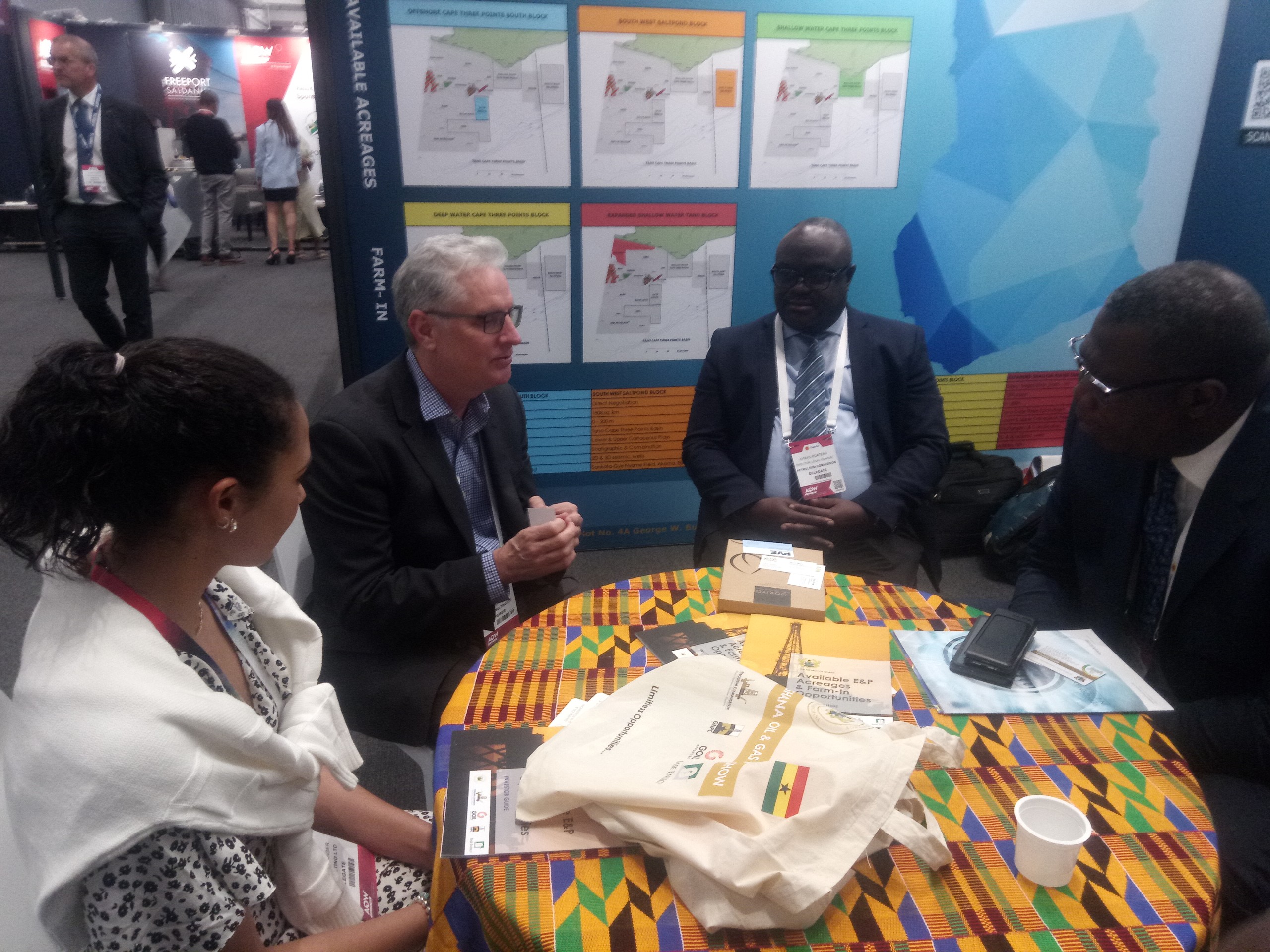
The Petroleum Commission of Ghana Chief Executive Officer, as part of his effort to attract new investors to take up interest in oil blocks, have set up meetings with a number of firms in Cape Town, South Africa.
Egbert Faibille, after his impressive presentation on the opportunities and conducive business environment available to investors in the upstream oil sector in Ghana, a number of investors followed up to the Ghana stands at the on-going African Oil Week to discuss the blocks available for direct negotiation and farm-in.
Among some of the firms that held meetings with the Petroleum Commission CEO is, PVE Consulting Ltd, which is an international advisory consulting firm for the upstream Exploration and Production sector. The firm is engaged with a number of oil and exploration companies, across Africa and other regions, with high level mandates in transaction support and exploration campaigns.
“PVE has twenty years experience in providing management services across the upstream sector and assist countries to attract potential investors in oil blocks”, Peter Elliot, Director of PVE Consulting UK said in the meeting.
Mr Egbert was delighted for the interest shown by the firms in helping Ghana to develop its decade upstream oil sector.
The blocks available for direct negotiation are the; Offshore Cape Three Points South, Shallow Water Cape Three Points and South West Saltpond. Those available for Farm-in are; Expanded Shallow Water Tano (Operated by Base Energy Ghana) and Deep Water Cape Three Points (Operated by Goil Offshore Ghana).
‘Hopes are that by end of first 2023, at least two of the blocks could have been awarded’, the CEO of the Commission has said in an interview at the sideline of the Africa Oil Week Summit in Cape Town, South Africa.
CAPE TOWN, October 5 – Africa’s gas sector presents an enormous opportunity for developed nations to diversify their energy suppliers in the face of European instability, while still meeting their environmental responsibilities.
This was the view of Roger Brown, CEO and executive director at Nigerian energy company, Seplat Energy Plc, speaking at Africa Oil Week (AOW), running here from October 3-7.
Investment in Africa’s energy industry would help developed nations, improve their energy security at little cost to the environment while complying with all their ESG requirements, he said.
Brown said investing in Africa’s gas assets would help western nations increase energy security and reduce their dependence on states willing to politicise energy supply. It would also accelerate development goals in Africa through increased trade and investment, and guide Africa’s energy transition by encouraging lower-carbon energy and ESG compliance.
Brown said gas was significantly less carbon intensive than coal, producing only 202kg of CO2 per MWh, compared to 354kg/MWh for coal. He quoted a statement by the Mo Ibrahim Foundation that, “if the whole of sub-Saharan Africa (minus South Africa) were to triple its electricity consumption using entirely gas, it would only add 0.6% to global carbon emissions.” Seplat Energy is a leading provider of gas for power in Nigeria.
Brown’s statements come against the backdrop of the ongoing war in Ukraine and the recent damage to the Nordstream gas pipeline between Russia and Europe.
“We must become independent from Russian oil, coal and gas,” European Commission president Ursula von der Leyen said earlier this year. “We need to act now to mitigate the impact of rising energy prices, diversify our gas supply for next winter and accelerate the clean energy transition.”
Brown said that, from a Nigerian perspective, improved energy partnerships between the country and the West would boost the economy, drive development and create jobs, while providing industrialised nations with more affordable and reliable energy.
“It’s a win-win for everybody,” he said. “Using gas is also far less damaging than going back to coal, as some European nations are doing.” Austria and Germany both recently announced plans to reopen coal-fired power stations in response to energy insecurity.
“By embracing African gas, developed nations can reduce the impacts of the upheaval in Europe by diversifying their suppliers and sources, while still mitigating the existential threat from climate change.”
Brown was speaking at the end of a successful opening day of Africa Oil Week (AOW), which drew around 2000 delegates and over 50 African energy ministers, and business delegates.
ENDS
About Africa Oil Week and the Green Energy Africa Summit
The Africa Oil Week offers four days of pioneering insights, from ministerial panels to strategic outlooks designed to drive investment into the African upstream for the continent’s benefit. At the heart of the event are some of the most compelling insights into the upstream strategies of governments across the continent.
These extensive and varied networking opportunities have resulted in an unprecedented return of delegates year after year.
AOW is globally renowned for bringing the most senior delegates together each year. AOW has welcomed 50+ Ministers and Government Leaders, 1 800+ C-level delegates, representatives, and hundreds of SVPs and VPs of Africa, Exploration and New Ventures – making the event the most influential energy conference in Africa.
While Africa Oil Week retains its identity as a pure-play Hydrocarbons event to advocate upstream development, the Green Energy Africa Summit plays its role in driving enabling environments to ensure foreign direct investment is deployed into game-changing projects that will reduce the energy deficit and provide energy access across the continent.
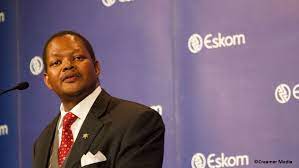
New Eskom Board Chairman has called for ‘just access’ to transition mechanisms to ensure all inclusive results are achieved.
He believes that to achieve energy transition agenda, just-transition mechanisms must be balanced with the idea of “just access”.
Speaking only days after the new Eskom Board was appointed at the Green Energy Africa Summit, he shared his views on the just transition, securing South Africa’s energy needs, and getting Eskom fired up again. He indicated that, the Green Energy Africa Summit, and similar energy events like Africa Oil Week, are important in terms of connecting the energy-producing economies of the continent with other participants in the global supply chain. Engaging at these events helps us find a common understanding of how to balance the notion of just access with the idea of a just transition. That’s the biggest challenge our continent faces.
“We need to figure out how to take everybody along so that the poorest of the poor feel like they are a part of this green future in a meaningful way – in terms of jobs, and access to economic opportunities”, Mpho Makwana said in an interview on the side-lines of the Green Energy Africa Summit (GEAS) in Cape Town.
“It’s important to understand that we only have one planet that is inhabitable for human beings. We are duty bound to figure out how to change our actions to ensure it continues to be habitable for generations to come.”
He shared insightful ideas and conversation around energy transition agenda. Below are excerpts of his interview.
“Another key insight from this event has been the need to do everything in moderation. We need to ensure we maintain balance, in the spirit of sustainable ESG practices. By way of example, many years ago, Israel looked into wave-power technology. It was a novel idea, but then it became clear that there were other environmental impacts.
Every new idea must be tested against its ESG impacts. Is it sustainable? Will it create new jobs? Will it keep the cost of producing electricity affordable? What it costs to turn a tonne of coal into electricity is already extremely high. As far as possible, we need to work to get Eskom back to the days when it was renowned for producing the cheapest electricity in the world.
There’s something we’ve missed. Because if you inflate the costs of a megawatt of electricity, you are exacerbating the problem of access to electricity. So, we must do everything in moderation as we pursue ESG principles and sustainability.
Events like these also improve Pan-African integration. Integration is improving in Africa, but it is not yet on the same level as Europe, where one can commute across the continent. That level of integration does something remarkable to culture. Your supply chains also begin to cross-pollinate. Events also have economic knock-on effects. The hospitality industry benefits, retail benefits, and it helps to build a sense of pan-African integration.
Finding the ideal energy mix has been a major theme at the Green Energy Africa Summit. What is the ideal energy mix for Eskom? South Africa is suffering major energy shortages and regular load-shedding. How do you see Eskom meeting our growing energy needs going forward?
Firstly, there’s a government programme and policy that Eskom has to implement. But as we implement that policy, we need to be practical in our pursuit of a healthy energy mix. We need to learn from the mistakes that other economies may have made. Spain, Germany, and a few other economies have learned some painful and perhaps valuable lessons. Spain tried decades ago to go totally solar. It almost bankrupted the country. Perhaps at the time, solar prices were still high. But it indicates that no single source of energy can give you absolute sustainability. Germany attempted to move to full wind power, and also learned some painful lessons. The difference between South Africa and Germany is that Germany’s neighbours have enough capacity to support their energy needs, and an integrated grid. South Africa is the only major producer in our region, and we do not have that luxury. We need to be responsible and careful in managing any transition to ensure that it’s sustainable.
Secondly, we need to remember the importance of “coal-based towns” and the economic value chains that they support. If we think of the town of Ogies in Mpumalanga, if we were to – overnight – remove that town’s role as a coal town, what would the people of that town be expected to do? This applies to 10 similar towns in the region that currently are central to the provision of electricity in South Africa.
The map of South Africa’s energy supply chain dates to the early centuries of industrialisation. Today, South Africa has various hubs of economic activity. We no longer have gold mines only in Gauteng. North West province has become a new mining hub. As a country, we need to figure out how to balance our grid in line with these new industrial developments.
This would have to evolve with time. We must consider that our country has made certain commitments to the rest of the world in terms of the Paris Agreement. But we also have significant coal reserves with low sulphur content.
You have just been appointed as Chairman of the new board at Eskom, South Africa’s state energy utility. It is a pivotal role, to say the least. What are your immediate priorities
The immediate priority is to keep the lights on. We have to grapple with how to return the energy availability factor – the EAF – to healthy levels. Under normal conditions, the EAF is 86%. Currently, our EAF is much lower. The president has challenged the Eskom board to get back to 75%. That is a tall order given the state of the systems in the country.
The other priority is people. You have 40 000 people working at Eskom, who understand to varying degrees where all nuts and bolts fit together. We need to reignite a sense of self-worth in these people. People have been psychologically battered throughout this loadshedding challenge.
I recall back when we prepared for the 2010 FIFA World Cup when I was Eskom CEO and chair. I went from region to region, to excite Eskom employees to be great hosts to the world for the World Cup. This time around, the challenge is to reignite in Eskom employees a passion for serving their country and its economy.
Related to this is the idea of reigniting a sense of internal competitiveness between power stations. Power Station X can compete against Power Station Y to see who maintains the highest EAF levels. This would get us well on the way to maintaining healthy energy availability factors across our operations. It’s not spreadsheets or robotics that will turn Eskom around. It’s people. We need to rekindle their passion and energy.
Another priority is that we need to energise communities. The average power station is hosted by a community. We need to excite each community around meaningful energy production and encourage them to see their power station as part of the continuity of the supply environment, and an asset that supports their livelihoods. Nobody will come and cut transmission cables if the community sees it as an asset of its own, which is part of a national asset – our power station fleet.”
The Petroleum Commission of Ghana is ready to announce about five new oil blocks offshore through direct negotiation and farm-in in the next couple of weeks.
‘Hopes are that by end of first 2023, at least two of the blocks could have been awarded’, the Chief Executive Officer of the Commission has said in an interview.
The blocks available for direct negotiation are the; Offshore Cape Three Points South, Shallow Water Cape Three Points and South West Saltpond. Those available for Farm-in are; Expanded Shallow Water Tano (Operated by Base Energy Ghana) and Deep Water Cape Three Points (Operated by Goil Offshore Ghana).
“The processes for the public offering for the blocks have already begun. It is only left with the official public announcement and publication in the media to take place hopefully by next week”, Egbert Faibille Jnr (Esq), Petroleum Commission CEO noted in an interview at the ongoing Africa Oil Week Summit in Cape Town, South Africa.
The Energy Minister in the past two weeks led delegation to meet investors (international oil companies) in Houston and Aberden to market the blocks.
“We have received many interest as at now. What we are to do now is to send a report to the minister for direction on which delegation should be meeting the various companies for further negotiations”, Mr Faibille noted.
“My indications are that latest by Q1 2023, one or two of them might be awarded. But, we are very hopeful all the blocks will be awarded from what I have seen as the interest of the IOCs.”
Ghana recently concluded on a licensing rounds which awarded a number of its oil blocks to companies for exploration, development and production. However, there were a number of blocks that are still to be awarded, whiles some of the blocks awarded still have rings around for farm-in.
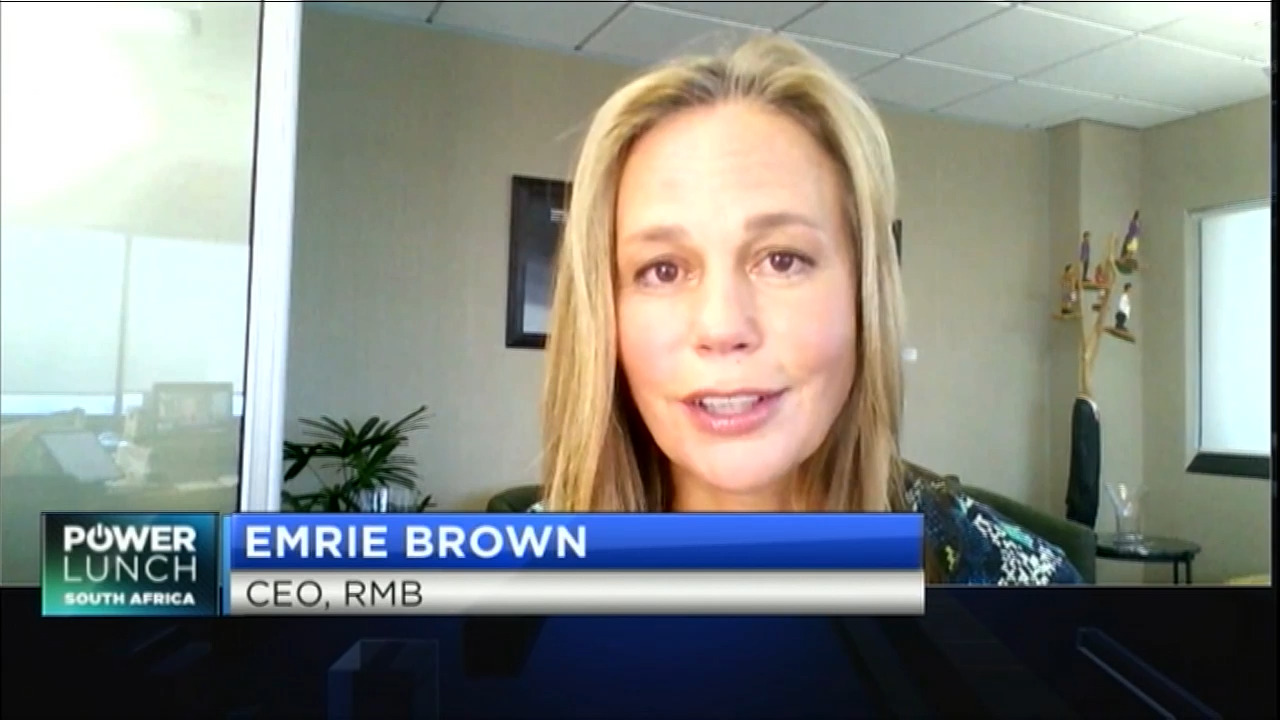
CAPE TOWN, October 5, 2022 –Private power is booming. This was the message from Rand Merchant Bank (RMB) CEO Emrie Brown at the Green Energy Africa Summit, taking place at the Cape Town International Conference Centre from October 4-5.
Brown was speaking during a successful first day of the Summit, which drew hundreds of local and international delegates.
Brown identified a growing trend for metros and private companies to either generate their own power, or to source it from third parties, as power opportunities expanded beyond the traditional state utility, Eskom.
The good news is that financial institutions such as RMB are seeing value in funding independent power initiatives. International investors are also being attracted by Africa’s renewable-energy opportunities.
Brown said South Africa’s current energy shortfall was estimated at around 6,000MW but ballooned to around 15,000MW if one took into account Eskom breakdowns, and its plans to retire power stations at end of life.
To resolve such an energy crisis would require significant investment – from both the private and public sector. Brown said it was estimated that the total power-sector investment until 2030 would be R1,2 trillion ($67 billion).
Brown said RMB estimated that over the next three years, $7,5-$10 billion would be required to fund the government renewable-energy programme alone.
Brown said the bank believed such programmes were highly bankable and would require 80 to 85% of debt. She said bank was encouraged by increased activity in the sector under the Renewable Energy IPP Procurement Programme (REIPPPP), the risk-mitigation IPP programme, and initiatives by municipalities such as Cape Town, eThekweni and Johannesburg to set up their own power-generation programmes.
“We fully support these initiatives and believe they’re a critical part of our energy transition,” said Brown. “Private power is booming! Private companies now either generate their own power, or they source it from third parties.
She said it was critical to continue to facilitate registration and licensing of generation capacity, and to gain clarity around wheeling of power across South Africa’s network.
Brown said that, based on deal-flow, RMB estimated that the funding required for private power projects in the next two to three years would be at least $2.8 billion.
Delivering a keynote address at the GEA, United Kingdom trade commissioner for Africa John Humphreys agreed that renewables represented a significant investment opportunity for international, as well domestic companies.
“Renewables are a good investment,” he said. “Renewables are bringing down the overall cost of energy, and making business more efficient, which makes it an increasingly attractive investment.”
Humphrey emphasised that the UK was committed to investing in Africa’s green-energy potential.
“With a growing population and an economy worth $2.4 trillion, there are huge opportunities across African emerging sectors such as technology, clean energy and sustainable infrastructure,” said Humphreys. “We are excited to be growing the UK-Africa relationship in these industries.”
Brown said only a fraction of Africa’s energy potential was currently being exploited – in areas such as hydropower, solar, biomass, wind and geothermal energy.
“Domestic and international capital must be mobilised for innovative financing in Africa’s energy sector with a focus on renewable energy. Electrification efforts need to be open to private-sector investment and innovations, such as solar energy and battery storage, which have made a tremendous impact in enabling access for millions of poor and underserved households.”
Brown said the challenge of Africa’s energy transition was twofold: managing the risks to vulnerable communities directly impacted by climate change, while at the same time supporting the people whose lives are inextricably linked to the fossil fuel industry, and for whom that transition represents a direct threat to the livelihoods.
“The greatest challenge is to deliver the vision of a just transition – a more socially inclusive society, which has managed the social risk of the change and sees the economic opportunity that the change brings,” she said.
GEA Vice President of Energy & Government Relations, Paul Sinclair said the views of business leaders supported the mission of the Summit to improve sustainable energy access in a way that made business sense.
“We completely agree that there are great opportunities in low-carbon energy,” he said. “This event is all about enabling investment into new energy projects, providing energy access and shaping the future of Africa.”
Humphrey emphasised that the UK was committed to investing in Africa’s green-energy potential.
“With a growing population and an economy worth $2.4 trillion, there are huge opportunities across African emerging sectors such as technology, clean energy and sustainable infrastructure,” said Humphreys. “We are excited to be growing the UK-Africa relationship in these industries.”
Brown said only a fraction of Africa’s energy potential was currently being exploited – in areas such as hydropower, solar, biomass, wind and geothermal energy.
“Domestic and international capital must be mobilised for innovative financing in Africa’s energy sector with a focus on renewable energy. Electrification efforts need to be open to private-sector investment and innovations, such as solar energy and battery storage, which have made a tremendous impact in enabling access for millions of poor and underserved households.”
Brown said the challenge of Africa’s energy transition was twofold: managing the risks to vulnerable communities directly impacted by climate change, while at the same time supporting the people whose lives are inextricably linked to the fossil fuel industry, and for whom that transition represents a direct threat to the livelihoods.
“The greatest challenge is to deliver the vision of a just transition – a more socially inclusive society, which has managed the social risk of the change and sees the economic opportunity that the change brings,” she said.
GEA Vice President of Energy & Government Relations, Paul Sinclair said the views of business leaders supported the mission of the Summit to improve sustainable energy access in a way that made business sense.
“We completely agree that there are great opportunities in low-carbon energy,” he said. “This event is all about enabling investment into new energy projects, providing energy access and shaping the future of Africa.”