
Press Release
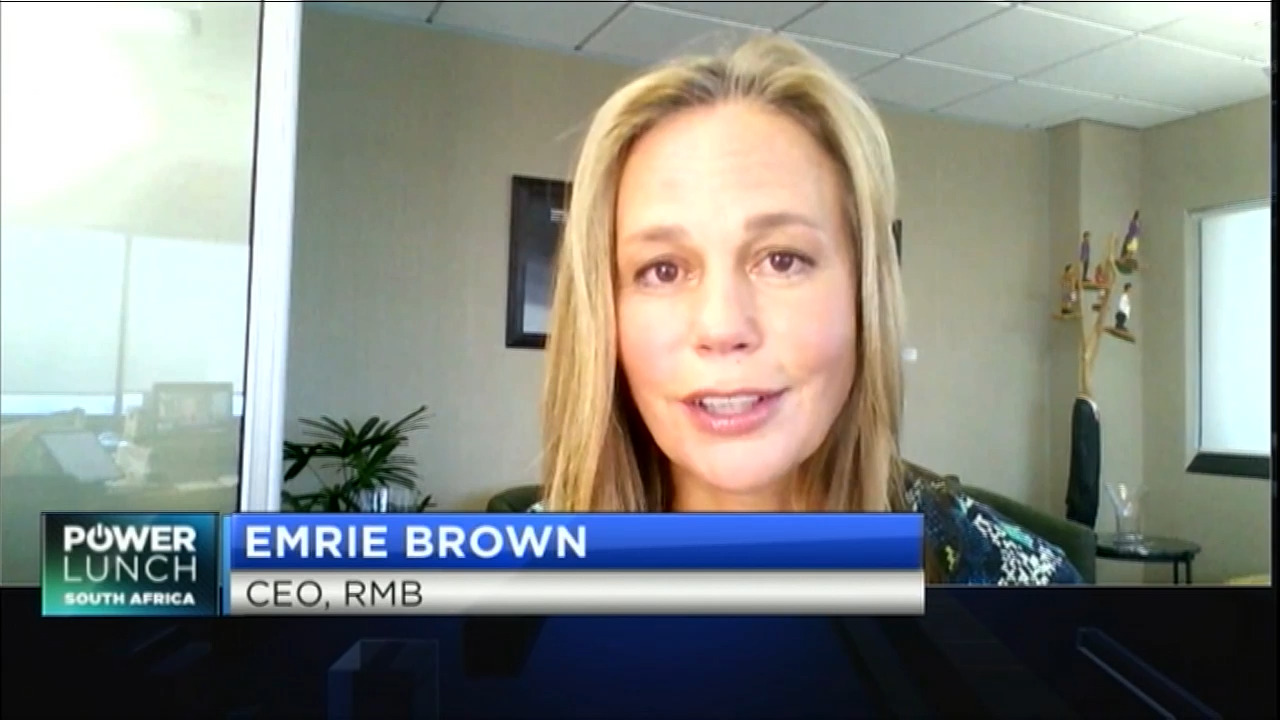
CAPE TOWN, October 5, 2022 –Private power is booming. This was the message from Rand Merchant Bank (RMB) CEO Emrie Brown at the Green Energy Africa Summit, taking place at the Cape Town International Conference Centre from October 4-5.
Brown was speaking during a successful first day of the Summit, which drew hundreds of local and international delegates.
Brown identified a growing trend for metros and private companies to either generate their own power, or to source it from third parties, as power opportunities expanded beyond the traditional state utility, Eskom.
The good news is that financial institutions such as RMB are seeing value in funding independent power initiatives. International investors are also being attracted by Africa’s renewable-energy opportunities.
Brown said South Africa’s current energy shortfall was estimated at around 6,000MW but ballooned to around 15,000MW if one took into account Eskom breakdowns, and its plans to retire power stations at end of life.
To resolve such an energy crisis would require significant investment – from both the private and public sector. Brown said it was estimated that the total power-sector investment until 2030 would be R1,2 trillion ($67 billion).
Brown said RMB estimated that over the next three years, $7,5-$10 billion would be required to fund the government renewable-energy programme alone.
Brown said the bank believed such programmes were highly bankable and would require 80 to 85% of debt. She said bank was encouraged by increased activity in the sector under the Renewable Energy IPP Procurement Programme (REIPPPP), the risk-mitigation IPP programme, and initiatives by municipalities such as Cape Town, eThekweni and Johannesburg to set up their own power-generation programmes.
“We fully support these initiatives and believe they’re a critical part of our energy transition,” said Brown. “Private power is booming! Private companies now either generate their own power, or they source it from third parties.
She said it was critical to continue to facilitate registration and licensing of generation capacity, and to gain clarity around wheeling of power across South Africa’s network.
Brown said that, based on deal-flow, RMB estimated that the funding required for private power projects in the next two to three years would be at least $2.8 billion.
Delivering a keynote address at the GEA, United Kingdom trade commissioner for Africa John Humphreys agreed that renewables represented a significant investment opportunity for international, as well domestic companies.
“Renewables are a good investment,” he said. “Renewables are bringing down the overall cost of energy, and making business more efficient, which makes it an increasingly attractive investment.”
Humphrey emphasised that the UK was committed to investing in Africa’s green-energy potential.
“With a growing population and an economy worth $2.4 trillion, there are huge opportunities across African emerging sectors such as technology, clean energy and sustainable infrastructure,” said Humphreys. “We are excited to be growing the UK-Africa relationship in these industries.”
Brown said only a fraction of Africa’s energy potential was currently being exploited – in areas such as hydropower, solar, biomass, wind and geothermal energy.
“Domestic and international capital must be mobilised for innovative financing in Africa’s energy sector with a focus on renewable energy. Electrification efforts need to be open to private-sector investment and innovations, such as solar energy and battery storage, which have made a tremendous impact in enabling access for millions of poor and underserved households.”
Brown said the challenge of Africa’s energy transition was twofold: managing the risks to vulnerable communities directly impacted by climate change, while at the same time supporting the people whose lives are inextricably linked to the fossil fuel industry, and for whom that transition represents a direct threat to the livelihoods.
“The greatest challenge is to deliver the vision of a just transition – a more socially inclusive society, which has managed the social risk of the change and sees the economic opportunity that the change brings,” she said.
GEA Vice President of Energy & Government Relations, Paul Sinclair said the views of business leaders supported the mission of the Summit to improve sustainable energy access in a way that made business sense.
“We completely agree that there are great opportunities in low-carbon energy,” he said. “This event is all about enabling investment into new energy projects, providing energy access and shaping the future of Africa.”
Humphrey emphasised that the UK was committed to investing in Africa’s green-energy potential.
“With a growing population and an economy worth $2.4 trillion, there are huge opportunities across African emerging sectors such as technology, clean energy and sustainable infrastructure,” said Humphreys. “We are excited to be growing the UK-Africa relationship in these industries.”
Brown said only a fraction of Africa’s energy potential was currently being exploited – in areas such as hydropower, solar, biomass, wind and geothermal energy.
“Domestic and international capital must be mobilised for innovative financing in Africa’s energy sector with a focus on renewable energy. Electrification efforts need to be open to private-sector investment and innovations, such as solar energy and battery storage, which have made a tremendous impact in enabling access for millions of poor and underserved households.”
Brown said the challenge of Africa’s energy transition was twofold: managing the risks to vulnerable communities directly impacted by climate change, while at the same time supporting the people whose lives are inextricably linked to the fossil fuel industry, and for whom that transition represents a direct threat to the livelihoods.
“The greatest challenge is to deliver the vision of a just transition – a more socially inclusive society, which has managed the social risk of the change and sees the economic opportunity that the change brings,” she said.
GEA Vice President of Energy & Government Relations, Paul Sinclair said the views of business leaders supported the mission of the Summit to improve sustainable energy access in a way that made business sense.
“We completely agree that there are great opportunities in low-carbon energy,” he said. “This event is all about enabling investment into new energy projects, providing energy access and shaping the future of Africa.”
