
By Adnan Adams Mohammed
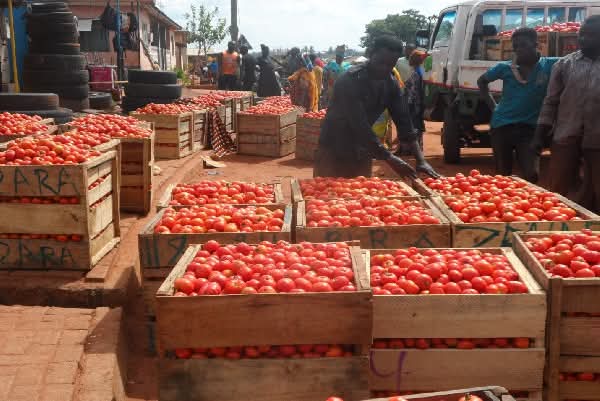
Ghana’s multi-million dollar tomato import bill is under fire as a coalition of agribusiness leaders, farmers, and high-profile advocates demand a radical decoupling from neighboring supply chains.
Following Burkina Faso’s recent export ban, the push to transform Ghana into a “Tomato Powerhouse” has shifted from a policy conversation to a national emergency.
The CAG 30-day ultimatum and 12-month emergency roadmap
The Chamber of Agribusiness Ghana (CAG) has officially turned up the heat on the government, demanding the activation of a Tomato Emergency Strategy within 30 days. The Chamber argues that the current volatility in the market is a direct result of decades of “lethargic” investment in local value chains.
To bridge the immediate gap, the CAG has unveiled a 12-month roadmap focused on three pillars:
The first pillar is input subsidies to provide Immediate relief for seeds and fertilizers specifically for tomato clusters.
The second pillar is irrigation mobilization, repurposing existing water infrastructure to support off-season farming.
The third pillar is off-take guarantees to ensure farmers have a locked-in market to prevent the post-harvest losses that have historically haunted the sector.
“Self-sufficiency is possible in 4 years”
Adding a practical voice to the movement, Ghana’s Deputy Food and Agriculture Minister, the celebrated actor and renowned farmer, John Dumelo, has asserted that Ghana can completely end its dependence on imports within just four years.
“We have the land and the climate. What we lack is the consistent technical support and the political will to protect the local farmer,” Dumelo stated. He emphasized that with structured investment in greenhouse technology and improved seed varieties, Ghana would not only feed itself but could become a net exporter to the very countries it currently relies on.
Importers join the call for local growth
In a surprising twist, even the Tomato Importers Association the group traditionally reliant on Burkinabe supply is urging the government to prioritize local production. Faced with rising costs and the unpredictability of cross-border trade, importers are ready to pivot.
“We would rather buy from the Upper East or Ashanti regions than navigate the risks of the border,” a spokesperson for the association noted. “If the quality and quantity are there, we are ready to put our money back into the Ghanaian economy.”
Blessing in disguise
Dr. Charles Nyaaba, a leading voice in the agricultural space, has gone as far as to say Ghana should “celebrate” the ban from Burkina Faso. He argues that as long as the “easy option” of importing existed, the nation would never take the hard steps required for industrialization.
“This ban is the best thing to happen to Ghanaian agriculture in a decade,” Dr. Nyaaba remarked. “It forces us to look inward. It is time to stop complaining about the border and start clearing the fields. It’s time to grow our own.”
The road ahead
The stakes could not be higher. As market prices for the essential fruit fluctuate, the government’s response over the next 30 days will determine if this crisis leads to a permanent agricultural revolution or another cycle of scarcity.
With industry experts, celebrities, and even importers aligned, the message to the Ministry of Food and Agriculture is unified: The era of the “Burkinabe Tomato” must end, and the era of the “Ghanaian Harvest” must begin.
