
By Adnan Adams Mohammed, Financial and Economist Journalist
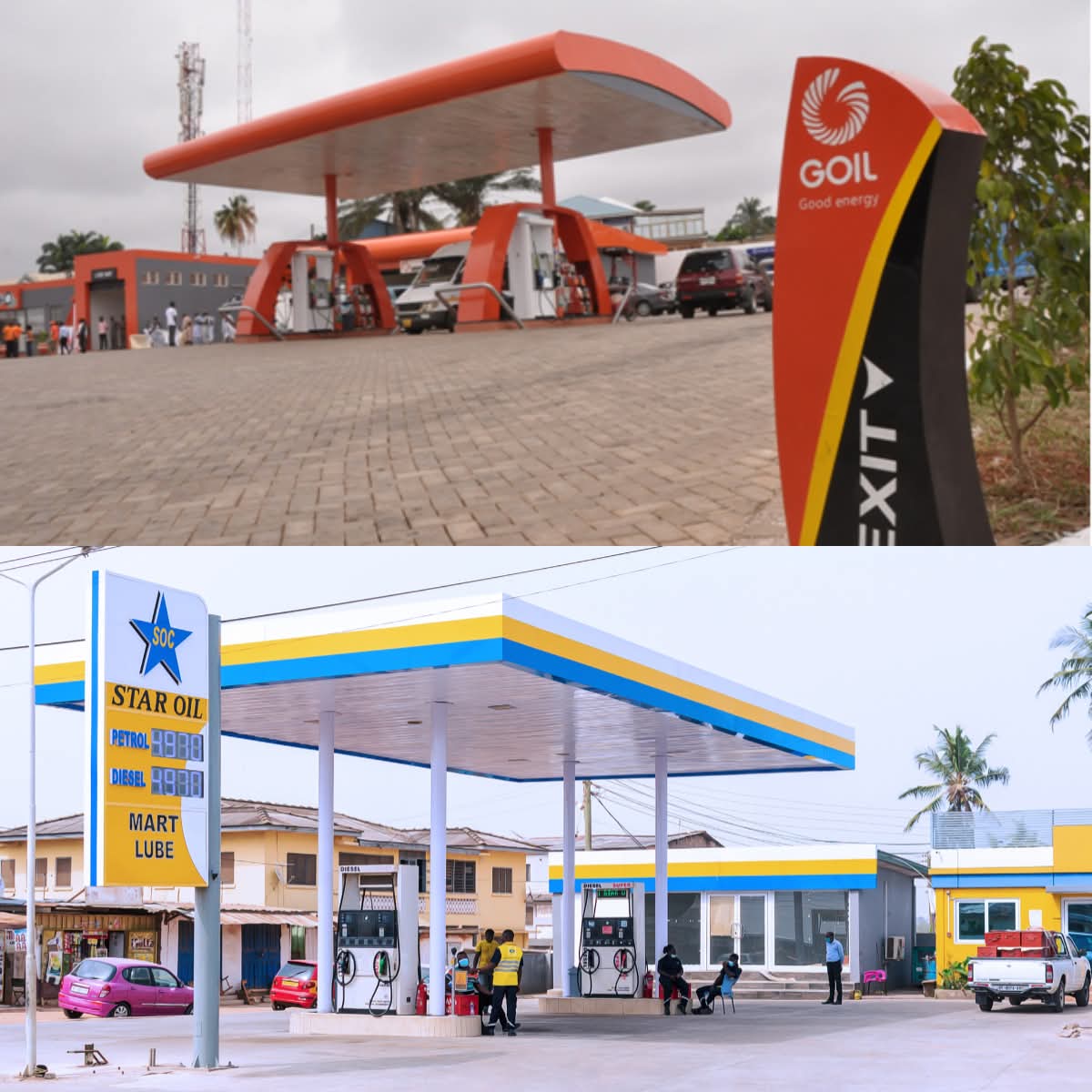
As the “Tigers and Lions”, Star Oil and GOIL, engage in a high-stakes price war, the ripples are being felt most acutely by the nearly 200 smaller Oil Marketing Companies (OMCs) that populate the fringes of the Ghanaian market.
While the headlines focus on the drama at the top, a quiet crisis of sustainability is brewing for the “Davids” of the industry.
Here is an analysis of how this price war could reshape the landscape for smaller players in the coming months.
1. The Margin Squeeze: No Room to Breathe
For large players like Star Oil, scale is a weapon. With an 805% growth rate over the last five years and advanced automation to curb forecourt losses, they can afford to operate on razor-thin margins. Smaller OMCs, however, often face higher overheads per liter sold.
The Procurement Gap:
Smaller firms lack the massive credit lines of the giants (often capped below US$3 million), meaning they pay 2% to 4% more to Bulk Distribution Companies (BDCs) for their product.
The Price Trap:
When the market leaders drop petrol to GH¢9.97, smaller players are forced to follow suit to keep their pumps running. Without the same efficiency, they aren’t just cutting profit—they are often cutting into the capital needed to buy their next load of fuel.
2. The Threat of “Station Cannibalization”
The price war is currently focused on high-traffic urban centers like Accra and Kumasi. In these areas, consumers are incredibly price-sensitive, often switching stations for a difference of just 2 pesewas.
Short-term:
Smaller OMCs may see a sharp drop in volume as loyal customers migrate to “discount stations.”
Long-term:
Industry analysts predict a wave of acquisitions. If small operators cannot break even over the next three pricing windows (roughly 45 days), many may be forced to lease their prime-location stations to the very giants they are currently fighting.
3. The Rural Fallout
While urban consumers benefit from the war, the “last mile” of Ghana’s fuel supply is at risk. Small OMCs are the backbone of rural fuel security, operating where the big brands find it unprofitable to go. “If the price war drives small players out of business, we won’t just see higher prices in the long run we’ll see ‘fuel deserts’ in rural Ghana where no one is left to serve the farmer or the local transport operator,” warns an analyst from the Institute for Energy Security (IES).
4. Regulatory Tug-of-War: The Price Floor “Shield”
The National Petroleum Authority (NPA) and COMAC maintain that the price floor is the only thing standing between the current market and total consolidation.
Outcome Impact on Small OMCs
Floor Maintained: Provides a “minimum safety net” that prevents giants from selling below cost to intentionally kill competition.
Floor Scrapped: Could lead to a “race to the bottom” where only the top 5–10 companies survive, leading to an oligopoly.
The Verdict: A Looming Shake-up
The coming months will likely be a “survival of the fittest” period. We can expect:
Consolidation: The number of active OMCs (currently around 210) could drop significantly by the end of 2026 as smaller firms merge to survive.
Service Diversification: Small OMCs may stop competing on price and pivot to “niche” value, such as better customer service or loyalty programs, to retain local footprints.
Adnan Adams Mohammed is a Financial and Economist Journalist
