
By Adnan Adams Mohammed
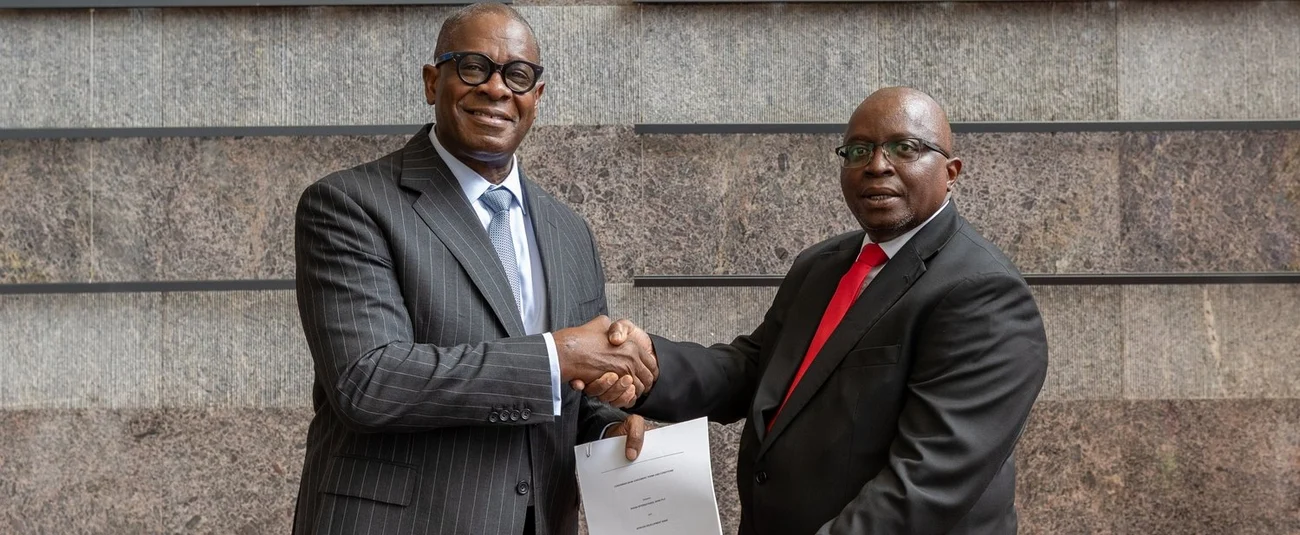
In a major move to counter the ongoing withdrawal of Western correspondent banks from frontier economies, the African Development Bank Group (AfDB) has signed a Confirming Bank Agreement with Ghana International Bank Plc (GHIB) under its flagship Transaction Guarantee Instrument.
The strategic partnership, finalized at the AfDB headquarters, establishes a robust de-risking mechanism designed to revive stalled import-export corridors, insulate fragile West African markets from liquidity shocks, and accelerate the cross-border momentum of the African Continental Free Trade Area (AfCFTA).
Under the terms of the agreement, the AfDB will provide transaction-by-transaction guarantees covering up to 100% of the non-payment risk assumed by GHIB on trade finance transactions originated by approved African local issuing banks. This unfunded, highly agile risk-sharing instrument allows transactions to be cleared within a rapid 48-hour window.
Reversing the Global De-Risking Tide
Over the past decade, major global banking conglomerates including HSBC, Citi, and Standard Chartered have aggressively pulled back their correspondent banking presence across African frontier states due to shifting risk-appetite metrics and compliance overheads. This structural retreat has left local banks stranded, unable to secure the international letters of credit required by domestic businesses to buy or sell critical goods.
By positioning GHIB a Ghanaian-owned, London-based financial institution regulated by the UK’s Financial Conduct Authority (FCA) as an approved international confirming bank, the AfDB is building an alternative financial highway for the continent.
Solomon Quaynor, the African Development Bank Vice President for the Private Sector, Infrastructure, and Industrialization, detailed the regional rescue logic driving the initiative.
“The addition of Ghana International Bank to the African Development Bank’s network of confirming banks strengthens our ability to support trade across Africa, especially in low-income countries and transition states such as Sierra Leone, The Gambia, Guinea, and Liberia,” Vice President Quaynor stated. “With the increasing implementation of the AfCFTA, our strategic objective is reducing Africa’s trade finance gap by enhancing the confirming bank capacity of African financial institutions such as GHIB for them to play an even bigger role in promoting intra-Africa trade.”
Tackling a Multi-Billion Dollar Financing Void
The partnership targets a widening funding void that continues to throttle sub-Saharan economic expansions. According to recent AfDB findings, Africa’s unmet annual demand for trade finance ranges between $74{ billion} and $92{ billion}, with small and medium-sized enterprises (SMEs) absorbing the heaviest damage. Other pan-African banking studies push that financing deficit as high as $120{ billion}.
By absorbing 100% of the underlying default risks, the AfDB-GHIB framework effectively lowers the cost of capital, allowing local businesses to process high-volume commercial transactions without facing impossible collateral demands.
Ian Greenstreet, the Chief Executive Officer of Ghana International Bank, framed the accord as a pivotal milestone for both the bank and the broader market.
“This agreement represents a significant milestone for Ghana International Bank and our clients,” Greenstreet noted following the signing ceremony. “It strengthens our ability to support businesses engaged in international trade and reinforces our commitment to facilitating economic growth and investment across Africa. As a UK-regulated bank with deep roots in Africa and strong international connections, GHIB is uniquely positioned to serve as a bridge between African markets and global capital.”
Unleashing the Power of the AfCFTA
Market analysts point out that while policy frameworks like the AfCFTA provide the legal architecture for tariff-free commerce, those policies remain frozen without the necessary trade finance mechanisms to back them up. If a local enterprise in Accra or Banjul cannot secure a validated letter of credit to pay an exporter in Abidjan, intracontinental supply chains break down entirely.
By providing comprehensive transaction guarantees, the AfDB-GHIB alliance ensures that trade lines remain open even during times of macroeconomic stress. Capitalized by its unique dual identity as a British-regulated entity backed by Ghanaian sovereign roots, GHIB plans to scale up its newly backed confirmation capabilities over the coming quarters, laying down a highly resilient financial bedrock for West African trade.
