

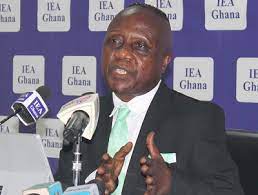
Adnan Adams Mohaammed
As Ghana visage for a way out of its cyclical economic management mess, the government is advised to establish a ‘Currency Board (CB)’ to help in the monetary management process of the Bank of Ghana.
The ‘Currency Board’, the Institute of Economic Affairs (IEA) believes will help stabilise the cedi and prevent instability in the economy in times of shocks. The Institute also think it will help to limit the Central Bank lending to the government
These monetary control and management factors deficiencies have been the bane of Ghana’s economic management. According economists, the CB system has limited inflation, checks currency volatility and better position balance of payments.
“You see, a Currency Board (CB) is a rigid monetary management system that is hedged in strict rules, with little room for discretion. The CB does not lend to government and it covers its currency fully by foreign exchange”, Lead Researcher at the Intitute, Dr. John Kwakye, in a paper published and titled “Institutionalising Fiscal Discipline and Macroeconomic Stability for Sustained Growth in Ghana: The Constitutional Pathway” noted.
“The CB system has limited inflation, the currency does not depreciate and balance of payments crises are rare. This is close to the system in our Francophone neighbours, who restrict their Central Bank lending to governments and provide adequate cover for their currency, the CFA.”
IEA buttressed its points that, the Francophone countries system guarantees them low inflation and a stable currency, but “you have Ghana that has chosen an independent Central Bank to conduct discretionary monetary policy’.
It also blamed the Central Bank of Ghana for some of the economic woes, saying, “The Central Bank provides significant lending to government and covers the cedi with limited foreign exchange (40% in the Act). No doubt we face perennial price and currency instability!”
“It is for this reason that some of us have argued that if we continue to abuse policy discretion and pay a high price for it in terms of macroeconomic instability, then we better hedge our policies by rules; tie our economic managers hands, so that we can enjoy rules-driven macroeconomic stability!”, it added.
Finally, the IEA said despite Ghana having rules such as the Public Financial Management Act, the Bank of Ghana Act and the Fiscal Responsibility Act, the rules have not work because of lack of political way.
“Let me say that it is not that we have had no rules at all in fiscal and monetary management. In fact, I can mention a couple of them, such as the Public Financial Management Act, the Bank of Ghana Act, the Fiscal Responsibility Act and the relevant provisions in the 1992 Constitution, which represent attempts to introduce rules in our fiscal and monetary management system”.
“However, there are serious questions regarding not only their enforcement but their effectiveness as well. And that is the reason we feel strongly about the need to give constitutional backing to some of these rules”, it concluded.
