
By Mariam Aminu
Small-scale fishers, chief fishermen, fish processors, and traders across Ghana’s coastal communities are calling on the government to completely revoke ten offshore reconnaissance licenses covering approximately 10,000 square kilometers of Ghana’s marine waters.
While welcoming President H.E. John Dramani Mahama’s initial decision to suspend the offshore gold exploration activities of Gold Coast GRC Ghana Ltd., stakeholders warn that a temporary halt is insufficient to guarantee long-term economic and environmental security.
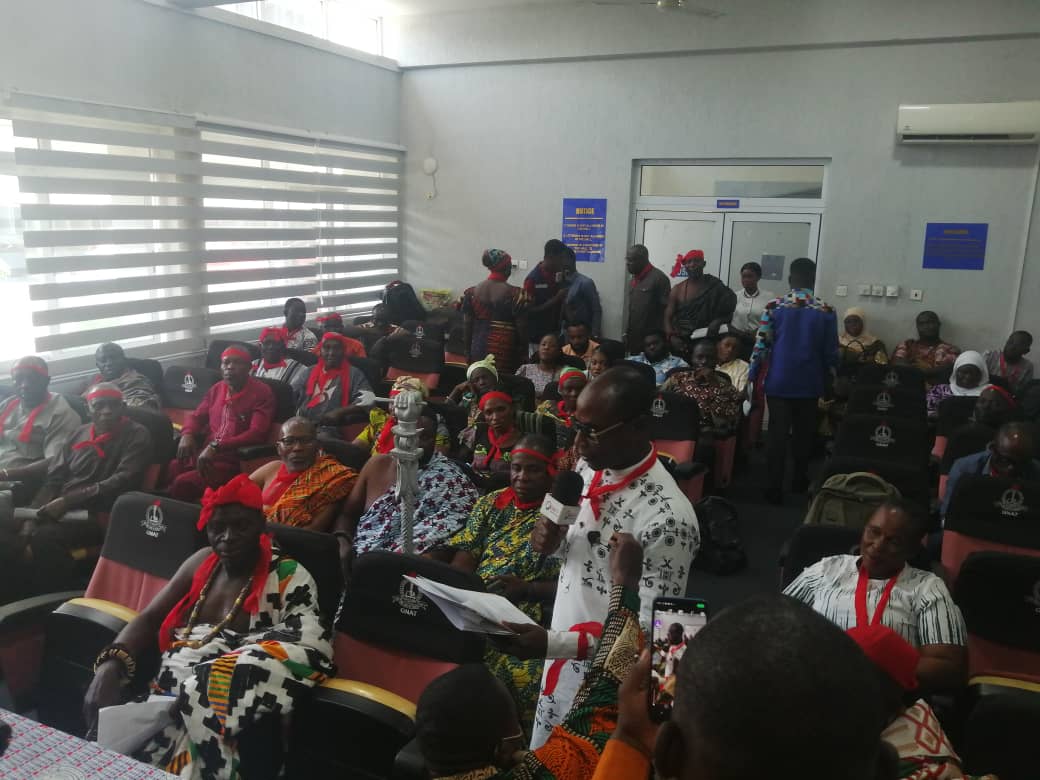
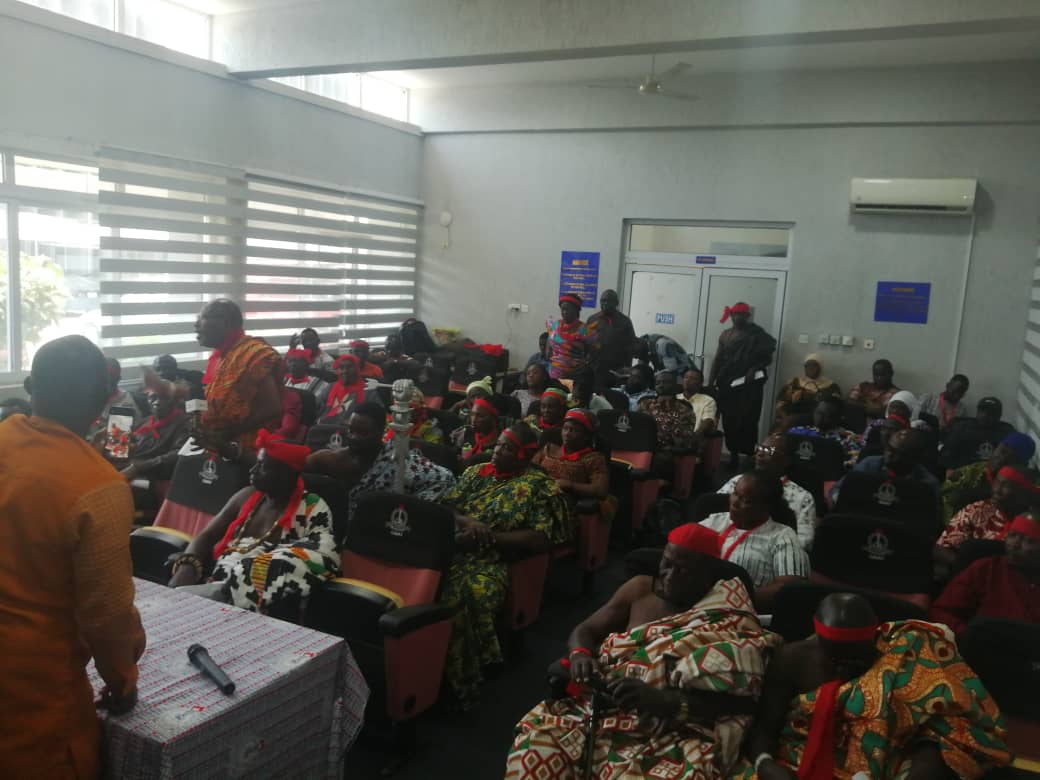
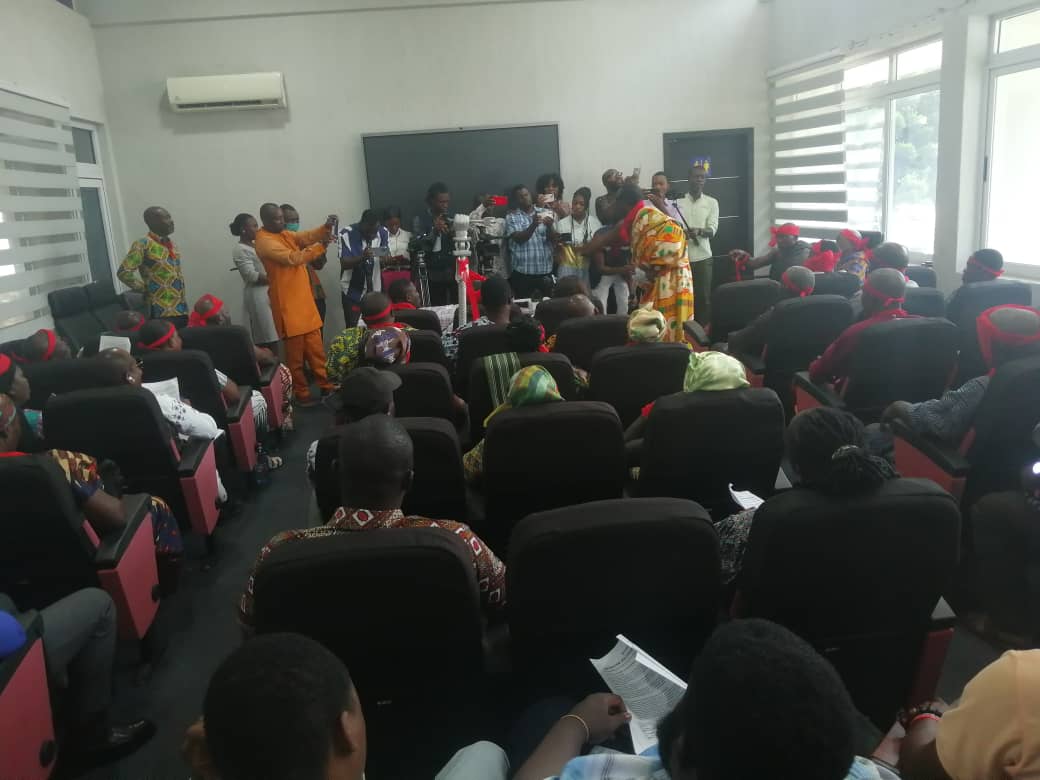
The collective call was made during a press conference organized by artisanal fishing representatives and the Chief Fishermen and Queen Fishmongers Council (CFQFC-GH) on October 13, 2026.
“Our Ocean is Not a Liquid Desert”
Addressing the media, Nana Kwamena Sankah, speaking on behalf of the fishing communities, warned that seabed mineral exploitation poses an existential threat to coastal livelihoods and national food security.
“Our ocean is not a liquid desert waiting to be exploited. It is a living ecosystem that sustains fishing families, fish processors, traders, and coastal communities whose livelihoods, food security, and cultural heritage depend on healthy fish stocks,” Nana Kwamena Sankah stated.
“Activities that damage marine habitats, disrupt fish populations, or restrict access to fishing grounds risk turning a living ocean into a liquid desert depleted of fish… Suspension alone does not provide the lasting certainty that fishing communities need. We call for a clear and definitive decision to revoke the licenses”.
Threat to Fisheries Legislation and Protected Areas
The group expressed deep concern that offshore reconnaissance overlaps with critical marine zones. Under Ghana’s Fisheries and Aquaculture Act, 2025 (Act 1146), the Inshore Exclusion Zone (IEZ) was extended from six to twelve nautical miles to safeguard artisanal fishing grounds.
Fisherfolk questioned the purpose of expanding the IEZ if mining exploration is permitted within the same marine areas. Additionally, concerns were raised regarding the potential disruption to the Greater Cape Three Points Marine Protected Area, an ecologically vital sanctuary for marine biodiversity.
Leadership Crisis and Environmental Stewardship
In a joint statement, the Chief Fishermen and Queen Fishmongers Council (CFQFC-GH) highlighted the severe broader impacts of mineral exploration on coastal communities, comparing seabed mining to destruction caused by illegal mining activities.
“In the CFQFC-Gh, we stand as custodians of the fisheries. Ocean mineral exploration is a killer more than Ghost Gears in the ocean,” the Council declared.
“This act is more damaging than light fishing, and more dangerous than inland galamsey impacts and repercussions… Small-scale fisheries is an economic, social, and cultural asset for Ghana and Africa. The majority of these jobs are carried out by the youth, and paradoxically, the majority of Ghanaians youth are unemployed about 60%”.
The Council also pointed to a breakdown in traditional oversight, criticizing local leaders who fail to defend coastal waters against exploitation.
“Long before the advent of the colonial state… traditional leaders held absolute stewardship over Ghana’s ancestral domains. They were the original protectors of the environment,” the Council noted. “Today, that sacred compact has fractured. Rather than standing as fierce defenders of their communities, many traditional leaders have capitulated to short-term personal enrichment and political patronage”.
Core Demands Presented to Government
To ensure sustainable marine governance and protect community livelihoods, the coastal coalition outlined five key demands for the President and the Government of Ghana:
1. Revoke All Exploration Licenses: Permanently cancel the offshore reconnaissance licenses granted to Gold Coast GRC Ghana Ltd. and abandon plans for mineral extraction in territorial waters.
1. Protect the Inshore Exclusion Zone: Keep the 12-nautical-mile IEZ free from seabed mineral exploration and extraction.
1. Safeguard Marine Sanctuaries: Explicitly protect sensitive marine ecosystems, including the Greater Cape Three Points Marine Protected Area.
1. Ensure Inclusive Consultation: Guarantee meaningful participation and consultation of artisanal fishing communities in decisions affecting marine resources.
1. Prioritize Long-Term Sustainability: Align national decisions with Sustainable Development Goal 14 (Life Below Water) and the Kunming-Montreal Global Biodiversity Framework to protect coastal food security.
The coalition reiterated that short-term economic gains from mining cannot compensate for the irreversible damage to marine biodiversity and coastal economies.
“Our message is clear: the ocean is our life, our heritage, and our future,” Nana Kwamena Sankah concluded. “Our children deserve a living ocean, not a liquid desert”.
