
By Adnan Adams Mohammed
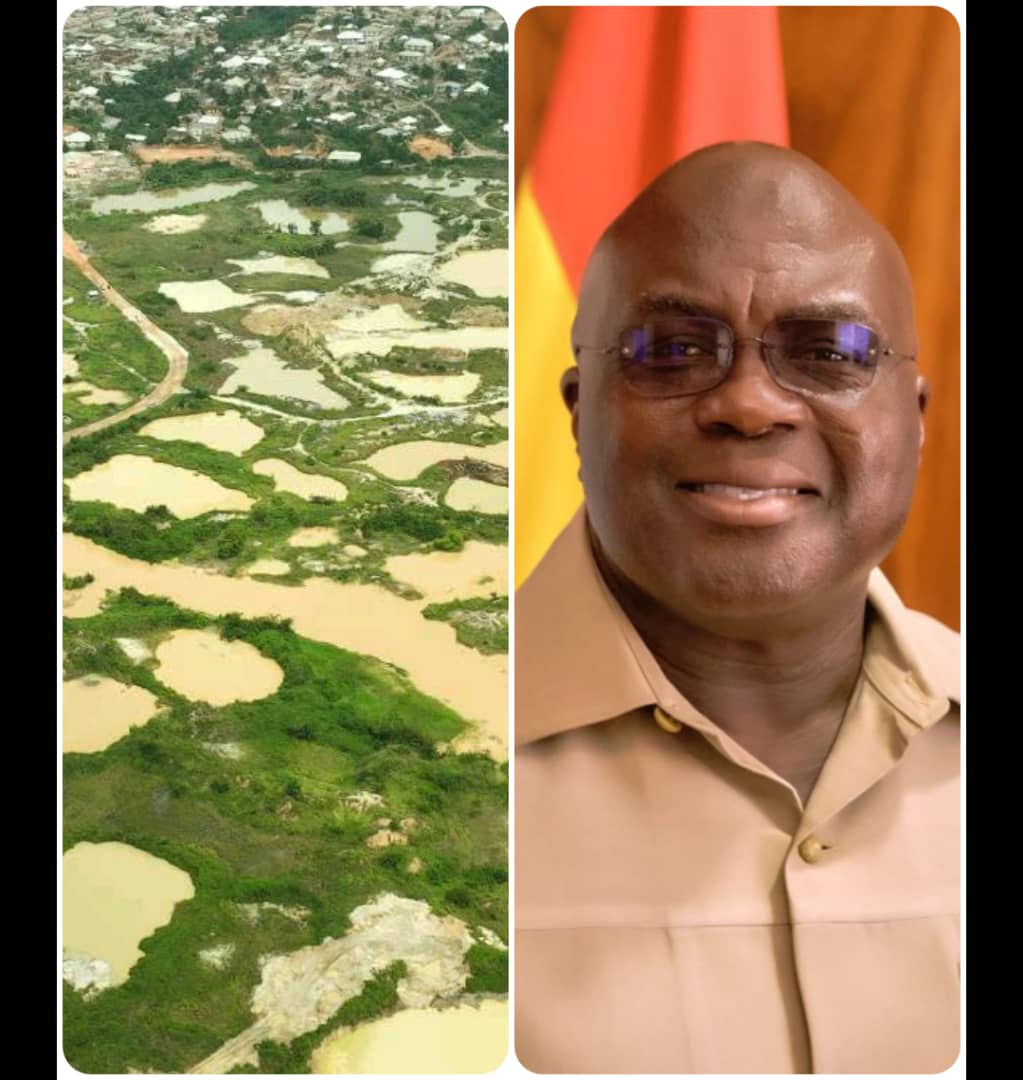
Ghana’s battle against illegal small-scale mining (galamsey) has evolved far beyond visible environmental damage. Rivers that once provided clean water now run thick with mud, and sacred forest reserves are scarred by heavy machinery. Yet the impacts extend into digital connectivity, public intelligence, and the breakdown of traditional values.
The struggle is no longer just about arresting miners in forest reserves; it encompasses national security, institutional coordination, and a shift in civic identity.
A Cultural Deficit and the Erosion of Civic Stewardship
At the heart of the crisis lies a shift in community values. Speaking at the Clean Conference in Accra, held under the theme “Assessing Ghana’s Progress Towards the UN SDGs,” Chief of Staff Mr. Julius Debrah pointed out that technical and military responses will fail unless citizens reclaim their traditional principles of environmental responsibility.
“We are now having issues with sanitation and struggling with galamsey because we have dropped our heritage.”
— Mr. Julius Debrah, Chief of Staff
Mr. Debrah explained that traditional Ghanaian societies historically operated with built-in accountability structures that protected water bodies and communal land. The decline of these norms has created widespread civic indifference, allowing illegal mining to flourish alongside urban sanitation issues.
“The fight against galamsey cannot be won solely through enforcement and government interventions but requires a change in attitudes among citizens.”
— Mr. Julius Debrah
Supporting this perspective, the Ga Mantse, Nii Teiko Tsuru II, noted in a speech delivered on his behalf that traditional leaders must be empowered to restore order and discipline at the local level.
“The erosion of traditional values has contributed significantly to the country’s sanitation challenges… Chiefs must be empowered to support efforts aimed at keeping communities clean and protecting public spaces.”
— Nii Teiko Tsuru II, Ga Mantse
The Hidden Cost: Fiber Optic Cuts and Digital Sabotage
While the environmental impact of galamsey is widely recognized, its damage to critical national infrastructure often goes unnoticed. Excavation equipment routinely severs fiber optic lines buried along transit corridors, disrupting telecom networks, financial systems, and public communications.
The Minister for Communication, Digital Technology, and Innovations, Samuel Nartey George, highlighted the scope of the problem, revealing that illegal earth-moving operations are a major driver of telecommunications disruptions across the country.
“Illegal mining activities, popularly known as galamsey, are responsible for about 25 percent of all fiber cuts recorded across Ghana.”
— Hon. Samuel Nartey George, Minister for Communication, Digital Technology, and Innovations
This statistic underlines that galamsey is not merely a rural or environmental issue—it poses a direct threat to the country’s digital economy, business operations, and emergency communications.
Frontline Enforcement: Tactical Raids in Protected Hotspots
Even as long-term institutional reforms are discussed, field enforcement remains necessary to halt active destruction inside protected ecosystems.
In a recent dawn operation, the Forestry Commission’s Rapid Response Unit (RRU) intercepted an illegal mining site in the Atewa Range Forest Reserve near the Sagyimase community in the Kyebi Forest District. The reserve serves as the critical headwaters for the Birim, Densu, and Ayensu rivers, which supply drinking water to millions across Accra and surrounding districts.
The covert operation involved 17 field officers deployed from Assin Fosu, Akim Oda, and Juaso. Officers arrested 12 suspects caught actively working in the reserve, while others fled into the surrounding forest. Officials confiscated five motorbikes, 11 shovels, water hoses, gold-washing blankets, and fuel containers, subsequently transferring the suspects to the Kyebi District Police Command for prosecution.
While field operations demonstrate active enforcement, security analysts argue that tactical arrests only address the surface of a broader network.
The Intelligence Deficit: Why Tactical Raids Are Not Enough
In a security analysis on the crisis, intelligence analyst and former Director General of the Bureau of National Intelligence, Nana Attobrah Quaicoe, argued that Ghana’s failure to contain galamsey stems from treating organized illegal networks as isolated criminal acts rather than a coordinated national security threat.
“A raid here, an arrest there, an excavator pushed into a pit or torched on camera—none of it touches the structure underneath, because nobody has actually mapped that structure. Enforcement without that groundwork isn’t disruption. It’s theatre.”
— Nana Attobrah Quaicoe, Intelligence and National Security Analyst
Quaicoe emphasized that illegal mining syndicates operate with financial, logistics, and protection layers. Without an intelligence architecture—one that maps financiers, tracks illicit equipment, and coordinates defense and civilian intelligence—the state remains trapped in reactive damage control.
“Galamsey didn’t have to get here… Every year we spend keeping a diary instead of forecasting pushes the bill higher.”
— Nana Attobrah Quaicoe
A Multidimensional Response
Addressing galamsey requires more than isolated task force operations. Protecting Ghana’s rivers, forests, and digital infrastructure demands a unified strategy: integrating national security intelligence, enforcing regulatory laws, protecting digital infrastructure, and restoring the traditional community values that once safeguarded the environment.
Until policy enforcement, intelligence gathering, and cultural values align, the toll on Ghana’s natural resources and public infrastructure will continue to mount.
