
By Adnan Adams Mohammed
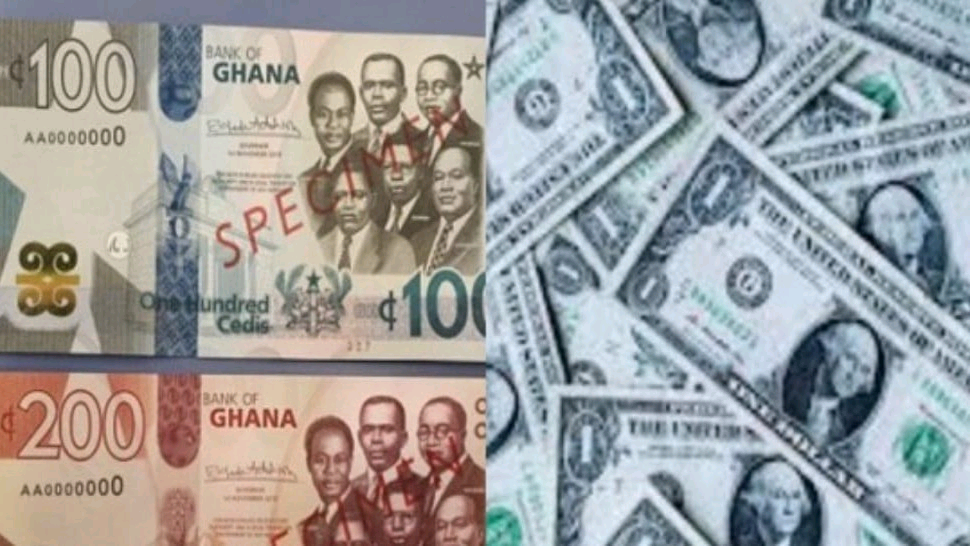
Ghana’s local currency continues to show strong signs of resilience across financial markets, with the Bank of Ghana (BoG) projecting sustained stability over the medium term despite the traditional Q4 rise in foreign exchange demand for Christmas inventory.
Trading data for Monday, September 7, 2026, places the US dollar at GH¢11.4057 on the central bank interbank market and GH¢12.15 on the retail forex market—reflecting a steady, controlled trading environment following months of proactive liquidity management by monetary authorities.
Central Bank Upbeat on Currency Outlook
The Bank of Ghana reaffirmed its confident outlook in its latest Monetary Report, highlighting that strategic foreign exchange interventions and robust private transfers will keep the cedi grounded against global currencies.
”Over the medium term, the Ghana cedi is expected to remain relatively stable,” the central bank stated. “FX intermediation is expected to moderate the pressures on the cedi, along with remittance flows.”
The central bank emphasized its ongoing commitment to balancing market dynamics while safeguarding the currency’s overall trajectory.
”The Bank remains prepared to intervene when necessary to ensure orderly market conditions while preserving exchange rate flexibility,” the regulator noted.
To sustain this equilibrium through September, the BoG is set to inject approximately $500 million directly into the foreign exchange market via its structured FX intermediation program.
$1.4 Billion Inflow Strengthens Market Buffers
Adding momentum to the currency’s calm, the Ghana Gold Board (GoldBod) is channeling $1.4 billion in foreign exchange receipts into the domestic economy this month to reinforce external reserves and commercial channels.
Under the current distribution plan, $700 million is being allocated directly to commercial banks through spot sales and funded forward contracts to meet trade obligations, while an additional $700 million is bolstering central bank reserves under the Ghana Accelerated National Reserve Accumulation Policy (GANRAP).
Declining Volatility and Strengthening Fundamentals
The cedi’s recent performance marks a clear stabilization phase after navigating broader global market pressures earlier in the year. Although year-to-date cumulative depreciation against the dollar reached 9.5% by mid-July, decisive market interventions successfully reined in losses to 7.11% by late August.
Furthermore, official figures show that the cedi achieved lower overall price volatility across the first 140 trading days of 2026 than during equivalent periods over the past four years. With substantial FX liquidity pipeline transfers underway, monetary authorities maintain that the local market is well-equipped to absorb seasonal demand without disrupting currency stability.
Cedi signals posture of resilience
…holding firm ahead of festive import demand surge
By Adnan Adams Mohammed
Ghana’s local currency continues to show strong signs of resilience across financial markets, with the Bank of Ghana (BoG) projecting sustained stability over the medium term despite the traditional Q4 rise in foreign exchange demand for Christmas inventory.
Trading data for Monday, September 7, 2026, places the US dollar at GH¢11.4057 on the central bank interbank market and GH¢12.15 on the retail forex market—reflecting a steady, controlled trading environment following months of proactive liquidity management by monetary authorities.
Central Bank Upbeat on Currency Outlook
The Bank of Ghana reaffirmed its confident outlook in its latest Monetary Report, highlighting that strategic foreign exchange interventions and robust private transfers will keep the cedi grounded against global currencies.
”Over the medium term, the Ghana cedi is expected to remain relatively stable,” the central bank stated. “FX intermediation is expected to moderate the pressures on the cedi, along with remittance flows.”
The central bank emphasized its ongoing commitment to balancing market dynamics while safeguarding the currency’s overall trajectory.
”The Bank remains prepared to intervene when necessary to ensure orderly market conditions while preserving exchange rate flexibility,” the regulator noted.
To sustain this equilibrium through September, the BoG is set to inject approximately $500 million directly into the foreign exchange market via its structured FX intermediation program.
$1.4 Billion Inflow Strengthens Market Buffers
Adding momentum to the currency’s calm, the Ghana Gold Board (GoldBod) is channeling $1.4 billion in foreign exchange receipts into the domestic economy this month to reinforce external reserves and commercial channels.
Under the current distribution plan, $700 million is being allocated directly to commercial banks through spot sales and funded forward contracts to meet trade obligations, while an additional $700 million is bolstering central bank reserves under the Ghana Accelerated National Reserve Accumulation Policy (GANRAP).
Declining Volatility and Strengthening Fundamentals
The cedi’s recent performance marks a clear stabilization phase after navigating broader global market pressures earlier in the year. Although year-to-date cumulative depreciation against the dollar reached 9.5% by mid-July, decisive market interventions successfully reined in losses to 7.11% by late August.
Furthermore, official figures show that the cedi achieved lower overall price volatility across the first 140 trading days of 2026 than during equivalent periods over the past four years. With substantial FX liquidity pipeline transfers underway, monetary authorities maintain that the local market is well-equipped to absorb seasonal demand without disrupting currency stability.
