
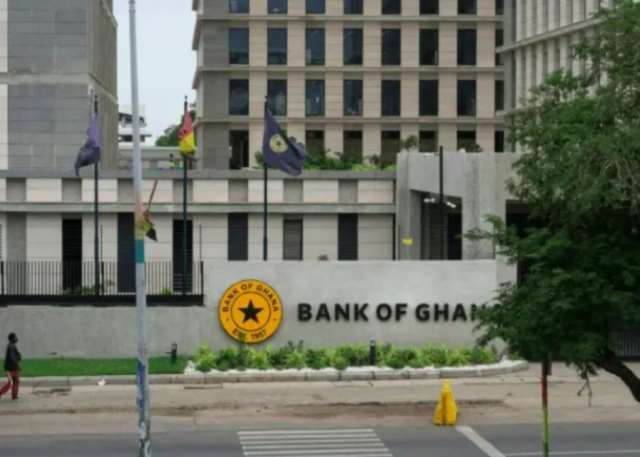
In a decisive move aimed at safeguarding consumers and protecting the integrity of the nation’s financial sector, the Bank of Ghana (BoG) has issued a stern warning to the public against engaging with unlicensed digital lending platforms, officially blacklisting unauthorized mobile loan applications operating within the country.
The central bank confirmed that the illegal platforms operate in direct violation of the Banks and Specialised Deposit-Taking Institutions Act, 2016 (Act 930).
According to regulatory authorities, these unauthorized operators exploit desperate borrowers by charging exorbitant interest rates, imposing hidden fees, and resorting to aggressive debt-collection practices that violate basic human rights and data privacy standards.
Regulatory Warning
In an official public notice released by the regulator, the central bank cautioned citizens against the severe risks associated with patronizing unregistered micro-lenders.
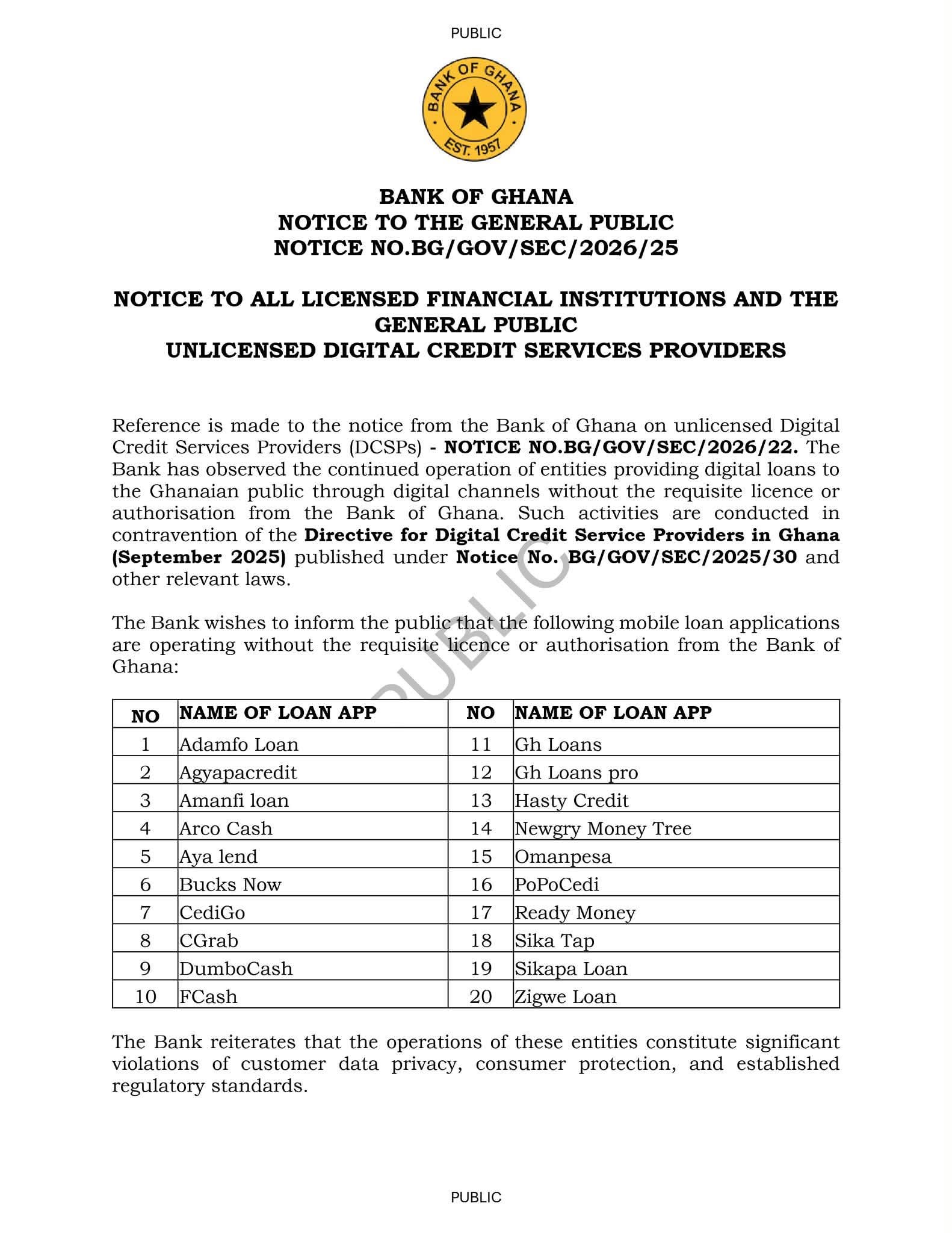
“The persistent operation of unlicensed entities engaged in providing loans through mobile applications to the Ghanaian public is in direct contravention of Act 930,” the Bank of Ghana stated. “The activities of these entities significantly breach customer data and privacy laws, as well as consumer protection requirements, with unfavourable implications for the integrity and well-being of their patrons.”
The central bank further instructed regulated financial institutions, payment service providers, and telecommunication networks to block access to these illegal operators immediately.
“Banks, Specialised Deposit-Taking Institutions, and Payment Service Providers are strictly cautioned not to facilitate the illegal transactions of unlicensed loan applications,” the statement added.
Public Reaction and Victims’ Experiences
The crackdown comes following widespread public outcry regarding abusive debt-recovery tactics employed by predatory loan app operators. Many victims reported that after defaulting on short-term loans, these applications accessed their phone contacts without permission to send defamatory messages to family, friends, and employers.
Kofi Mensah, a small business owner in Accra who fell victim to an illegal lending app, shared his ordeal:
“I borrowed GH¢500 to restock my shop when business was slow. Within a week, the interest skyrocketed, and when I couldn’t pay immediately, they harvested all my phone contacts and sent text messages calling me a thief to everyone I knew,” Mensah said. “The central bank’s intervention is long overdue. These apps destroy lives and reputations overnight.”
Financial analysts have also commended the regulator’s stance, emphasizing the need for stricter digital surveillance to prevent unverified financial apps from appearing on mobile app stores.
Cybersecurity specialist and financial analyst Dr. Samuel Baidoo welcomed the crackdown but urged further collaboration with international technology giants:
“Blacklisting these apps is a positive step toward consumer protection, but enforcement must be continuous,” Dr. Baidoo noted. “The BoG must partner closely with Google, Apple, and local telecommunication providers to ensure these illegal platforms are systematically removed from app stores and blocked from processing mobile money transfers.”
Safe Alternatives for Borrowers
The Bank of Ghana reiterated that legitimate digital credit services remain available through accredited financial institutions and authorized mobile network operators. Members of the public are strongly advised to verify the licensing status of any financial service provider on the central bank’s official website before initiating financial transactions or granting applications permission to access personal mobile data.
