
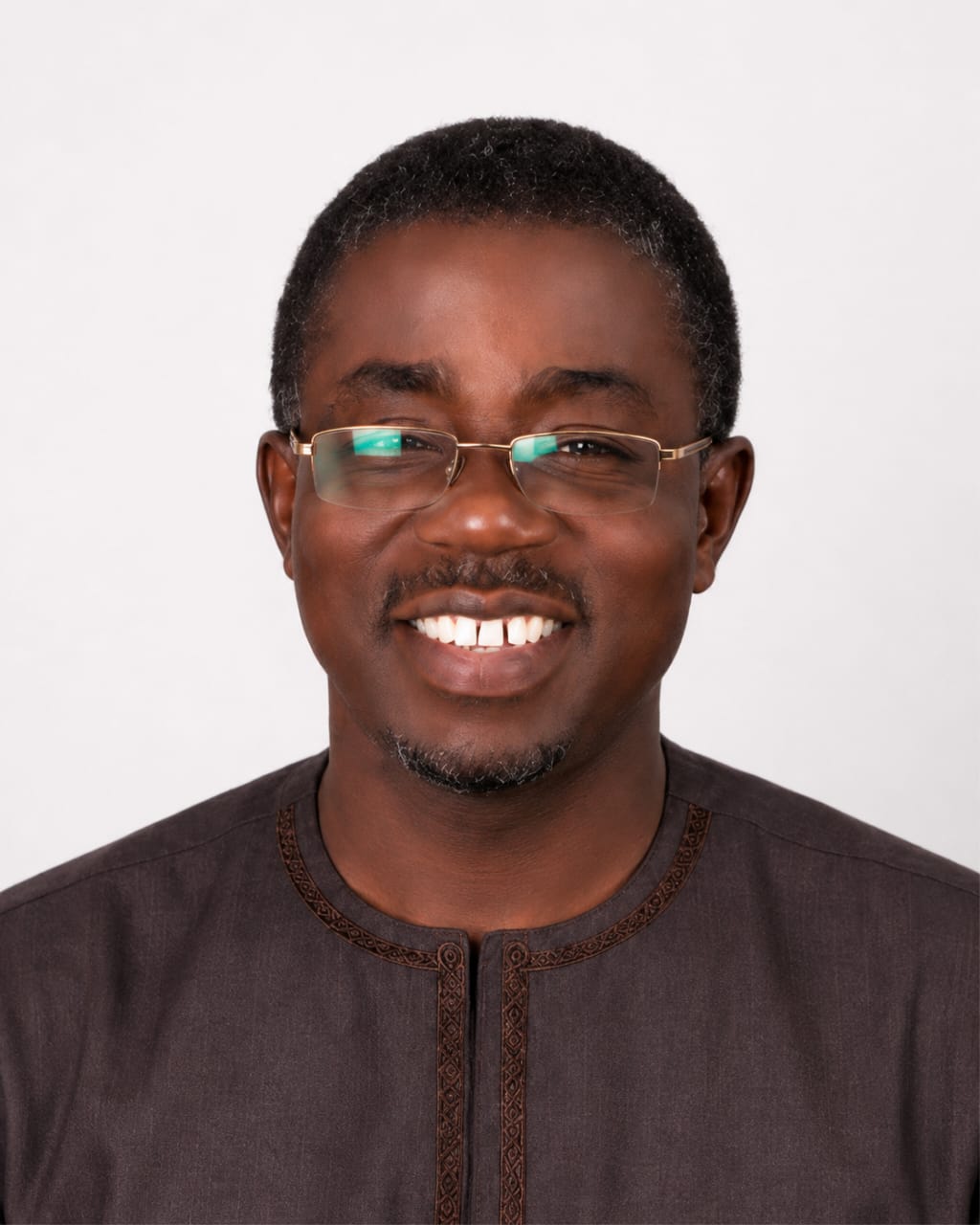
Compiled by the Friends of Hajj Abdel-Manan Abdel-Rahman
Led by Brothers Adnan Adams and Abdul Rahim Balom
Background of Our Story
As long-standing friends, colleagues, and beneficiaries of Hajj Abdel-Manan Abdel-Rahman’s visionary leadership, we have taken the independent initiative to document his vital contributions to the establishment, survival, growth, and present standing of the Coalition of Muslim Organizations, Ghana (COMOG).
Anyone who has worked closely with Hajj Abdel-Manan understands why he has never publicly touted his instrumental role in shaping COMOG. Throughout decades of dedicated service, he has remained a deeply humble and selfless servant of the Muslim Ummah, consistently choosing to let his actions and impact speak for him rather than seeking personal acclaim or public recognition.
We consider it our collective moral duty to place his sacrifices on official record so that this pivotal chapter in COMOG’s institutional history is preserved for future generations. Based on accounts gathered from individuals who have walked alongside him from COMOG’s inception to the present day, Hajj Abdel-Manan’s journey is defined by unfailing humility, quiet sacrifice, and unwavering integrity. Throughout his journey, he has mentored countless young leaders without ever seeking personal glory.
We share his story not merely to honor him, but to offer a practical model of leadership to current and future generations proving that true Muslim leadership is measured by sacrifice, service, and sincerity (Ikhlas), not by publicity or praise.
The Journey to COMOG: Grassroots Roots & Strategic Vision
Hajj Abdel-Manan’s legacy of service began at the grassroots with the Al-Balagh Group, an Islamic study and outreach initiative that initially held its spiritual and administrative gatherings at the residence of Brother Shawki Bayrouti before relocating to the Madina Koko Mosque.
Starting as a dedicated floor member, his commitment, organizational acumen, and work ethic quickly elevated him to Deputy Secretary and, subsequently, Secretary of the group. In this capacity, he also served as the executive producer for On the Right Path, a prominent Islamic radio program sponsored by Al-Balagh that served as an essential avenue for dawah and civic education.
Recognizing the need to gauge public engagement and community impact, he was appointed to coordinate the Al-Balagh committee tasked with evaluating its leadership lecture series broadcast on major media outlets such as Vibe FM and Radio Univers (University of Ghana, Legon). This strategic committee comprised distinguished scholars, intellectuals, and community leaders, including:
● Alhaji Dr. Adam Mahama
● Mallam Alhassan Sulemana
● Alhaji Hamidu Chode
● Sheikh Armiya Shaib
● …alongside other respected figures across the Ummah.
The committee’s extensive findings and engagements culminated in the historic First National Muslim Conference held at Lebanon House in Accra. Serving as Secretary to the Organizing Committee, Hajj Abdel-Manan worked tirelessly behind the scenes to ensure the event’s success. The conference proved to be a watershed moment in Ghana’s Islamic history, igniting momentum toward national organizational unity.
In the wake of this milestone, he was appointed Secretary of the Task Force mandated to engage the Federation of Muslim Councils (FMC) on critical institutional reforms. Building on this momentum, he served as Assistant to Dr. Adam Gabal Nasser in organizing the Second National Muslim Conference, the historical platform that directly led to the formal founding of COMOG.
Leadership, Governance, and Global Engagement
Since COMOG’s inception, Hajj Abdel-Manan has served at nearly every tier of its executive structure, demonstrating a rare depth of institutional memory and operational commitment:
● Programmes Coordinator: Driving grassroots outreach and thematic workshops.
● General Secretary (8 Years): Structuring administrative governance, keeping detailed records, and establishing core organizational protocols.
● President (4 Years): Guiding the national body with strategic vision, institutional diplomacy, and crisis management.
During his years of executive leadership, he played a central role in organizing key national developmental platforms:
● Co-organized the First National Hajj Conference and coordinated the Second National Hajj Conference, helping lay early foundations for structural Hajj management reform in Ghana.
● Assisted in organizing the First National Zakat Conference and subsequently coordinated the Second National Zakat Conference, which was proudly inaugurated at the British Council in Accra to institutionalize Zakat collection and distribution frameworks nationwide.
On the international stage, he served as Project Coordinator for COMOG’s high-impact, UNFPA-supported development initiatives. His leadership led to his election as Ghana’s representative on the Network of Islamic Organizations in Africa on Population and Development. In this continental role, he coordinated and participated in major international conferences across Dakar (Senegal), Freetown (Sierra Leone), Zanzibar (Tanzania), Uganda, and Sokoto (Nigeria), placing Ghana’s Muslim civil society at the forefront of African developmental dialogue.
Revitalizing COMOG: Innovation & Inter-Sectarian Diplomacy
As Editor of the COMOG Magazine, Hajj Abdel-Manan introduced thought-provoking, policy-oriented commentary that broadened the organization’s intellectual footprint and engaged Muslim professionals and academics.
When public interest in COMOG began to wane and the organization faced a period of dormancy becoming almost exclusively associated in the public eye with seasonal Hajj logistics he spearheaded a comprehensive structural revitalization program:
● Digital Transformation: Recognizing the power of modern communication tools, he personally established and monitored over 30 COMOG WhatsApp platforms across all regions of Ghana. This bridged the gap between national headquarters and local communities, creating a direct, real-time feedback loop with members nationwide.
● Diplomatic Re-engagement: He revitalized COMOG’s relationship with the Office of the National Chief Imam (ONCI) and painstakingly rebuilt bridges across diverse Islamic sects, institutions, and traditional leadership bodies.
Under his presidential stewardship, COMOG restored and deepened active bilateral relations with all major stakeholders across the Islamic spectrum in Ghana, including:
● Ahlus-Sunnah Wal-Jama’ah (ASWAJ)
● Federation of Muslim Women Associations in Ghana (FOMWAG)
● National Council of Zongo Chiefs
● Conference of Regional Chief Imams
● Muslim Council of Ghana
● Tijjaniyah Muslim Movement of Ghana (TMMG)
● Faydatut Tijjaniyah Ibrahimiyyah Council of Ghana
● Ambariya Sunni Muslim Community of Ghana
Furthermore, he worked proactively to bridge historical socio-cultural divides, fostering strategic collaboration between traditional Muslim Chiefs in Northern Ghana and their counterparts in Southern Ghana creating a unified national front for community advocacy.
Championing the Muslim Ummah Constitution & Policy Advocacy
Perhaps one of Hajj Abdel-Manan’s most enduring legacies is his instrumental leadership in conceptualizing, drafting, and building consensus around the Muslim Ummah Constitution.
Recognizing that sustainable unity requires clear institutional framework and rule of law, he initiated formal constitutional dialogues with the Office of the National Chief Imam in 2015 while serving as General Secretary, sustaining the momentum over several years.
Under his presidency, he organized the historic First National Consultative Conference on the Draft Constitution in 2020. He directly led the legal and technical drafting team that presented the first finalized draft to His Eminence the National Chief Imam.
To ensure wide legitimacy, he coordinated comprehensive nationwide stakeholder consultations that brought together key state and non-state actors, including:
● The Ministry of Chieftaincy and Religious Affairs
● The Ministry of Justice and Attorney-General’s Department
● The Speaker of Parliament & the Parliamentary Muslim Caucus
● The Director-General and management of the Ghana Broadcasting Corporation (GBC)
● Traditional Muslim Chiefs, Islamic scholars, and grassroots consultative forums across Accra, Kumasi, and Tamale.
Working closely with the ONCI Committee chaired by Alhaji Mahamudu, he spearheaded the formulation of the operational and financial roadmap for implementing the Ummah Constitution an achievement that received formal commendation from the Advisory Board of His Eminence the National Chief Imam. Additionally, he coordinated COMOG’s submissions to the National Religious Policy Framework, ensuring that the Ummah’s values, rights, and interests were protected within broad state policy.
Personal Sacrifice, Resourcefulness & Nationwide Expansion
Beyond strategic vision, the defining signature of Hajj Abdel-Manan’s leadership has been his extraordinary willingness to sustain COMOG through personal financial sacrifice and logistical resourcefulness.
● Sustaining Secretariat Operations: During times when COMOG operated without external funding or institutional grants, he personally secured office accommodation in Kokomlemle to keep the organization’s administrative core functional.
● Operational Anchoring at Tudu: From 2005 onward, he integrated COMOG’s administrative operations into his private business premises at Tudu, effectively utilizing his own commercial infrastructure, staff, and office supplies to keep COMOG running day-to-day.
● Self-Funded Representation: He consistently represented COMOG at scores of events hosted by the Conference of Regional Chief Imams, Tijjaniyah organizations, the Shia Muslim Community, the Islamic Education Unit (IEU), the Ghana Muslim Students Association (GMSA), and the Islamic Mission Secretariat paying for his own travel, lodging, and logistics without demanding reimbursement.
Notably, the only period in COMOG’s history during which the organization provided direct financial support for its internal administrative operations was for less than a single year during his presidency, when national executive allowances were temporarily approved for National Service personnel. Outside of that brief window, the financial and administrative weight was borne largely by him.
Laying the Regional Foundation
Long before regional branches were formally inaugurated, Hajj Abdel-Manan personally traveled extensively across the then-Brong Ahafo, Northern, Upper West, Upper East, Central, Eastern, and Volta Regions. He engaged local traditional rulers, scholars, and youth leaders to explain COMOG’s mission, build local trust, and lay the groundwork for expansion. He subsequently led the official inauguration of these regional branches, turning COMOG from an Accra-centered coalition into a truly national, grass-roots body.
National Moral Leadership & Public Advocacy
On the broader national stage, Hajj Abdel-Manan ensured that COMOG remained a principled voice on social governance, morality, and national cohesion.
He served as COMOG’s representative on the Board of Directors of the National Coalition for Proper Human Sexual Rights and Family Values. In this role, he actively supported the Coalition’s work through personal financial contributions, media engagements, policy forums, and national press conferences.
During his presidency, COMOG emerged as an active, courageous public voice, issuing seventeen (17) major public policy statements on critical matters impacting the Muslim community, public morality, human rights, and national governance.
He personally led high-level Muslim delegations to present petitions to state organs, engaged in policy dialogues surrounding the Proper Human Sexual Rights and Ghanaian Family Values Bill, coordinated public commendations for public officials standing for traditional values, and expressed solidarity with sponsoring Members of Parliament—setting a high standard for constructive, principled civic engagement.
Conclusion
The story of Hajj Abdel-Manan Abdel-Rahman is far more than a timeline of positions held or titles recorded. It is the inspiring record of a leader who quietly dedicated decades of his life to constructing institutions, promoting unity, mentoring future leaders, and sustaining the Muslim Ummah through quiet, continuous personal sacrifice.
The resilient institutional foundations upon which COMOG stands today were built largely through his sacrifice laid without any demand for applause, compensation, or personal reward.
It is our earnest prayer and hope that this record preserves an essential chapter of Ghana’s Islamic history and inspires future generations to embrace the timeless principles of humility (Tawadhu), integrity (Amanah), selflessness, and dedicated service that Hajj Abdel-Manan Abdel-Rahman has so consistently exemplified.
