
By Adnan Adams Mohammed
From illegal light fishing in Ada to toxic catch seizures in Tema and billion-cedi contraband busts, Ghana’s maritime frontiers face an unprecedented crisis; triggering aggressive naval crackdowns, historic conservation decrees, and the Fisheries Act 2025.
Across Ghana’s 550-kilometer coastline and sprawling inland waterways, a high-stakes war for sovereignty, food security, and human survival is unfolding.
Long plagued by maritime illegalities, overfishing, smuggling, and eco-degradation, the nation’s marine and inland aquatic resources are being stretched to breaking point.
However, a sweeping surge of regulatory reforms, naval interventions, and historic conservation mandates signals an aggressive state fightback.
1. Toxic catch & environmental warfare: The silent threat on dinner plates
The crisis on the water is no longer just an ecological debate, it has breached public safety and consumer health.
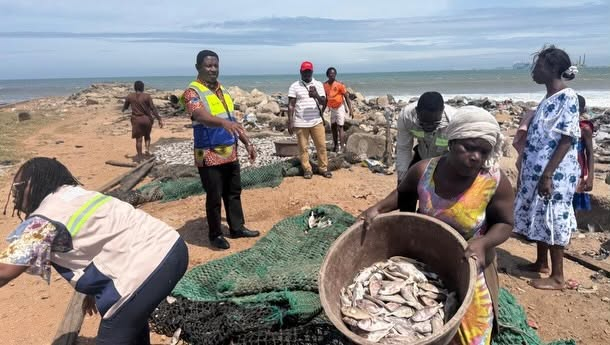
In Tema Newtown, a joint operation by the Food and Drugs Authority (FDA) and national security agencies led to the confiscation of tons of contaminated fish that were heading into local markets.
The interception followed serious warnings from regulatory authorities against consuming fish washed ashore or harvested around the Tema Shipyard following a suspicious mass fish-death incident.
Simultaneously, artisanal fishing communities are grappling with severe plastic pollution and industrial waste dumping. In Ada, despite clear statutory bans, illegal light fishing remains rife, devastating juvenile fish stocks and wrecking the marine ecosystem.
Civic groups and marine scientists are warning that chemical fishing, including the lethal use of DDT, carbide, and explosives constitutes a national emergency.
“Protecting Ghana’s fisheries is directly bound to our health and human security,” warned an environmental health advocate during a coastal stakeholder summit. “When toxic chemicals and microplastics contaminate our ocean, we aren’t just losing fish stocks; we are poisoning our food supply chain and destroying livelihoods.”
2. Piracy, smuggling, and high-seas crime: Navy intercepts billions in contraband
While chemical fishing wrecks coastal ecology, organized criminal syndicates have targeted Ghana’s territorial waters as transit corridors for illicit trade and maritime piracy.
In a landmark operation, the Ghana Coast Guard and Armed Forces executed a swift rescue operation off the coast, repelling a violent pirate attack on local fishermen. The Ministry of Fisheries and Aquaculture praised the Armed Forces, reaffirming that maritime security remains non-negotiable.
Meanwhile, multi-agency crackdowns at major ports and offshore bunkering routes have uncovered illicit operations of astonishing scale:
GH₵3.6 Billion Tramadol Bust: The Ghana Revenue Authority (GRA) at Tema Port intercepted illegal shipments of tramadol valued at GH₵3.6 billion, halting a massive drug pipeline.
Fuel Bunkering Syndicate Smashed: The Ghana Navy seized 8 vessels during a major offshore crackdown on illegal maritime fuel bunkering syndicates.
Yet enforcement challenges persist. Concerns were raised after a suspicious vessel previously arrested in Ghanaian waters was strangely freed, only to be rearrested by Senegalese maritime authorities highlighting the need for tighter inter-state coordination and legal vigilance.
In a separate distress incident along the coast, a heavy fishing vessel accidentally drifted off course onto La Beach near Accra, attracting crowds of onlookers and highlighting safety hazards faced by vessels operating between Takoradi and Tema.
3. Premix shortages & internal exploitation: Inland fisheries under siege
The crisis extends far inland. On Volta Lake, inland fishers struggle with dwindling catches, gear conflicts, and severe distribution bottlenecks for subsidized premix fuel.
During an unscheduled enforcement tour to landing sites in Yeji, the Minister for Fisheries and Aquaculture, Hon. Emelia Arthur, issued a stern warning against illegal price hikes, artificial shortages, and fuel diversion by local Landing Beach Committees (LBCs).
“The government-approved price for a gallon of premix fuel remains strictly regulated at GH₵200,” Hon. Emelia Arthur warned operators. “Any committee member or distributor who inflates prices beyond this ceiling or manipulates fuel volumes is committing a crime against the state and local fishers. We will pull you up and ensure the law takes its course.”
Supporting the Minister’s stance, Hon. Emmanuel Kwadwo Ahiam (MP for Pru East) emphasized that subsidized fuel must reach the intended beneficiaries:
“The premix fuel subsidy was created to relieve pressure on our fisherfolk. If LBCs and middle-men exploit local fishers for extortionate profits, it defeats the government’s purpose. We stand firmly with the Ministry to enforce price ceilings and transparent distribution.”
Further south, experts like Prof. Aggrey-Fynn have recommended radical structural shifts to curb fuel diversion and illegal practices, calling on government to “scrap all minor, unregulated landing beaches” in favor of centralized, monitored harbour infrastructure.
4. Major reforms: Act 2025, mandatory licensing, and the first Marine Protected Area
To combat systemic overfishing and restore international credibility, Parliament passed the landmark Fisheries and Aquaculture Act 2025 (Act 1146) alongside the Maritime and Anti-Piracy Bill, providing legal firepower to prosecute sea crimes.
Under the new policy regime:
Mandatory Digital Licensing: The Fisheries Ministry announced the mandatory registration and licensing of all artisanal fishers.
Closed Fishing Season Realignment: Responding to scientific studies including recommendations from the Sankofa Project stakeholders are aligning closed seasons with biological spawning cycles, with over 80% of local fishers now backing scientifically managed closed seasons.
National Action Plan: Stakeholders are pushing for an updated National Action Plan against Illegal, Unreported, and Unregulated (IUU) fishing to avoid yellow-card sanctions from international trading partners like the European Union.
The defining moment in Ghana’s conservation strategy occurred at Cape Three Points. Invoking Section 39 of the Fisheries Act 2025, Vice President Prof. Naana Jane Opoku-Agyemang formally declared the Greater Cape Three Points Area as Ghana’s first-ever Marine Protected Area (MPA).
Connecting over 21 coastal communities across Ahanta West and Nzema East in partnership with Hɛn Mpoano, the decree anchors Ghana’s commitments to achieve 100% sustainable ocean management by 2030.
“Government is strongly committed to safeguarding Ghana’s marine resources as a cornerstone of our blue economy agenda,” declared Vice President Prof. Naana Jane Opoku-Agyemang. “This initiative is not about restricting fishing communities, but about ensuring sustainable practices that allow marine ecosystems to regenerate, securing long-term food security.”
“Protecting the ocean is ultimately about protecting our people,” the Vice President added. “Long-term success will depend on partnership, compliance, and shared responsibility across every coastal community.”
5. Looking ahead: International trade & deep-sea diplomacy
As internal enforcement tightens, Ghana is leveraging its marine potential globally. High-level bilateral engagements between the Fisheries Ministry and delegations from the United Arab Emirates (UAE) have opened doors for sustainable fish exports and aquaculture investments. Meanwhile, consultations with UN delegations aim to safeguard the socio-economic rights of rural fishers amid rapid policy shifts.
At the international level, Ghanaian diplomats and environmental leaders are actively contributing to global debates on deep-sea mining, asserting that ocean conservation must take precedence over unchecked seabed exploitation.
With newly built infrastructure like the Jamestown Fishing Harbour being commissioned, the line in the sand is drawn. Ghana’s ocean is no longer a free-for-all frontier; it is a vital national security asset being reclaimed by law, conservation, and community vigilance.
