
By Adnan Adams Mohammed
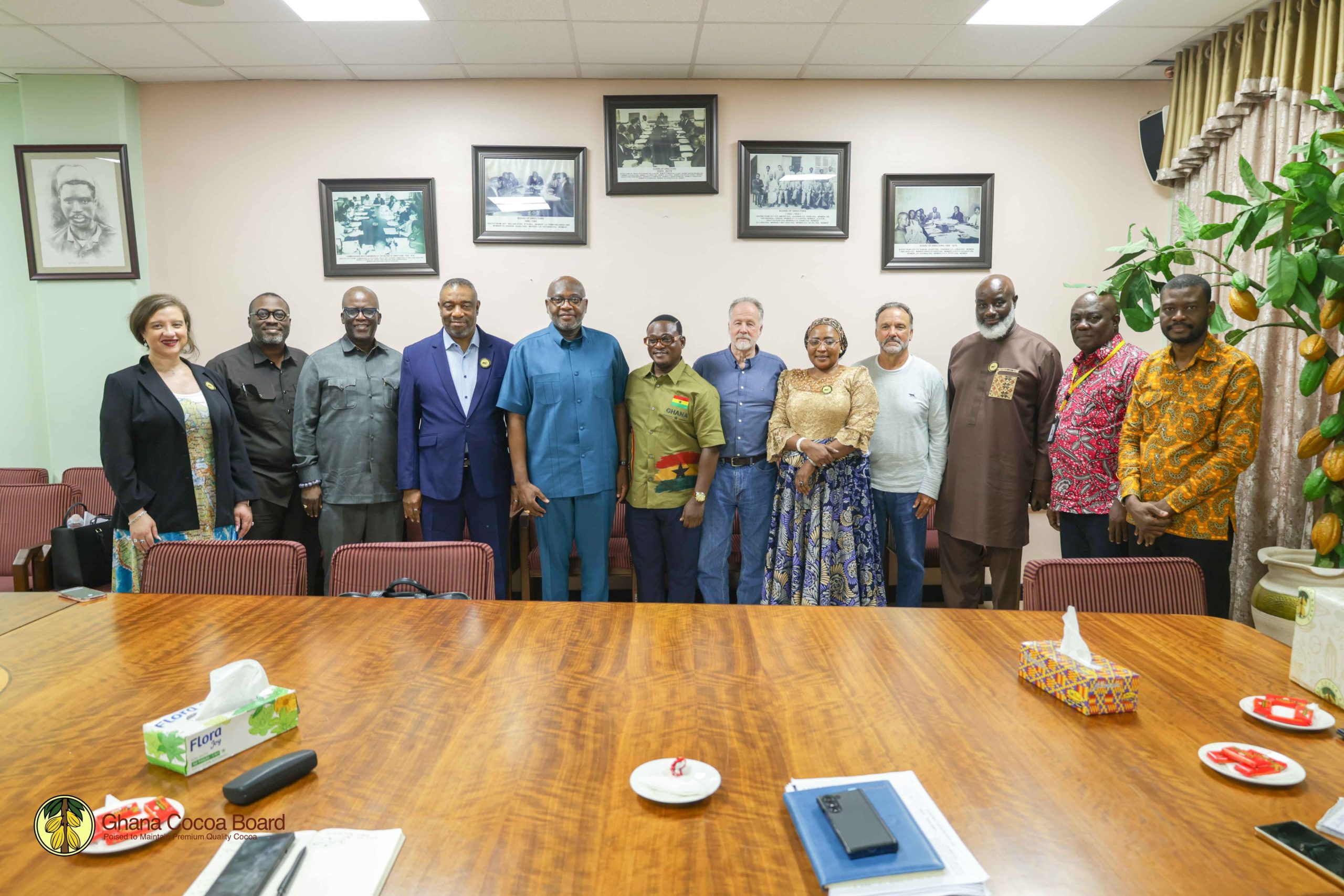
In a major push to boost foreign direct investment and promote sustainable development within Ghana’s agricultural sector, His Royal Majesty King Tackie Teiko Tsuru II, the Ga Mantse, yesterday led a high-level delegation of potential investors from the United States on an official courtesy call to the management of the Ghana Cocoa Board (COCOBOD).
The strategic visit aimed to provide the American delegation with firsthand insight into Ghana’s renowned cocoa value chain, opening doors for prospective collaborations in cocoa plantation development, environmental management, processing, research, and long-term sustainable investments.
Unlocking Opportunities Across the Value Chain
Addressing the delegation and COCOBOD officials during the meeting, King Tackie Teiko Tsuru II underscored the importance of leveraging international partnerships to modernize the agricultural landscape and maximize local value creation.
“Our goal is to build bridges that bring sustainable development, technology, and capital into key sectors of our economy,” the Ga Mantse stated. “Ghana’s cocoa industry remains a pillar of our national heritage and economy. Partnering with international investors who bring expertise and capital will ensure that we not only sustain this vital sector but also transform it for the benefit of future generations.”
The delegation expressed strong interest in expanding beyond raw bean exports, focusing heavily on local processing capacity, advanced agricultural research, and eco-friendly farming practices.
Reforms and Resilience at COCOBOD
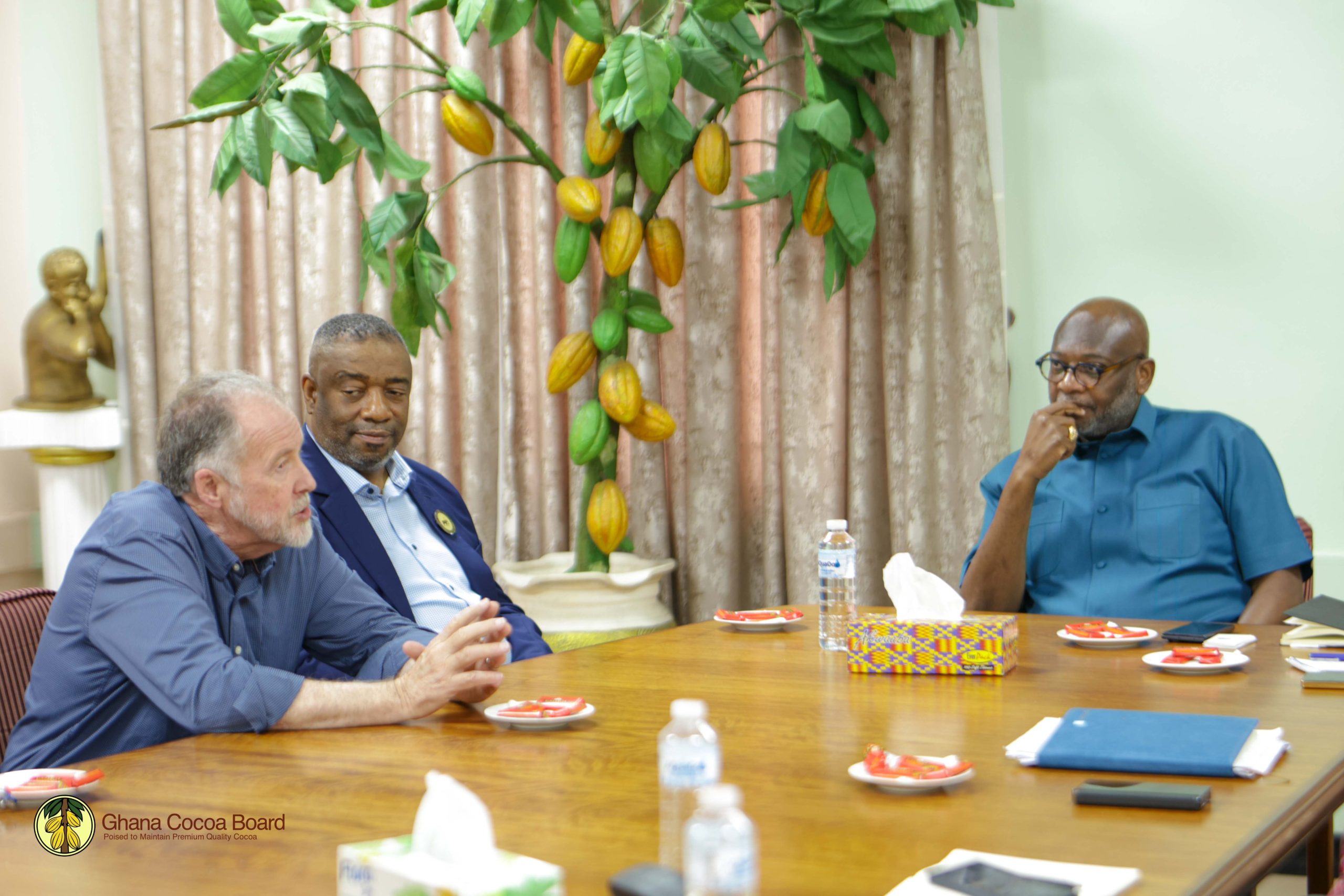
Welcoming the traditional monarch and the U.S. delegation, COCOBOD Chief Executive Dr. Randy Abbey briefed the visitors on the board’s proactive transformation agenda. He highlighted major structural shifts currently underway, particularly the transition to a new domestic financing model set to take effect for the upcoming 2026/2027 cocoa season.
Dr. Abbey emphasized that while Ghana’s cocoa sector holds massive investment potential, protecting the ecosystem and addressing systemic industry challenges remain top priorities.
“We are aggressively reforming our operations to build a more self-reliant and resilient cocoa sector,” Dr. Abbey explained. “Increasing our domestic processing capacity and transitioning to sustainable financing are key steps forward. However, realizing the full value of our cocoa requires strong strategic partnerships to tackle critical threats such as the Cocoa Swollen Shoot Virus Disease (CSSVD), illegal mining, deforestation, and climate change.”
He added that COCOBOD’s vision aligns perfectly with investor interests that prioritize environmental stewardship and local community development.
“We are open to partnerships that do not just extract value, but actively invest in our environment, our research institutions, and our farmers,” Dr. Abbey noted.
A Vision for Sustainable Growth
Members of the U.S. delegation praised the Ga Mantse for his leadership in facilitating the meeting and commended COCOBOD for its forward-thinking reforms. A representative from the investor group noted that the stability of Ghana’s cocoa sector and its shift toward localized processing present a compelling environment for sustainable impact investment.
The meeting concluded with both parties agreeing to set up technical working discussions to map out specific investment frameworks, particularly in modern plantation management and sustainable processing facilities.
COCOBOD reaffirmed its unwavering commitment to forging robust global alliances aimed at securing a prosperous, sustainable, and climate-resilient cocoa industry for Ghana.
