
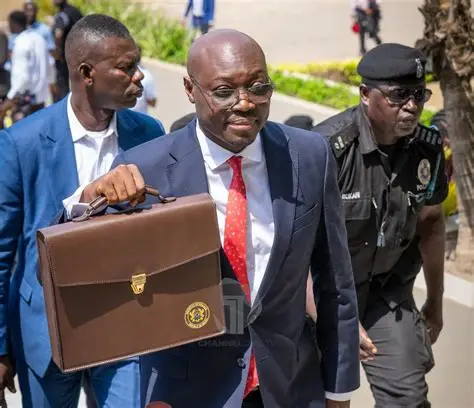
By Adnan Adams Mohammed
In what is being positioned as a decisive turning point for Ghana’s economy, the Minister for Finance, Dr. Cassiel Ato Forson, is scheduled to present the 2026 Mid-Year Budget Review to Parliament on Thursday, July 23, 2026.
The presentation will mark a major shift in the economic management of the Mahama administration. Following months of strict fiscal consolidation, the government is ready to transition from defensive stabilisation measures to an aggressive, productivity-driven growth strategy designed to directly impact jobs and standard of living.
Locking in the Gains of the Economic “Reset”
The mid-year review is presented in accordance with Section 28 of the Public Financial Management Act, 2016 (Act 921), comes on the heels of better-than-expected macroeconomic performance in the first half of the year. Inflation has continued a steady downward trajectory, food inflation has plunged significantly, and the standard VAT rate reduction from 21.9% to a flat 20% has provided breathing room for local markets.
Speaking ahead of the presentation, a senior economic analyst at the Ministry of Finance explained that the initial stabilization groundwork has been fully laid:
“The era of stopping the economic bleeding is behind us. Having achieved a highly predictable macroeconomic environment in the first half of the year, Dr. Ato Forson’s presentation on July 23 will focus on unlocking the country’s productive capacity. This is about pivoting from basic stability to visible, tangible expansion.”
What Is on the Horizon?
The mid-year review is expected to offer crucial updates on several key policy initiatives, including:
● The IMF Transition: The planned transition from the IMF’s Extended Credit Facility (ECF) to the Policy Coordination Instrument (PCI).
● Debt Restructuring: Progress on external debt negotiations and updated debt sustainability metrics.
● Strategic Investments: Funding updates for major pillars like the “24-Hour Economy” and “Big Push” infrastructure projects.
Lawmakers in Parliament are anticipating a highly detailed presentation. Reflecting on the significance of the July 23 sitting, a member of the parliamentary Finance Committee observed:
“The business community is looking for policy predictability. We want to see how the fiscal discipline of the last six months translates into structural support for local industries and small enterprises. The Minister has been very disciplined with public spending, and now we want to see the blueprint for accelerated growth.”
A Discipline-First Growth Framework
Despite the shift toward expansion, Ministry officials maintain that the transition will not trigger reckless public spending. The government remains legally anchored to a strict target of a 1.5% primary surplus, a cap reinforced by the newly established independent Value for Money Office.
Dr. Ato Forson has previously defended this dual approach of holding the line on discipline while pursuing development, stating:
“Macroeconomic stability is not an end in itself; it is the foundation upon which we build jobs, attract investments, and drive industrialisation. But as we pivot to growth, our commitment to keeping the integrity of public finances sacred remains absolute.”
With consultations with Cabinet concluding this week, all eyes will be on the floor of Parliament next Thursday as Dr. Ato Forson outlines the financial roadmap for the rest of the fiscal year.
