

By Adnan Adams Mohammed
The Bank of Ghana (BoG) has launched a strategic push to curb the escalating fiscal burden of replacing damaged banknotes, a persistent operational drain that impacts both central bank reserves and the broader commercial banking sector.
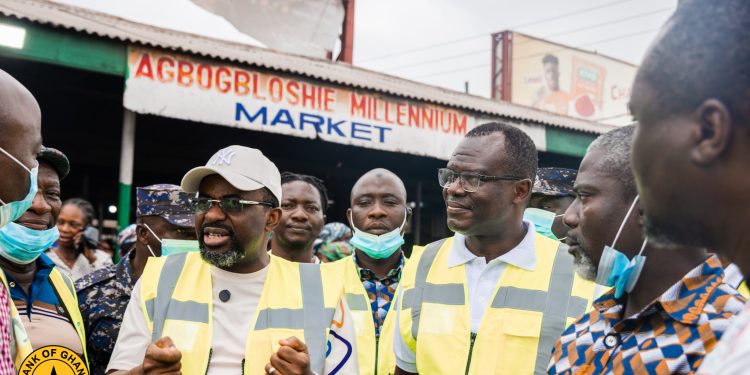
During the National Clean-Up Exercise at the Agbogbloshie Market, last week Friday, July 10, 2026, the Governor Dr. Johnson Asiama, alongside First Deputy Governor Dr. Zakari Mumuni and senior management executives, linked environmental sanitation directly with national currency preservation.
The initiative underscores a critical policy pivot: treating currency handling as an economic stability metric rather than just a public habits issue.
The Multi-Million Cedi Drain on Banking Operations
Physical cash remains the primary transactional medium within Ghana’s informal retail markets. However, poor storage, exposure to moisture, and unhygienic market conditions accelerate the degradation of Cedi notes. For commercial banks and the apex bank, this translates into substantial re-sorting, processing, and premature destruction costs capital that could otherwise bolster credit availability or improve liquid banking assets.
Speaking to journalists while participating in the market clean-up, Governor Dr. Johnson Asiama emphasized that keeping the marketplace hygienic directly mitigates financial waste.
“We are looking at this from another perspective, which is the condition of the banknotes, particularly the cedi notes used in our markets. We want those notes to remain clean because research has shown that banknotes can harbour bacteria. As people exchange cash, those bacteria can be transmitted from one person to another.”
The Governor explained that the Central Bank’s direct intervention in public areas is a calculated approach to safeguard currency longevity where velocity is highest.
“And for us at the Central Bank, just as I was saying when we went to Agbogbloshie, we want the market environment especially to be clean,” Dr. Asiama noted. “We have spoken with officials, we work with them to make sure that the refuse and those other buildups are cleaned constantly.”
Mitigating Operational Risks for Commercial Banks
Financial analysts point out that clean notes significantly reduce the mechanical downtime of automated teller machines (ATMs) and cash-counting hardware across commercial banking halls, which frequently jam when processing soiled or mutilated tender.
By curbing the volume of poor-quality banknotes entering the banking system, the BoG aims to streamline cash-in-transit (CIT) cycles and lower processing overheads for local banks.
The First Deputy Governor, Dr. Zakari Mumuni, echoed these operational priorities, noting that financial system resilience is reinforced when the physical integrity of the national currency is maintained. The central bank is actively coordinating with market associations and municipal authorities to institutionalize routine cleanliness and ensure public health goes hand-in-hand with currency care.
A Call to Commercial Actions
The Bank of Ghana concluded the exercise by reminding the corporate and retail sectors that preserving the Cedi requires collective discipline.
“The Governor called on traders to avoid practices that damage banknotes, including exposing them to dirt, moisture and other contaminants, and urged market operators to make cleanliness a routine part of their business operations,” the bank noted in an official release following the drive.
With the central bank maintaining a strict stance on banking sector reforms and financial stability, this grassroots campaign demonstrates a clear understanding that maintaining a robust economy begins with protecting the physical assets circulating within it.
