
By Adnan Adams Mohammed
Ghana’s long-standing reign as Africa’s top gold producer is under severe threat as a “hostile” fiscal regime pushes major investors toward more competitive neighbors.
In a stark warning, industry leaders suggest that the country has entered a “danger zone” where taxation levels are actively driving capital out of the domestic economy.
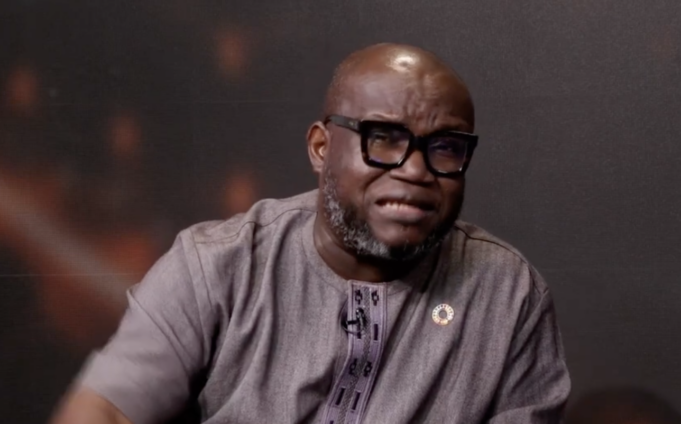
Speaking on Joy News’ PM Express Business Edition, the CEO of the Ghana Chamber of Mines, Ing. Dr. Ken Ashigbey, revealed that Ghana is hitting the upper limits of the International Monetary Fund’s (IMF) recommended fiscal range.
“The IMF has a model where, in terms of the rent… you are supposed to be doing between 40% and the upper limit at 60%,” Dr. Ashigbey explained. “Currently, what we are doing is that we are hitting that upper limit. If you are an investor and the government is going to take above 60, and you have Ivory Coast and other countries that are going to take less, definitely you are going to find out that some of your investments will move out.”
The great investor migration
The warning is not merely theoretical. Dr. Ashigbey cited the high-profile exit of mining giant Endeavour Mining, which has shifted its strategic focus from Ghana to Côte d’Ivoire. He also disclosed that a mining firm recently liquidated a property in South Sudan with the intent of reinvesting in Ghana, only to redirect those funds to Côte d’Ivoire at the eleventh hour.
“The money moved into Côte d’Ivoire due to the fiscal regime that is not friendly, especially the royalty,” Ashigbey noted. He specifically criticized the recent increase in royalty rates which surged from a flat 5% to a range of 5% to 12% as a primary driver of rising production costs.
The rise of regional rivals
While Ghana has historically relied on its stable democracy and the incentives provided under Act 703 to attract investment, neighboring nations are rapidly closing the gap. Côte d’Ivoire, in particular, has laid out an ambitious roadmap to become the continent’s leading producer within the next decade.
“Their objective is that in the next 10 years they want to be the leading producer of gold in Africa,” Ashigbey warned. “It means they want to take over from us in Ghana… The geology is not restricted to Ghana.”
Ethics amidst crisis: The Adamus controversy
The fiscal pressure comes at a time when the industry is also grappling with regulatory and ethical challenges. The Chamber of Mines recently raised concerns about the revocation of the mining lease of Adamus Resources Limited, following allegations of illegal mining breaches and environmental damage.
The Chamber now supports the government’s decision to establish a committee to review the revocation, following a petition submitted by Adamus Resources Limited on the matter.
Despite the firm’s pushback, claiming it has been actively fighting illegal mining on its concessions, the Chamber has maintained a firm stance on compliance.
“The long-term credibility, stability, and competitiveness of Ghana’s mining industry depend on adherence to these standards by all operators,” Dr. Ashigbey stated regarding the controversy. He emphasized that while the Chamber supports “responsible mining,” it remains mindful of the “potential impact of this development on employees and host communities.”
A call for urgent reform
As Parliament considers adjustments to various levies, including the Growth and Sustainability Levy, the message from the mining sector is clear: the current path is unsustainable.
Industry experts are calling for an immediate reconsideration of the royalty regime to prevent further “sovereign risk” perceptions and job losses.
“What you have done is that you’ve added an additional cost to the production of these mining firms,” Ashigbey concluded. “If we do not look at our fiscal policies urgently, we will find that we have the gold in the ground, but no one to help us bring it out.”
