
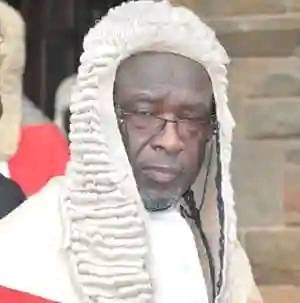
Justice Paul Kwadwo Baffoe-Bonnie, Acting Chief Justice, has been nominated by President John Mahama to lead the third Arm of Government.
Barring any unforeseen events, one of Ghana’s longest legal practitioners with 33 experience years at the Bench and 44 years at the Bar, the 68 years Baffoe-Bonnie awaits the approval from the Council of State and subsequent vetting and approval from the Parliament of Ghana to be named as the ninth Chief Justice of Ghana since 1992.
In a statement from the Presidency released yesterday September 23, 2025, President John Mahama has written to the Council of State seeking its advice on his choice of Justice Baffoe-Bonnie to lead the judiciary.
The statement described him as a jurist who has “served with diligence and integrity” and made “invaluable contributions to the development of Ghanaian jurisprudence.”
According to the Presidency, he has earned the respect of the Bench, the Bar, and the wider legal fraternity for his intellect, impartiality, and unwavering commitment to justice.
Following the suspension of Chief Justice Gertrude Torkornoo, His Lordship Justice Paul Baffoe-Bonnie, the most senior among the nine remaining justices of the Supreme Court, was appointed to act as the Chief Justice of Ghana.
His Life Profile
Baffoe-Bonnie was born on December 26, 1956, in Goase Mempeasem, Ghana to Opanyin Baffoe-Bonnie from Sewua in the Bosomtwe district and Ama Kyerewaa from Breman in Kumasi. He attended the Goaso Local Authority primary and middle schools obtaining a Middle School Leaving Certificate in the 1960s. He also attended the Konongo Odumase Secondary School for his GCE Ordinary Level and GCE Advanced Level certificates and then proceeded to the University of Ghana and the Ghana Law School.
He is married to Pat, and his daughter is a medical doctor.
He is the brother of Kwasi Saint Baffoe-Bonnie, who owns Network Broadcasting Company Limited that runs Radio Gold FM in Ghana.
Legal Profession Journey
His journey in the legal and public service sectors has been marked by notable versatility and dedication.
In 1981, he was called to the bar. He worked as a Circuit Court Judge in Kumasi and served as High Court Judge at Duayaw Nkwanta. Prior to his appointment as a Supreme Court Judge by the President of Ghana John Kufuor in June 2008, he served as an Appeals Court judge.
Paul Kwadwo Baffoe-Bonnie was on the panel of Supreme Court Judges who ruled against a petition where the New Patriotic Party asked for about four million votes to be scrapped after it was alleged to be tampered with in the 2012 Ghanaian general election.
Justice Baffoe-Bonnie’s rich professional background extends beyond the judiciary. Prior to joining the bench in 1992, he worked as a Principal Inspector of Taxes and Head of Legal for the Eastern and Volta Regions at the Internal Revenue Service (IRS). Earlier still, he served in the Ghana Prisons Service, where he rose to become Deputy Superintendent of Prisons and Head of Legal at the Prisons Headquarters.
A proud alumnus of Konongo-Odumase Secondary School, he pursued higher education at the University of Ghana and the Ghana School of Law, institutions that laid the foundation for his illustrious career.
Within the judicial system, Justice Baffoe-Bonnie is highly regarded for his expertise in constitutional law, taxation, prison administration, election law, and legal education. He has been instrumental in several judicial reforms and continues to champion the cause of ethical practice and professional development within the judiciary.
Currently, he chairs key bodies within the Judicial Service, including the Disciplinary Committee of the General Legal Counsel, the Election Management Committee, and the Finance Committee. His contributions also extend internationally, having participated in numerous global judicial conferences and capacity-building initiatives.
Known for his integrity, strong leadership, and commitment to justice, Justice Baffoe-Bonnie steps into the Chief Justice role with a wealth of experience and a steady hand during a crucial time for Ghana’s judiciary.
By Adnan Adams Mohammed
