
By Adnan Adams Mohammed
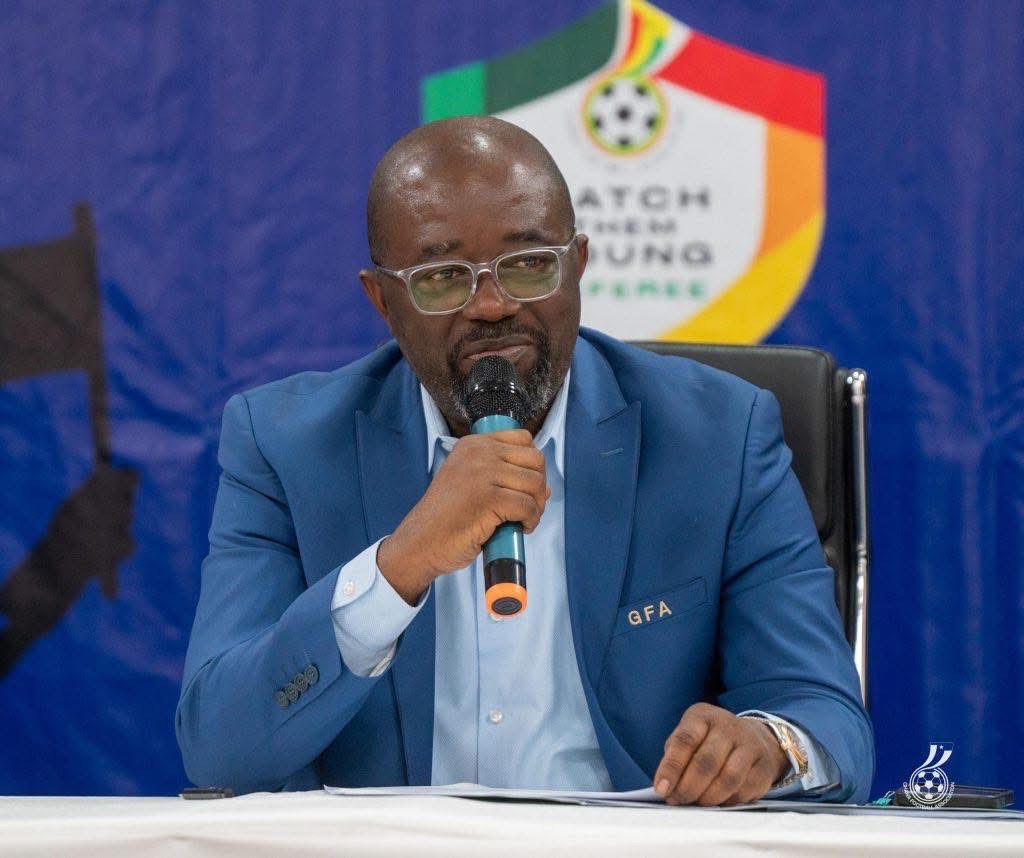
Ghana Football Association (GFA) President Kurt Okraku has boldly declared that the Black Stars have everything required to win the FIFA World Cup, dismissing the notion that any nation is too small to claim football’s ultimate prize.
Speaking on The Delay Show just days before the global showpiece kicks off on Thursday, June 11, 2026, Okraku rallied the country behind a high-stakes campaign, revealing that the football governing body has left no stone unturned in preparing the team for a historic run.
“I have seen bad teams win big tournaments, I have also seen good teams lose big tournaments, and I have seen good teams win big tournaments,” Okraku stated firmly. “So, you can never rule out any football nation, Ghana inclusive. We have a good team, and I want to win the World Cup. That is why we are doing everything possible.”
Ghana is making its fifth appearance at the tournament since its debut in Germany twenty years ago. Handled by veteran Portuguese strategist Carlos Queiroz who was dynamically appointed just two months ago following the dismissal of Otto Addo the Black Stars find themselves pitted in a highly competitive Group L alongside England, Croatia, and Panama. They are aiming to advance past the group stage for the first time since their iconic quarter-final run in South Africa in 2010.
Dismantling the “Panama Myth”
While Okraku’s lofty ambitions have ignited national pride, tactical experts and sports analysts are warning the public and the team against a creeping sense of complacency, particularly regarding their opening fixture.
The Black Stars will launch their campaign against Central American side Panama on June 17 in Toronto, Canada. To many casual Ghanaian supporters, the CONCACAF nation represents a guaranteed three points compared to the European powerhouses England and Croatia. However, underlying data suggests that treating Panama as the group’s “whipping boys” is a dangerous mistake.
Under Thomas Christiansen, Panama has evolved into an incredibly disciplined, possession-hungry side, averaging a staggering 61.9% possession during their World Cup qualifying campaign and a dominant 66.3% at the 2025 Gold Cup. They operate in a fluid 3-4-3 system that morphs into a defensive 5-4-1 block, relying on high-octane pressing to choke their opponents out of the game.
With a Passes Per Defensive Action (PPDA) rate of just 9.4, Panama suffocates teams on the ball a tactical blueprint that could heavily trouble a Ghanaian side that has historically struggled against structured, high-pressing opponents like Japan, Austria, and Germany in recent outings.
Queiroz Facing Selection Dilemmas
The short preparation window under Queiroz, which yielded a lone 1-1 friendly draw against Wales, leaves several questions unanswered regarding the starting eleven. To combat Panama’s intense, athletic style, analysts argue that the veteran coach may need to choose current form and tactical compatibility over historical reputation.
The biggest selection dilemma centers on midfield maestro Thomas Partey. While the experienced midfielder remains one of the country’s most accomplished assets, his lack of regular club football showed in recent friendlies. Against Wales, Partey struggled significantly with sharpness and mobility, resulting in a halftime substitution.
In contrast, the meteoric rise of younger, more mobile players like Caleb Yirenkyi offers a compelling alternative. Yirenkyi’s athleticism, recovery speed, and calmness under pressure could provide the dynamic coverage needed to match the threat of Panama’s flying wing-backs, Amir Murillo and Jorge Gutiérrez.
Furthermore, technical security at the back will be paramount. Observers suggest that Lawrence Ati-Zigi’s superior ball-playing distribution may give him the nod in goal over Benjamin Asare, whose distribution errors including a costly blunder against Mexico have raised red flags when trying to build play from the defensive third. In central defense, the composure of Kojo Oppong Peprah to partner Jerome Opoku is being widely touted as essential to breaking Panama’s front-line press.
A Campaign Defining Fixture
Currently ranked 34th in the world, Panama has proven remarkably resilient, losing only twice this calendar year to global giants Brazil and regional heavyweights Mexico.
History also reminds the Black Stars of their opening-day vulnerabilities; Ghana has won only one of its four previous World Cup opening matches a 1-0 triumph over Serbia in 2010.
While GFA chief Okraku insists the tournament is wide open, the reality on the ground indicates that the path to world glory must begin with clinical tactical execution in Toronto. If Carlos Queiroz and his squad fail to respect the danger Panama poses, Ghana’s World Cup dream could suffer a crushing blow before it even truly begins.
