
By Adnan Adams Mohammed
Ghana’s energy landscape is currently caught in a volatile tug-of-war between aging infrastructure and a surge in demand.
As recent technical failures, including a major fire at the Akosombo switchyard, have dominated headlines, energy experts warn that the real crisis lies deeper: in a “trifecta” of poor planning, communication breakdowns, and a massive investment deficit.
A crisis of leadership and logic
The recurring nature of the country’s power outages, popularly known as dumsor, has drawn sharp criticism from policy analysts.
Benjamin Nsiah, an energy sector commentator, argues that the current instability is not merely technical but a failure of governance.
“The energy sector is currently facing significant planning, communication, and leadership challenges,” Nsiah stated. He pointed out that the lack of a transparent, published load-shedding timetable has left businesses and households in the dark, both literally and figuratively. “Without clear communication and a proactive leadership approach, the sector will continue to react to crises rather than prevent them.”
The billion-dollar investment gap
While leadership is under fire, others point to the cold, hard reality of economics. Michael Aidoo, a prominent energy consultant, highlighted that the grid’s frailty is a direct result of years of underfunding.
“The recurring power issues we are seeing today are tied inextricably to massive investment gaps,” Aidoo explained. He noted that as the population grows and industrialization efforts expand, the existing transmission lines and transformers are being pushed past their breaking points. “We are operating a 21st-century economy on a 20th-century backbone. Until we bridge the financing gap for infrastructure upgrades, these outages will persist.”
Akosombo fire: A wake-up call
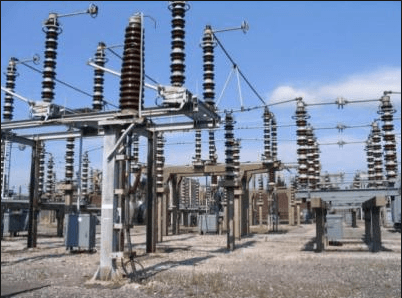
The vulnerability of the system was laid bare recently when a fire broke out at the Akosombo switchyard, a critical node in the nation’s hydroelectric heart. The incident caused widespread blackouts, forcing the government into a defensive posture.
In response, the Ministry of Energy announced an emergency “system upgrade” to modernize the switchyard and surrounding infrastructure. “The government is moving swiftly to upgrade the power system following the Akosombo switchyard fire,” a ministry spokesperson confirmed. Officials stated that the upgrade is intended to build redundancy into the grid so that a single failure at one plant does not trigger a national collapse.
The frontlines: Afram Plains and regional stability
Despite the systemic gloom, there have been pockets of operational success. The Electricity Company of Ghana (ECG) recently completed a high-stakes repair mission to restore power to the Afram Plains. The area had been plunged into darkness after a submarine cable—the lifeblood of the district’s power supply—was severely damaged.
“Our technical teams worked around the clock in challenging marine conditions to restore the cable,” an ECG representative noted. The restoration was met with relief by local residents who had been without power for days, disrupting local trade and healthcare services.
Karpowership: A stabilizing force?
As the country seeks long-term solutions, independent power producers (IPPs) continue to play a pivotal role. In the Western Region, local leaders have expressed vocal support for Karpowership Ghana. During a recent facility visit, Western Regional Chiefs lauded the company for its consistent contribution to the national grid.
“We appreciate the stability that Karpowership brings to our region and the country at large,” noted one of the traditional leaders. The chiefs emphasized that while the nation works on its permanent infrastructure, such strategic partnerships are essential to keeping the lights on for local industries.
The path forward
The consensus among stakeholders is that a “quick fix” is no longer an option. Between the technical restoration of submarine cables and the strategic praise for floating power plants, Ghana sits at a crossroads. Industry observers maintain that unless the government addresses the “leadership challenges” cited by Nsiah and the “investment gaps” flagged by Aidoo, the cycle of outages will continue to haunt the nation’s economic ambitions.
