
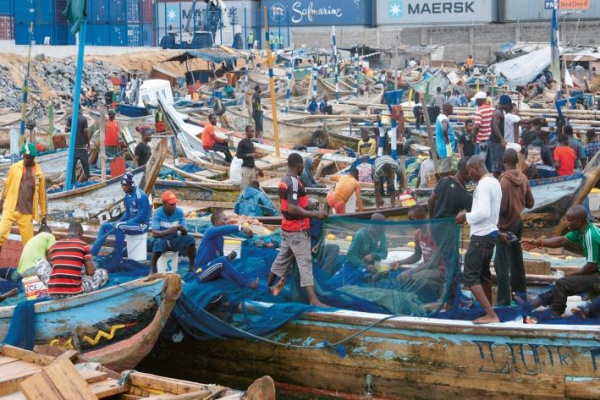
The Togolese government has launched a sweeping initiative to transform its traditional fishing industry, rolling out a multi-layered modernization plan designed to protect marine resources while boosting local economies.
Announced during a high-profile regional summit in Lomé, the new strategy aims to address critical production deficits and build long-term climate resilience for thousands of coastal families who depend on the sea.
The strategy was presented in the capital city during the eighth meeting of the Artisanal Fisheries Working Group of the Fishery Committee for the Eastern Central Atlantic (CECAF). The high-level event, organized with the technical support of the United Nations Food and Agriculture Organization (FAO), brought together regional partners from ECOWAS and the Fisheries Committee for the West-Central Gulf of Guinea to deliberate on the sustainable management of marine resources.
Addressing the assembly, Konlani Dindiogue, representing the Minister in charge of Fisheries, underscored the critical role that fishing plays in the West African nation.
“Fishing, which is predominantly artisanal in our country, plays a crucial role in the national economy,” Dindiogue stated. “It generates household income, creates jobs, and is vital to the country’s food sovereignty. Regional cooperation is a real necessity to address the challenges facing the sector, including growing pressure on fishery resources, illegal fishing, the effects of climate change, and competing demands on maritime space.”
A Five-Pronged Approach to Sustainability
Togo’s new blueprint for the sector relies on five central pillars designed to balance environmental conservation with economic vitality:
1. Implementation of the Beach Seine Fisheries Management Plan: Introducing tighter regulations on traditional net fishing to prevent overexploitation.
2. Institutional Strengthening: Bolstering the capacity of local fisheries management institutions to enforce regulations.
3. Ecosystem Restoration: Active protection and restoration of critical coastal ecosystems.
4. Combatting Coastal Erosion: The strategic construction of groins and breakwaters along the nation’s shoreline to defend vulnerable fishing communities.
5. Resource Governance: Overhauling the governance framework overseeing national fishery resources.
To support these measures, Togo has already implemented aggressive groundwork. The state enforces a strict annual fishing ban from July 1 to July 31 to allow depleted fish stocks to reproduce. Additionally, a specialized coast guard unit has been deployed to curb illegal fishing within the country’s lagoon systems, while a state-backed fuel subsidy continues to cushion artisanal fishermen against rising operational costs.
Meeting the Deficit
Despite possessing a modest coastline of just 56 kilometers (35 miles), Togo’s fishing industry is almost entirely artisanal and acts as a financial lifeline for thousands of coastal families.
Currently, national demand for fish products exceeds 100,000 metric tons annually. However, domestic output satisfies only 30% to 40% of this demand, forcing the country to rely heavily on expensive imports. The artisanal sector contributes between 20,000 and 25,000 metric tons per year. Crucially, up to 90% of this local catch is processed through smoking, frying, or drying—value-added activities that sustain the livelihoods of thousands of local traders, mostly women, across the supply chain.
The 5-day regional conference in Lomé aims to align Togo’s strategy with CECAF’s work plan. Delegates are expected to finalize frameworks on regional responses to climate change, improve fishery data collection systems, evaluate existing landing sites, and promote co-management models to secure the future of West African waters.
