
By Adnan Adams Mohammed
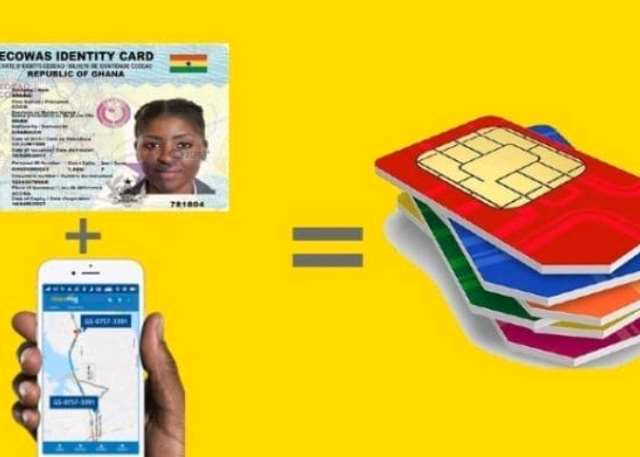
The government of Ghana has announced plans to implement mandatory biometric verification across all SIM card registrations before the end of 2026, marking a decisive shift toward strengthening the security and integrity of the country’s telecommunications sector.
Speaking on Monday, September 7, 2026, during the Government Accountability Series at Jubilee House in Accra, the Minister for Communications, Digital Technology and Innovations, Samuel Nartey George, revealed that Parliament has officially passed the Legislative Instrument (L.I.) governing SIM registration. The legal framework paves the way for real-time identity validation designed to curb mobile money fraud, eliminate pre-registered SIM cards, and secure digital identities across mobile networks.
”The government is set to introduce biometric verification as part of Ghana’s SIM registration process before the end of 2026,” Sam George declared. Addressing the broader implementation roadmap, the Minister added, “The work is far from finished, and I will not pretend otherwise. But the direction is unmistakable, the results are measurable, and the resolve of this Ministry is unshaken.”
According to the Ministry, the new phase requires telecommunication operators to cross-reference subscriber biometric details against central identity databases in real time, closing regulatory gaps from previous registration exercises. The move forms part of a broader digital policy designed to protect mobile financial services and increase accountability for digital platforms operating within the country.
”Our focus is to ensure that the regulatory framework keeps pace with developments in the digital space,” Mr. George emphasized, adding that transparent reporting remains central to the administration’s mandate. “Public office is a public trust, and citizens deserve a clear, honest account of what their government is doing with their mandate.”
Telecommunications industry analysts and public sector stakeholders have broadly welcomed the legislative progress, noting that real-time biometric checks are crucial for protecting consumers against identity theft and unauthorized SIM swaps.
Commenting on the ministry’s oversight initiatives during parliamentary engagements on digital infrastructure, Bandim Lamangin Abed-Nego, Chairperson of the Parliamentary Select Committee on Information and Communication, noted the necessity of stakeholder collaboration to ensure smooth adoption.
”The Ministry’s proactive engagement and detailed approach are commendable,” Abed-Nego stated. “However, as we move toward full implementation, maintaining transparency, building public trust, and ensuring sustained public education will be vital to achieve seamless nationwide compliance.”
The rollout of the biometric verification system will be supported across all active networks, accommodating physical SIM cards, eSIMs, and foreign subscriber accounts, with mobile network operators managing system integrations to ensure minimal disruption for end-users.
