

By Adnan Adams Mohammed
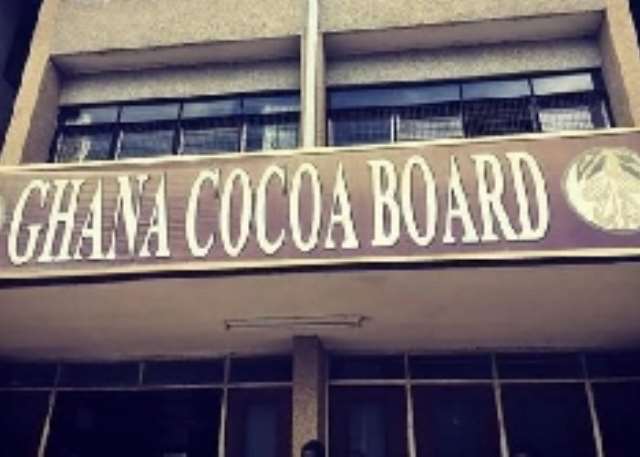
A brewing scandal at the heart of Ghana’s cocoa sector has exposed a complex web of unexecuted contracts, “legacy” debts, and controversial corporate links that threaten the stability of the nation’s primary export.
An investigation into the financial collapse of the Ghana Cocoa Board (COCOBOD) has uncovered startling details regarding Olam Ghana’s role in unexecuted contract claims, a multi-billion cedi debt inherited by the current administration, and a direct professional link between Olam and the current Managing Director of the Produce Buying Company (PBC) Ltd, Alhaji Seidu Yonye.
The “Ghost” Contracts: A GH¢32.9 Billion Nightmare
When the current administration, led by Dr. Randy Abbey, took the reins of COCOBOD in early 2025, they were met with a balance sheet in tatters. Official audit revelations now confirm that the board inherited a staggering GH¢32.91 billion in liabilities.
Central to this debt are “unexecuted contract claims” from the previous administration’s tenure. Sources within COCOBOD reveal that several Licensed Buying Companies (LBCs) most notably Olam Ghana have been caught in the crosshairs of a due diligence probe regarding forward-sale contracts.
Under the previous leadership of Joseph Boahen Aidoo, COCOBOD allegedly committed to supplying over 333,000 tonnes of cocoa at historically low prices. However, investigators have found that in many instances, these were “unserviced contracts.” While the international buyers expected delivery, the internal machinery failed to produce the beans, leading to massive rollover costs that have drained nearly US$1.3 billion from the state’s coffers in the 2024/2025 season alone.
Due Diligence: The “Slasher” Revelation
The “due diligence” conducted by the Abbey-led administration has not just focused on cocoa beans, but also on the procurement of farm inputs.
Audit queries from the Audit Service which the former management reportedly failed to answer identified hundreds of millions of dollars spent on farm equipment like “slashers and pruners.” The investigation revealed that these items were purchased without proper farmer consultation. Many farmers rejected the tools as “unsuitable,” preferring traditional cutlasses, meaning the state paid for massive inventories that now sit rotting in warehouses while the debt remains on the books.
The Olam Connection: From Zonal Manager to PBC Boss
As COCOBOD struggles to settle its debts with LBCs like Olam, a significant conflict-of-interest concern has emerged regarding the leadership of the state-owned Produce Buying Company (PBC) Limited.
The current Managing Director of PBC, Alhaji Seidu Yonye, is a former high-ranking executive of Olam Ltd, where he served as a Zonal Sales Manager for the Brong Ahafo and Northern Regions.
This professional link has raised eyebrows among industry watchdogs. While Mr. Yonye has recently made headlines for lamenting the “negative books” and 20 months of unpaid staff salaries he inherited at PBC, critics point to his deep-rooted history with Olam—one of the very companies currently entangled in the COCOBOD debt and contract disputes.
“The question isn’t just about the debt,” says an industry insider who spoke on condition of anonymity. “It’s about the ‘revolving door’ between private giants like Olam and state institutions like PBC. When Olam has claims against COCOBOD, and a former Olam manager is running the state’s biggest buyer, the public deserves absolute transparency.”
A Sector in “Reset” Mode
Mr. Yonye has described his mission at PBC as a “reset,” claiming he has not even received his own salary in a bid to show solidarity with suffering workers. However, the shadow of the GH¢32 billion debt and the ongoing EOCO (Economic and Organised Crime Office) investigations into the previous administration’s “criminal mal-administration” suggest that the rot goes deeper than simple mismanagement.
As the Attorney General prepares to prosecute former appointees for leaving the board “bankrupt,” the focus remains on whether Olam and other LBCs will be held accountable for their roles in the “unexecuted” contracts that have brought Ghana’s cocoa golden goose to its knees.
Part 2 of this investigative work will release Olam Ghana’s unexecuted claims and how the Managing Director is sponsoring political actors to bring down public servants protecting the public purse.
