In the heat of controversies and opposition to the appointment of of Anthony Kwasi Sarpong as the Commissioner-General of Ghana Revenue Authority, the Central Regional branch of NDC has commended President John Mahama for the appointment.
Many NDC grassroot members had previously vehemently opposed the appointment and attempted to stop him from entering the GRA headquarters building to assume his official duties.
The agitated party members, who were initially misinformed, labelled the former KPMG partner as NPP member. However, the Central Region NDC clarified that, Mr Sarpong is a financier of both Upper Denkyira West and East.
“Mr. Anthony Kwasi Sarpong has been an exemplary member of the NDC since 2012, consistently demonstrating unwavering commitment to the party’s growth and development”, a statement signed by the regional Chairman Prof Richard Asiedu noted.
“His financial support and grassroots mobilization efforts have significantly contributed to the party’s success in the region.”
Below is the full statement:
FOR IMMEDIATE RELEASE
26th January, 2025
CENTRAL REGION COMMENDS PRESIDENT MAHAMA FOR APPOINTING MR. ANTHONY KWASI SARPONG AS GRA CEO
Central Region, Ghana – The Regional Functional Executives Committee of the National Democratic Congress (NDC) in the Central Region, on behalf of the entire party, expresses its profound gratitude to His Excellency John Dramani Mahama for appointing Mr. Anthony Kwasi Sarpong as the Chief Executive Officer of the Ghana Revenue Authority (GRA).
Mr. Anthony Kwasi Sarpong has been an exemplary member of the NDC since 2012, consistently demonstrating unwavering commitment to the party’s growth and development. His financial support and grassroots mobilization efforts have significantly contributed to the party’s success in the region.
Mr. Sarpong’s notable contributions span across Upper Denkyira East and West. His instrumental role in contributing towards the party financially is particularly commendable and has left a lasting impact on the party’s operations.
The Central Region wholeheartedly supports Mr. Sarpong’s appointment as the GRA CEO, a decision that reflects His Excellency John Dramani Mahama’s commitment to recognizing dedicated party members who have contributed to the nation’s development.
We, therefore, extend our gratitude to President Mahama for this thoughtful and strategic appointment, and we pledge our continued support to Mr. Sarpong as he assumes this significant role.
The NDC youth in the Effutu constituency have taken a noble step by apologizing to President John Mahama, the NDC party, and their parliamentary candidate, James Kofi Annan.
This apology comes after a group of young NDC supporters staged a protest last Friday, demanding government appointments for their two-term parliamentary candidate James Kofi Annan.
According to Musa Moro, the group’s spokesperson, their actions were driven by frustration and the news of the appointment of the Gaming Commissioner, who they believed had ties with the NPP. They felt that this appointment was unfair, especially considering that their parliamentary candidate had suffered greatly for the party and had his businesses targeted due to his financial support for the umbrella fraternity.
During a press conference, the group expressed remorse for disrupting a meeting of the Effutu constituency executives and for any damage caused during the demonstration. They pledged to repair any damage and accepted any disciplinary measures the party might take against them. The group also urged the constituency executives to appeal to Dr. James Kofi Annan, who had expressed anger at the group for associating his name with their actions.
The Finance Minister, Dr Cassiel Ato Forson, has clarified that, the Ghana Gold Board (GoldBod) establishment is to compliment the mandate of Minerals Commission.
The GoldBod, a flagship initiative envisioned by President John Dramani Mahama for economic revitalization, will ensure strong monitoring and compliance measures which will help curtail black-market and smuggling of gold.
To achieve this vision, a Technical Committee, tasked with developing the legal and operational framework, particularly the drafting of a Bill for the establishment of the Ghana Gold Board (GoldBod) has been outdoored today in Accra.
“It is important to note that the GoldBod will not assume the regulatory mandate of the Minerals Commission over the small-scale mining sector” Dr Ato Forson clarified at the outdooring of Technical Committee. “Instead, it will complement its role.”
“The key objective of the GoldBod will be to formalize the trading of gold from the small-scale mining sector, promote traceability and pursue London Bullion Market Association (LBMA) certification”, the minister indicated.
The Committee has 21 members drawn from the legal profession mining and gold trading industry.
Read full statement of minister below:
FINANCE MINISTER, DR. CASSIEL ATO FORSON, Ph.D., INAUGURATES TECHNICAL COMMITTEE TO DRAFT A LEGAL FRAMEWORK FOR THE ESTABLISHMENT OF THE GHANA GOLD BOARD (GOLDBOD)
27TH JANUARY, 2025
1. Distinguished members of the press, I warmly welcome you this afternoon to the Ministry of Finance.
2. Today, we gather to inaugurate a Technical Committee tasked with developing the legal and operational framework, particularly the drafting of a Bill for the establishment of the Ghana Gold Board (GoldBod).
3. The GoldBod is a flagship initiative envisioned by His Excellency President John Dramani Mahama for economic revitalization.
4. It seeks to serve as a vehicle for achieving currency stability through the structured purchasing and management of Ghana’s gold resources.
5. As Africa’s leading gold producer, Ghana derives substantial foreign exchange earnings from gold. However, the benefits accrued from this valuable mineral remain minimal, often coming at a steep environmental cost.
6. Historically, Ghana’s revenues from gold have been confined to traditional sources such as royalties and taxes.
7. The Ghanaian economy has not realized the full benefit of our gold resources.
8. The time has come for Ghana to expand beyond royalties and taxes by harnessing the entire value chain of gold.
9. As a nation, we must aspire to maximize the full benefits of our gold resources.
10. This involves optimizing every stage of the value chain—from extraction to refining, value addition and marketing, both locally and internationally.
11. The Ghana Gold Board will serve as a specialized agency for effective marketing of our gold resources.
12. This will involve the implementation of a deliberate program to formalize gold trading from the small scale mining industry and promote traceability with the aim of enhancing the international acceptability of gold fromGhana.
13. Currently, the chaos in Ghana’s gold purchasing sector prevents the nation from fully benefiting from its goldresources.
14. Presently, the Precious Minerals Marketing Company (PMMC) has the mandate to purchase and sell gold. However, this mandate is not exclusive.
15. The Bank of Ghana also purchases gold through PMMC and other private aggregators under initiatives such as “gold for forex,” “gold for reserves”, gold for oil,” and “gold for cash” among others.
16. Additionally, the Minerals Income Investment Fund (MIIF), despite its primary mandate to optimize mineral investment, has ventured into gold buying, incurring substantial financial losses.
17. Also, numerous individual Ghanaians and foreigners with export licenses and/or gold buying licenses are active in the gold purchases and export market.
18. This fragmented, uncoordinated and unregulated system has led to widespread gold smuggling and deprived the state of much-needed foreign exchange.
19. To address these issues, the Ghana Gold Board will be mandated to regulate and streamline the sector.
20. It will act as the sole buyer of gold from the legal small-scale mining sector through licensed aggregators and local traders.
21. Upon its establishment, the GoldBod will also have exclusive legal rights as the sole assayer, seller, and exporter of gold purchased from small-scale miners.
22. The enabling legislation will clearly outline these mandates and amend relevant sections of the Minerals Commission’s export regulations and other ancillary legislations.
23. This will ensure 100% repatriation of forex from the export of gold from the small-scale mining industry to support our national currency.
24. The GoldBod will ensure strong monitoring and compliance measures which will help curtail black-market and smuggling of gold.
25. It is important to note that the GoldBod will not assume the regulatory mandate of the Minerals Commission over the small-scale mining sector.
26. Instead, it will complement its role.
27. The key objective of the GoldBod will be to formalize the trading of gold from the small-scale mining sector, promote traceability and pursue London Bullion Market Association (LBMA) certification.
28. The Government of Ghana will provide a revolving fund enough to PURCHASE ALL GOLD from the small-scale mining sector.
29. In 2024 alone, Ghana exported nearly $5 billion in gold from legal small-scale mining.
30. However, research indicates that the value of gold smuggled out of Ghana from small-scale mining is nearly double the official figure.
31. This highlights the significant foreign exchange losses.
32. Streamlining the small-scale mining sector, curbing smuggling, and directing gold purchases through formal channels will help Ghana improve its foreign exchange accumulation and help stabilize the Cedi.
33. The establishment of the Ghana Gold Board is a critical tool for economic revitalization and currency stability.
34. The GoldBod remains a top priority for His Excellency President John Dramani Mahama.
35. I urge the committee to work diligently and efficiently to fast-track the realization of this noble objective.
36. I also entreat all industry players and stakeholders to give this initiative their maximum support.
37. Ladies and gentlemen, the members of the Technical Committee tasked with drafting the Bill and developing the operational framework for the GoldBod include experts from relevant institutions.
38. Their diverse expertise will ensure the development of a comprehensive and robust legal and operational framework for the GoldBod.
President John Mahama and Sharaf Mahama in sports kit
Here is what the NPP must know, that the Commander in Chief reserve the right to have anyone whose presence he so wishes for both at home and on foreign trips.
For people who just left the Presidency, it is disingenuous to pretend not to know about the existence of an unaccountable imprest purely at the mercy of the President to take care of anything that keeps him sane or comfortable for the biggest task as President.
The President can request for the presence and company of anyone he wants and even if the persons is not within the jurisdiction, the person must be flown from wherever at the instance of the President and if that person has happens to be his son, who lives with him and his constant presence doesn’t cost the tax payer a dime then what is the fuss about?
In any case, the President doesn’t fly commercial for anyone to say that the State will incur additional air cost on him, accommodation for the President and his entourage are mostly provided for by the host nations, food and all pecks on such trips are mostly taken care of. Unless the NPP can prove that Mr Sharaf Mahama is recieving per diem for accompanying his father on foreign trips, then there’s no basis for this needless agitation.
The President can request for the presence of his family on all his official trips and no can say anything, given that the job takes him far away from his family most of the time, the President’s desire to keep his son close and so as to continue to be there for him as a father and President shouldn’t attract this sort of carnage from the NPP.
They are even lucky the ever modest President decided that only one of his Children should be with him at all times, Infact he can bring all of his children with him if he so pleases, because before a President he is a father.
The President will not take any moral lessons from a brothel, people who decided to use their unaccountable imprest to fly side-chicks around are the last people to complain about the President keeping his young son who deserves all the nurturing in the world close.
People who neglected our Presidential jet, and flew an empty aircraft from Europe to Accra to airlift President Akufo-Addo to wherever he was going and back and then fly back to origin empty all on the poor tax payer should be the last people to complain about President Mahama’s son joining him on a trip(especially when his presence most likely does not incur any additional cost to the State)
When Sharaf Mahama was busy following his father around through deep night campaigns in rural Ghana, did they ask how much it cost his father?
We will not take any moral lessons from thieves and harlots.
The NDC is focused on resetting Ghana and nothing will derail the ever focused President Mahama who is poised delivering on his promises to the Ghanaian people and cementing his place as one of Ghana’s finest Presidents.
Ghana’s economic team prioritizes inclusivity to tackle challenges and reset the economy.
Adnan Adams Mohammed
Key appointees of the President John Mahama’s government for finance and economy have indicated their resolve for inclusivity in the discharge of their mandate.
Both Seth Tekper, the President’s economic advisor and Dr Cassiel Ato Forson, finance minister have publicly declared their readiness to work with diverse groups towards resetting the economy.
In reacting to his appointment, Mr Terkper has assured to work with inputs from a diverse group of experts.
“This will help reset the economy”, the former finance minister posited.
In a post on his X page, the former Finance Minister said “I am grateful to you and others for your kind words. I look forward to working with inputs from our diverse group of experts.”
On his side, the Finance Minister, Dr Forson, speaking to Senior Management staff at the Ministry of Finance during his maiden meeting with them last week emphasised the importance of joint effort in addressing Ghana’s economic challenges.
“We are here to work together to better the lot of the people of Ghana; indeed, we will constantly be mindful of the needs of Ghanaians,” he stated.
Dr Forson identified key priorities, including job creation, prudent fiscal management, exchange rate stability, and reduced inflation as key components of his vision.
He noted that these objectives reflect a determined approach to tackling the economic challenges confronting Ghana currently.
In this role, Seth Terkper will provide strategic guidance on critical economic issues, including fiscal policy, debt management, and strategies to foster economic recovery efforts.
Mr Terkper in his post he wrote “May I take the opportunity to thank all my Online and Offline family, friends and acquaintances for the goodwill and best wishes, following the appointment.
“I will endeavour to work harder and with humility on my assignment.”
The new President John Mahama administration has been urged to take critical steps to ensure comprehensive regulatory reforms in Ghana’s upstream petroleum sector.
According to an Alliance of Civil Society Organizations, the reforms are needed to attract significant investment and revitalize the industry.
They argue that the current government’s ability to address policy inconsistencies and foster a predictable regulatory environment will help reverse the steady decline in domestic crude oil production and create a more dynamic sector.
“Over the past 3-4 years, we have witnessed a decline in upstream petroleum production. Exploration activities are almost nonexistent, and one of the primary issues is policy and regulatory uncertainty within the sector”, Nana Amoasi VII, Executive Director of the Institute for Energy Security, representing the alliance said at a press briefing last week. “We are urging the government to ensure consistency and coherence in policies to instill confidence among existing and potential investors. A stable policy environment is critical for securing long-term investments.”
According to the 2024 Ghana’s Upstream Petroleum Business Outlook Report, without rigorous reforms, the sector could lose up to US$2 billion in investment in 2025.
It was projected in the report that investments in Ghana’s upstream petroleum sector in 2024 would be around US$1.0 billion, which is a 40% decrease from the previous year.
The sector faced challenges such as low crude oil production, political interference, and environmental concerns.
Nana Amoasi VII also emphasized the need to strengthen the integration between the upstream and downstream petroleum sectors, advocating for the prioritization of crude oil allocation to local refineries.
“There needs to be synergy between the upstream and downstream sectors. Our petroleum agreements stipulate that crude oil from domestic fields should be prioritized for local refineries, yet this is not being enforced. We are urging the government to uphold these agreements and regulations to enhance domestic processing capacity,” he added.
The proposed reforms aim to create a favorable investment climate while bolstering Ghana’s refining capabilities, ensuring that the country maximizes the economic benefits of its petroleum resources.
Ghana’s dwindling upstream petroleum sector investment comes at a time investors are pulling out of fossil fuel financing due to environmental concerns.
Dr Cassiel Ato Forson leads the charge for fiscal discipline and economic growth
Adnan Adams Mohammed
On his first day in office, the Finance Minister, Dr. Cassiel Ato Forson, charged all agencies and departments under the direct control of the ministry to be selfless and work diligently to meet and exceed fiscal revenue targets.
In being specific, the minister urged the management of the Controller and Accountant-General’s Department and the Ghana Revenue Authority (GRA) to embrace nationalistic spirit in their duties to ensure fiscal discipline in driving national development.
Dr Ato Forson emphasized that his major target for this is to reduce inflation drastically to a single digit of 8%, increase domestic revenue mobilisation by about 5% of Gross Domestic Product, while stabilizing the Cedi. To achieve these, the fiscal system needs to be efficient in controlling government expenditure and improving revenue collection while eliminating leakages.
He urged the officials to discharge their duties with a commitment to excellence and to strive to leave a lasting legacy of financial stability for the country, highlighting the critical role of the GRA in achieving the nation’s economic goals and he called for collaborative efforts to improve revenue collection and management practices.
The government has said it is focused on enhancing public financial management and ensuring sustainable economic growth.
Meanwhile, the Customs Staff Association (CSA) has pledged to support the Finance Minister to address financial challenges and improve the integrity of Ghana’s customs systems.
“We are eager to assist in tackling financial challenges and enhancing customs integrity. Together, we can achieve sustainable development that benefits all citizens,” the Association said in a statement to congratulate the new Minister after his swearing-in by President John Dramani Mahama.
The statement released last week, signed by National Secretary of the Association, Gift E. Kofi Tsamah, commended Dr. Ato Forson for his dedication to public service.
The association also highlighted the importance of the Finance Ministry in guiding Ghana toward economic stability and growth, expressing confidence in his leadership to drive positive change and implement critical economic reforms.
The CSA acknowledged the importance of effective fiscal policies in boosting revenue generation and ensuring smooth customs operations.
“We look forward to collaborating with your office to promote policies that strengthen the economy while enhancing efficient customs processes.”
“Your extensive experience and commitment to public service make you an excellent choice for this position. We believe your vision will drive a more prosperous future for all Ghanaians,” the statement read.
A global fintech leader in mobile money as Africa embraces the digital future
Adnan Adams Mohammed
The Global System for Mobile Communications (GSM) Association in their latest Mobile Money Regulatory Index (MMRI) has adjudged Ghana as having the best mobile money (MoMo) system with regards to driving the Financial Technology (FINTECH) ecosystem.
Ghana placed above countries with remarkable mobile money systems such as Qatar and Brazil. Ghana’s competitive edge above its peers is due to the fact that, the mobile money network of the West African nation is built on a robust national identity system, which has synchronised unique national identities with financial institutions and telecommunication networks.
Ghana operates a unique system with transactions enabled between all mobile money wallets and all bank accounts, making every mobile money wallet function as a bank account, thereby also projecting Ghana’s financial inclusion index.
Ghana’s shine at the global space comes the same week the 2025 World Economic Forum (WEF) resolved after the 4-day summit that, “adopting emerging technologies such as artificial intelligence, the Internet of things and digitising economies, are indispensable to the growth of Africa.”
The General Secretary of African Continental Free Trade Area (AfCFTA), Wamkele Mene, speaking at the forum highlighted the importance and indispensability of digitalisation in Africa’s economy, and the need for digital trading on the continent.
As a step towards attaining this on the continent, he revealed that the Africa Digital Trade Protocol, is ready and will be adopted next month, by the continent’s heads of state.
“We have established the protocol on digital trade. The last instrument of that protocol will be adopted by our heads of state next month in Addis Ababa. The protocol on digital trade responds exactly to what the President has just said,” said the AfCFTA General Secretary, in response to comments by the President of Botswana during a special roundtable.
The AfCFTA General Secretary acknowledged the cutting edge innovation of young Africans, and the ability to create entrepreneurship through Africa’s digital economy.
“By the year 2050, Africa will have the youngest workforce in the world. Those jobs will have to be created intra Africa. We will not be able to import jobs from somewhere else so Africa’s digital economy, we believe, is a very, very important aspect of intra Africa trade. And it actually addresses day-to-day challenges that all of us are battling with.”
Consequently, Botswana’s new President, Duma Boko, acknowledging that young Africans constitute majority of Africa’s population, called for a new approach to development, adding that the adoption of digital technology, which he described as “the language of young people” in every aspect of African economies, is the way forward to addressing “many challenges.”
Apparently, as part of the call for Africa’s adoption of the digital economy, the AfCFTA also raised concerns about the lack of seamless payment systems in Africa, and called for urgent implementation of payment interoperability on the continent.
“The issue of payments for example. I live in Ghana. There is a direct flight to Nigeria. When I travel to Nigeria, I take my direct flight. But when I send money, it goes somewhere else first. It should be the same; that we have a seamless interoperable payment system in Africa to address this challenge of youth unemployment,” said.
“We also, in the same protocol, have far reaching provisions on emerging technologies, on improving SMEs, which will create an environment where we will see more investment in digital public infrastructure.”
“While we have come a long way, we do recognise that we still have much work to be done. But I believe that in any endeavour, the starting point has got to be to write the laws. That is how the investors around will have the confidence to invest in digital technologies in Africa, to invest in youth entrepreneurship and finally to invest in trade finance.”
Linking the successes of Ghana at the global GSMA MMRI to the resolve of the patrons at the 2025 WEF reflects the talents Africa is endowed with when the necessary support is given.
The GSMA Mobile Money Regulatory Index which is an interactive tool that measures the effectiveness of mobile money regulatory frameworks of about 90 countries globally, was introduced by the global telecom standard giants GSMA.
The MMRI includes six dimensions covering 26 indicators, and Ghana’s mobile money system emerged the best after all six main dimensions and 26 broad categories were analysed.
The six dimensions and 26 categories are:
Authorisation: eligibility, authorisation instruments, capital requirements, international remittances.
Consumer protection: safeguarding of funds, consumer protection rules, deposit insurance.
Transaction limits: entry-level transaction limits, entry-level monthly limits, entry-level balance limits, maximum transaction limits, maximum monthly limits, maximum balance limits.
Investment and infrastructure environment: financial inclusion strategy, affordability, ID verification infrastructure, interoperability, settlement access, interest payments.
Meanwhile, Ghana’s success could not have been possible without the personal resolve of former Vice President, Dr. Mahamudu Bawumia, who championed the implementation of Ghana’s mobile money interoperability system in the past eight years.
The GSMA is a global organisation unifying the mobile ecosystem to discover, develop and deliver innovation that helps business and society thrive.
The GSM Association (commonly referred to as ‘the GSMA’ or Global System for Mobile Communications, originally Groupe Spécial Mobile) is a non-profit industry organisation that represents the interests of mobile network operators worldwide. More than 750 mobile operators are full GSMA members and a further 400 companies in the broader mobile ecosystem are associate members.
The current NDC-led government has indicated its intention to reintroduce the tollbooth levy collection which was scrapped by the erstwhile NPP government.
The finance minister, Dr Cassiel Ato Forson’s resolve to reintroduce the road toll levy collection this year ignited much interest and massive support from the stakeholders and the general public.
Notable among the stakeholders are the road users and former collectors at the tollbooths as well as the product vendors operating around the tollbooths. On the part of the Ghana Private Road Transport Union (GPRTU), Mr Samuel Amoah, the National Deputy Public Relations Officer okayed the reintroduction of road tolls, emphasizing the need for their effective implementation to enhance the financing of the transport sector. He noted that, the primary objective of road tolls is to fund road maintenance stressing that, revenues collected must be managed transparently and accountably to ensure proper infrastructure development.
As part of proposed reforms, the Minister of Roads, Kwame Governs Agbodza, had indicated the adoption of an electronic toll collection system to manage the biggest challenge of traffic congestion at toll booths across the country. However, he criticised the scrapping of the road tolls as an “illegal” decision that disregarded existing laws.
“The reintroduction of road tolls will not involve building obstructions on the road. Instead, it will be a fair and efficient technological platform designed to simplify collection and accountability,” he explained.
The funds, he said, would be pivotal in tackling the country’s extensive road infrastructure challenges.
Road tolls were first introduced in Ghana in the early 1990s as a means of generating revenue for the construction and maintenance of roads across the country.
They became a common feature on major highways and roads, with vehicles being required to pay a toll for using these routes.
However in 2021, the Akufo-Addo-led administration made the controversial decision to abolish road tolls as part of the budget for that year.
The government justified the decision by stating that the tolls had become inefficient and costly to collect, and that the revenue generated was minimal in comparison to the expenses involved in running the toll system.
The cancellation was then replaced with the controversial Electronic Levy.
Meanwhile, in a U-turn, the former Finance Minister, Dr Mohammed Amin Adam, in July last year announced governments plans to reintroduce the road toll collection after it approved an additional GH¢1.5 billion for settling unresolved claims associated with financial management companies.
“Mr. Speaker, Cabinet has also granted approval for the disbursement of an additional GHc 1.5 billion to settle outstanding claims relating to the financial management companies; the establishment of a framework for the re-introduction of Road and Bridge Tolls in 2025,” Dr Amin Adam told Parliament during the presentation of the mid-year fiscal policy review for 2024.
The reintroduction announcement marks a significant step in addressing Ghana’s infrastructure challenges while leveraging technology to ensure transparency and efficiency in revenue collection.
The proposed system also promises a sustainable approach to road maintenance without disrupting traffic flow.
With plans for re-engaging displaced workers and focusing on strategic interventions, the initiative aims to modernise Ghana’s road management system while addressing long-standing issues in infrastructure development.
Highlighting the growth of Ghana’s road fund revenue, the Roads Minister noted an increase from GH¢250 million annually during former Minister Inusa Fuseni’s tenure to over GH¢2 billion in recent years.
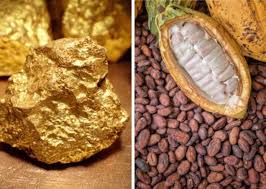
Cocoa and gold have been projected to record strong performances on the commodity market, according to analysts.
Databank Research’s market outlook for 2025 indicates that the Gold price, which surged by 25.6% in 2024 due to geopolitical tensions and inflation concerns, is anticipated to rise further this year. Gold prices are expected to range between US$2,600 and US$3,100 per ounce, driven by potential interest rate cuts from the U.S. Federal Reserve and sustained demand for gold from central banks. Gold serves as the most preferred store of value during periods of currency markets volatility.
Cocoa prices are also forecasted to remain elevated, closing this year between US$ 7,000 and US$ 9,600 per tonne. However, amidst the optimism concerning cocoa and gold prices, the price of benchmark Brent crude oil is projected to continuously face difficulties.
Ghanaian investors are encouraged to diversify their portfolios by considering gold-backed securities, such as the Ghana Gold Coin introduced by the Bank of Ghana, as a hedge against economic uncertainties. However, they should prudently measure the upside potential for gold prices against cedi – dollar exchange risks; it is instructive that the cedi price of the BoG Gold Coins fell during the last weeks of 2024 due to the appreciation of the cedi against the US dollar.
Persistent supply challenges, exacerbated by the implementation of the EU Deforestation Regulation, are expected to constrain global cocoa output.
Conversely, Brent crude oil prices, which declined by 20.31% in 2024, are projected to stabilize below US$ 76 per barrel in 2025. Factors such as high U.S. inventories, economic slowdowns in major consuming nations, and a global shift toward cleaner energy are likely to weigh on demand.
With these trends, 2025 presents diverse opportunities for investors, particularly in gold and cocoa, while the oil market may require cautious navigation amidst ongoing challenges.