Category: News

  • Dr. Ato Sarpong: the new face of ADB gives hope

    Dr. Ato Sarpong appointed Acting MD of ADB.


    Adnan Adams Mohammed


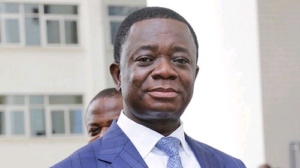
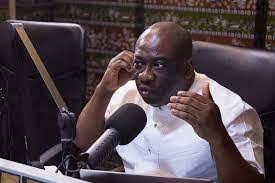
    A financial industry expert, Dr. Edward Ato Sarpong, has been appointed to lead the Agricultural Development Bank (ADB) as the Acting Managing Director.


    The business development expert and Chartered Accountant comes to the struggling bank with enormous experience in the finance sector.


    Many Ghanaians, especially those within the financial industry and his political allies, acknowledge his appointment as a proof of his exceptional leadership dexterities and dedication to public service. Says a leading financial journalist who is very conversant with the appointee, “Dr. Ato Sarpong’s impressive background in business, finance and governance makes him the ideal candidate for this position. His experience as a former Deputy Minister for Communications add to his advantage to help him better master control over the complex challenges and drive growth. His ability to think strategically and make informed decisions will undoubtedly serve him well in this new role.”


    “Dr. Ato Sarpong’s commitment to excellence has earned him recognition and respect from party faithful’s and Ghanaians at large, and this appointment is a well-deserved acknowledgment of his hard work and expertise”, the Central regional branch Organiser of the NDC, Mike Derry extolled.


    Dr. Ato Sarpong’s new role at the Agricultural Development Bank presents an exciting opportunity for him to make a meaningful impact on the country’s agricultural sector. Dr Ato Sarpong’s leadership and expertise will undoubtedly contribute to the bank’s success and help drive economic growth in Ghana.


    NDC chieftains are confident that Dr. Ato Sarpong will excel in his new position and will make the party and indeed the whole country proud.


    Profile of Dr.Edward Ato Sarpong


    Born on March 29, 1969, he is a business mogul, chartered accountant, leadership and business consultant, executive coach, speaker,  author, and a politician in Ghana.


    He started his working life as a messenger in the accounts department of Automotive and Technical Services (ATS).


    From there, he did a one year course at the Snaps College of Accountancy and then secured admission to the Institute of Professional Studies, now University of Professional Studies (UPS), where he studied for his Institute of Chartered Accountants certificate.


    Dr.Sarpong while at the UPSA, combined work and school in order to make some money to pay his tuition fees.


    Dr.Sarpong has worked at Kenbert Mines as their  Accountant and during that period, he frequently travelled from Accra to Ntronang, a small village in the Birim North District within the Eastern Region, where he was paying the workers who were doing exploration for the company.


    After a short stay, he started his professional practice as an Audit Trainee at Owusu & Fiadjoe, which later became Fiadjoe & Associates and then Ernst & Young as it is known today.


    Since then, he had never looked back as he worked with SCOA Ghana Limited, which was then the sole distributor of Peugeot, Opel and Chevrolet vehicles in Ghana, as Chief Accountant from 1999 until it was liquidated in 2002.


    Other positions he has held include: Finance Manager for Africa Online Ghana Limited and then as the Regional Financial Controller, West Africa, for Africa Online Holdings, before rising to become Managing Director for Africa Online Ghana Limited.


    From there, he became the Regional Managing Director – West Africa for Africa Online Holdings Limited, and then the Lead Consultant and Chief Operating Officer for K-Net Limited, a provider of connectivity solutions to banks and corporate institutions in Ghana, He has also worked as the Lead Consultant and Director, Operations and Commercial, for TV3 Network Limited


    Dr.Sarpong, who is now a Chartered Accountant, had also worked as a Business Consultant for Multimedia Group Limited, owners of Joy FM, Adom FM, Multi TV and others, as well as a Business Consultant and Trainer for Edge Capital Partners, his own firm, since 2011, and has served as a business and leadership trainer and  motivational speaker.


    Dr.Sarpong is also the MD of Ignite Media Group.


  • Gross reserves improve to cover 4 months of imports


    Ghana’s reserves hit US$8.98bn, covering 4 months of imports.


    Adnan Adams Mohammed


    The Bank of Ghana has announced that Ghana’s Gross International Reserves (GIR) increased to a stock position of US$8.98 billion at the end of 2024, enough to cover 4.0 months of imports.


    This exceeded targets under the IMF programme. The 2024 remarkable improvement compares favourably with the 2023 reserves of US$5.92 billion (2.7 months of imports).


    The Bank of Ghana’s Gold for Oil Policy and Domestic Gold Purchasing Programme contributed significantly to this through the strategic accumulation of gold.


    “This is part of the Central Bank’s broader efforts to shield the economy from external shocks, enhance the country’s foreign exchange reserves and strengthen Ghana’s position in global markets”, Governor Dr Ernest Addison told journalists last week at the latest MPC press briefing.


    “It is also a decisive step toward stabilising Ghana’s financial outlook, especially as global uncertainties weigh heavily on economies worldwide.”


    In terms of impact, the increase in gold reserves is expected to  serve as a hedge against inflation, reduce the country’s vulnerability to currency fluctuations and bolster investor confidence.


    Market watchers are therefore keenly focused on the implications for Ghana’s fiscal policy and its standing in the global economy, as the Bank of Ghana continues to diversify and strengthen its reserves.


    Comparable on the continent, Libya has maintained a substantial foreign currency reserve totaling $80.7 billion in 2024, positioning it as the top country in Africa in this regard. This achievement coincides with Libya’s status as one of the continent’s major oil exporters.


    Meanwhile, on the global front, China had, by far, the largest international reserves in 2024, with

    US$3.59 trillion in reserves and foreign currency liquidity.


    Ghana has risen to become the fifth-largest holder of central bank gold reserves in Africa, with 28.1 tonnes as of October 2024. This marks a significant increase from May 2023, when its reserves stood at just under 9 tonnes, reflecting consistent efforts to bolster its holdings.


    Consequently, external sector conditions remain positive, with sustained and stronger-than-programmed rebuilding of reserve buffers contributing to the stability of the domestic currency. The performance of the external sector was mainly driven by strong growth in gold exports, which also largely impacted positively on growth.


    In the outlook, the external sector is expected to remain strong as commodity prices remain favourable amid improvements in production. Overall, while the external sector conditions are expected to provide an anchor to exchange rate stability, key risks in the outlook including challenges in the energy sector will have to be closely monitored.


  • Ghana’s current account records growth of US$3.1bn to end 2024

    Ghana’s current account surplus hits US$3.8bn in 2024 driven by strong gold exports


    Adnan Adams Mohammed


    Ghana’s current account recorded a provisional surplus of US$3.8 billion in 2024, compared with a surplus of US$1.4 billion in 2023, Bank of Ghana economic data has indicated.


    This performance was driven mainly by higher gold and crude oil exports, as well as strong remittance inflows.


    The central bank explained that, this, together with a lower net outflow of US$588 million in the capital and financial account, relative to a net outflow of US$733 million in 2023,  contributed to an improved balance of payments position for the year.


    “The lower outflow in the capital and financial account reflects Ghana’s successful debt restructuring and the IMF ECF programme”, Governor Dr Ernest Addison told journalists last week at the latest Monetary Policy Committee press briefing. “These favourable developments resulted in an improved balance of payments surplus of US$3.1 billion, compared to a surplus of US$518 million recorded in 2023.”


    Also, the central bank noted that external sector conditions remain positive, with sustained and stronger-than-programmed rebuilding of reserve buffers contributing to the stability of the domestic currency. The performance of the external sector was mainly driven by strong growth in gold exports, which also largely impacted positively on growth.


    In the outlook, the external sector is expected to remain strong as commodity prices remain favourable amid improvements in production. Overall, while the external sector conditions are expected to provide an anchor to exchange rate stability, key risks in the outlook including challenges in the energy sector will have to be closely monitored.


  • Ghana earns record high US$5 billion trade surplus in 2024

    Ghana achieves a record high US$5 billion trade surplus in 2024

    By Toma Imirhe

    A combination of surging gold prices on one side and the reduced availability of foreign exchange due to the closure of Ghana’s access to international capital markets, coupled with the inordinate cost of international trading currencies, have supported an improvement in the country’s merchandize trade performance to a long term surplus position in 2024. Last year, Ghana recorded a merchandise trade surplus of US$4,980.0 million, which was 46% higher than the surplus of US$2,694.5 million earned in 2023. This helped to support both a primary account balance and an improved balance of payments position, illustrating the fact that the intense pressure on the cedi’s exchange rate is the result of portfolio  investment and debt servicing outflows, lac k of confidence in the national currency by currency traders and to a lesser extent forex leakages through illegal transfers abroad of  monies and natural resources, particularly gold and cocoa.

    The import bill has resumed its upward trend, after recording rare declines in 2023, following the cedi’s sharp depreciation which had made imports less competitive against locally produced alternatives. In 2024, the overall import bill rose by 8.7% to US$15,231.2 billion, up from US$14,008.5 in the previous year.  Importantly though, the increase in the oil import bill was negligible, rising to US$4,481.7 million last year, from US$4,475.3 million in the previous year. Indeed the rise in import value came almost entirely from non-oil imports of intermediate production inputs and finished goods which increased by 12.9% from US$9,533.2 million in 2023 to US$10,759.5 million in 2024, as the economy enjoyed faster than anticipated growth during the year.

    But the main driver of the improved overall merchandise trade performance was the substantial  21.1% increase in Ghana’s exports last year to US$20,221.0 million, up from US$16,703 million in 2023. However this increase was entirely fuelled by a 53.2 % increase in gold exports from US$7,600.8 million in 2023 to US$11,641 million in 2024. Conversely, oil exports stagnated in value, its US$3,868.3 million hardly higher than the US$3,837.3 million earned in the previous year. Cocoa fared even worse, earning just US$1,696.1 million in 2024, down 21.2% from the US$2,153.0 million generated in 2023.

    ”The external sector position improved significantly in 2024 on account of increased trade surplus and lower capital outflows” Dr Ernest Addison, Governor of the Bank of Ghana has enthused. “The current account recorded a provisional surplus of US$3.8 billion, compared with a surplus of US$1.4 billion in 2023, driven mainly by higher gold and crude oil exports, as well as strong remittance inflows” he has further revealed. “This, together with a lower net outflow of US$588 million in the capital and financial account, relative to a net outflow of US$733 million in 2023, contributed to an improved balance of payments position for the year. The lower outflow in the capital and financial account reflects Ghana’s successful debt restructuring and the International Monetary Fund’s Extended Credit Facility programme. These favourable developments resulted in an improved balance of payments surplus of US$3.1 billion, compared to a surplus of US$518 million recorded in 2023.”
    This strong external sector performance in last year means that international reserves build-up was faster than programmed in 2024. Gross International Reserves (GIR) increased to a stock position of US$8.98 billion at the end of 2024 and was enough to cover 4.0 months of imports, exceeding targets under the IMF programme. This compares favourably with the end-December 2023 GIR of US$5.92 billion (2.7 months of imports).

    “In the outlook, the external sector is expected to remain strong as commodity prices remain favourable amid improvements in production” predicts Dr Addison,  based on the central bank’s research and the Monetary Policy Committee’s assessment. “Overall, while the external
    sector conditions are expected to provide an anchor to exchange rate stability, key risks in the outlook including challenges in the energy sector will have to be closely monitored.”

  • Dr Johnson Asiama nominated as new Bank of Ghana Governor

    The new governor of the Bank  of Ghana

    By Toma Imirhe

    President John Dramani Mahama has nominated Dr. Johnson Asiamah to serve as Governor of the Bank of Ghana pending approval by the Council of State.

    Dr Asiamah’s nomination follows the receipt and acceptance of a formal request by current Governor, Dr. Ernest Addison, to proceed on leave from Monday, February 3, leading to his retirement on 31st March, 2025 when his second four year term in office expires.

    Dr Johnson Asiamah who previously served as a Second Deputy Governor of the Bank of Ghana between 2016 and 2017, holds a PhD in Economics from the University of Southampton, UK and has extensive experience in monetary policy formulation, financial stability regulation and economic research having worked at the central bank for over 23 years.

    Highly respected in the local and  international financial services industry for being a career central banking professional rather than simply a favoured political career. He has over the years demonstrated commitment to implementing sound monetary and exchange rate policy, foster a stable financial system, as well as promoting accelerated economic growth in Ghana.

    But his appointment is seen as redemption after a difficult past seven years. After being hounded out of his contractual position as second Deputy Governor in 2017, by the now outgone Nana Akufo-Addo administration, he has since been prosecuted – unsuccessfully – over two separate cases related to the collapse of UniBank and UT Bank. He was accused by that government of breaching the Bank of Ghana Act and causing financial loss, due to his signing off on providing central bank liquidity support of GHc150 million to the now defunct Unibank and GHc 413.09 million to the also now defunct UT Bank, despite both decisions being recommended by the BoG’s Banking Supervision Department.

    However, the case was widely seen as political persecution for his role in defending some decisions of the bank and the state under the first President John Dramani Mahama administration; an assertion supported by the circumstances of the case and the fact that seven years on, no guilty verdict has been secured. Instructively upon the assumption of office of President Mahama for a belated second term in early January, a notice of withdrawal of the case was filed at the trial court and signed by the Director of Public Prosecutions (DPP), Yvonne Atakora Obuobisa.

    Meanwhile, the outgoing Governor of the Bank of Ghana (BoG), Dr. Ernest Addison will from Monday February 3, 2025 proceed on a terminal leave as he prepares for retirement. Dr. Addison who has served as Governor since April 2017 is embarking on the leave ahead of his official exit on March 28, 2025, after successfully serving two full terms. This move aligns with the Bank of Ghana Act, 2002 (Act 612), as amended, which stipulates that the Governor’s tenure is a four-year term, renewable only once.

    The Governor’s leave has received the approval of President John Dramani Mahama. Dr. Ernest Addison was first appointed on April 3, 2017 and was reappointed for a second term on March 29, 2021.

    Interestingly, Dr Addison has also been publicly villainized for political reasons too, having been accused of supporting the Akufo-Addo administration’s profligate public spending by lending it money far in excess of what the laws permit in 2022 and then writing off half of it, leading to the erosion of most of the central bank’s capital. In actual fact though, the BoG, under Dr Addison, provided government with the money to prevent its defaulting massively on due public debt repayments when the international capital markets closed its doors to Ghana; and then accepted a 50% haircut on its enlarged exposure to government to enable government meet the public debt sustainability threshold demanded by the International Monetary Fund before it approved a direly needed US$3 billion financial bailout for the country

    President Mahama has pledged to overcome public discontent by boosting the economy and creating much-needed jobs. He inherited an economy emerging from its worst economic crisis in a generation, with turmoil in the vital cocoa and gold industries.

    His administration has yet to formally publish its detailed macro-economic policy plans, which was cited by the central bank a week ago as one reason why it kept its key lending rate, the Monetary Policy Rate unchanged at 27%.

    The Bank of Ghana targets inflation of 8% with a margin of error of 2 percentage points either side of that, but the annual rate was currently well above that at over 23% in December.

    The bank said last week that its latest forecasts showed it would take longer for inflation to return within the 6%-10% range than originally anticipated, and is now targeting the second quarter of 2026 to reach it..

  • Dr. Ato Sarpong: the new face of ADB gives hope 

    Dr Edward Ato Sarpong, ADB Bank MD


    Adnan Adams Mohammed


    A financial industry expert, Dr. Edward Ato Sarpong, has been appointed to lead the Agricultural Development Bank (ADB) as the Acting Managing Director.


    The business development expert and Chartered Accountant comes to the struggling bank with enormous experience in the finance sector.


    Many Ghanaians, especially those within the financial industry and his political allies, acknowledge his appointment as a proof of his exceptional leadership dexterities and dedication to public service. Says a leading financial journalist who is very conversant with the appointee, “Dr. Ato Sarpong’s impressive background in business, finance and governance makes him the ideal candidate for this position. His experience as a former Deputy Minister for Communications add to his advantage to help him better master control over the complex challenges and drive growth. His ability to think strategically and make informed decisions will undoubtedly serve him well in this new role.”


    “Dr. Ato Sarpong’s commitment to excellence has earned him recognition and respect from party faithful’s and Ghanaians at large, and this appointment is a well-deserved acknowledgment of his hard work and expertise”, the Central regional branch Organiser of the NDC, Mike Derry extolled.


    Dr. Ato Sarpong’s new role at the Agricultural Development Bank presents an exciting opportunity for him to make a meaningful impact on the country’s agricultural sector. Dr Ato Sarpong’s leadership and expertise will undoubtedly contribute to the bank’s success and help drive economic growth in Ghana.


    NDC chieftains are confident that Dr. Ato Sarpong will excel in his new position and will make the party and indeed the whole country proud.


    Profile of Dr.Edward Ato Sarpong


    Born on March 29, 1969, he is a business mogul, chartered accountant, leadership and business consultant, executive coach, speaker,  author, and a politician in Ghana.


    He started his working life as a messenger in the accounts department of Automotive and Technical Services (ATS).


    From there, he did a one year course at the Snaps College of Accountancy and then secured admission to the Institute of Professional Studies, now University of Professional Studies (UPS), where he studied for his Institute of Chartered Accountants certificate.


    Dr.Sarpong while at the UPSA, combined work and school in order to make some money to pay his tuition fees.


    Dr.Sarpong has worked at Kenbert Mines as their  Accountant and during that period, he frequently travelled from Accra to Ntronang, a small village in the Birim North District within the Eastern Region, where he was paying the workers who were doing exploration for the company.


    After a short stay, he started his professional practice as an Audit Trainee at Owusu & Fiadjoe, which later became Fiadjoe & Associates and then Ernst & Young as it is known today.


    Since then, he had never looked back as he worked with SCOA Ghana Limited, which was then the sole distributor of Peugeot, Opel and Chevrolet vehicles in Ghana, as Chief Accountant from 1999 until it was liquidated in 2002.


    Other positions he has held include: Finance Manager for Africa Online Ghana Limited and then as the Regional Financial Controller, West Africa, for Africa Online Holdings, before rising to become Managing Director for Africa Online Ghana Limited.


    From there, he became the Regional Managing Director – West Africa for Africa Online Holdings Limited, and then the Lead Consultant and Chief Operating Officer for K-Net Limited, a provider of connectivity solutions to banks and corporate institutions in Ghana, He has also worked as the Lead Consultant and Director, Operations and Commercial, for TV3 Network Limited


    Dr.Sarpong, who is now a Chartered Accountant, had also worked as a Business Consultant for Multimedia Group Limited, owners of Joy FM, Adom FM, Multi TV and others, as well as a Business Consultant and Trainer for Edge Capital Partners, his own firm, since 2011, and has served as a business and leadership trainer and  motivational speaker.


    Dr.Sarpong is also the MD of Ignite Media Group.


  • Ghana’s Hajj Journey: Transformation and Progress Over the Last Decade

    Dr Shaibu Ali


    By Dr. Shaibu Ali

    Over the last decade, Ghana’s Hajj system has experienced a profound evolution, showcasing a commitment to improving the pilgrimage experience for Ghanaian Muslims. The Hajj, one of Islam’s Five Pillars, has been a vital spiritual undertaking for Muslims for over 1,400 years, symbolizing unity, devotion, and equality before God. Ghana’s participation in this sacred tradition dates back centuries when pilgrims would travel on arduous journeys by foot, camel caravans, or by sea. These early travels were fraught with hardship, often lasting months and requiring immense resources and resilience.

    I. C. Quaye

    With the advent of air travel in the 20th century, the Hajj process became more accessible but remained fraught with challenges such as delayed visas, logistical issues, and inadequate support. However, over the last ten years, Ghana’s Hajj system has undergone systematic reforms, creating a smoother and more dignified process for the country’s pilgrims.

    One of the standout reforms has been the introduction of the Universal Bagging System. Previously, pilgrims often faced the distressing issue of missing luggage, which could compromise their Hajj experience and lead to additional financial burdens. The Universal Bagging System not only eliminated these losses but also streamlined the logistics of luggage management. By integrating the bagging system into the overall Hajj package, the need for a separate cargo system was removed, significantly reducing associated costs. This innovation exemplifies the system’s focus on efficiency and pilgrim convenience.

    Ben Abdallah

    Visa processing has been another area of significant improvement. In the past, delays in visa issuance caused anxiety and uncertainty among prospective pilgrims, with some even missing the opportunity to perform the Hajj. Today, the process has been streamlined, ensuring that anyone who pays their fees is guaranteed a visa. This timely and reliable system alleviates stress and ensures that the focus remains on spiritual preparation.

    Food services have also seen substantial enhancements, with meals now provided at every critical location on the pilgrimage journey. Pilgrims are assured of nutritious and timely meals in Makkah, Madinah, Mina, and even at the airport, ensuring that their energy and focus are sustained throughout the physically demanding pilgrimage. This improvement reflects a deeper understanding of the practical needs of pilgrims.

    The provision of Zamzam water has also been revolutionized. Previously, pilgrims would face logistical challenges in obtaining and transporting this sacred water back to Ghana. Today, Zamzam water is shipped to Ghana in advance, ensuring that pilgrims receive it conveniently upon their return. This logistical foresight eliminates the strain on returning pilgrims and allows them to focus on their spiritual fulfillment.

    Orientation sessions at the Hajj Village have resolved longstanding issues of misinformation and confusion. Pilgrims now receive clear and comprehensive briefings on their journey, ensuring that they understand every step of the process. This proactive approach prevents the chaotic last-minute rushes that were common in previous years and allows pilgrims to embark on their journey with confidence.

    Ibrahim Tanko

    Transportation has been significantly upgraded, with high-quality buses ensuring seamless travel between key sites such as Madinah, Makkah, Mina, Arafat, Muzdalifah, and Jeddah. These modern vehicles prioritize safety, comfort, and punctuality, enabling pilgrims to focus on their spiritual obligations without worrying about logistical challenges.

    A major innovation has been announced by the deployment of service personnel from the police, fire service, and military to assist task teams. Their presence ensures order, security, and rapid responses to emergencies, further enhancing the overall experience for pilgrims.

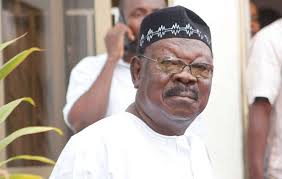
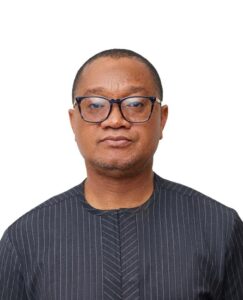
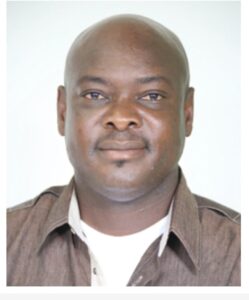
    The success of these reforms is a testament to the leadership and dedication of various individuals across different regimes. Alhaji Alhassan Bene, Hon. Ibrahim Tanko, Hon. I.C. Quaye, and Hon. Ben Abdallah have all played pivotal roles in advancing Ghana’s Hajj system. However, special gratitude must be given to the Embassy of Kingdom of Saudi Arabia in Ghana with their hardworking employees, who worked tirelessly over the years to see these progress. Their efforts were instrumental in addressing core challenges and setting new standards of excellence in Hajj management.

    Despite these remarkable strides, there is still room for improvement. Restructuring the Ghana Hajj Board to enhance governance and accountability could further strengthen the system. Adding new ports of embarkation and upgrading regional airports would make the Hajj more accessible to pilgrims from different parts of the country. Engaging in negotiations with Saudi civil aviation authorities could help reduce airfare costs and provide additional flight options. Finally, depoliticizing the Hajj system would foster greater transparency, trust, and inclusivity.

    The story of Ghana’s Hajj system is one of progress, resilience, and a commitment to service. From its humble beginnings to its current status as a well-organized and efficient process, the system reflects the collective effort to ensure that Ghanaian Muslims can fulfill their religious obligations with dignity and ease. With continued innovation and strategic leadership, the Hajj system is poised to reach even greater heights, serving as a model for other nations while preserving the sanctity and significance of this sacred journey.


  • One of Ghana’s finest and best-fit to lead Ghana Maritime Authority 

    Dr Kamal-Deen Ali, Ghana Maritime Authority Authority Director-General


    Adnan Adams Mohammed


    As President John Mahama progresses in forming his government machinery, one of the few best-fit appointment made so far is the Ghana Maritime Authority Director-General appointee, Dr. Kamal-Deen Ali.


    Dr Ali is a global doyen of maritime law and governance as well as blue economy, a new sector the current wants to tap significant to generate revenue while improving lives.


    He brings a wealth of experience to the role, having served as a Naval Captain, a prominent maritime lawyer, and a leading figure in maritime policy and governance at both national and international levels.

    Prior to his appointment, Dr. Ali served as the Executive Director of the Centre of Maritime Law and Security Africa (CEMLAWS Africa), where he provided crucial policy advice and reform services across several African countries.


    He is listed among the top 50 personalities influencing Africa’s Blues Economy.


    Dr. Ali has also made significant contributions to the maritime sector in Ghana and beyond.


    He holds a PhD in International Maritime Law, a Master of Laws, and a Master of Arts in International Relations.


    He is a Barrister of Law and holds a Bachelor of Laws degree, a Postgraduate Diploma in Public Administration, and is a graduate of the prestigious Ghana Armed Forces Senior Staff College.


    He serves as a visiting lecturer at the International Maritime Law Institute, Malta, an external examiner at the World Maritime University, Malmo, Sweden, and a Fellow of the Council on Foreign Relations Ghana.


    Dr. Ali is a prolific writer, having authored the book, “Maritime Security Cooperation in the Gulf of Guinea: Prospects and Challenges,” considered a leading publication in the maritime field. He is also a co-editor of the forthcoming book, “The Law of the Sea: Contemporary Norms and Practice in Africa.”


    As the fourth Director-General of the GMA, Dr. Ali is expected to leverage his extensive experience and global influence to significantly enhance ocean governance at national, continental, and global levels.


  • Veep receives delegation from the Shenzhen Energy… Women engineers to be trained in China 

    Vice President receives China delegation on energy 


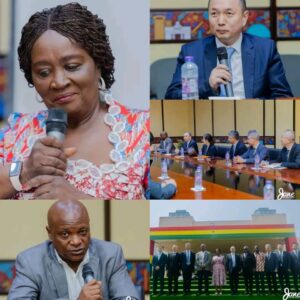
    The Vice President of Ghana, Prof Jane Nana Opoku Agyeman, on behalf of President John Dramani Mahama, received a delegation from the Shenzhen Energy Group.


    The group was led by Mr. Ouyang Huiyu, the Executive President, and the management team of the Sunon Asogli Power (Ghana) Limited.


    The discussion focused on ways of expanding the reach of Sunon Asogli in the energy sector of the country. She. expressed her gratitude for the China company’s unwavering support to  Ghana’s needs, especially given the challenges linked to the supply of energy.


    She also highlighted the importance of the longstanding bilateral relations between Ghana and China, emphasizing how these partnerships continue to benefit both nations.


    “We discussed the critical need for training and, where necessary, retraining local staff to enhance capacity and efficiency at facilities such as the Energy Groups in our country”, Prof Opoku-Agyeman noted in a post.


    “I placed emphasis on supporting women engineers in the energy sector. By the end of the meeting, the delegation from China had agreed with my suggestion to select some women engineers for training in their facilities in China.”


    She assured the delegation of the government’s commitment to supporting future project expansions to meet Ghana’s growing energy demands.


  • State drops prosecution against Dr. Opuni and Seidu Agongo in the COCOBOD case

    Dr Stephen Opuni

    The State prosecution in the COCOBOD financial loss case has dropped all charges against Dr. Stephen Kwabena Opuni, former CEO of Ghana Cocoa Board, and businessman, Seidu Agongo.

    The duo faced 27 charges, but including defrauding by false pretenses, willfully causing financial loss to the state, and corruption by public officers.

    In a surprising turn of events, State Attorney Enam Mensah informed the High Court on Tuesday, January 28, 2025, that the Attorney General had directed the prosecution to withdraw the charges. The prosecution subsequently filed a notice of withdrawal, citing Section 59 Act 30.

    The case, which began in 2018, centered on allegations that Opuni and Agongo caused a financial loss of over GH¢271 million to the state through a series of Lithovit foliar fertilizer transactions. However, the prosecution’s decision to drop the charges brings an end to the lengthy and complex trial.

    It’s worth noting that the case had its share of controversies, including allegations of withheld evidence and bias. In February 2024, a subpoenaed witness revealed that a crucial test result from the Ghana Standards Authority, which confirmed Lithovit as a fertilizer, was not presented in court.