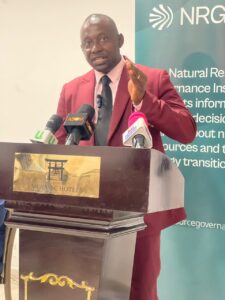
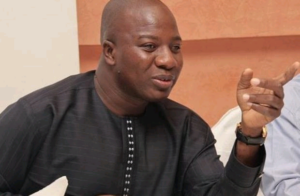
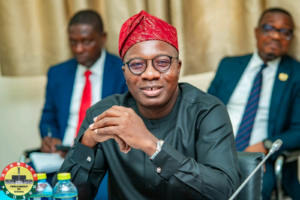
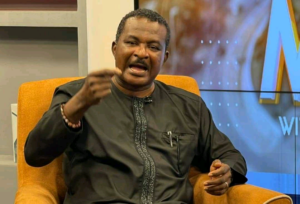
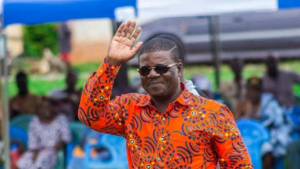
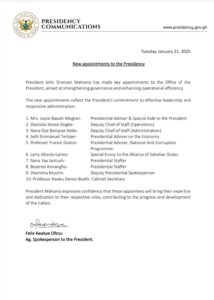
Julius Debrah, Chief of Staff of John Mahama Presidency
Adnan Adams Mohammed
The Office of the President has directed all heads of government institutions to revoke all unethical ‘last-minute employment’ the outgone NPP government did in bad faith to overburden the public purse.
This is to help purge the government payroll from overbearance of all persons added to the payroll on or after Saturday, December 7th 2024.
The Chief of Staff, Julius Debrah, who signed the directive emphasized the importance of maintaining transparency and accountability in government payroll management processes.
Heads of all public institutions are to oblige by the new directive.
This follows earlier directive from the presidency tasking all heads of public institutions to provide on all such persons employed on the December 7th 2024.
The memo urged the heads to ensure the requested information is submitted no later than Friday, January 31, 2025.
The memo outlines that institutions are required to submit the following details for each staff member added within the specified period:
Full Name
Designation/Job Title
Employee Identification Number (if applicable)
Date of Appointment
Date Added to Payroll
The directive was part of ongoing efforts to verify and ensure the accuracy of government payroll records, specifically those added during the tenure of the John Mahama administration.
“This information is critical to maintaining transparency and accountability,” the memo states, stressing the need for prompt compliance. Institutions facing any challenges or requiring clarification have been encouraged to reach out without hesitation.
The directive has also been copied to the Vice President, the Secretary to the President, and other key stakeholders, underscoring the significance of this initiative in addressing payroll integrity across government institutions.
Failure to meet the submission deadline may attract scrutiny, as the government seeks to streamline payroll systems and eliminate any discrepancies.
Civil Society Organizations, working in the extractive and environmental sectors, have reaffirmed commitment to partnering with the President John Mahama’s government to achieve shared goals of development, sustainability, and good governance.
They believe that by working together, Ghana can harness its vast resources for the benefit of all while ensuring the protection of the environment and the wellbeing of future generations.
The CSOs indicated their recognition of the ambitious agenda set forth by the new administration and commend the emphasis on economic recovery, environmental stewardship, good governance, and energy transition. However, there are critical areas requiring immediate attention to secure the future of Ghana and its people.
“As citizens who have bought into your vision for this country, we wish to call upon you to honour your promises and commitments as outlined in the 120 Days Social Contract with the people of Ghana”, the CSOs said in a statement read by Kyei Kwadwo Yamoah at a press conference last week. Thus; “Combating Illegal Mining and Strengthening Environmental Governance and Combating Corruption and Promoting Good Governance.”
They urged the government to: Issue a bold directive to halt all illegal mining activities immediately to deter those who defy the law; Repeal the Environmental Protection (Mining in Forest Reserves) Regulation 2022 (L.I. 2462) and enhance enforcement of existing mining laws; Empower District and Regional Security Councils (DISEC and REGSEC) to enforce bans effectively at the local level; and Expedite prosecution of illegal miners by getting the Attorney General to work with the Chief Justice to establish a special court to fast track illegal mining cases.
“We believe that fulfilling these commitments will not only ensure the sustainability of Ghana’s resources but also secure a prosperous and equitable future for all”, the CSOs noted.
The CSOs, thereby, called upon the President to count on their support in driving policy reforms, fostering transparency, and promoting responsible resource management.
“Ghana stands at a pivotal moment, and we are optimistic that your leadership will deliver on the promise of a better future for all. Together, we can build a Ghana that sets the standard for governance and sustainable development across the continent.”
Read full statement below:
PRESS STATEMENT
CIVIL SOCIETY STATEMENT ON NATURAL RESOURCE AND ENVIRONMENTAL GOVERNANCE, ENERGY TRANSITION, AND ANTI-CORRUPTION MEASURES
Title: Advancing Ghana’s Development: Strengthening Governance, Protecting the Environment, and Driving Economic Transformation
Distinguished Members of the Press, Ladies and Gentlemen,
Good morning, and thank you for joining us today.
First and foremost, we extend our heartfelt congratulations to His Excellency, the President of the Republic of Ghana John Dramani Mahama, on your decisive victory in the 7th December 2024 general elections.
Your resounding victory is a testament to the trust and confidence the people of Ghana have placed in your vision and leadership.
We also warmly welcome the new administration and express our hope for a term marked by progress, unity, and prosperity.
Ghana stands at a pivotal moment, and we are optimistic that your leadership will deliver on the promise of a better future for all.
As civil society organizations, working in the extractive and environmental sectors, we reaffirm our commitment to partnering with your government to achieve our shared goals of development, sustainability, and good governance.
We believe that by working together, we can harness Ghana’s vast resources for the benefit of all while ensuring the protection of our environment and the wellbeing of future generations.
Mr President, you can count on our support in driving policy reforms, fostering transparency, and promoting responsible resource management.
Together, we can build a Ghana that sets the standard for governance and sustainable development across the continent.
As citizens who have bought into your vision for this country, we wish to call upon you to honour your promises and commitments as outlined in the 120 Days Social Contract with the people of Ghana.
We recognise the ambitious agenda set forth by the new administration and commend the emphasis on economic recovery, environmental stewardship, good governance, and energy transition.
However, there are critical areas requiring immediate attention to secure the future of Ghana and its people.
Combating Illegal Mining and Strengthening Environmental Governance
Your Excellency, we applaud your pledge to ban mining in forest reserves and roll out initiatives like the ‘Tree for Life’ and ‘Blue Water Initiative’ to rehabilitate degraded areas.
However, illegal mining continues unabated, resulting in environmental degradation, the destruction of cocoa farms, and the pollution of vital water bodies.
We urge you to:
Issue a bold directive to halt all illegal mining activities immediately to deter those who defy the law.
Repeal the Environmental Protection (Mining in Forest Reserves) Regulation 2022 (L.I. 2462) and enhance enforcement of existing mining laws.
Empower District and Regional Security Councils (DISEC and REGSEC) to enforce bans effectively at the local level.
Expedite prosecution of illegal miners by getting the Attorney General to work with the Chief Justice to establish a special court to fast track illegal mining cases.
These actions are vital to protect our forests, rivers, and farmlands, ensuring a sustainable future for generations to come.
Energy Transition: A Multi-Sectoral Approach
We commend the addition of “Green Transitions” to the mandate of the Ministry of Energy. However, energy transition must extend beyond one ministry to achieve national impact.
We therefore propose:
Establishing a high-level coordinating body akin to Nigeria’s Energy Transition Implementation Working Group or South Africa’s Presidential Climate Commission to drive efforts across sectors.
Developing an integrated energy transition strategy by reviewing and aligning the existing Energy Transition Framework and Investment Plan with manifesto commitments.
Accelerating investments in renewable energy by creating a favourable regulatory and investment environment to enhance the renewable component of the country’s energy mix .
Linking energy transition to green minerals through mapping resources, promoting research, and ensuring value addition within the country.
Ghana must leverage its natural resources and global energy transition goals to become a leader in sustainable energy.
Forests, Environment, and Climate Change
We acknowledge your government’s commitment to addressing climate change through reforestation policies and modern agricultural infrastructure.
However, we urge swift action to:
Implement the ‘Tree for Life’ and ‘Blue Water Initiative’ as stated in the government’s inaugural commitments.
Ban new mining activities in forest reserves and adopt innovative farming methods to preserve natural ecosystems.
These measures are essential not only for climate mitigation but also for economic resilience.
Upstream and Downstream Petroleum Sector
The petroleum sector is critical to Ghana’s economy. We urge the government to:
Revise and harmonize regulations governing the petroleum sector to ensure consistency and support integration.
Invest in critical infrastructure and explore partial privatisation options to address financial challenges.
Prioritize domestic crude oil supply for local refineries as mandated by the Petroleum Agreement.
Align the sector with global energy transition goals to ensure long-term sustainability.
Combating Corruption and Promoting Good Governance
Your Excellency, we commend the promise to establish a robust Code of Conduct for government officials and to institute inquiries into corruption scandals.
However, these efforts must be fortified with tangible actions. We recommend:
Urgent passage of the Conduct of Public Officers (CoPO) Bill, which has been pending since 2013.
Strengthening procurement reforms to prevent insider dealings and ensure transparency.
Engaging stakeholders to review political party financing laws to reduce undue influence on governance.
Empowering state institutions to lead forensic audits and investigations into scandals of public interest.
These steps will restore public trust, foster accountability, and uphold the principles of good governance.
A Collective Responsibility
We believe that fulfilling these commitments will not only ensure the sustainability of Ghana’s resources but also secure a prosperous and equitable future for all.
We urge the government to act decisively, and we call on citizens, civil society organisations, and the private sector to lend their support in this shared mission.
Thank you for your attention.
We look forward to the government’s swift and decisive action in addressing these pressing issues.
Together, let us build a Ghana that we can proudly pass on to future generations.
Emelia Arthur, Fisheries and Aquaculture minister, has pledged her commitment to aligning the nation’s fisheries regulations with international standards to restore compliance and secure Ghana’s seafood.
This, she believes, will also reverse the ‘yellow card’ Ghana currently holds against seafood exports to the European Union market.
Many stakeholders in the fisheries industry are upbeat on their expectations. They have confidence she could deliver on the job.
“Illegal, Unreported, and Unregulated (IUU) activities in fisheries have earned Ghana a Yellow Card. The EU outlined a number of things that need to be sorted out so that the Yellow Card will be lifted. It is my understanding that those activities have begun,” she stated while answering a question during her vetting, last week.
Arthur announced plans to revise the Fisheries Act (Act 625) as part of measures to address the issue. She noted that the current legislation inadequately addresses inland fisheries and aquaculture, which are critical to meeting the EU’s requirements.
“We have to do the right things so that the trade will go on for the foreign exchange to come,” she said, stressing the urgency of the matter to protect the fishing industry, which contributes significantly to Ghana’s economy.
Arthur revealed that the Yellow Card significantly impacts industrial fishers, particularly those involved in tuna exports—a sector that generates nearly $400 million annually for the country.
The EU’s Yellow Card serves as a warning that Ghana risks losing access to the European seafood market if it fails to combat illegal fishing in its exclusive economic zone. A “Red Card,” the next step in the EU’s sanctions, would result in trade restrictions on seafood exports, severely affecting Ghana’s economy and the livelihoods of thousands in the fishing industry.
In 2021, the European Union issued Ghana a second Yellow Card, citing inadequate efforts to combat illegal fishing. Virginijus Sinkevičius, the European Commissioner for Environment, Maritime Affairs, and Fisheries, expressed concern over Ghana’s failure to implement necessary measures to meet international standards.
With Ghana producing an estimated 448,200 metric tons of seafood annually, addressing the EU’s concerns is crucial to safeguarding both marine resources and the country’s access to global markets.
Arthur highlighted the urgency of resolving the situation, underscoring the importance of sustainable fisheries management. She committed to working with stakeholders to implement necessary reforms, protect Ghana’s fishing industry, and maintain its position in the global seafood market.
Her assurances offer hope for an industry that is not only vital to Ghana’s economy but also to the livelihoods of millions of citizens who depend on fisheries for sustenance and income
Professor Yarhands Dissou Arthur, Dean of the Faculty of Applied Sciences and Mathematics Education at the Akenten Appiah-Menka University of Skills Training and Entrepreneurial Development (AMMUSTED) in Kumasi, has suggested to President John Dramani Mahama that appointing at least two persons from each constituency as presidential staffers would greatly benefit the party.
This move, according to Professor Yarhands, would bring fair representation of the people to the doorstep of the government.
“Reports from some constituencies with expectations of having their MP’s or some good people of their constituency appointed by the president is not pleasant for the National Democratic Congress,” Professor Yarhands noted. “The destructions in these constituencies are in a bad taste, and it’s a call for some strategic action to cool down the tempers of these constituents. I suggest to President Mahama to appoint at least two persons each from the various constituencies as presidential staffers.”
Professor Yarhands believes that this approach would allow grassroots party members and opinion leaders, such as chiefs, pastors, and Imams, to have direct contact with the presidency. This would enable them to communicate specific developmental needs and complement the work of members of parliament. “This would not only foster greater inclusivity but also provide the presidency with valuable insights into the unique challenges and opportunities faced by each constituency,” Professor Yarhands explained. “The presidency can tap into local expertise and develop more targeted solutions to address the nation’s pressing issues.”
The suggestion comes amidst unrest among some National Democratic Congress (NDC) youth groups, who feel that President Mahama has not appointed enough representatives from their constituencies to his government. In the Ho Central constituency, for instance, some youth broke into the party’s office, destroying property and equipment. Similar incidents have occurred in other parts of the country, including the Bole Bamboo area, a stronghold of the party.
In a first reshuffle of Parliamentary leadership on the majority side, Hon Mahama Ayariga, Member of Parliament for Bawku Central, has assumed his leadership position as Majority leader today, January 23, 2025.
He replaced the finance minister, Dr Cassiel Ato Forson, who has been the minority leader since the beginning of 2023 under the eighth parliament and majority leader since January 7, 2025, under the ninth Parliament.
The five-term MP, representing Bawku Central on the Fourth, Fifth, Sixth, Seventh, eighth and ninth Parliaments comes to office with vast experience in Parliamentary business. In a statement issued to acknowledge his acceptance of the leadership position, the calm, unassuming but brainy legal practitioner pledged to draw inspiration from the legacies of former leaders of the National Democratic Congress (NDC) caucus in Parliament as he assumes his role as Majority Leader.
“I am guided by the illustrious precedents set by former distinguished leaders of our caucus. Twenty years ago, our current Speaker, Rt. Hon. Alban Bagbin, led us. Then Hon. Cletus Avoka, Hon. Benjamin Kunbuor, Hon. Haruna Iddrisu, and most recently, Hon. Cassiel Ato Forson. Their leadership styles will remain guideposts,” Ayariga said as he affirmed the NDC caucus’s commitment to pursuing President John Dramani Mahama’s agenda to “reset Ghana.”
“As Leader of the House and Leader of Government Business, I assure the people of Ghana that, consistent with the overwhelming mandate given to President John Dramani Mahama and the 187 members of this caucus, we will rigorously pursue the agenda to reset Ghana,” he stated.
Mahama Ayariga
Mr Ayariga also emphasized a commitment to inclusivity, consensus-building, and national unity, vowing not to abuse the NDC’s numerical advantage in Parliament.
“As President John Dramani Mahama has said, these overwhelming numbers will not be abused. Even though we are an overwhelming majority, we will strive for inclusivity, consensus-building, and deeply uphold the principles of probity and accountability in the fulfillment of the dreams of our founding fathers. We will foster national unity, advance democracy, and ensure equitable development.”
Mr Ayariga is expected to bring a fresh, pragmatic approach to leading the Majority Caucus.
Over the years, he has earned a reputation as a vocal advocate for his constituents and a key contributor to legislative debates. His leadership style is anticipated to prioritize fostering unity within the Majority Caucus while advancing the government’s legislative agenda.
The reshuffle has also significantly changed other key parliamentary roles. Cape Coast South MP, Kweku Ricketts-Hagan, succeeded Emmanuel Armah-Kofi Buah as Deputy Majority Leader, following Buah’s nomination as Minister for Lands and Natural Resources. Ricketts-Hagan, recognized for his strategic insights and leadership acumen, is expected to work closely with Ayariga to ensure seamless coordination of parliamentary business.
Ricketts-Hagan, Deputy Majority leader
Also, Rockson-Nelson Etse Kwami Dafeamekpor, the Member of Parliament of South Dayi in the Volta Region replaces Governs Kwame Agbodza, the Minister for Roads and Highways, as the Majority Chief Whip.
Rockson Defeamekpor
There is also speculation about a potential promotion for Comfort Doyoe Cudjoe-Ghansah, the MP for Ada and current Second Deputy Whip. Reports suggest she may be elevated to the position of First Deputy Whip.
Ghana’s energy sector is on the brink of transformation with the appointment of Hon. John
Abdulai Jinapor as Minister of Energy Designate.
His appointment is a fresh opportunity to revitalize an industry that has struggled with stagnation and inefficiencies for the past eight
years, benefiting only a select few while the broader economy has suffered.
As Ghana aims to fully harness its natural resources for national development, strong and visionary
leadership is essential.
For years, the extractive industry has faced persistent challenges, including an unreliable power supply, weak regulatory frameworks, and policies that have failed to unlock the nation’s full potential in oil, gas, and renewable energy.
Under Jinapor’s leadership, stakeholders are hopeful for a renewed focus on transparency, efficiency, and policies that
serve all Ghanaians rather than a privileged minority.
His appointment has the same response with widespread industry support, with key players expressing their commitment to backing his initiatives for meaningful progress.
With extensive experience in the energy sector—including his tenure as Deputy Minister and his role as a Member of Parliament—Jinapor is well-equipped to navigate the
complexities of Ghana’s energy landscape.
His leadership must prioritize addressing inefficiencies that have hampered progress while unlocking opportunities for investment,
job creation, and sustainable energy solutions.
One of the most urgent challenges he must tackle is Ghana’s energy generation and distribution system.
The country has experienced periods of power crises that have
disrupted businesses and slowed economic growth.
Stabilizing the electricity supply,
promoting renewable energy investments, and ensuring fair and transparent procurement
processes will be critical steps toward restoring confidence in the sector.
Additionally, Minister Jinapor has the opportunity to reshape the oil and gas industry to ensure more fair benefits for all Ghanaians.
Strengthening local content policies will be crucial in ensuring that Ghanaian businesses and professionals actively take part in the industry’s expansion.
Moreover, revenue from natural resources must be managed
efficiently to support national development rather than benefiting only a select few.
His leadership will be a test of accountability and action. With Ghana’s energy future at
stake, he must work collaboratively with stakeholders to implement reforms that promote
sustainability, affordability, and innovation in the sector.
The industry is ready to support
this transformation but achieving it will require bold leadership and a strong commitment to change.
As John Abdulai Jinapor steps into this critical role, expectations are high, and the responsibility is immense.
His success will not only shape his legacy but also decide
Ghana’s energy security and economic trajectory.
The nation stands ready to support his efforts, urging him to prioritize the interests of the people, industry growth, and sustainable
development.
President John Dramani Mahama has today sworn in six ministers of his cabinet into office.
The Minister included: Dr Cassiel Ato Forson as finance minister, John Jinapor as Energy Minister, Dr Dominic Ayine as Minister of Justice and Attorney General, Haruna Iddrisu as minister of Education.
Eric Opoku as Agric Minister, and Kwame Governs Agbogya as minister of Roads.
The colourful event took place at the Jubilee House.
President Mahama tasked the ministers to swift move to work to address the daring challenges facing the country.
Stakeholders in the fisheries sector have commended President John Mahama and the NDC- led government for maintaining the Ministry of Fisheries.
The stakeholders also extended appreciation to the president for nominating, Hon Emelia Arthur as the Fisheries Minister designate. The Covener of Fisheries Alliance, Kyei Kwadwo Yamoah, described the nominee as well qualified in that capacity.
“We look forward to working with Hon. Emelia Arthur, when she is approved to deliver the important policies in the NDC manifesto on fisheries”, Mr Yamoah indicated in a statement released last week.
Read statement below:
Open letter to the President. H.E. John Mahama
Mr. President, Fisheries Stakeholders Appreciate your Commitment to the Fisheries Sector
We thank Mr. President for maintaining the Ministry of Fisheries and Aquaculture and nominating a very qualified minister designate Hon. Emelia Arthur for the sector
Your Excellency, this shows your commitment to developing the fisheries sector and we are very much appreciative of this commitment.
We look forward to working with Hon. Emelia Arthur, when she is approved to deliver the important policies in the NDC manifesto on fisheries including:
● Mo-NE-YO initiative to promote the uptake of special pension schemes for informal sector workers that includes fishermen.
● Revitalize, the fisheries and aquaculture sector and promote the development of the Blue Economy through the establishment of the Blue Economy Commission to sustainably harness and regulate our marine and freshwater resources
● Provide resources to support research and development in the fisheries sector
● Enforce laws to sustain fish stock and fishing practices
● Improve education in fishing communities and develop alternative livelihoods for fisher folks to improve their well-being and reduce pressure on fish stocks.
● Support landing beach Committees to create Fisheries Services Center (FiSC) to supply necessary equipment and services to fisher folks.
We know Hon. Emelia Arthur, will be able to deliver because she has extensive experience in fisheries, agriculture, natural resources management and gender inclusion. She has worked with fisheries stakeholders and various NGOs and stakeholders in Ghana, particularly in her role as Deputy Regional Minister and the Shama District Chief Executive. Hon Emelia Arthur has been involved in supporting initiatives related to the fisheries sector in Ghana. She advocated for the construction of state-of-the-art fishing harbors and fish processing plants, indicating her commitment to enhancing the industry and creating job opportunities. She has been involved in various initiatives, including the establishment of an Agriculture Support Scheme to benefit local farmers, fishers and enhance agricultural development in the area.
Hon. Emelia Arthur established the IADI (Integrated Agricultural Development Initiative) which has several key goals aimed at enhancing agricultural productivity and sustainability. Theseinclude:
-Boosting Food Security: Ensuring that communities have access to sufficient, safe, and nutritious food through improved agricultural and fishing practices.
– Promoting Sustainable Farming and fishing Practices: Encouraging environmentally friendly and sustainable agricultural and fishing methods to protect natural resources.
– Increasing Farmer and fisher Incomes: Supporting farmers and fishers in increasing their yields and accessing markets to enhance their income potential.
– Empowering Farmers and Fishers: Providing training and resources to enhance the skills and knowledge of farmers and fishers, particularly women and youth.
– Strengthening Agricultural and Fisheries Value Chains: Creating a more efficient agricultural system by connecting farmers and fishers with suppliers, processors, and markets.
– Facilitating Access to Finance: Helping farmers, fishers and agricultural businesses access funding and credit facilities to invest in their operations.
The Electricity Company of Ghana (ECG) has been an albatross on the neck of all successive governments with its growing inefficiencies and unsustainable management practices.
According to the Company’s audited financial statement for the year 2023, its total debts and liabilities stood at GH¢47.2 billion with net loss of GH¢5.96 billion.
A new twist to ECG’s woes is that, a forensic audit by PricewaterhouseCoopers (PwC) has uncovered GH¢ 303.48 million in unexplained “tax offsets,” raising serious questions about financial transparency and revenue allocation within the power sector.
Also, the 2023 Auditor General’s report reveals a discrepancy in revenue collection to a tune of GH₵490 million in a period of three month, between October and December 2023. The discrepancy involves both tariff and non-tariff revenue.
According to a report shared by the Public Utility Regulatory Commission (PURC), the variance was identified between the regional bank accounts and ECG’s head office accounts. The audit report explained that: “Between October and December 2023, ECG reported revenue of GH₵3.38 billion. However, based on information from the head office bank accounts analysed, the recorded revenue was GH₵3.87 billion.”
Further investigations revealed that the unaccounted funds resulted from the transfer of all funds from district and regional accounts to the 14 head office accounts at the end of each month. This transfer process led to the GH₵490 million discrepancy between the figures reported by ECG and those found in the audit analysis.
All these have ignited public interest in the ECG management and inefficiencies. With the newly inaugurated President Manama administration indicating its readiness to reconsider involving private participation in the management of the Electricity Company of Ghana (ECG), many stakeholders have ignited opposing debates.
In a meeting with Independent Power Producers (IPPs) to address longstanding challenges in Ghana’s energy sector, particularly the financial sustainability of the Electricity Company of Ghana (ECG) and the overall power distribution framework, President John Mahama underscored the critical need for reforms in the energy sector, highlighting issues of inefficiency, procurement irregularities, and revenue losses at the ECG.
The meeting which the President described as a ‘new chapter in Ghana’s energy governance’, paid attention to efforts to introduce private sector participation in the distribution and billing of electricity, referencing the controversial Power Distribution Services (PDS) deal that was initiated but subsequently terminated under the previous administration.
President Mahama is dismayed at the current losses of about 40 percent of total expected revenue of ECG. He therefore emphasises the importance of private sector involvement in reducing the ECG’s losses and improving revenue collection, suggesting that a well-structured and transparent partnership could yield better results than previous attempts.
“If you made 40% commercial and technical losses and continue to think that you have a viable business,” Mahama said, “something must give in that sector.”
However, the former Managing Director of ECG, Samuel Dubik Mahama, has dismissed the government’s proposal to privatise the power distribution company, arguing that, private sector participation is already integrated at the metering level and questioned the necessity of further privatisation.
Instead, Mr Dubik is confident that ECG could thrive if the government builds on the foundation laid during his tenure, despite his acknowledging the inefficiencies within ECG although also highlighting areas of operational efficiency.
“I do admit that there are a few inefficiencies in the company, and in the same way, there are a few efficiencies, he asserts. Now before you do any private sector privatisation what are the benchmarks? Let’s not forget there is already private sector participation in ECG.
“At the metering point under the loss reduction programme. Under this programme, the ECG has moved from its previous position where it used to look for a large sum of money to purchase meters to come and install. That is one thing that I decided to change when I became the
Managing Director and I had a discussion with the board, was that looking for cash or capital to purchase meters, for usage, doesn’t make sense.
“Why don’t we get all these metering companies and tell everybody to have a factory in the country? Based on that, we now have about seven metering companies that have factories in Ghana. What we then did was to give them a locality to install their meters…and that is private
sector participation. If you do the math very well, you realise that it saved us a lot. More than almost 50% of how much you now have to borrow and all those administrative costs.”
When asked about the main problem that needs to be solved for ECG, he said, “The first one forex… you buy the electricity in dollars and you come to sell it in cedis. And you go and look for requisite dollars to go and pay…If you are going to look for US dollars to pay the Independent Power Producers (IPPs), will the money be enough to pay the whole value chain?”
Meanwhile, President Mahama has criticised the current procurement practices at the company, questioning why the ECG would procure items that would not be needed for several years.
“We can start to look at their procurement systems,” he said. “Why would you procure items that you don’t need until five years or six years after? So much of the revenue that is collected must go to pay for power that is generated.”
He also called for the more effective implementation of the cash waterfall mechanism to ensure that IPPs are remunerated for their services promptly.
“How to make the cash waterfall mechanism more effective so that at least you people are getting back part of your cost while we look at the outstanding debt. These are issues that we want to look at. But we’re going to do that in concert with you,” he added.
Additionally, during his vetting, the Energy Minister-designate, John Abdulai Jinapor, reiterated the need for increased private sector involvement in the operations of the Electricity Company of Ghana (ECG).
“We believe there should be private sector participation. What we intend to do is to form a seven- member committee, chaired by technical experts, legal aspects, financial experts, and some industry players, and even somebody from the consumer side,” he stated.
According to Mr. Jinapor the committee will be tasked with designing a comprehensive framework based on global best practices to determine the most suitable model for private sector involvement, whether it be a concession model or full privatization. He assured the Parliamentary Appointments Committee that the process would be devoid of political interference.
“We will stay off as politicians and let them develop a framework in a transparent, open, and frank manner. Once we get the buy-in of Ghanaians, we can set standards using a Request for Proposal (RFP) or competitive tender process,” he added.
Mr. Jinapor stressed that the government would not resort to sole-sourcing for private sector participation in ECG operations. Instead, a competitive process with a strong emphasis on local content and Key Performance Indicators (KPIs) would be adopted. “Our approach ensures a clear path forward, incorporating private sector expertise while safeguarding national interests,” he explained.
The Minister-designate also revealed that the energy sector debt has ballooned to US$3 billion.
Meanwhile, the Public Utilities Workers Union (PUWU) has vehemently opposed the privatization of ECG. Rather, the Union is assuring of its collaboration with the current government to resolve challenges facing the Electricity Company of Ghana (ECG) and the power sector. In a statement signed by the General Secretary of PUWU, Timothy Nyame, the Union appealed to the President not to privatize the ECG.
“We can vividly recall the engagement we had with the previous NDC administration regarding the issues of the power distributor ECG. PUWU’ of TUC Ghana wishes to reaffirm that its position on ECG privatization and management remain unchanged and believe the best alternative presented still stands as the best for Ghanaians and other stakeholders.
“As a Union with membership mainly in the utilities and housing sectors of the country, we are ready to collaborate with the government in finding permanent solutions to the energy, housing and water situation and at affordable cost to Ghanaians,” Mr Nyame said in the January 13 press release.
He further stated that, PUWU is very much aware of the investment done in the energy sector by both local and international partners. He appealed to President John Mahama to sustain discussions with these partners to resolve the energy challenges.
“PUWU of TUC Ghana is not unaware of many interest groups, locally and abroad, when it comes to investment in the power and energy sector, we are also aware of many who paraded the corridors with interest in ECG in the past and have metamorphosed and resurfaced to continue their game.”
Another critic of the privatisation of ECG is a private legal practitioner, Martin Kpebu. He believes urgent reforms and the appointment of selfless leaders to manage the Electricity Company of Ghana (ECG) could change situation for good. He, however, expressed concerns over how contracts, such as the controversial HUBTEL contract, were awarded, suggesting they were driven by profit motives rather than genuine efforts to improve the sector.
“We’ve had situations where decisions were made, not for the benefit of the people, but to enrich a few. These contracts have led to inefficiencies and left the industry worse off,” he said in reaction to the current government position of increasing private hands in ECG, last week.
“We need an independent process for appointing the ECG’s leadership. Let’s select the most competent and honest Ghanaian, someone who can run it without favoring family, friends, or private interests. That’s the only way forward,” he added.
Mr. Kpebu’s remarks highlight the need for bold reforms, transparent leadership, and a commitment to public interest to revamp ECG and ensure efficient power distribution in Ghana.
Conversely, the Executive Director of the Africa Centre for Energy Policy (ACEP), Benjamin Boakye, has backed the immediate privatization of ECG to address inefficiencies within the power sector and reduce the financial burden on the government. He emphasized that privatizing ECG would enhance operational efficiency, stabilize the system, and potentially lower electricity costs for consumers. According to Mr. Boakye, the government’s continued management of ECG has proven unsustainable, with inefficiencies bleeding the national budget. He explained that despite the state’s efforts, inefficiencies in ECG’s operations continue to divert significant tax revenues into supporting the struggling entity.
“There is no sector that bleeds Ghana like ECG,” Mr. Boakye asserted in an interview, last week. “Even if President Mahama made ECG an NGO today, there is no guarantee that subsequent governments would avoid the same cycle of inefficiency.”
Mr. Boakye highlighted the risks of postponing critical decisions, such as deferring maintenance on pipelines, which could lead to a higher demand for liquid fuels in the future.
“Pushing these decisions to later dates only creates a cycle of increased demand, inefficiency, and debt. We need to take the bull by the horns and address these challenges now,” he said.
Addressing concerns that privatization could lead to higher electricity tariffs for consumers, Mr. Boakye argued that effective regulation by the government could ensure fair pricing even under private ownership.
“The private sector can invest in ECG, but it is the state’s role to regulate their operations. This has been successful in other sectors, like telecommunications and banking, where private companies operate under state oversight,” he explained.
He dismissed claims that electricity is too essential to be handled by private entities, stating, “Power is no more important than tomatoes or rice. The narrative that the state must manage electricity because it is essential often allows inefficiencies to persist under the guise of serving the public interest.”
Mr. Boakye pointed to the inefficiencies within the current structure of ECG, including overstaffing, as a key reason for its financial struggles. He urged the government to prioritize efficiency and embrace privatization as a long-term solution to the challenges in Ghana’s energy sector. He also criticized the regulatory environment, noting that entities like the Public Utilities Regulatory Commission (PURC) lack the independence and power to hold state-owned enterprises accountable.
“Government has never been good at regulating itself,” he said, citing the inability of PURC to enforce fines on ECG.
Mr. Boakye concluded by emphasizing that privatization of ECG is critical to freeing up resources for other development needs, stabilizing electricity supply, and creating a more efficient energy sector.
“The time to act is now,” he urged, adding that failure to address these challenges could lead to more financial strain on the government and a less reliable power system for Ghanaians.