“Economist urges Ghana to use mineral revenues to offset tax losses.”
Adnan Adams Mohammed
An economist has called on the government’s economic team to fully exploit resource receipts to make up for revenue gaps that would arise due to tax cut proposals.
The Director of Research at the Institute of Economic Affairs (IEA), Dr John Kwakye, has also indicated that abolishing taxes should come along with measures to plug tax loopholes, broaden the tax net, strengthen tax administration and stem tax evasion.
Sharing his perspective on the move by the Mahama administration to cut some taxes as part of its fulfilling campaign promises, he however believes that leaving betting untaxed will be financially ill-advised and indeed ‘suicidal’.
“Betting will become an increasing part of the economy with a huge tax revenue potential. Leaving betting untaxed would, therefore, be fiscally ill-advised and, indeed, suicidal!”, Dr Kwakye has said.
The Mahama administration is seeking to remove the 10 % betting tax following the promise made during the 2024 election campaign period.
The Finance Minister Dr Cassiel Ato Forson recently reiterated his stance on removing the Betting Tax, arguing that its elimination would not harm the economy.
“Scrapping the Betting Tax will not affect the forward march of the economy,” he said. He added that increasing taxes is not the only way to boost revenue. “You don’t have to increase taxes to increase revenue. What is important is to increase compliance.”
Rather than introducing new taxes, Dr. Forson revealed that he intends to improve compliance with existing tax laws to enhance revenue collection. He further stressed that Ghana’s fiscal challenges cannot be solved solely by increasing revenue but also requires prudent management of expenditures.
“It’s not always about revenue, but expenditure,” he stated.
Dr. Forson emphasised the need to cut wasteful spending, urging decisive action to stabilise the economy. “We need to cut the waste! The time is now. We must work in a way that stabilises inflation, the exchange rate, and creates jobs.”
Dr. Forson also shared his medium-term vision to increase tax revenue as a percentage of GDP from the current 13.8% to between16–18%.
A team from the International Monetary Fund (IMF) was in Ghana last week to have discussions with the government on the ongoing programme.
From, Monday 10th February to Friday 14th, February 2025 the Government of Ghana had discussions with the IMF team led by their Mission Chief for Ghana, Stephane Roudet.
The discussions centred primarily on Ghana’s progress under the IMF-supported Programme and the policy direction of government in the 2025 Budge due to be presented to Parliament on March 10.
Other critical areas for discussion included revenue administration reforms, the energy sector reforms, expenditure rationalisation, and monetary and exchange rate policy.
The Bank of Ghana, Ghana Revenue Authority, the Controller and Accountant General Department and other key institutions were expected to be present in the scheduled meetings.
“The Government of Ghana assures the public of its commitment to prioritising macroeconomic stability, job creation and improved livelihood for the people of Ghana,” a statement issued by the Finance Ministry said.
“World Bank urges Ghana to adopt tough fiscal reforms.”
Adnan Adams Mohammed
As Ghana’s borrowing costs rose, escalating interest payments have crowded out critical capital investments needed for infrastructure and economic growth. Consequently, the World Bank wants Ghana to adopt tough fiscal reforms.
The latest Public Finance Review of Ghana’s economy report launched by the Bank highlights the urgent need for Ghana to reset its fiscal strategy by boosting domestic revenue, rationalizing tax exemptions, and enforcing stricter expenditure controls.
“Without deeper reforms”, the Bank warns, “Ghana risks reversing recent economic gains and prolonging financial instability”.
It recommends that “To achieve long-term stability, policymakers must curb non-essential spending, strengthen public financial management, and adopt a more disciplined fiscal framework to restore economic confidence and attract sustainable investments.”
The report attributed Ghana’s fiscal challenges to a lack of budget discipline, leading to unchecked public spending, surging interest payments, and increasing financial constraints.
The World Bank report also asserted that, excessive election-year spending, costly bailouts in the financial and energy sectors, and pandemic-related expenditures have severely strained Ghana’s fiscal space, limiting resources for productive investments.
Government spending has consistently outpaced GDP growth, with nearly 70% of total expenditure between 2010 and 2023 allocated to public sector wages, interest payments, and statutory transfers.
“World Bank warns Ghana against premature return to capital markets.”
Adnan Adams Mohammed
Ghana’s economic challenges have been attributed by the World Bank to unguided fiscal systems which led to overburdened debt accumulation and unmatching revenues.
The World Bank believes that weak expenditure controls enabled a vicious circle leading to reduced fiscal space and unsustainable debt accumulation, particularly over-reliant on external commercial debt, this being made worse by declining tax revenue in the years preceding the outbreak of the country’s still ongoing economic crisis.
Among its key findings in the Ghana Public Finance Review, the Bretton Woods institution indicated that the lack of fiscal discipline was marked by weak budgetary institutions, high fiscal liabilities from the financial and energy sectors, and insufficient revenue collection.
“Again, a costly clean-up of the financial sector and ongoing losses in the energy sector increased fiscal pressures”, the report titled “Building the Foundations for a Resilient and Equitable Fiscal Policy” asserted.
“With precarious fiscal conditions, the prolonged and expensive fiscal response to the COVID-19 and the subsequent deterioration of global conditions plunged Ghana into a full-fledged crisis – and into debt distress – in 2022.”
Also, the Bank emphasized that Ghana’s fast Gross Domestic Product (GDP) growth, fuelled by debt, left it highly vulnerable to global shocks.
The report, however, noted that Ghana has made progress toward economic stabilisation but warned that more needs to be done to meet monetary and fiscal targets and create lasting fiscal space.
It proposed that stronger domestic revenue mobilisation is necessary to create fiscal space for critical development priorities. Currently, Ghana’s tax collection rate falls below that of its peers, although not for all taxes
Consequently, the Country Director for Ghana, Liberia, and Sierra Leone, Robert Taliercio, while speaking at the launch of the report, cautioned Ghana against making a premature return to international capital markets, warning that such a move could undermine the country’s recent economic recovery.
He warned that an early return could send negative signals to investors, leading to a reversal of gains made under Ghana’s debt restructuring efforts and exposing the nation to unsustainable borrowing costs.
His warning follows Ghana’s successful restructuring of both domestic and external debts, which secured significant relief under the US$3 billion International Monetary Fund’s Extended Credit Facility (ECF) programme.
While acknowledging these achievements, Taliercio cautioned against complacency, noting that Ghana has had a history of falling back into unsustainable financial practices when an economic crisis recedes.
“The risk now is falling into complacency with these achievements and returning to a business-as-usual mindset – a recurring error in the past. Ghana has requested a record 17 IMF programs and has been under active IMF supervision for 40 out of its 68 years of independence,” he noted.
He further stressed that rushing back to international markets for dollar funding could be counterproductive, potentially triggering a return to high borrowing costs and renewed financial instability.
Since 2022, Ghana has been locked out of international capital markets due to soaring debt levels, sluggish economic growth, and a weak balance of payments.
While the country is eager to regain investor confidence, the World Bank warns that timing and fiscal discipline will be critical in ensuring long-term economic stability.
“Ghana pushes to meet revised cocoa production target.”
By Toma Imirhe
Despite continued major challenges still persisting in Ghana’s cocoa industry, recent data suggests that the production target for the current, 2024/2025 season will be met and possibly exceeded. The current target is 617,000 tons, after Ghana revised downwards its erstwhile 650,000 tons target by 20% in December.
However, cocoa arrivals at official Ghanaian warehouses neared 550,000 metric tonnes by end-January, putting the world’s second largest producer – after neighbouring Cote d’Ivoire – within reach of its output target for this season, said a source with access to data from sector regulator Cocobod. This is encouraging news for Ghana which has been heavily reliant on cocoa exports for its foreign exchange needs, but which incongruously suffered a severe earnings slump in 2024, due to sharp falls in official production, just as cocoa prices surged to record highs of over US$10,000 per ton,
According to the source, Ghana’s graded and sealed cocoa arrivals reached 542,223 tonnes as of January 30. This puts production just 74,777 tons short of the (downwardly) revised output target for the 2024/25 season, which runs till end-September. These production figures have been independently verified by three Europe-based cocoa traders who recently told Reuters they had heard Ghana’s G&S cocoa arrivals had reached about 550,000 tonnes by mid-January, albeit cautioning that the crop was heavily front-loaded and arrivals could well decline going forward. Instructively this already exceeds the informal forecasts of International Cocoa Organization officials who, at the start of the season said they see total production for the season from Ghana at around 500,000 tons.
G&S is cocoa that has been quality checked and sealed in bags by regulator Cocobod and is ready to be shipped.
Although the cocoa crop development phase in Ghana – as well as Cote d’Ivoire, has been helped by benign weather this season, recent Harmattan winds have been extremely harsh, two of the traders said.
However, cocoa industry analysts in Ghana assert that the major cause of last year’s production slump was inappropriate pricing. Ghana has customarily pre-sold its crop on forward markets in order to give a syndication of international banks comfort that allows them to lend the country up to US$2 billion a year, with which to purchase the crop for local farmers. Over the past two decades this arrangement had become a pivotal source of bulk forex inflows. However, in 2024, Ghana negotiated its forward sales at below US$3,000 per ton just before the price more than tripled on the spot and futures markets. Consequently, many farmers opted to sell their crops through unofficial channels rather than accept about 70% of Cocobod’s price which was barely a third of those spot market prices.
Late last year, in the run up to the December general elections, government increased the producer price for farmers but this has proved too little too late. The newly installed President John Dramani Mahama administration has promised further price increases for farmers.
In the meantime though Ghanaian cocoa farmers and industry officials expect a boost in the 2024/2025 season due to improved weather conditions and some rehabilitation efforts.
This would be a relief. Ghana saw its 2024 export earnings plummet to US$1.7 billion—the lowest in 15 years. This drop is largely attributed to dwindling production to a long term low. The decline in forex inflows from cocoa is exacerbated by illegal mining activities (galamsey), smuggling, and crop diseases, all of which have significantly impacted yields. In just three years, Ghana’s cocoa output fell from over one million metric tonnes in 2021 to slightly above 500,000 tonnes in 2024. This dramatic reduction has also weakened the country’s ability to secure favorable terms in the syndicated loan market.
Despite Ghana and its western neighbor, Côte d’Ivoire, jointly accounting for over 60% of global cocoa production, both nations have struggled to benefit from the recent surge in global cocoa prices due to forward sales agreements. In 2024, global cocoa prices soared by a record 157%, yet Ghana recorded its lowest export revenue since 2010.
The National Tripartite Committee (NTC) has officially commenced negotiations on the 2025 National Minimum Wage.
The committee, which includes representatives from thegovernment, employers, and organised labour associations, is tasked with determining the wage structure for the new financial year.
Following the conclusion of minimum wage negotiations, discussions will shift to the base pay for public sector salaries, which is a critical aspect of wage determination for the Government of Ghana’s workforce
The negotiations are taking place against the backdrop of delays in the wage-setting process, as the Public Financial Management (PFM) Act mandates that discussions should have been completed by the end of April 2024 to guide budget planning.
In light of this, the Government has urged all social partners – employers, organised labour, and government representatives – to accelerate discussions to ensure that outcomes arefinalized in time for inclusion in the 2025 Budget, which is expected in March.
Felix Kwakye Ofosu, MP, Minister of Government Communications has emphasized the need for timely negotiations, stressing that any further delay could impact fiscal planning and salary adjustments for workers.
With rising concerns over inflation, cost of living, and economic stability, stakeholders are expected to engage in rigorous discussions to reach a fair and sustainable wage agreement that balances the interests of both workers and employers.
The outcome of these negotiations will be crucial in shaping the financial well-being of Ghanaian workers in 2025.
Last year, Organised Labour secured a 23% increment in the base pay for the year 2024, after a two-day negotiation with the government.
Prior to this, Organized Labour had demanded a 75.1% base pay increase for 2024. They however subsequently reviewed it downwards to 60%, but government rejected it, proposing a 15% increment instead. Both parties later agreed to a 23% raise with an additional 2% scheduled for July to bring it to 25% in total.
Ghana’s National Tripartite Committee, the body in charge of setting the country’s minimum wage and overseeing public sector pay negotiations, has begun its deliberations for 2025.The committee, which balances the interests of government, employers, and organized labour, will meet under the leadership of Rashid Pelpuo, the newly approved Labour Minister, who awaits only his swearing-in to assume the role.
The committee’s 15 members—five each from the government, employers’ organizations, and organized labour—will face a challenging task.
The Trades Union Congress (TUC), the apex representative of labour, is expected to push for significant wage increases, while employers and the government grapple with economicconstraints. As of the beginning of February 2025, Ghana’s national daily minimum wage stands at 18.15 cedis, or
approximately 363 cedis per month, based on a 20-working-day calculation. This figure was set in 2024 after the committee agreed to a 22% increase, a move driven bysoaring inflation that peaked at 54% in December 2023—the highest rate in over two decades.
While the 2024 hike was substantial, it followed years of modest adjustments: 6% in 2021, 8% in 2022, and 9% in 2023. The sharp rise last year underscored the urgency of addressing the cost-of-living crisis, which has placed immense pressure on low-income workers.
Beyond the minimum wage, the committee’s decisions will have significant implications for public sector salaries. The Ministry of Finance has projected that total compensation for public sector employees will exceed 73 billion cedis in 2025, a figure that has drawn concern from the World Bank. The bank has repeatedly flagged Ghana’s public sector wage bill as unsustainable, warning that it puts strains on the country’s fiscal resources.
Despite these concerns, public sector workers are likely to demand higher base pay, arguing that their salaries have not kept pace with inflation.
The negotiations will be a delicate balancing act, as the government seeks to rein in spending while addressing the legitimate grievances of its workforce. Consequently, the 2025 negotiations come at a pivotal moment for Ghana’s economy. Inflation, though lower than its 2023 peak, remains a concern, particularly food inflation, and economic growth has been uneven.
However, labour consultant, and former Minister of Employment, Austin Gamey, has called for a paradigm shift in the determination of the national daily minimum wage. According to him, the use of inflation figures to determine how high the minimum daily wage is hiked is counterproductive and fails to address the problem of low salaries for workers.
He suggested that the tax threshold be used instead for such negotiations. “Now, in determining a national daily minimum wage, we have to have a paradigm shift and for the base pay as well. Because we cannot be using inflation if it’s 70% we go 70%, if it’s 100% we go 100% – it cannot work” he has asserted. “If you go that route, this country will be turned upside down in five minutes, I guarantee you”, he cautioned.
“What you can do is to take advantage of what the labour law says. That is the best. Maybe they are not fully conversant with it. I propose that we work together. But let me say that in determining these things, we have several ways of doing this including the tax thresholds. So it is for organized labour to ensure that a certain amount that people earn will not attract any form of tax at all. The barest minimum as it stands now is not enough.”
According to him, by doing away with the minimum daily wage-pegged-to-inflation-figures in favour of the tax threshold system, organized labour will be able to demand for what is appropriate.
“We must now go into the mystery of what goes into these things, unravel and unearth it and be able to deal with it properly, but I don’t think that we should be saying 50 to 50, 20 to 20. We must demand what is appropriate,” he said.
Meanwhile, Mr. Gammey has urged organised labour to support government in managing the current economic downturn.
“And we must be very open to helping government, I maintain we must be very open to helping government to enable them to manage the situation and get us out of this economic situation. Because this is a very turbulent situation we find ourselves in already. We are simply in the IMF on a complete stretcher,” he said.
The Tripartite Committee’s decisions will not only shape the livelihoods of millions of workers but also influence the country’s fiscal health and social stability. As the committee deliberates, all eyes will be on whether it opts for another significant wage increase or prioritizes fiscal restraint.
Either way, its choices will have far-reaching consequences for Ghana’s economic trajectory in the year ahead.
“Gold-for-Oil policy scrapped; stakeholders push for a better solution.”
Adnan Adams Mohammed
Stakeholders in the downstream petroleum sector have resolved to abandon the controversial Gold-For-Oil programme on the basis that it has not fulfilled its objectives. The Energy Minister, has therefore confirmed that the current administration would discontinue the Gold-for-Oil programme and replace it with a better system.
Ghana’s gold-for-oil policy, marketed as a daring move to stabilize the cedi, now finds itself ensnared in execution flaws, questionable efficacy, and mounting political discord. As its true impact remains cloudy, the policy may soon join the long list of bold yet faltering attempts to tame exchange rate volatility of Ghana’s turbulent currency.
“There’s a high level of opacity, and the clarity is not there,” John Jinapor said in an interview last week. He referenced the Auditor-General’s report, which had flagged issues with theprogramme, reinforcing claims that it lacked accountability and efficiency. “If it were that clear and transparent, we wouldn’t need the reforms we are pursuing,” he added.
Instructively the International Monetary Fund had earlier expressed reservations over the initiative, making the Bank of Ghana to retreat from its original role in its implementation.
Consequent to such widespread reservations, the Chief Executive of the Association of Oil Marketing Companies (AOMCs) and LPG Marketing Companies, Dr. RiversonOppong, expressed disappointment with the much- touted Gold-for-Oil (G4O) programme. Dr. Oppong argued that the initiative did not meet its intended objectives and disrupted the industry’s supply chain.
“In the long run, we have seen how this was introduced, and the fact is, it absolutely didn’t curb energy pricing in any way,” Dr. Oppong stated.
He noted that towards the end of 2024, Ghana experienced fuel shortages because Bulk Oil Distribution Companies (BDCs) struggled to plan their imports alongside the Gold-for-Oil supply. “As a result, BDCs were reluctant to import fuel, which led to supply challenges,” he explained.
Dr. Oppong further questioned whether the programme had fulfilled its primary goal of reducing fuel prices, stating emphatically, “The answer is a big no.”
He emphasized that industry players were waiting for the government to outline a new framework to replace the existing policy.
“With dialogue, I believe we can come up with a better solution,” he added.
Meanwhile, the energy minister has pleaded for time to phase out the programme. “You need time to put a workable system in place. In the interim, we are making adjustments to reduce losses and enhance transparency, but ultimately, we will replace it,” he stated.
The government’s decision to phase out Gold-for-Oil is expected to pave the way for a new fuel pricing policy, with industry players advocating for a more predictable and transparent framework
Ho water crisis to end.. as GWCL promises new
pumps
The Managing Director of the Ghana Water Company Limited (GWCL), Mutawakilu Adams, has assured residents of Ho and its surrounding communities that steps are being taken to resolve their ongoing water crisis.
According to Adams, the company has ordered two new machines to replace the old and faulty ones at the Kpeveheadworks, which has suffered multiple breakdowns in recent weeks, disrupting water supply across the municipality.
The frequent failure of the Kpeve headworks pumps in January has led to a severe water shortage, forcing residents to travel long distances in search of water. Hospitals, schools, and other institutions have also been severely affected by the crisis.
Volta Regional Minister James Gunu, along with GWCL management and traditional leaders from Ho and Kpeve, toured the Kpeve headworks to assess the situation, last week.
Speaking to the media after the inspection, MutawakiluAdams reaffirmed the company’s commitment to resolving the issue. “We have placed orders for two brand-new machines to replace the faulty ones, ensuring a more effective and reliable water supply,” he assured.
Residents remain hopeful that the arrival of the new equipment will bring lasting relief and end the recurring water shortages in the region
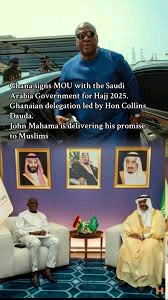
Information gathered from the presidency indicates that the much anticipated Ghana’s Hajj Pilgrimage fare for 2025 has been reduced by a whooping GH¢13,000.
The new fare is pegged at GH¢62,000 against the 2024 figure of GH¢75,000.
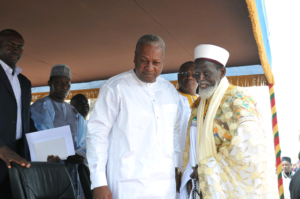
The reduction is in fulfilment of President John Dramani Mahama and the NDC’s promise to reduce the hajj fare to lessen the burden of would-be prigimages.
Ghana Hajj Committee and Saudi Arabia delegation sign MOU
This was after President Mahama setup a committee to consider how reduce the hajj fares for Ghanaians. The Committee subsequently embarked on a journey to Saudi Arabia to accomplish the task.
The discussions around the introduction of Islamic financing models to augment Ghana’s access to needed funding to address pressing developmental needs of the country has lingered over decades.
In spite, the financial laws of the country permitting the country to explore the vast market of Islamic finance products which have been touted as the most sustainable and prudent sources of developmental funding, the regulatory framework is not attended to, thereby curtailing all efforts by Ghanaians to exploit the market.
Over the years, many finance industry experts have consistently highlighted Islamic banking as a critical tool for addressing Ghana’s ongoing economic and financial challenges. They emphasize the need for innovative financing options to support Ghana’s development amidst budget constraints and rising debt burdens. However, President John Dramani Mahama recently hinted at the adoption of Islamic banking during the National Thanksgiving Prayers with Muslims at the National Mosque. This came as an assuring moment to the finance industry.
“For some time, Ghana will be working to pay interests, and the budget cannot accommodate significant economic expansion on the front of infrastructure. This is why alternative sources of financing, such as Islamic banking, are crucial”, Renowned economist and Dean of the University of Cape Coast Business School, Professor John Gartchie Gatsi, said in an interview last week.
Prof. Gatsi emphasized that Ghana must explore inclusive and sustainable financing options to navigate its economic challenges. Islamic banking, he argued, provides a viable alternative that aligns with the country’s development goals while easing fiscal pressures.
“By embracing this innovative financing model, Ghana can diversify its funding sources, support critical infrastructure projects, create jobs, and reduce the public debt burden”. “This is the way forward for sustainable economic growth,” Prof. Gatsi noted, highlighting the benefits of adopting Islamic banking, which offers unique financing mechanisms like sukuk (Islamic bonds) and access to the Islamic Development Bank.
Analyzing Ghana’s budget structure, Prof. Gatsi noted that 35.5% is allocated to debt servicing, 24% to compensation, 5.5% to capital expenditure, and 5.4% to goods and services. This leaves minimal room for infrastructure development.
“When structured well, Islamic banking promotes public-private partnerships with a Special Purpose Vehicle (SPV) to ensure that project loans are repaid without burdening the public purse,” Prof. Gatsi elaborated.
Also, a Chartered Accountant and an Islamic finance expert, Yusif Geoffrey, has indicated that, among the innovative financing solutions Ghana can adopt to bridge the financing gap, especially for the country’s infrastructure is Sukuk.
Sukuk is an Islamic financial instrument similar to conventional bonds; this instrument has been used as an avenue for unlocking much-needed funds for infrastructure projects by both developed and developing economies across the globe.
The Infrastructure Challenge in Ghana
Ghana’s infrastructure deficit is a critical barrier to economic growth, affecting transportation, energy, and healthcare sectors. There is a huge infrastructure gap in several sectors of the economy, including energy, education, affordable housing, health, transport, and recreation.
The World Bank estimated that Ghana would require $2.3 billion annually for infrastructure financing. The critical question is how Ghana can sustainably finance this necessary expenditure without worsening its debt burden.
Sukuk, known as Islamic Bonds, is the golden key to Ghana’s infrastructure financing needs. Its asset-backed feature ensures that the financial arrangement does not create an additional debt burden for the country.
It signifies ownership in a tangible asset or its usufruct, which refers to the rights to the earnings or benefits derived from that asset. Essentially, sukuk represents a form of investment that combines the principles of Islamic finance with the tangible qualities of underlying assets. It allows investors to share in the returns generated by the asset while ensuring compliance with Islamic Jurisprudence.
Unlike traditional bonds that incur interest, sukuk involves asset-backed financing, where investors receive returns based on the performance of underlying assets. This structure aligns with ethical finance principles and provides a unique opportunity for governments and businesses to diversify their funding sources.
Global Sukuk Market
The global sukuk market has made notable strides over the past decade, showcasing its strength and resilience despite various global financial challenges, such as the COVID-19 pandemic. As highlighted in the Islamic Financial Services Board (IFSB) Stability Report 2023, the Islamic finance industry is projected to reach a remarkable USD 3.38 trillion this year. This growth underlines the significance of sukuk as a vital capital market instrument within the Islamic Capital Market.
The recent International Islamic Financial Market (IIFM) Sukuk report reveals that global sukuk issuances increased by around 16% p.a., or USD 212 billion, in 2023 compared to USD 182.7 billion in 2022. Such figures reflect the increasing recognition and adoption of sukuk as an innovative financing tool that has gained prominence in financing Infrastructure projects across the globe.
Benefits of Sukuk for Ghana
Alternative Funding Source: Sukuk can provide Ghana access to a broader pool of investors, including those interested in Sharia-compliant investments. This diversification will enhance financial resilience and reduce reliance on traditional debt instruments such as the Euro and other domestic bonds. The absence of interest in the structuring of Sukuk makes it unique and attractive to investors from the Islamic Finance market, which is expected to reach $5.96 trillion by 2026.
Economic Growth: By financing key infrastructure projects through Sukuk, the government can stimulate economic activity, create jobs, and improve public services. Infrastructure development is closely linked to GDP growth and overall national development. Ghana can follow African Countries like Nigeria, South Africa and the United Kingdom that have issued Sukuk to finance various infrastructure projects.
Financial Inclusion: Issuing Sukuk can foster financial inclusion by engaging a broader population segment in investment opportunities. This approach can empower individuals and businesses that prefer ethical financial products. In 2024, the Ministry of Finance reported in the National Financial Inclusion and Development Strategy that about 60% of Ghanaians are excluded from the formal financial system.
Public-Private Partnerships (PPP): Sukuk can facilitate PPPs by providing a structured financing mechanism that aligns the interests of both public entities and private investors. This collaboration can lead to more efficient project execution and risk-sharing. For example, the Islamic Development Bank financed a Hydro Agricultural Development Project in Cote d’Ivoire and Maternal and neonatal healthcare services in Mauritania using Islamic Financial Instruments. This is mainly because Islamic Finance is with partnership financing models.
What needs to be done
Apparently, Mr Geoffrey has indicated that, despite its potential, several challenges may hinder the successful implementation of Sukuk in Ghana, therefore, he proposes that to facilitate its adoption; policymakers, investors, and the general public need to be more aware and understand Sukuk.
A robust regulatory framework supporting Sukuk issuance is vital. The Banks and Specialised Deposit-taking Act 930 Institutions ACT, 2016, Securities Industry 2016 (ACT 929), and other related laws must be reviewed to create an environment that will attract investors to enter this financial market.
Ghana must apply for membership in the Organization of Islamic Countries (OIC), the mother Institution of the Islamic Development Bank (IsDB). These are multilateral financial institutions like the World Bank and the International Monitoring Fund. It is rife to point out that Ghana will not automatically be classified as an Islamic country if it joins the IsDB. Yet, it can access a large pool of non-interest-bearing financing tools to finance the much-needed infrastructure to fill the deficit.
“Fisheries Minister Emelia Arthur drives sustainable Blue Economy growth.”
Adnan Adams Mohammed
Key to the vision of the new Fisheries Minister is the Blue Economy Initiative which is an ambitious plan to leverage Ghana’s marine and freshwater resources for sustainable economic growth.
The initiatives aim to sustainably manage and conserve the living and natural resources of the ocean, while harnessing its potential and benefits for the good of all.
Hon. Emelia Arthur, who officially commenced her duties last week, announced a clear vision for the sustainable growth of Ghana’s fisheries and aquaculture sector in a meeting with the management teams of the Ministry, the Fisheries Commission and the Premix Fuel Secretariat to share her vision and expectations.
She brings to the role a wealth of experience as a development specialist with expertise in local governance, natural resource management and gender inclusion. Her distinguished career includes roles as a Presidential Staffer, Deputy Regional Minister, and District Chief Executive. Her academic credentials from Yale University and GIMPA further underscore her ability to blend strategic planning with inclusive development, making her well-positioned to lead MOFA toward a sustainable future.
Discussions at the meeting highlighted efforts to: Enforce the registration of fishing vessels; Regulate the trawl sub-sector to reduce juvenile fish harvest; Introduce safety standards for canoe construction; Monitor illegal fishing practices using an Electronic Monitoring System (EMS); and Establish Marine Protected Areas (MPAs) to preserve biodiversity.
The Hon Minister was also given details on the challenges faced by the Commission including, overfishing, illegal practices like light fishing and the use of dynamite, insufficient funding and difficulties in data collection. She discussed strategies to address these concerns and reaffirmed her commitment to addressing these challenges and supporting the sector’s growth by empowering stakeholders and encouraging teamwork.
The Minister was briefed on the performance of the sector, which recorded total annual fish production of 684,114.87 metric tons in 2023: Marine Fisheries: 425,423.91 metric tons; Inland Fisheries: 142,583.13 metric tons; and Aquaculture: 116,107.83 metric tons.
Further at the meeting, the Minister emphasized her commitment to collaboration, innovation and teamwork. She encouraged the team to focus on delivering sustainable results that benefit future generations.
“Together, we can strengthen Ghana’s fisheries and aquaculture sector, making it more sustainable and impactful,” Hon. Arthur stated. “With collaboration, dedication, and innovation, we will ensure food security and a prosperous future for all.”
With her wealth of experience, strategic vision, and passion for inclusive development, Hon. Emelia Arthur’s leadership promises to usher in a new era for Ghana’s fisheries and aquaculture industry.
“ISODEC report exposes illicit financial flows in Ghana’s gold industry.”
Adnan Adams Mohammed
ISODEC, a policy think-tank and community development centered organisation, has launched a new report that puts the spotlight on the vulnerabilities in the gold mining supply chain.
The report titled “Mapping of Illicit Financial Flows Risks Along the Supply Chain of Gold Mining in Ghana” provides critical analysis and actionable recommendations that help to address the risks in the industry. ISODEC in collaboration with Global Financial Integrity and with funding from NORAD, facilitated the research.
The findings in the report underscore the widespread prevalence of illicit financial flows at key stages in the gold mining process chain: mining, processing, transportation and marketing.
“These risks not only drain our nation of vital revenues but also weaken governance structures and hinder equitable resource management”, Charlotte Kpogli-Dzadey, the lead researcher noted at the launch event last week.
Mr Ben Aryee, a director at the Ministry of Lands and Natural Resources, commended the efforts by the parties for coming out with the report that serves as a guide to help streamline the gold industry and safeguard it from illegalities.
He admitted to governance weaknesses affecting the industry and therefore called for the industry regulators to enforce the necessary laws and recommendations to stop gold smuggling and underreporting among others vices.
Governance of Ghana’s mining sector involves many institutions. However, the Ministry of Lands and Natural Resources and Minerals Commission are two core state agencies that oversee the industry based on their direct relevance as espoused in law. While the ministry provides the sector with a strategic policy direction, the Minerals Commissions statutory role is already stated above. Other vital agencies include the Environmental Protection Agency (EPA), Forestry Commission, Water Resources Commission, Ghana Geological Survey Authority, Lands Commission, and the Land Use and Spatial Planning Authority which provide quasi-regulatory functions in managing the mining sector.
These agencies are responsible for granting various licenses, enforcing regulations and monitoring compliance standards. Also the Bank of Ghana (BOG) , the Ghana Revenue Authority (GRA) and the Precious Minerals Marketing Company (PMMC) all play significant financial and economic roles. However coordination and collaboration among these agencies can be Improved to enhance the effectiveness of regulatory oversight and ensure the sector’s sustainable development.
On the issues of corruption and smuggling; responders in the study believe, money for buying gold comes from sources largely unknown following government failure through the Precious Mental Marketing Company to mobilize enough money to buy gold produced, excess gold is bought by foreigners and their local collaborators, smuggled outside Ghana and re-exported in the name of a third country, relations between mining company and their subcontractors and communities are strained, some attempt at smuggling gold in one instance.
These undermine the local economy leading to less revenue for the government, contributing significantly to illicit financial flows and thus undermining domestic resource mobilization for national development.
Also, supply chain complexity and regulatory compliance are key issues identified which are bordered on by the faceless people who funded small-scale mining and also bought the excess gold in the system and where the gold was going. Gold from ASM and galamsey, which are often informal and poorly regulated in the form of the absence of customer due diligence and porous borders facilitate the gold smuggling out of the country.
The study reveals that corruption among government officials is widely perceived as a major driver of IFFs in the mining sector. A substantial 66.25% of respondents believe that corruption contributes to these licit activities “to a very large Thee underscores the systemic nature of corruption and its role in facilitating the
Consequently, the influence of multinational mining companies in driving IFFs is another significant concern. A majority of respondents (76.03%) view the role of these companies as “very significant” highlighting the need for greater scrutiny and accountability in their operations. The practices of these corporations often explore weak regulatory frameworks exacerbating the problem of IFFs.
Looking at the policy implications, the report captured that; the pervasive nature of IFF’s in Ghana’s mining sector has far-reaching implications for the country’s economy, governance, and social development. These flows not only deplete the nation’s financial resources but also perpetuate inequality, weaken institutions, and hinder efforts to improve public services such as healthcare. The widespread perception of corruption and the significant role of multinational corporations in driving IFFs suggest that addressing this issue requires both national and international efforts. Companies that handle the movement of gold either as raw ore or refined products, might also hide the tree ownership of companies. These entities evade scrutiny and accountability by obscuring their real ownership, making enforcing legal and regulatory measures Harder Lack of transparency about gold mining activities, financial transactions, and beneficial ownership can facilitate various forms of illicit financial activities that prevent domestic resource mobilisation.
The report further recommended some policy actions, which included: at the mining or extraction stage, the government should adopt stringent monitoring and enforcement of royalty and tax payments, including regular auditing of mining operations. The integration of digital topics and automated systems for tracking me extraction and production will improve accountability;
With the processing stage, strengthening customs and trade verification procedures, including independent assay reports for precious metals, car mitigate risks Implementing traceability systems for mineral processing such as blockchain technology, will ensure transparency from the mines to markets Governments shoüld work with regional bodles to establish cross-border cooperation to address smuggling and underreporting;
For the transportation stage, strengthening customs enforcement and using digital technologies such as GPS tracking for shipments of minerals can mitigate risks. Regional cooperation is necessary to harmonize border controls and customs protocols. Patities should encourage the use of formal transportation channels and incentivize compliance with tax and customs laws; and
At the marketing and sales stage, the government must require full transparency in marketing and sales transactions There should be effective Implementation of the law that mandate public disclosure of beneficial ownership of companies Involved in marketing The introduction of automated transaction monitoring systems for pricing and sales agreements could reduce undervaluation and mis-invoicing Strengthening anti-corruption measures and enforcing penalties for buyers and brokers involved in illicit activities is crucial.