Category: News

  • Rolled-over cocoa sales contract deprive Ghana benefits of production rebound

    “Ghana’s cocoa rebound overshadowed by rolled-over sales losses.”

    by Toma Imirhe


    The hangover from the disastrous production shortfalls from the previous, 2023/24 season, is depriving the country and its farmers from enjoying the benefits of the turnaround.


    This comes at a time Ghana should be rejoicing over the strong rebound in its cocoa production for the ongoing 2024/25 crop season.


    This is because nearly half of this season’s improved production is being used to settle unfulfilled sales contracts from the previous season and at prices less than half of what they are currently.

    Bloomberg reported last week that, Ghana’s cocoa deliveries to warehouses are running roughly 70% ahead of last season helped by an increased harvest and efforts to reduce smuggling. About 560,250 tons of beans arrived at Ghana Cocoa Board’s warehouses between the start of the 2024-25 season and mid February, according to people familiar with the matter, who asked not to be identified as the information had not been made public.

    This is more than one and a half times the 330,000 tons of arrivals at Ghana Cocoa Board depots by the same time last year, according to the international news agency’s sources. Indeed, although. Ghana late last year cut its forecast for this season’s harvest to less than 620,000 tons – and appears on course to exceed it – that is still  much bigger than the 480,000 tons that the International Cocoa Organization estimates the country produced during the previous year. But it would still be among the smallest seasonal production in the past two decades, during which Ghana actually twice exceeded one million tons.


    Most of the beans delivered to warehouses are destined for export, though a small proportion are sold to local processors at a discount.,

    Ghana in September and November raised the amount it pays farmers in cedis at the farm gate following the rally in global spot market prices, to historic highs of around US$10,000 per ton, this helping to reduce the incentive to smuggle beans to nearby nations where prices were substantially higher because Ghana had earlier locked into forward market prices – which were still far less than US$3,000 per ton when the sales contracts were signed – in order to provide comfort for members of the international syndication of banks that  customarily provide annual financing for local cocoa purchases from farmers, of close to US$2 billion.

    Improved weather patterns and lower impact of crop disease and pests have also played a part in the rebound of Ghana’s cocoa crop production. A new funding model – forced on Ghana because the erstwhile lending international banks now doubt the country’s ability to fulfill its sales contracts – ,where there’s a growing dependence on top exporters to help finance bean purchases, has also improved the tracking of beans from farms as well..

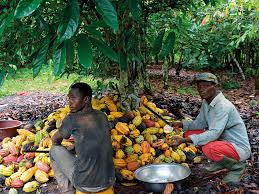
    But Ghana – both government and the farmers themselves –  will not enjoy much of the benefits of this rebound because in the 2023/2024 crop season, COCOBOD could not supply 333,767 tonnes of cocoa, which it had sold at US$ 2,600 per tonne. As a result, the then management of COCOBOD rolled over these contracts into the 2024/2025 cocoa season.

    This was revealed last week by President John Dramani Mahama himself during his presentation of the 2025 State of the Nation Address to Parliament. He went on to quantify the losses that Ghana is consequently incurring during the current crop season as about half of the production is being used to meet the unfulfilled obligations from the previous crop season, at last season’s forward market prices.

    “This implies that for every tonne of cocoa delivered this year in fulfilment of the rolled-over contracts, COCOBOD and the Ghanaian farmer would lose US$ 4,000 in revenue” he lamented.

    He confirmed that as at last week “COCOBOD has supplied 210,000 tonnes out of the rolled-over contract, resulting in a revenue loss of US$ 840 million for both COCOBOD and the Ghanaian farmer” who “will lose another US$495 million when the Board finishes supplying the remaining rolled-over contracts.”

    Additionally, cocoa road commitments alone total GHc 21.7 billion, of which only GHc 4.4 billion is included in the total debt of GHc 32.5 billion. President Mahama alleges that “This debt has arisen mainly because of the decision in 2019 and 2020 to award road contracts worth over US$1 billion because of the  2020 election.”

    Ghana is the world’s second largest producer cocoa after neighbouring Cote d’Ivoire, and between them they supply 60% of total global production.  The market is closely watching supplies from the West African growers after poor harvests last season fueled a huge global shortage that sent prices soaring to a record high.

    Top grower Cote d’Ivoire — where farmers’ pay is also set by the government — in September raised prices, and Ivorian bean arrivals for export are running almost 20% ahead of last season. Still, sales of next season’s crop are off to a slow start as high prices make it riskier for traders to hedge purchases, Bloomberg reported last week.
  • Maiden National Economic Dialogue 2025 starts tomorrow March 3

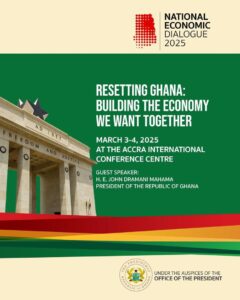
    National Economic Dialogue 2025


    Ghana is gearing up for the National Economic Dialogue 2025, scheduled to take place on March 3-4, 2025, at the Accra International Conference Center.


    This year’s theme, “Resetting Ghana: Building the Economy We Want Together,” underscores the need for collective action to drive economic growth and development.


    The event will feature a keynote address by H.E John Dramani Mahama, President of the Republic of Ghana.


    President Mahama is expected to share his insights on the country’s economic challenges and opportunities, as well as his vision for a more prosperous and inclusive Ghana.


    Key stakeholders from various sectors, including government, business, academia, and civil society, will gather to engage in constructive discussions on the country’s economic future. The event will provide a platform for participants to share their expertise, experiences, and perspectives on how to reset Ghana’s economy and build a brighter future for all.


    Economic growth, job creation, poverty reduction, and sustainable development are expected to be major focus areas during the dialogue. Participants will also explore ways to leverage Ghana’s natural resources, human capital, and technological innovations to drive economic transformation.


    Ghana’s economic development is at a critical juncture, with the National Economic Dialogue 2025 offering a timely opportunity for stakeholders to come together and chart a new course.


    President Mahama’s leadership and the collective expertise of participants are expected to yield meaningful insights and actionable recommendations for resetting Ghana’s economy and building a more prosperous future for all.


  • Full Speech: State of the Nation Address 2025

    President John Mahama presenting the 2025 SONA

    Read full State of the Nation Address  as presented by H. E. John Dramani Mahama.


    2025 State of the Nation Address

    SONA2025


  • Banking sector crisis has shown us the cost of neglecting the truth… Mahama alarms as he swears in BoG Governors

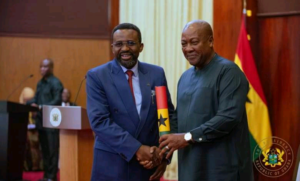
    President John Mahama and Dr Johnson Asiama


    Adnan Adams Mohammed


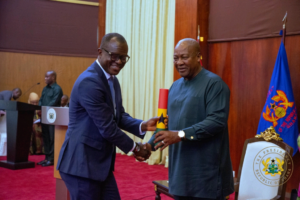
    President John Dramani Mahama has charged the Bank of Ghana Governor and his deputy  to discharging their mandate in a manner that acknowledges market sentiments and data as the pulse of the economy.


    He tasked them to go beyond mere technical considerations and act in full recognition that every statistic, every movement on a chart, and every shift in an index is more than just data, but, it is the pulse of an economy, a measure of resilience or distress.


    President Mahama, while swearing the two, Dr. Johnson Pandit Kwesi Asiama as Governor and Dr. Zakari Mumuni as First Deputy Governor of the Bank of Ghana, further indicated that a dip in confidence indices may signal businesses on a brink, evolving market conditions, or changing household prospects.

    President John Mahama and the Deputy BoG Governor, Dr Zakari Mumuni

    “Behind these numbers are real human stories—dreams either nurtured or shattered—demanding not just your highly extolled analytical expertise, but empathy and foresight that acknowledge the profound human consequences of every decision”, President Mahama recounted emphasising the effect of the banking sector’s cleanup exercise that had a deep toil on the Ghanaian economy.


    “Our recent banking history has shown us the cost of neglecting this truth.”


    “During the supposed banking sector cleanup exercise, thousands of jobs were lost and lives disrupted because decisions were made with a narrow focus rather than considerations of the human impact.


    “The Bank of Ghana had the opportunity to salvage some institutions, to protect livelihoods while ensuring stability, but instead, an approach that ignored human consequences prevailed.


    “The test of your patriotism in this solemn duty of economic governance lies in learning from these missteps—recognizing that policies must not only enforce regulations but also safeguard the futures that depend on them.


    “The lessons of the past remind us of the dangers of fiscal recklessness and the lasting harm it can inflict on an economy.”


    Recent past economic downturn faced by the country, where inflation skyrocketed to historic high, quantum leap in the local currency, cedi, depreciation stemmed from the unsustainable debt have thought government actors and analysts that, when governments resort to unsustainable consumption expenditure, financed by excessive and unregulated printing of money, the consequences are severe— from spiraling inflation, erosion of incomes to driving millions into poverty. Such actions, not only weaken public confidence in financial institutions but also threaten long-term stability.


    To safeguard our economy from these risks, the economy managers must uphold responsible fiscal management, strict adherence to legal and regulatory frameworks and protect the independence of the Bank of Ghana.


    Meanwhile, President Mahama assured the Governors of his resolve to the central bank operate independently.


    “As President, I am committed to ensuring that the Central Bank operates free from political interference, guided solely by its mandate. This is the path to building a resilient economy—one where policies are driven by discipline, foresight, and the best interests of the Ghanaian people.


    “I encourage you to work closely with key institutions, including the Ministry of Finance, Parliament and the financial industry while maintaining the independence your mandate requires.”


    The appointments of the Governor and his deputy are not merely routine exercises to satisfy Article 183(4) of the Constitution. They constitute a deliberate commitment to the Bank of Ghana’s core mandate, outlined under Article 183(1-3)—to regulate currency, ensure monetary stability, and promote sustainable economic development in Ghana.


    In full adherence to section 17(1) of the Bank of Ghana Act, 2002 (Act 612), these appointments uphold the legal stipulation that the Governor and Deputy Governors of the Bank of Ghana be individuals of demonstrable financial and banking experience.


    Dr. Asiama, a distinguished economist with a PhD from the University of Southampton,  ascent to this office is a natural progression from his long and dedicated service to the Bank of Ghana. With over two decades at the institution—rising through the ranks from banking supervision and financial markets to leading research and policy implementation—he has played a pivotal role in shaping Ghana’s monetary policy and our efforts for financial stability.


    As Deputy Governor, he was instrumental in controlling inflation, stabilizing the currency, and strengthening regulatory oversight. His deep expertise in banking supervision, risk management, and digital finance positions him as the right leader at this critical time.


    Ghana’s financial sector is in crisis, and the task ahead demands experience, foresight, and decisive leadership. With Dr. Asiama heading the Bank of Ghana, I am confident that we will rebuild trust, restore stability, and put our economy on a path of sustained growth. I entrust him with this responsibility, knowing he will serve with diligence and excellence.


    Consequently, Dr. Mumuni’s appointment is a recognition of his exceptional expertise, dedication, and distinguished service in banking, financial markets, and economic policy. He also has over two decades of experience at the Bank of Ghana, playing vital roles in shaping monetary policy and strengthening financial stability. His academic credentials, including a Ph.D. from the University of Nottingham and an MPhil from the University of Ghana, reflect his deep understanding of the complexities of our economy.


    As First Deputy Governor, he will be a key pillar in supporting the Governor to implement sound policies, reinforce regulatory oversight, and navigate the challenges ahead. His experience and analytical rigor will be crucial in ensuring that the Bank remains steadfast in its mandate to maintain price stability, safeguard the financial sector, and drive sustainable growth.


    Together, Dr. Asiama and Dr. Mumuni bring the leadership, expertise, and vision needed to restore confidence in our economy.


  • COPEC tells gov’t to pay close attention to fuel pricing … amidst new pricing floor


    COPEC urges gov’t to stabilize fuel prices amidst new pricing floor.


    Adnan Adams Mohammed


    The Chamber of Petroleum Consumers (COPEC) has called on the government to pay closer attention to fuel pricing to ensure stability and prevent excessive increases that burden consumers.


    Consumers concerns are rife in the wake of three consecutive fuel price hikes since the beginning of the year, followed by a price reduction in the second pricing window of February.


    The latest decrease in fuel prices has been attributed to factors such as drop in global crude oil prices among others.


    This comes as the National Petroleum Authority (NPA) has introduced a minimum price threshold for petrol, diesel, and LPG to prevent aggressive price undercutting. Effective February 16 to 28, OMCs and LPGMCs are to adhere to the newly established price floor.


    To this effect, petrol and diesel will trade at no less than GH₵12.56 and GH₵13.45 per litre, respectively, while liquefied petroleum gas (LPG) will be priced at a minimum of GH₵14.26 per kilogram.


    According to the NPA, the directive seeks to ensure pricing transparency and long-term market sustainability. Companies that fail to comply face regulatory sanctions, as authorities work to prevent market distortions that could threaten industry stability.


    Duncan Amoah, Executive Secretary of COPEC believes the government must implement measures to help mitigate sharp increases in the future as cost of fuel has a direct impact on transportation fares, inflation, and overall economic activity.


    “If anybody will be able to function within the economic space, fuel will play a very vital role. So for us, whatever importance a government attaches to fuel, it attaches to its own economic indexes. We think this government would have to focus a lot on fuel pricing because the moment that goes up, transport operators will definitely demand for their pound of flesh.


    “The market women will start reducing balls of kenkey. Everything will start getting smaller and smaller simply because prices of fuel have gone higher and higher. The is a natural effect on the economy and I think that the government will need to pay a lot of attention to fuel pricing going forward,” he told Citi Business News.


    Duncan Amoah has also been calling for decisive action to curb the depreciation of the Cedi, which often offsets reductions in fuel prices when global petroleum prices decline.


    Prices at the pumps for the first time this year dropped in the second pricing window of February.


    Total Energies reduced the price of both petrol and diesel to GHȼ15.99 per litre, down from GHȼ16.15 in the first pricing window of February.


    Notably, the OMC had maintained its price at GH¢16.15 while other OMCs increased theirs in the first pricing window of February.


    Shell has also reduced the price of diesel to GHȼ15.99 per litre, down from GHȼ16.09 in the first pricing window of February. The price of petrol has also dropped from GHȼ 16.23 to GHȼ15.89 per litre in the second pricing window of the month.


  • 2025 budget: temporary freeze on public sector employment expected as Mahama instructs expenditure cut

    Mahama announces expenditure cuts in 2025 budget.


    Adnan Adams Mohammed


    As Ghanaians wait in earnest for the first budget of the Mahama administration, public expectations have been stemmed with plans for a possible huge cut in government spending, especially on the public sector wage bill, in an effort to rebuild the economy.


    This means that, there could be no new public sector employment in 2025. This is forthright, as President John Mahama has instructed the Finance Minister to cut expenditure as much as reasonably possible.


    Speaking to organized labour in Accra last week, his government approved a 10% salary increase for public sector workers, President Mahama indicated that, the ‘economy was criminally handled by the previous NPP administration’.


    “I couldn’t understand how the previous government was so reckless in the handling of the economy”, President Mahama worriedly stated


    “One thing that is a cardinal principle for us is to tell the truth at all times. We all knew that the economy was in crisis but some of the things I am discovering myself, have been a criminal handling of our economy, Ghana is a crime scene because how a government can be so reckless I can’t understand it.


    “But we are faced with a reality, our options are very few, we can behave like the ostriches and hide our heads in the sand and let the economy crash but then what effect will it have on Ghanaian households and everybody? So I have told the Finance Minister to cut expenditure as much as he likes – even for we ourselves in government machinery – cut as much of our budget as you like because we all must make those sacrifices. A certain distrust for the political class has arisen because it is like when everybody else is tightening their belt, the political class is loosening itself. I want to assure you that we are all going to tighten our belts. and there will be no wasteful expenditure.”


    Instructively, Dr. John Kwakye, Director of Research at the Institute of Economic Affairs (IEA), had earlier called on the Mahama administration to close tax loopholes and curb wasteful spending.


    Dr. Kwakye said these measures would help the government recover revenue lost from planned tax eliminations.


    In a post on X (formerly Twitter) last week, he stated, “Plugging tax loopholes and cutting expenditure waste will be enough to compensate for intended tax eliminations.”


    Already, President Mahama has also emphasized the need to strengthen Ghana’s Fiscal Responsibility Act and the Public Financial Management Act, highlighting the importance of reducing waste and tackling corruption.


    Speaking at the Africa Business Forum 2025 in Addis Ababa, Ethiopia, President Mahama said, “We must analyze the factors that brought Ghana to this point and implement steps to ensure we do not end up in this situation again. That will entail strengthening the Fiscal Responsibility Act and the Public Financial Management Act.


    “We need to cut out waste and reduce corruption. These are some of the critical issues that must be addressed.”


  • Post IMF programme: Gov’t, economists, build consensus on strict fiscal responsibility adherence


    Ghana charts post-IMF fiscal path.


    Adnan Adams Mohammed


    Consensus is building up among government actors and economists on pursuing strict adherence to the Fiscal Responsibility Rules enshrined in the Fiscal Responsibility Act, 2018 (Act 982) to keep the Ghanaian economy on the track after the end of the International Monetary Fund programme.


    Already, President John Mahama, has indicated that the current administration would not extend the current three year Ghana-IMF Balance of Payments improvement programme.


    The Fiscal Responsibility Act was introduced to enforce discipline in government spending by preventing excessive borrowing that could widen the fiscal deficit beyond 5% of Gross Domestic Product (GDP). However, the government suspended these rules in the wake of the COVID-19 pandemic, citing the need for increased expenditure to manage the health crisis and its economic impact.


    Meanwhile, an economist and finance lecturer at the University of Ghana Business School, Professor Lord Mensah, believes that reviving these fiscal rules should be a key focus of the upcoming National Economic Dialogue, a forum expected to shape policy discussions on Ghana’s economic trajectory post-IMF programme.


    “I remember at the exit of the 2018 IMF programme, we had the Fiscal Responsibility Act and then also a fiscal responsibility supervision team made up of some economic professors at the University of Ghana and all those places. At the end of the day, we ask ourselves what has been the function of this body and then the Act?


    “I think we should bring it back and ensure strict enforcement of the Act. That will be able to help us because within the Act, all the things the IMF may want us to do is in it. If the Act tells you to reduce your budget deficit to about 5% to your GDP, strictly they are telling you to be measured in your expenditure and try to enhance your revenue generation,” he said.


    Consequently, President Mahama, in an interview with Bloomberg TV at the Munich Security Conference last week, clarified that while future extensions remain an option, his government is presently committed to adhering to the existing programme.


    “We’ve not talked about an extension of the program. We are determined to continue with this programme,” he stated. “If it’s necessary to look at additional funds or to extend the programme, we’ll look at it, but for now we are determined to continue on this trajectory.”


    President Mahama also outlined key proposals his administration presented to the IMF during their recent discussions, emphasizing the government’s commitment to addressing Ghana’s economic challenges while ensuring the success of the ongoing Extended Credit Facility arrangement.


    The US$3 billion ECF, approved on May 17, 2023, spans three years and is designed to support Ghana’s economic stability and growth. The latest discussions with the IMF focused on tax rationalization, debt management, and fiscal prudence—critical areas for strengthening Ghana’s economic recovery.


    A central aspect of the engagement with the IMF was tax rationalization. President Mahama criticized the previous administration’s approach of imposing multiple taxes, arguing that it had led to diminishing returns, as increased tax burdens resulted in lower revenue collection.


    “Because of the target of achieving 24 percent revenue to GDP by 2028, the programme required that revenue should continue increasing at a certain rate,” he explained.


    “Unfortunately, what the previous government had done was just to slap on more taxes, and we had gotten to a stage where the more taxes that were put on, the less revenue that came in. And so it’s necessary for us to look at the whole tax handle, rationalize them, make them more transparent, easy to understand, so that we can have better compliance.”


    To support these efforts, President Mahama revealed that the IMF has agreed to provide technical assistance in streamlining Ghana’s tax system, ensuring efficiency and improved compliance for businesses and individuals.


    Addressing Ghana’s ongoing debt restructuring efforts, President Mahama acknowledged the significant repayments due this year, particularly domestic debt obligations exceeding US$15 billion in 2025. He highlighted his administration’s proactive measures to manage these challenges, including reactivating the country’s sinking fund to facilitate debt repayments.


    “We also have the issue of the debt restructuring and humps that have been created this year, we have to pay in excess of 15 billion (dollars) on the domestic debt exchange,” he noted. “So what we’ve done is to reactivate the sinking fund and put more resources into it to take care of the repayments that have to be made this year.”


    He further emphasized his government’s dedication to fiscal discipline, stating that expenditure rationalization remains a priority. “We must be more prudent in our handling of our finances, we must also look on the expenditure side and see how we can cut waste and also shift resources to more priority programmes,” he stated.


    As part of Ghana’s economic roadmap, President Mahama highlighted the upcoming budget presentation in March, which will incorporate insights from the IMF’s latest staff review. The fourth IMF programme review is scheduled for April, and the government is aligning its fiscal policies with recommendations from the ongoing assessments.


    “The next review, which will be the fourth review, is due in April, but before that, we’ll present the budget in March,” he explained. “So the budget will take into focus some of the issues that have come out from the staff mission. We’re hoping to receive the aid memoir today or tomorrow, and looking at the issues that IMF raises, we will incorporate them in the budget.”


    Despite economic challenges, President Mahama expressed confidence in Ghana’s relationship with the IMF, describing it as “cordial.” He reiterated his administration’s commitment to maintaining this partnership, ensuring the successful implementation of the ECF programme, and steering the country towards economic stability and growth.


  • Labour experts disagree on public sector minimum wage increment rate


    Ghana debates public sector wage increase.


    Adnan Adams Mohammed


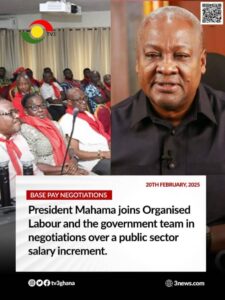
    President John Mahama’s direct involvement in public sector base pay negotiation has yielded a 10 percent increment for this year.


    The Tripartite Committee, made up of representatives from the government, employers, and organized labour associations, agreed to peg the minimum wage at GH₵19.97 as against the 2024 figure of GH₵18.15.


    Although, public sector workers have received the news with excitement, some labour experts have clashed with each other on the wage pay adjustment, opposing each other. Austin Gamey has described the 10% wage increase for public sector workers as excessive, warning that it could exacerbate inflationary pressures.


    “The issue is base-pay, and normally it should be based on productivity but we are yet to get there as a nation. We are so far not practicing the performance management system here in Ghana fully”, the labour consultant indicated in an interview, last week, reacting to the wage adjustment announcement.


    “The private sector responds well but the public sector doesn’t respond well. So, for fairness, the 10% is about the best for now. I would have preferred something else,” he stated.


    He further emphasized that even a 1% adjustment in public sector wages could push the economy into a higher inflationary bracket, ultimately affecting everyone, including the beneficiaries of the wage increase.


    “I would have preferred it lower. Because even a 1% adjustment on the public sector wage takes us to another inflationary bracket and that comes back to bite all of us including them,” he stated.


    While these negotiations are a late but necessary development, many believe the current wage falls far short of what is needed. Before the announcement was made, a former Secretary-General of the Trades Union Congress,  Dr. Yaw Baah – speaking at the opening of his labour consultancy firm, the Kaizen Institute for Labour Economics, in Tema, last week, –  had called on the Tripartite Committee to negotiate a better deal for public sector workers regarding the minimum wage.


    Mr Baah expressed strong concern about the 2024 minimum wage of GH¢18.15 (just over US$1), describing it as insufficient and insulting for public sector employees. He advocates for a substantial wage increase to more accurately reflect the contributions of these workers.


    “This is not the Ghana we wanted to build. This is not the Ghana Kwame Nkrumah envisioned. After 68 years of independence, the people of Ghana are working eight hours for just one dollar. This is a big shame. I hold both the government and employers accountable for keeping the minimum wage so low,” Dr. Baah stated.


    “It is simply wrong, and I hope that in these negotiations, employers will realize the gravity of this issue.”


    In addition to Baah’s concerns, Chairman of the National Development Planning Commission, Dr. Nii Moi Thompson highlighted the importance of training public sector workers to boost their productivity.


    “We need to focus on training for workers, entrepreneurs, and those managing the public sector. Fortunately, the President has appointed a minister responsible for public sector reforms. I am scheduled to meet the minister soon to strategize on these reforms,” Thompson said.


    The Kaizen Institute for Labour Economics, founded by Dr. Yaw Baah in 2024, is dedicated to supporting unions, employers, and government efforts to improve industrial relations, social partnership, and labor market outcomes. The institute places a special focus on employment, productivity, and wages.


  • National Economic Dialogue to guide Ghana’s medium term post-IMF strategies

    Caption: Ghana’s National Economic Dialogue on post-IMF strategies.

    By Toma Imirhe

    Reliable sources at the Ministry of Finance claim that although the President John Dramani Mahama administration is fully committed to the upcoming National Economic Dialogue, as promised in his 120 day social contract, the recommendations that emerge from the two day meeting may not have a major influence on the 2025 fiscal year budget proposals that Finance Minister Dr Cassiel Ato Forson will present to Parliament on March 11.

    Finance Minister officials, speaking privately and off record, give two core reasons for this.

    One is the sheer tightness of the timelines involved in preparing the 2025 budget. Although Dr Forson himself, his technical team at the Ministry and the President’s special advisor on the economy, Seth Terkper – who was himself the Finance Minister during President Mahama’s first term in office – have extensive practical experience in budget preparation, the impending Dialogue will end less than a week to the budget presentation to Parliament. This simply does not give enough time to incorporate the policy directions agreed at the Dialogue, and the consequent implications for budgetary allocations on both the expenditure and revenue sides.

    Normal practice requires government agencies to present budget proposals well in advance of the Finance Ministry’s actual allocations but this has been largely truncated by the change of political administration with ministers only being confirmed by Parliament a couple of weeks ago.

    The second reason is that Ghana is in the middle of a crucial International Monetary Fund programme which is supposed to release a US$3 billion financial bail out to the government, but this is subject to the Fund’s satisfaction with the country’s economic policies and consequent performance. Already, the Mahama administration has held talks with the Fund to renegotiate some key terms of the programme, such as the target to achieve tax revenues equivalent to 24% of Gross Domestic Product by 2026. The incumbent government correctly sees this as unattainable – the current ratio is below 16%  – and wants attainment of the target moved further down the line.

    However, while the IMF staff mission to Accra agreed in principle to consider adjusting some key aspects of the programme – and even has offered technical support towards this – the Fund wants its core to remain intact. But that core is its customary insistence on demand management driven policies which have always worked over the short term in the past, even as the Mahama administration rode to power on supply side expansionary policy promises.

    Government does not want populist supply side economic management proposals made at the impending dialogue, if incorporated into the 2025 budget, to turn the IMF away, just a month ahead of its 4th review of Ghana’s progress which should lead to approval of another tranche of the financial bailout which it direly needs.

    In addition to these considerations, left unsaid is government’s worries that such suggestions made at the Dialogue may conflict with the economic policy promises on which it rode to power.

    Consequent to all this, government has apparently decided to be guided by the reviewed IMF programme for now, and incorporate the sensible but deviant suggestions at the Dialogue into its medium term framework.

    However some finance experts worry that this tack is reminiscent of the strategy adopted by the Akufo Addo administration in 2017 which similarly postponed its supply side strategies until it exited from the previous IMF proramme in 2019 and then adopted them, ultimately taking the country back into macroeconomic instability. In response though, the  Mahama administration insists that its superior fiscal expenditure discipline  – and no COVID to throw a wrench in the fiscal position –   will ultimately produce much better results than what the Akufo Addo administration achieved.


  • Alex Mould leads transformative agenda at MiDA

    Alexander Mould


    Adnan Adams Mohammed

    Alexander Mould has assumed the position of acting Chief Executive Officer of the Millennium Development Authority (MiDA).


    Known for proven track-record of excellence and a citadel of expertise from both the private and public sectors, with over three decades in Finance, Energy and Governance.


    The former CEO of the National Petroleum Authority (NPA) and the Ghana National Petroleum Corporation (GNPC); where he spearheaded transformative reforms at both organizations, driving operational excellence and growth. At MiDA, he is expected to bring a fresh perspective on aligning the institution’s objectives with the government’s development priorities. However, during his inaugural address to the MiDA team, he emphasized his collaborative leadership style, acknowledging the wealth of experience within the organization.


    “I am, first and foremost, a people person,” Mr Mould stated, expressing his readiness to learn from the existing team. “I will be relying heavily on your expertise and institutional knowledge to bring me up to speed so we can collectively deliver the results expected from this important institution.”


    At MiDA, a key focus of Mr Mould’s vision involves strengthening the organization’s alignment with government’s initiatives, particularly the proposed 24-hour economy program. He has outlined plans to engage in substantive discussions with government stakeholders to identify opportunities for MiDA to take on a more prominent role in the nation’s development agenda.


    He highlighted the immediate priority of meaningful conversations with government officials to explore effectively integrating programmes that will support the 24-hour economy initiative.


    Mr. Mould pledged to work to synchronize MiDA’s activities with the government’s broader growth agenda, stressing that “MiDA needs to be in perfect sync with the government’s vision.”


    Emphasizing the importance of cross-ministerial collaboration, he stated that MiDA would actively work with various ministries to identify and potentially assume management of strategic projects, to, ensure effective project management and implementation, delivering tangible results for Ghana.


    Looking toward the future, Mr. Mould articulated an ambitious vision for his tenure at MiDA. He expressed gratitude to President Mahama for the opportunity, entrusting him to transform MiDA into a world-class Project Implementation Organization, to deliver his government’s flagship projects in support of the 24Hr Economy agendum.


    “The legacy I want to leave,” he shared “is to establish MiDA as the government of Ghana’s go-to project implementation unit.”


    The appointment of Alex Mould marks a new chapter for MiDA, with a renewed focus on alignment with national development goals and efficient project implementation. His emphasis on collaborative leadership and strategic alignment with government initiatives suggests a potentially transformative period ahead for the organization, as a key player in achieving the government’s broader growth agenda.