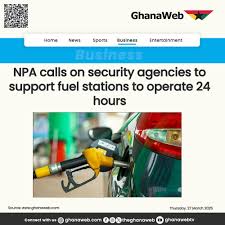
NPA partners security agencies for safe 24-hour fuel stations.
Adnan Adams Mohammed
The National Petroleum Authority (NPA) is seeking collaboration with various security agencies to ensure the safety of consumers and personnel at fuel stations across the country as they prepare to commence 24-hour operations.
The NPA has emphasized the importance of strict regulation and enforcement to protect the petroleum downstream industry from criminal activities.
The industry is highly susceptible to criminal activities, including fuel smuggling, illegal siphoning, and fraudulent transactions.
“We will need the active involvement of the National Intelligence Bureau (NIB), alongside the NPA’s intelligence unit and other security agencies like the Police, Customs, and Fire Service, to combat all forms of fuel-related crimes,” the Chief Executive of NPA, Godwin Edudzi Tameklo
Mr. Tameklo said at a special meeting with the Eastern Regional Minister, regional security heads, and key stakeholders at the Eastern Regional Coordinating Council (RCC) in Koforidua.
Meanwhile, he hinted at the NPA’s plans to provide specialized training for security agencies to enhance their capacity in tackling petroleum-related offenses.
Lawyer Tamaklo stressed that the government’s plan to roll out a 24-hour economy could only succeed if the security and safety of consumers and petroleum workers were assured.
“Petroleum is a hazardous product, and we cannot afford to overlook safety concerns. The NPA will work closely with the Fire Service and other security agencies to ensure the highest levels of safety and security,” he emphasized.
In a recent unfortunate incident, masked armed robbers attacked the Kansaworodo branch of the Total fuel station in the Sekondi-Takoradi Metropolis of the Western Region at dawn.
Fortunately, the keys to the safe were with the manager, who was not on the premises at the time, so the robbers left empty-handed.
The Eastern Regional Minister, Rita Akosua Adjei Awatey, pledged the support of the Regional Coordinating Council (RCC) and assured the NPA of her full cooperation in ensuring safety and regulatory compliance in the petroleum sector across the Eastern Region.
She also proposed integrating the Regional Security Council (REGSEC) into the NPA’s operations nationwide to strengthen security and improve collaboration.
Additionally, she commended the NPA’s commitment to consumer protection and regulatory enforcement.
Gov’t engages pension funds to revive capital market.
Adnan Adams Mohammed
The government, through the finance ministry, is considering access to the domestic capital market as it plans to pivot around pension funds in restoring investor confidence and driving economic stability.
To reignite the moribund interest of investors in Ghana’s lowly rated instruments, the government has assured it will not default on its financial commitments.
Per the Domestic Debt Exchange Programme (DDEP) calendar, the government has obligations in 2027 and 2028. However, the finance minister has assured that the government is proactively operationalizing the sinking fund to provide strong backing for longer-term bonds.
“Ghana will not default ever again, not on my watch”, Dr. Cassiel Ato Forson boasted when speaking to representatives of pensions fund in Accra last week emphasizing that reopening the capital market is in the collective interest of all stakeholders, as it will help lower inflation, stabilize the cedi, and restore confidence in financial markets.
Dr Ato Forson called for the support of pension funds in line with their core investment strategy, which is to invest in bonds.
The meeting, also attended by Minister for Labour, Jobs, and Employment, Dr. Rashid Pelpuo, and Deputy Finance Minister, Thomas Ampem Nyarko, saw stakeholders express cautious optimism.
While pension fund representatives welcomed the initiative, they also voiced concerns based on past experiences.
Dr. Forson acknowledged these concerns, reaffirming the government’s commitment to building a resilient and sustainable financial system.
Ghana Cedi records 5.3% depreciation against the US dollar in Q1 2025.
Adnan Adams Mohammed
Bank of Ghana data indicates that the Ghana Cedi lost 5.3% in value to the US dollar from January to March this year.
As at last week, the local currency traded averagely at a rate of GH¢15.53 to the US dollar on the interbank market. However, in January and February 2025, the local currency lost 5.3% and 3.9% in value respectively to the US dollar.
Unfortunately, the cedi recorded its worst depreciation of 9.20% to the Euro on the interbank market in quarter one of 2025, which traded at GH¢16.75 as at last week.
Also, the cedi lost 8.2% in value to the British pounds sterling, which traded at GH¢20.03 to one pound on the interbank market.
The potential upside however is that it is expected that a team from the International Monetary Policy (IMF) would visit Ghana this week to commence the fourth review of the US$3.0 billion Economic Credit Facility programme.
The team’s assessment would be focused on the country’s performance under the Fund programme so far and the 2025 Budget.
Analysts believe a successful review could pave the way for another tranche disbursement, which would help BoG’s sell-side intervention. This will consequently help stabilize the cedi.
CLEARING THE MISCONCEPTIONS ABOUT THE GOLDBOD (PART 2)
CLAIM 2: UNDER THE GOLDBOD, A PERSON INCLUDING A CHIEF, WILL REQUIRE A LICENSE TO HOLD OR KEEP GOLD, JEWELRY AND OTHER GOLD PRODUCTS. AND THAT FAILURE TO DO THAT, CONSTITUTES A CRIME UNDER THE GOLDBOD BILL.
RESPONSE: TOTALLY FALSE
No provision in the Goldbod Bill passed by Parliament and awaiting the assent of the President, criminalizes the mere holding, possession and/or storage of Gold.
What constitutes a crime under the Goldbod Bill (Clause 68 (1)) is the HOARDING of gold.
It is worthy of note, that hoarding is not the same as keeping or being in possession of Gold.
Clause 68(1) of the Goldbod bill provides:
“A person shall not, without lawful authority, HOARD gold without a license or authorization issued by the Gold Board”.
Hoard is defined under Clause 74 of the Goldbod Bill as “the accumulation or storage of a gold mining product beyond reasonable business needs, with the purpose of manipulating market conditions or creating artificial scarcity”.
More importantly, Clause 68(2) provides that:
Subsection (1)- which is the offense creation section on hoarding, “DOES NOT APPLY TO A PERSON IN POSSESSION OF GOLD FOR PERSONAL OR VALUE STORAGE PURPOSES”.
The purpose of Clause 68(1) of the Goldbod Bill, is to prevent situations where licensed agents of the Goldbod, given funds by the Goldbod to buy gold for the Goldbod, will hoard gold for the purpose of causing scarcity or create unfair competition or manipulate prices , among others.
It is therefore false that the Goldbod Bill criminalizes the possession of gold by a person or Chief.
On the contrary, one of the functions of the Goldbod is to promote value addition, particularly, local gold fabrication into coins, tablets, bars and other castings and mints for Ghanaians.
One of the reasons for this function, is to promote gold as a better store of value than the U.S. dollar with the aim of reducing pressure on the Ghana cedi.
Thus, the Goldbod will consciously campaign for Ghanaians to buy gold products such as coins, tablets, tokens etc. for purposes of value storage.
The claim that possessing gold for ancestral, traditional or personal reasons constitutes a crime under the GoldBod Bill is totally false.
CLEARING THE MISCONCEPTIONS ABOUT THE GOLDBOD (PART 1)
CLAIM 1: THE GOLDBOD IS A REGULATOR AND A COMMERCIAL PLAYER AT THE SAME TIME. HENCE, THERE WILL BE CONFLICT OF INTEREST IN ITS OPERATIONS.
RESPONSE: FALSE
The Goldbod is not a regulator and a commercial player in the sense or context being canvassed by some.
The Goldbod is simply a monopoly in the trading and export of gold.
The regulating function of the Goldbod relates only to its own licensed agents and not competitors.
The regulatory powers of the Goldbod are intended to ensure compliance with its Act and regulations by licensed service providers who trade for and on behalf of the Goldbod for the realization of the objects of the Goldbod.
For emphasis, the Goldbod will not be regulating competitors but rather, its own licensed agents. Thus, the issue of conflict of interest, does not arise at all.
“Researchers engage communities on illegal mining solutions.”
Adnan Adams Mohammed
As efforts are intensified to end illegal mining in Ghana especially in forest reserves, cocoa-growing areas and along water bodies, government is taking steps to ban all forms of mining in forest reserves.
In supporting these political efforts through use of legal regimes and security task-forces, the academia have committed to a new approach.
The Minister for Environment, Science, Technology, and Innovation, last week assured Ghanaians that steps to repeal Legislative Instrument (LI) 2462, which permits mining in forest reserves, are well underway. He noted that discussions with parliamentary leadership and key stakeholders have taken place, paving the way for the repeal process to be finalized soon.
“We have actually started the process. I engaged the Ranking Member on Subsidiary Legislation, Patrick Boamah, and other leadership members. We have agreed to lay it very soon”, Dr. Murtala Mohammed said indicating that “the controversial regulation is set to be repealed within the 120-day timeline promised by President John Mahama.”
He further explained that, due to ongoing budget discussions, the government opted to bypass a pre-laying process to fast-track the repeal to halt mining in forest reserves.
The academia’s approach
Meanwhile, the University Ghana, in its efforts to engage in multidisciplinary research that addresses societal challenges, has launched a two-year project to tackle the pressing issue of illegal mining in Ghana.
Led by a team of five researchers from the University, the Anti-Galamsey Project seeks to address the menace of illegal mining through research, advocacy and the application of linguistic and cultural strategies.
Operating under the theme, “Sharing Galamsey Research Findings and Doing Advocacy to Stop Galamsey in Ghana,” the project is envisioned to influence public attitudes, change behaviours and promote sustainable alternatives for affected communities.
The adoption of a holistic approach is also intended to provide actionable insights and practical strategies to combat illegal mining, which poses severe threats to communities, ecosystems and livelihoods across the country. This project underscores the University’s commitment to using academic expertise to drive national development and promote environmental sustainability.
The project is led by Prof. Gladys Nyarko Ansah from the Department of English, with team members including Prof. Richmond Nii Okai Aryeetey (FGA) of the School of Public Health, Prof. Abena Animwaa Yeboah-Banin, Head of the Department of Communication Studies, Dr. Margaret Ismaila of the Department of Linguistics and Mr. Bright Frimpong of the Department of Geography and Resource Development. The initiative is funded by the Research and Innovation Directorate.
Prof. Nyarko Ansah, sharing the project’s objectives during the launch laid emphasis on the importance of leveraging language to engage communities effectively. “We aim to raise awareness by sharing research findings, using appropriate cultural and linguistic frameworks. The project also seeks to empower communities to find sustainable livelihood alternatives while ensuring a bottom-up approach to advocacy,” she explained.
She highlighted how language shapes the discourse surrounding ‘galamsey’ noting that, much of the rhetoric has been framed as a “war discourse,” with phrases like, “we are at war,” “we need to fight,” and “we are in crisis; we need to take action.”
While acknowledging the urgency of the situation, she pointed out that such language can create resistance by establishing two opposing sides, supporting a top-down approach that often alienates communities and creates unnecessary enmity.
Prof. Nyarko Ansah advocated for a shift in strategy, suggesting the adoption of lessons from the fight against COVID-19, which relied heavily on collaboration and consensus building. She emphasised the importance of community mobilisation and a bottom-up approach to addressing galamsey, ensuring that communities have a voice in the process.
She also outlined key components of the project, including media campaigns that will produce compelling content for public dissemination and town hall meetings to make room for dialogue and active youth involvement. These efforts aim to influence attitudes, encourage sustainable practices and strengthen community participation. She expressed gratitude to the Research and Innovation Directorate(RID), the National Commission for Civic Education (NCCE) and other project partners for their invaluable contributions to the initiative so far.
Chairing the launch, Prof. Kwabena Frimpong-Boateng, FGA, former Minister for Environment, Science, Technology and Innovation, described ‘galamsey’ as a complex issue with widespread implications.
“Illegal mining impacts water bodies, forest reserves and involves directing mining waste into rivers. It is also exacerbated by the involvement of foreigners in small-scale mining,” he said.
Prof Frimpong-Booateng, who was the former Chairperson for the Inter-Ministerial Committee on Illegal Mining lamented the complacency of political leaders in addressing the crisis, stating, “Don’t trust politicians when it comes to this business. When they are under pressure from the grassroots, they will change their policies without informing those leading the campaign against illegal mining.”
He, however, expressed confidence in the project’s approach and pledged his full support, offering resources such as videos and pictures to aid its implementation.
Prof. Richmond Aryeetey, FGA, a member of the project team, presented an overview of actions taken so far to combat galamsey. He acknowledged various interventions, including government programmes, arrests, alternative livelihood initiatives and community mining schemes. He highlighted the need for more innovative and community-centered approaches to address the issue effectively.
“There is a lot that has been done, particularly in advocacy, to raise awareness about the scale of galamsey and its impact on livelihoods and health. Academia has also contributed through research and training,” he said. He noted, however, that many efforts from political, traditional and faith-based leaders have not translated into concrete action, reducing them to verbal commitments.
The project will incorporate media campaigns with compelling content, town hall meetings and youth involvement to promote sustainable solutions.
History of Artisanal Small-scale Mining
Artisanal small-scale mining dates back to the 15th century in Ghana. It is an important means of livelihood for many rural people, who use the income from mining to supplement meagre farming income. Ghanaian small-scale mining may be second only to agriculture in its ability to create jobs and boost the economy.
About one million people work directly in the sector, and approximately four million work in services dependent on small-scale mining.
With so many Ghanaians practicing small-scale mining, the government felt the need to regulate mining practices to streamline the sector’s contribution to the economy, regulate the use of resources by small-scale miners, and provide official marketing channels for gold that the sector produced.
In 1989, the government passed the Small-Scale Gold Mining Act, which introduced a licensing process. However, the process is highly bureaucratic, expensive, time-consuming, and riddled with corruption. Only those with money and political connections can secure licenses. Thus the process discourages many Ghanaians without money and influence from applying for and obtaining legal licenses. Since villages depended greatly on the mining sector, unlicensed small-scale mining continued.
Genesis of surge in illegal mining
The scale of illegal mining expanded greatly in the 2000s, when Ghana’s gold reserves and the surge in gold prices attracted many foreign miners from neighboring Burkina Faso, Cote d’Ivoire and countries such as Russia, Armenia, and China. Ghana saw an especially large influx of experienced Chinese miners.
Unregulated and illegal mining by Chinese migrants has severely challenged the Ghanaian government, local communities and rural populations. It has compromised the local economy and security, particularly the well-being and security of women. In response, the government passed the 2006 Minerals and Mining Act, which “reserved” small-scale mining for Ghanaian citizens, and instituted the Alternative Livelihood and Community Mining Program, which sought to diversify sources of livelihood in mining areas. But because of widespread government corruption among national and local officials, their implementation was unsuccessful. Therefore, Chinese miners’ galamsey continues.
Efforts to curb illegal mining
Prior to 2013, the Ghanaian government paid little attention to the proliferation of Chinese migrants in the small-scale mining sector. Although the government did pass the Minerals and Mining Act in 2006, the law was undermined by corrupt officials taking bribes from Chinese miners to allow them to continue mining.
When news media began reporting on galamsey issues in 2013, the government felt pressure to respond. President John Mahama established a task force made up of military personnel and other state security forces. The task force was instrumental in deporting over 4,500 Chinese miners and the seizure of mining equipment, but it also attempted to curtail illegal mining by Ghanaians. During presidential and parliamentary electoral campaigns in 2016, however,
the Mahama government held back on enforcement against Ghanaians due to pressures from some communities that threatened to vote against it for attempting to stop them from working in galamsey mines.
After Mahama’s electoral defeat, the new government under President Nana Akufo-Addo nonetheless sought to reinforce the ban on illegal mining. In 2017, an Inter-Ministerial Committee on Illegal Mining was set up to deal with the problem. The new government also launched Operation Vanguard, which deployed 400 military and police officials
in centers of illegal mining. Also, an Alternative Livelihood and Community Mining Program is also in place to train those previously involved in small-scale mining for work in other sectors. All have failed to curb illegal mining.
Obstacles to curbing illegal mining
Meanwhile, according to a policy brief ‘Galamsey in Ghana: Mitigating its Negative Effects’ published by Felicia Dede Addy and Shikshya Adhikari, they indicated that; among the many obstacles to curbing illegal mining are the corruption of government officials and heavy-handed crackdowns by the security forces. Other reasons include a weak judicial infrastructure and complicit local populations that directly benefit from illegal mining.
The policy brief proposed a peaceful means for curbing Chinese galamsey in Ghana through greater reliance on CSOs, emphasizing that, “forceful curbing of galamsey will only lead to more violence and abrupt loss of livelihoods. Grievances will increase, aggravating the challenges communities already face.
“The government’s ban on illegal mining and violent crackdowns are compounding the problem while failing to tackle it systematically. The problem of Chinese illegal mining in Ghana is both serious and complicated. It secures livelihoods for some and destroys it for others. It
creates dependencies, incites violence, reduces security, and severely depletes natural resources. By bringing together all stakeholders—the local mining communities, the Ghanaian government, and international actors—we believe mobilizing CSOs will help Ghanaian communities address the problem holistically.”
“Boosting tax compliance through financial institutions.”Prof Williams Coffie said .
Adnan Adams Mohammed
A finance expert has advised government to leverage on financial institutions to encourage tax compliance among small businesses.
Prof. William Coffie believes that existing financial institutions, such as microfinance agencies, the Ghana Enterprise Agency (GEA), and the yet-to-be-established Women’s Bank, could serve as avenues to promote tax compliance among small businesses.
Although, he acknowledged the challenges of formalizing the informal sector, he emphasized the need for a strategic approach to integrating the informal sector into the tax system.
“With the proposal to establish the Women’s Development Bank, we can use this and other small medium, and micro firms to comply with tax payment”, Head of the Department of Accounting at the University of Ghana Business School (UGBS), Prof. William Coffie pointed when speaking at a post-budget discussion organised by Lima Partners, last week.
“We have a number of these microfinance institutions and agencies such as the GEA, MASLOC, and now the Women’s Bank. Why don’t we use these avenues to encourage micro and small businesses to comply with the reporting and record-keeping of their taxes? And say that if a small business or a micro firm could produce your account for three years and continuously show that you are paying your taxes, we are going to support you with a micro-credit as a way to support them.
“I believe that once these small business owners know that there is support for them just by good behaviour, they may comply,” he stated.
Meanwhile, the Minister for Finance, Dr Cassiel Ato Forson, last week gave his assurance to heads of commercial banks that, the government remains committed to responsible economic management and will not repeat the financial instability experienced in 2022.
He explained that lessons learnt from past economic challenges, are guiding the government to implement measures that promote stability and growth.
“Reckless financial decisions would not be tolerated, as the government aims to restore confidence in the banking sector and the broader economy”, Dr Forson noted while speaking to the Managing Directors of commercial banks operating in Ghana last week.
The Finance Minister stressed that a coordinated policy approach would be essential in ensuring sustainable growth and protecting the financial system from future crises.
He urged banks to collaborate closely with the government in implementing strategies that enhance liquidity, encourage investment, and strengthen economic resilience.
Dr Forson reiterated that the government’s priority is to create a stable economic environment that benefits both financial institutions and the general public.
“Policies would be carefully designed to support long-term stability, ensuring that Ghana’s financial sector remains strong and capable of driving national development.”
“Gov’t to introduce debt ceiling for economic stability.”
Adnan Adams Mohammed
As government declares its resolve to managing Ghana’s debt sustainably, Dr Cassiel Ato Forson, the finance minister has agreed to the proposals of some economists with regards to legislating a public debt ceiling ratio and instituting a fiscal responsibility council.
In his proposal at the National Economic Dialogue 2025, the Director of the Institute of Statistical, Social and Economic Research (ISSER), Professor Peter Quartey, called for the establishment of an independent fiscal responsibility council with real enforcement powers and a legislated debt ceiling of 60% of Gross Domestic Product to ensure prudent economic management.
The revered economist explained that, Ghana’s borrowing patterns in recent years have been unsustainable, with funds largely spent on recurrent expenditure and interest payments rather than productive investments. Thereby he cautioned that, without stricter fiscal discipline ,the country risks worsening its economic vulnerabilities.
“Ghana spent a greater proportion of borrowed funds on recurrent expenditure and interest payments, especially in the last few years. Therefore a greater part of the debt accumulated was consumed rather than channeled into productive investment”, Prof Quartey further noted at his inaugural lecture at the Ghana Academy of Arts and Sciences, last week, on the topic “Debt, Investment, and Growth in Ghana: Did We Borrow to Consume?”.
“Fund’s investments were not effectively utilized due to a lack of competitive bidding and poor procurement practices. What is the way forward? One is to legislate a debt ceiling – a debt to GDP ratio of 60%. ECOWAS is proposing 70% but I think that is too high because if you slip from 70%, you are likely to get into the 80’s and we will cry for a debt exchange and restructuring.
“We certainly have to practice prudent financial management and establish an independent fiscal responsibility council; an independent one that can bite”, he said.
Consequently, Dr. Cassiel Ato Forson, at a high-profile meeting with managing directors of commercial banks in the country last week, announced that the government will be submitting a fiscal responsibility rule legislation to Parliament, setting a debt ceiling that the Ministry of Finance cannot exceed.
This move, he said, is part of efforts to entrench fiscal discipline and restore macroeconomic stability.
“As part of our commitment to fiscal discipline, we will be submitting to Parliament a fiscal responsibility rule and a debt ceiling that the Ministry of Finance cannot exceed,” he disclosed to the Managing Directors of commercial banks operating in Ghana.
“We are making massive investment cuts and resetting goods and services expenditure to 2023 levels. Our target is clear: achieve a primary surplus of 1.5% as we work to consolidate our gains and rebuild confidence.”
Moreover, Dr. Ato Forson expressed concerns about the country’s external debt service obligations.
Over the next four years, Ghana is expected to pay a total of US$8.7 billion in debt servicing, which represents 10.9% of the country’s GDP. The largest payments are expected to be concentrated in 2027 and 2028.
On the Domestic Debt Exchange Programme (DDEP), the Finance Minister assured that the government has no intention of defaulting.
“We do not intend to default. All outstanding holdouts have been paid, and we have built enough buffers to fully meet our DDEP obligations this year” he emphasized.
He also highlighted efforts to reduce reliance on Treasury bills and enhance policy coordination between fiscal and monetary authorities.
“We are also taking deliberate steps to reduce our reliance on the Treasury bill market and strengthen policy coordination between fiscal and monetary authorities. Stability is our priority, and we will not return to the turbulence of 2022. We will not be reckless,” he assured.
Dr. Forson acknowledged the crucial role of the banking sector in Ghana’s economic transformation and reaffirmed the government’s commitment to working closely with financial institutions.
Meanwhile, Kwamina Asomaning, President of the Ghana Association of Banks (GAB) and CEO of Stanbic Bank Ghana speaking at the meeting applauded the government’s budget for 2025, highlighting positive market reception and pledging the banking sector’s support for financial inclusion and capital market development.
In a related event, the Presidential Advisor on the economy, Seth Terkper, has defended the government’s 2025 budget, calling it a necessary step to implement austerity measures aimed at addressing the country’s external debt.
Terkper highlighted the evolution of Ghana’s debt portfolio over the years and stressed that alternative solutions will be crucial to prevent defaulting on external debt payments between 2026 and 2028.
“As we speak, we’ve just cleared the first (bond debt servicing payment), and three more major ones are ahead. For instance, one of them is an outlier, but the years 2026, 2027, and 2028 will be crucial. We must find a solution—whether through paying down the debt or refinancing”, Terkper said at the farewell ceremony honouring Simon Madjie, the former Executive Secretary of the American Chamber of Commerce-Ghana, now appointed as the Acting CEO of the Ghana Investment Promotion Centre (GIPC).
“Otherwise, there is a rare possibility of defaulting for a third time. That’s the reality, and this is the concern driving the tough austerity measures in the current budget,” the former finance minister stated.
Ghana’s Parliament Building , where the Gold Board Bill 2025 was recently introduced
By Toma Imirhe
Amid calls for clarity on the structure, purposes and activities of the Gold Board (referred to simply as Goldbod), being established by the President John Dramani Mahama administration, legislative proposals have now been drawn up for consideration by Parliament who will be required to turn them into law. However it is still unclear what the timelines for this process are since the bill has not yet been formally presented to Parliament.
With gold prices having passed US3,000 per ounce last week for the first time, Ghana is looking up to gold industry revenues to make up for the ongoing slump in cocoa revenues and stagnant oil revenues. Indeed, the ongoing surge on gold prices was the primary driver of Ghana’s record high trade surplus of over US$4 billion achieved in 2024.
The draft Act itself is: “To establish the Ghana Gold Board , regulate the purchase, trading and export of gold, promote value addition for the country’s gold resources and provide for related matters”
The Board will be a corporate body operating as a commercial venture, with the objectives to regulate, oversee, monitor and undertake the purchase, trading, assay, refining, export and other related activities, concerning gold and other precious minerals of Ghana.
To this end the Board will, among other things : promote the marketing of the country’s gold resources; institute policies and programmes to enhance local gold production and maximize the national benefit across the entire value chain of the gold resources of Ghana; provide support to small scale miners and mining communities; support environmentally sustainable and responsible mining practices; serve as the national authority with the exclusive power to grade, assay, and value gold produced or brought into Ghana and ensure the most favourable arrangement for their commercialization; serve as the national authority with the exclusive power to purchase, sell and export gold from the mining and marketing industry; set standards on the quality purity and weight of gold sold or exported from Ghana ; determine the pricing of gold on the local market; institute policies to promote vale addition to Ghana’s gold resources; combat gold smuggling; formalize the small scale mining industry; promote supply chain sustainability from environmental, legal and ethical perspectives; and grant operating licenses and maintain a register licensed operators.
Goldbod’s governing body will be a Board of Directors comprising a Chairperson and a CEO, both nominated by the President; one representative each from large scale mining firms, small scale miners and gold service providers; one representative each from the Ministry of Lands and Natural Resources, the Bank of Ghana and the Ministry of Finance; and three other persons with specialized knowledge and experience in matters relevant to the to the functions of the Board. Directors will hold office for a maximum of two four year terms.
The Ghana Goldbod will be funded by monies approved by Parliament ( the 2025 budget proposes US$279 million for starts) ; fees payable by gold service providers and licensees; revenues accruable to the Board from its activities; administrative penalties; loans and investments; donations and grants; and any other monies as approved by the Finance Minister.
Central to Goldbod’s activities will be the operation of a Goldbod Fund, which primarily will provide concessional funding for licensed small scale miners, provide them with the right environmentally friendly equipment, train them, facilitate precious minerals processing and refining, and support alternative livelihood programmes for mining communities .
The Fund will be financed from Goldbod’s own resources as approved by its Board of Directors, donations and grants, levies imposed by Parliament on gold mining products and services, and any monies as approved by Parliament.
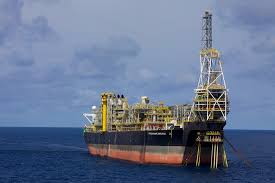
Ghana’s offshore oil production is projected to average 127,000 barrels per day in 2025, contributing significantly to national revenue.
Adnan Adams Mohammed
Ghana’s benchmark crude oil production for this year has been projected at an average of 126,994.49 barrels of crude oil per day (approximately 127,000) translating to an annual output of 46.35 million barrels.
These were arrived at based on a three-year simple average of each producing field’s actual and projected outputs in line with the Petroleum Revenue Management Act (PRMA) as announced by the finance minister in Parliament, last week, in accordance with the First Schedule (Section 17) of the PRMA (Act 815) as amended.
The Benchmark price for 2025 has been calculated as a seven-year moving average of prices at US$74.70 per barrel for crude oil and the Gas price is projected at US$7.11 per MMBtu. These are expected to yield projected petroleum receipts of US$1,011.36 million for 2025
“Mr Speaker, the Benchmark Revenue for 2025, which is the total petroleum receipts, net of the programmed receipts for GNPC is estimated at US$818.69 million”, Dr Cassiel Ato Forson noted when presenting the 2025 budget statement.
“Of this amount, a total of US$573.08 million representing 70% of the Benchmark Revenue has been allocated to the Annual Budget Funding Amount (ABFA), while the Ghana Petroleum Funds (GPFs) are programmed to receive US$245.61million.”
The GPFs receipts are would be distributed between the Ghana Stabilization Fund
(US$171.93 million) and Ghana Heritage Fund (US$73.68 million) in the ratio
of 70% to 30% in line with the PRMA.
The total receipt was calculated as per Ghana group share (liftings) of the total Benchmark crude oil output projection (46.35 million barrels) of 9.20 million barrels consisting of: royalty volume of 2.56 million barrels; and carried and participating interest volume of 6.64 million barrels, whilst, the Benchmark gas output, has been estimated at 118.14 trillion btu for 2025.
In monetary value terms, Ghana’s share of liftings are made up of Royalties (US$191.52 million), Carried and Participating Interest (US$495.92 million), Corporate Income Tax (US$319.70 million) and Surface Rentals (US$4.22 million).
Of the total receipts of US$1,011.36 million, US$192.67million has been programmed for the National Oil Company (GNPC) in respect of the equity financing cost (US$139.15 million) and share of the net Carried and Participating Interest (US$53.52 million)
Meanwhile, in the medium-term, total petroleum receipts are projected at US$1,159.66 million, US$1,209.33 million, and US$1,232.25 million, for, 2026, 2027, and 2028, respectively. This is based on Benchmark price per barrel of US$78.98, US$79.21 and US$75.50 for 2026, 2027, and 2028, respectively.
The Government maintained the cap on the Ghana Stabilization Fund at US$100 million, in line with Section 23(3) of the PRMA.