The family of the late business mogul, Alhaji Asoma Abu Banda, has denounced the 40th day funeral event being organised by unrelated family members at the State House as ‘illegitimate’.
The Abu Banda family has therefore cautioned the general public and lovers of the late Alhaji Asoma Banda to disassociated itself from an unauthorised funeral.
The family, at a press conference held at the Alhaji Banda’s mosque at Airport Residential Area, addressed the media and public in the presence of his siblings and other family members indicated that, the late Alhaji Banda before he passed requested that ‘no state funeral should be organised fore him in his absence’ and wants to honor his request.
“Alhaji Asoma Abu Banda had specifically requested to be buried in the mosque, alongside a mausoleum prepared for both himself and his wife of 51 years, Mrs. Cassandra Asoma Banda, with whom he shared a devout faith”, the Head of Family, Alhaji Mohammed Abu Banda, said.
Alhaji Mohammed, who is also the Chief of Banda in the Ashanti Region, emphasised the family’s collective commitment to preserving the legacy, dignity, and religious wishes of the late Alhaji Asoma Abu Banda.
“My late brother passed away on the 1st of March 2025, and in accordance with his wishes and Islamic tradition, I personally laid him to rest right here in the mosque he built to honour the religion he cherished,” said Alhaji Mohammed.
However, addressing what he described as a deeply concerning development, Alhaji Mohammed revealed that one Alhaji Abdullah Khalifa, also known as Alhaji Abomour, had taken unilateral steps to organise an unauthorised funeral service at the State House.
In a strong and clear statement, he noted: “Alhaji Abdullah Khalifa is not the Head of the Abu Banda Family. The funeral at the State House is not sanctioned by the family or the state. The Abu Banda Family has no knowledge of this event.
“The public is being misled by invitations issued by Alhaji Khalifa. The family completely dissociates itself from this unauthorised gathering.”
He strongly stated that “Alhaji Abdullah Khalifa is not a member of the Abu Banda family.”
Meanwhile, he invited all well-wishers and the public to the official 40-day funeral service, scheduled for Thursday, 10th April 2025 at 10:00 am, at the same mosque in the Airport Residential area. The service will be led by the National Chief Imam, with Qur’anic recitation and prayers in honour of the late Alhaji Asoma Abu Banda.
Telecom operators halt E-Levy charges, boosting digital transactions.
Adnan Adams Mohammed
Telecommunication Operators in Ghana have been directed by the Ghana Revenue Authority to cease collection of the Electronic Transfer Levy (E-Levy) effective April 2, 2025.
This comes as President John Dramani Mahama assented to the Electronic Transfer Levy Act, 2022 (Act 1075) and the Electronic Transfer Levy (Amendment) Act, 2022 (Act 1089) bill, which abolishes the 1% E-levy.
However, MTN Ghana, a major player in the industry, initially claimed that it could not stop the E-Levy collection for fear of breaching Bank of Ghana’s regulations explaining, the process must go through regulatory approval. Although, it has since stopped charging the levy having received the requisite regulatory directive and has made the necessary refunds in line with the demands of the Ghana Revenue Authority.
“There is a process that has to be followed. I can’t abolish E-Levy until I’m told to do it. If I do it ahead of time, the Bank of Ghana will catch me,” the CEO, Stephen Blewett said while speaking at MTN House in Accra, on Wednesday, April 2, last week. He emphasized that while the government had signaled its intention to remove the levy, telecom operators like MTN must follow official directives before making changes.
More importantly, Blewett also highlighted the negative impact of the E-Levy on mobile money transactions and expressed optimism that its removal would revitalize the sector.
“The reason for the abolishment of E-Levy is to encourage momentum in mobile money,” he explained.
He acknowledged that the tax removal is expected to boost digital transactions and financial inclusion.
“We will follow the process. And once it’s gone, mobile money will regain its strength.”
The E-Levy, initially introduced at 1.75% before being reduced to 1%, taxed electronic transactions, including mobile money payments, bank transfers, and inward remittances. Since its introduction in 2022, it has faced widespread criticism, with opponents arguing that it imposed an additional financial burden on citizens and discouraged digital transactions.
GRA, in it directive communicated the following guidelines, thus:
1. The GRA Electronic Transfer Levy Management and Assurance System (ELMAS) will automatically return a “no charge” on all transactions posted to it by entities from midnight.
2. Charging Entities must cease applying the 1% E-Levy from midnight on all their channels.
3. Charging Entities must immediately process refunds for any E-Levy amounts deducted from customers effective today, 2nd April 2025. Entities are to establish an expedited refund process to handle such cases promptly and maintain proper documentation of all refunds processed. Reports of such refunds must be submitted to GRA.
4. Charging Entities are to take the necessary steps to file and pay all outstanding E- Levy charged and collected on all transactions that occurred before 2nd April 2025.
5. For effective reconciliation and in accordance with Section 33A of the Revenue Administration Act, 2016 (Act 915) as amended, entities must continue to post all electronic transfer transactions to ELMAS until further directives are provided.
6. All entities must maintain electronic transfer records for at least six (6) years as stipulated in Section 27(3) of the Revenue Administration Act, 2016 (Act 915).
“Please be informed that failure to comply with the above directives constitutes an offence and sanctions will be imposed as prescribed by law,” GRA admonished, cautioning it “will conduct regular compliance checks to ensure adherence to these directives”, the statement signed by Edward Apenteng Gyamerah, Commissioner, Domestic Tax Revenue Division (GRA), noted.
Consequently, the Association of Ghana Industries (AGI) has welcomed the removal of the 1% E-Levy, stating that it will boost digital financial transactions and reduce the cost of doing business in Ghana.Ghanaian fashion
The CEO of AGI, Seth Twum Akwaboah, commended the government for its decision, highlighting its positive impact on businesses, especially small and medium enterprises (SMEs).
Seventy-five percent of our members are SMEs, and for them, digital transactions are essential. Any additional cost discourages their use. The removal of the levy will not only cut costs but also encourage more businesses to embrace digital financial services and electronic money transfers.
“It’s a commitment the President made, and now that it has been fulfilled, we look forward to seeing its impact on business growth”, the CEO of AGI said.
Also, Ing. Dr. Kenneth Ashigbey, CEO of the Ghana Chamber of Telecommunications, stressed the broader economic benefits of eliminating the E-Levy.
“With this removal, we expect an increase in both the volume and value of digital transactions. This growth will boost profitability for financial institutions, leading to higher corporate tax revenues for the government, “he noted.
He added: “Additionally, more digital transactions will reduce the cost of printing physical currency, benefiting the Bank of Ghana. It will also generate valuable data for policymakers to enhance fiscal and monetary strategies,”
Ing. Dr. Ashigbey also noted that the removal of the E-Levy aligns with the government’s financial inclusion strategy, fostering a more digitized economy while easing financial burdens on businesses and consumers alike.
IMF begins 4th review as Ghana eyes waivers for missed targets.
Adnan Adams Mohammed
The International Monetary Fund (IMF) and Ghana’s economic team have begun the fourth review of the Extended Credit Facility (ECF) programme to Ghana.
Much is expected from this review as it is the first of a new political administration which has shown much will to commit to fiscal discipline while improving living standards of the citizenry.
To this, an economist and lecturer at University of Ghana Business School believes Ghana is likely to obtain waivers on some of its performance targets, suggesting that the IMF will likely accommodate some of the missed targets as the President Mahama administration is new.
“We definitely would miss some targets. No question about that”, Professor Patrick Asuming pointed. “The period for this ends 31st December (2024). We missed some of the performance criteria. We definitely missed the inflation target. We probably missed some of the fiscal targets, in particular the deficit target.
“I think we also missed a couple of structural targets. But I think as a new government, probably the IMF will be willing to cut them some slack.
Prof Asuming emphasized that the current government has demonstrated commitment to fiscal discipline, therefore, securing waivers would provide some flexibility in meeting program targets, particularly in the face of economic challenges.
“The government seems aggressive in trying to implement its fiscal programmes. I have seen that they have passed the Public Financial Management Act,” he said.
Meanwhile, Prof Asuming has also urged the government to maintain transparency in its negotiations on Value Added Tax reforms.
“We don’t want a situation where they go and agree something with the IMF when the Ghanaian academia as well as the business community is not fully informed,” he added.
The ongoing review is a critical step in Ghana’s engagement with the IMF, as the country seeks to stay on track with its economic recovery program.
The two-week mission, which runs from April 2 to April 15, will assess Ghana’s economic performance and progress on structural reforms under the IMF-backed programme.
The review began with discussions at the Ministry of Finance and the Bank of Ghana, focusing on the country’s fiscal performance for 2024.
Over the next two weeks, the IMF delegation will engage with senior government officials, the central bank, and other stakeholders to evaluate key economic indicators, including inflation control, monetary policy, and structural reforms.
The mission will also assess Ghana’s progress in meeting IMF targets related to fiscal discipline, economic stabilization, and debt restructuring.
The outcome will also determine whether Ghana qualifies for the next tranche of financial support from the IMF, which is crucial for maintaining macroeconomic stability.
Finance Minister, Dr. Cassiel Ato Forson emphasized the government’s commitment to economic reforms, citing the passage of transformative tax amendment bills, public procurement reforms, and policies in the 2025 Budget.
He expressed confidence that with positive macroeconomic trends, Ghana’s economy could stabilize by May 2025, and stressed the importance of concluding the review on schedule. The final statement from the IMF is expected on April 15.
U.S. tariff sparks concern among Ghanaian exporters.
Adnan Adams Mohammed
Ghanaian exporters have reacted to the 10% tariff adjustment by the United States against all imports from Ghana highlighting a threat to Ghana-US bilateral trade relations.
The Importers and Exporters Association of Ghana indicates that the imposition of the tariffs could adversely impact the business community, particularly those involved in export activities.
The U.S current administration under President Donald Trump has in the past days embarked on tariff hikes in what he describes as trade and economic transformation in favour of the U.S economy including 14% tariffs on Nigeria, 34% tariffs on Chinese imports and a 20% tax on goods from the European Union. These measures have heightened global trade tensions and sparked mixed reactions from world leaders.
“I must say it is a big blow to the Ghanaian business community, especially the exporters,” Samson Asaki Awingobit, the Executive Secretary of the Importers and Exporters Association of Ghana noted in his reaction to the US government’s decision.
He called on the Government of Ghana to address the issue and provide solutions to mitigate the effects of the tariff.
“We believe that the Government of Ghana will definitely have to tell us something about what they are going to do to salvage the situation at this point in time,” he added.
According to the White House however, the measures are reciprocal tariffs designed to counter what the US perceives as unfair trade practices. Speaking from the Rose Garden, President Trump defended the tariffs as part of a national economic emergency, arguing that they were necessary to protect domestic manufacturing and counter decades of what he described as unfair economic practices.
Meanwhile, a veteran finance and economic journalist has waded in the debate as to the possible impact of the US tariffs adjustment, asserting that, the new condition provides double edge impact.
“To be sure, there will be negative repercussions for Ghana, a country that now exports somewhere between US$2.4 billion and US$2.7 billion to the United States annually. However, the public reaction by many trade analysts and economic commentators has been completely over the top – yes there will be some degree of threat to the country’s foreign exchange earnings and even more definitely, there will be some job losses, but altogether, the new situation is not a major threat to the Ghanaian economy.
“Indeed, properly handled it may present major opportunities.”
He admonished that, “First of all, government should not be in any hurry to announce retaliatory tariffs immediately as they would serve little purpose. Not only does America not rank among Ghana’s top export markets, but even more importantly, Ghana maintains a healthy trade surplus with that country. Indeed, the imposition of the lowest baseline tariff on Ghana in part reflects America’s relative disinterest in dramatically changing its trade relationship with us. However an immediate, unmeasured retaliation by Ghana could serve to stoke a fire that has barely been lit.”
Again, he stressed that, “the structure of Ghana’s exports to the US means that the tariffs will not significantly reduce our export earnings from that country since the primary exports are cocoa beans and crude oil, two commodities that America direly needs.
“Indeed, the biggest threat to Ghana is the fate of the many small sized enterprises that sell all sorts of non traditional exports to that country in fragmented volumes and consequently relatively small values. While any reduction in demand for such exports would not dramatically reduce Ghana’s overall export revenues derived from America, there is the real possibility of significant job losses, especially among small enterprises whose exports to the US are their primary source of income.
“For such enterprises therefore there is the need to identify and exploit export markets in other parts of the world, which certainly exist; after all, who could have predicted, three decades ago that China would today provide Ghana with its largest export market. Besides, the African Continental Free Trade Agreement (AfCFTA) has opened the door to vastly increased exports, as well as imports, from fellow African countries on preferential terms.”
Apparently, the US Ambassador to Ghana, Virginia Evelyn Palmer, has reassured Ghanaians about the resilience of the U.S.-Ghana trade relationship, which currently exceeds US$3 billion in bilateral trade and investment. She expressed confidence that Ghana’s key exports, such as gold and gas, would remain vital to global trade and would not be significantly affected by U.S. policy shifts.
“The life-saving programmes are all to be continued. The new face partnership will maintain all of the life-saving programmes. The U.S. and Ghana have a very warm, close relationship, as you all know, and that is founded on four pillars.
“We have the historical and cultural [ties]. Also, more than US$3 billion in bilateral trade investment is one of the key pillars. There are also goods and services—gold coming from here, gas coming from here—and we have automobiles and pharmaceuticals coming from the United States.
“So, it is something that builds prosperity in all the countries. It is all to say that no matter the changes in language and no matter the change in focus, Ghana remains an important part of the United States, and we will continue to be so,” she stated.
Palmer’s remarks reinforce the enduring strength of the U.S.-Ghana partnership, even as radically new global trade policies evolve.
Seidu Agongo urges alignment of politics with business to drive development.
Adnan Adams Mohammed
A Ghanaian entrepreneur has called for deliberate efforts to align political administration with business development and empowerment.
The successful businessman believes that is the only way to drive Ghana’s sustainable economic development, warning that the country’s progress will remain stunted if the two do not align.
Seidu Agongo, the Chief Executive of defunct Heritage Bank in an interview last week highlighted the challenges business leaders face and the need for policymakers to deliberately adopt business perspectives into decision-making.
“The only way that we can get Ghana to develop is if politicians align with businessmen”, he said.
“Business people face so many problems to which they have to find solutions, so if you are able to get a businessman to sit with the politician and let him understand the business perspective and share ideas, we’ll go a long way,” he posited.
Being a byproduct of political ‘witch-hunting’ with his bank allegedly politically targeted by the former President Akufo-Addo administration, Mr Agongo expressed concern over the lack of practical business experience among some government officials, arguing that many politicians make critical decisions affecting millions without firsthand knowledge of the entrepreneurial landscape.
“Sometimes you have a politician who has never ventured into any business nor registered a company before. He just comes from school and becomes a minister in a particular sector and is supposed to make decisions for 34 million people, including business people,” Mr. Agongo remarked.
Stressing on the fact that Ghana lacks the necessary institutional frameworks to correct policy missteps, he pointed out that this makes it even more crucial for political leaders to engage directly with experienced business figures.
He further suggested that successful entrepreneurs like himself, Ibrahim Mahama, and Zoomlion’s Joseph Siaw Agyepong could make a lasting impact on society by guiding the next generation and helping them avoid costly mistakes.
“Let’s assume I, as a businessman, my brother Ibrahim Mahama as a businessman, and Zoomlion’s Agyepong, as a businessman, decide to adopt 300 kids each and mentor them so they don’t make the mistakes we have made—because some mistakes are grievous – can you imagine the knock-on effect on their families and society in general and the transformation we can make without depending on the World Bank, USAID, etc.? This can turn Ghana around because we become better when we depend on ourselves,” he said.
Mr Agongo’s call comes amid concerns about youth unemployment and the need for local mentorship programmes that reduce reliance on foreign aid and intervention.
He urged business leaders, religious figures, and other influential people to invest their time and resources in grooming young talent.
“Good friends like Ibrahim Mahama, Zoomlion’s Agyepong, most of the businesspeople, pastors, and people in leadership should try as much as possible to adopt at least 200 or 300 young guys and mentor them. Let’s see how best we can build them up to achieve whatever they desire because, at the end of the day, the wealth that we are looking for will not go with us into our grave,” he said.
According to Mr Agongo, a well-mentored generation would be able to sustain and expand the legacies of today’s business leaders, rather than mismanaging inherited wealth.
“When we don’t even give the right training to our kids in life, trust me, they are going to sell it like kelewele,” he cautioned, referring to the popular Ghanaian street food.
Early data for 2025 from the Bank of Ghana suggests that the surprisingly strong economic growth Ghana achieved in 2024 will continue this year.
Data released at the latest Monetary Policy Committee press briefing at the end of March reveals that the first two months of this year have recorded increased economic activity, improved sentiments by both consumers and businesses as well as a build-up in business inventories. The central bank’s real sector indicators point to a sustained improvement in economicactivity, amid significantly improved business and consumer sentiments.
Theupdated Composite Index of Economic Activity (CIEA) rose by 5.7% year- on-year in January 2025, relative to 1.1% in December and 3.5% in January 2024, driven by increased consumption, international trade activities, and private sector credit growth. The CIEA measures economic activity, which is different from the Ghana Statistical Service’s measure of changes in economic output (Gross Domestic Product growth) but since economic activity is directly related to economic output, both measures tend to correlate with each other, loosely at least.
The BoG’s latest consumer confidence survey puts the index at 100.2 in February this year, up from 90.2 in December last year and 92.0 in February 2024. Similarly, the business confidence survey’s index reached 99.7 in February this year, up from 96.0 a year earlier. The index stood at 96.6 in December last year.
Enthused BoG Governor, Dr Johnson Asiama: “The confidence surveys conducted in February 2025 showed significantimprovement in both consumer and business sentiments, buoyed by expectations foran improved macroeconomic environment”.
Added to all this, the Ghana Purchasing Managers’ Index moved above the 50-benchmark in February, implying increases in new orders by companies. The PMI measures the level of inventory holdings by businesses and an increase in the index indicates a build-up in inventory levels in anticipation of increased production and sales.
Ghana’s economic growth continued to rebound in 2024, exceeding initial expectations. Provisional data from the Ghana Statistical Service estimated real GDP growth at 5.7% in 2024, higher than the programmed growth rate of 4.0% for 2024, and the 3.1% recorded in 2023. Non-oil GDP grew at 6.0% compared with 3.6% recorded in 2023.
However, the President John Mahama administration has targeted growth of at least 4.0% for 2025, a target which the Parliamentary opposition has criticized as being too low, compared with the growth rate it left last year.
But the latest data from the BoG suggests that economic growth this year could match or even exceed last year’s performance if the early year trends continue over most of the rest of the year. Already, commercial banks are showing a willingness to increase their credit to the private sector in the face of treasury bill rates turning negative and loan quality starting to improve.
In February 2025, private sector credit recorded 26.9% annual growth, compared with 5.1% in February 2024. In real terms, credit growth was 3.1%, compared with a decline of 14.7% in February 2024.
Strong economic growth prospects have encouraged the BoG to focus on dragging down inflation – which has stubbornly stuck at just over 23% for several months now – through monetary tightening in the form of a 100 basis points rise in the Monetary Policy Rate to 28%.
However Ghana’s forecasted strong growth for 2025 faces headwinds from global events in the form of the evolving global trade war instigated by America’s President Trump administration last week and restrictive monetary policy as central banks around the world slow the pace of monetary easing in response to the stalling of disinflation.
“The persistence of these external headwinds may spill over to the domestic economy through the trade and financial channels, highlighting the need for policy to remain proactive” warned Dr Asiama although “both business and consumer confidence have improved, and private
sector credit growth is recovering, suggesting a positive outlook for the economy”.
The Ghana Zangos Forum has used the Eid period to celebrate Alhaji Naziru Seidu Mohammed.
They described him as the light of inspiration and motivation in Zango partisan politics.
“For the two decades, Alhaji Naziru Seidu Mohammed, have held the front light for Zango youth in political communications and diplomacy”, the group said in a press release. “His endurance and tenacity birthed interest and inspiration to many Zango youth to take up the challenge of becoming interested in politics.
“Not only limited to the Zango youth, many communicators in the NDC today was once mentored or developed their passion for political communications through Alhaji Naziru.”
The group further expressed confidence in the organisational leadership and managerial skills of Alhaji Naziru as remarkable and can serve in any national office.
“Alhaji Naziru is well-made, self composed and has the qualities to represent Ghana in every capacity locally and internationally.
” Going through his resume; we were woowed to know his academic credentials and super-rich past working experience in both public and private capacities”, the statement noted.
“Such a great resource he has been. It is of no doubt that, the Ghana Zango Forum, describe him as the ‘Light of Zango Youth’.”
Read full statement:
Ghana Zangos Forum
Press Release:
Hajj Naziru: the ‘Light of Zango Youth’
In the sphere of political communications, there cannot be an equation to a persona that represent a political party nationally and internationally without personally mastering the act of discipline, self motivated, dedicated and being tactful. Aside, being personally resourceful both financially and intellectually.
For the two decades, Alhaji Naziru Seidu Mohammed, have held the front light for Zango youth in political communications and diplomacy. His endurance and tenacity birthed interest and inspiration to many Zango youth to take up the challenge of becoming interested in politics.
Not only limited to the Zango youth, many communicators in the NDC today was once mentored or developed their passion for political communications through Alhaji Naziru.
Such a great resource he has been. It is of no doubt that, the Ghana Zango Forum, describe him as the ‘Light of Zango Youth’.
We wish to congratulate Alhaji Naziru for his show of statemanship, strength, steadfastness and perseverance in the midst of all odds.
Despite, his long dedicated service to the NDC, over 20 years of serving the NDC as a communicator, missing the position of National Deputy Communication Officer thrice by a slim margin to his opponent whom, hitherto, are financially well resourced, Alhaji Naziru never relented in his dedicated service to the NDC.
This show of strength deeply motivate the Zango youth to emulate such tenacity and virtues in our political journey.
Alhaji Naziru will always encourage anyone who calls on him for guidance and mentorship and admonish you the person to master the act of patience.
We, however, plead to draw the attention of the leadership of the NDC and the H. E President John Mahama to, consider rewarding hard work and dedication.
This will go a long way to send a strong message to we the youth of Ghana to be hopeful that; hard work and dedication pays.
Alhaji Naziru is well-made, self composed and has the qualities to represent Ghana in every capacity locally and internationally.
Going through his resume; we were woowed to know his academic credentials and super-rich past working experience in both public and private capacities.
We acknowledge that, every fortune or misfortune in the life of a person by the Decree of Almighty of Allah, so as we pray that, our wishes come true.
Ghana’s major export commodities prices traded with mixed fortunes on the international commodities market in early 2025.
Gold traded at over US$3,000 per fine ounce for the very first time on March 14, this is after gold prices averaged US$2,897.3 per fine ounce in February this year, indicating year-on-year price growth of 9.7 percent.
“Gold prices crossed the US$3,000 per fine ounce on March 14, 2025, on account of heightened economic uncertainty triggered by the trade and geopolitical tensions, persistent inflation, and weakening US dollar”, the Governor of the Bank of Ghana, Dr Johnson Asiama told journalists last week.
Similarly, crude oil prices recorded a marginal annual growth of 2.4 percent to settle at an average price of US$74.95 per barrel.
Cocoa prices, however, declined by 8.5 percent driven by improving supply outlook for the current 2024/25 season, Dr Asiama stated.
Meanwhile, in the banking sector, Dr Asiama said that banks’ performance continued to improve.
Total bank assets recorded year on year 34.0 percent growth at the end of February 2025 relative to 12.1 percent growth, over the previous year, he said.
With regulatory reliefs, the banking industry’s Capital Adequacy Ratio (CAR) was higher at 14.4 percent compared to 13.6 percent in the same period last year, Dr Asiama added.
“Without reliefs, CAR was 12.1 percent. The industry’s Non-Performing Loan (NPL) ratio declined to 22.6 percent in February 2025 from 24.6 percent in February 2024. Excluding the loans in the loss category, which are fully provisioned, the NPL ratio as at end-February 2025 was 8.9 percent,” he said.
Dr Asiama further stated that overall, the Financial Soundness Indicators showed broad improvements in asset growth, solvency, liquidity, efficiency, and profitability.
The fiscal policy stance was more expansionary than expected in 2024. The 2024 fiscal deficit, on a commitment basis, was 7.9 percent of GDP against a target of 3.8 percent of GDP, on the back of higher expenditures than target.
“This notwithstanding, early indications from banking sector data suggest some improvements in fiscal performance in early 2025.
“This, along with the commitment to fiscal consolidation presented in the 2025 budget, should support the fiscal outlook. Also, the ratio of public debt to GDP declined supported by the debt restructuring,” he said.
Parliament has approved two most important bills which give a lifeline to the reset agenda as envisioned by the President John Dramani Mahama led administration.
The Appropriation bill and Ghana Gold Board bill are key instruments that allow the government to execute crucial economic policies stated in the 2025 budget statement. While the Appropriation bill allows the government to spend its budgetary allocations from the Consolidated Fund, the Goldbod bill sets a solid foundation for the restructuring of Ghana’s gold trading and export framework.
The government is permitted to spend GH¢293 billion from the Consolidated Fund and other public funds for the 2025 financial year per the Appropriation bill with GH¢68 billion allocated for wages and salaries and GH¢13 billion for the payment of arrears.
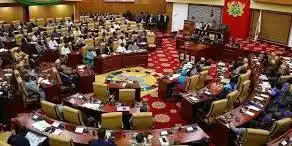
“Hon. members, the Appropriation 2025 is now read the third time and accordingly passed”, the First Deputy Speaker, Bernard Ahiafor, said in Parliament concluding the approval of the 2025 Appropriation Bill.
Meanwhile, the Goldbod bill is to regulate the gold industry, enhance transparency and traceability, and boost foreign exchange earnings.
It will oversee the purchase, sale, and export of gold, generating forex revenue needed to stabilize the cedi.
Despite criticism from the minority caucus, who argued that the bill promotes illegal mining activities, also known as ‘galamsey’, the house approved the bill by a majority decision.
The Majority Leader, Mahama Ayariga hailed the bill as a landmark legislation.
“Mr. Speaker, this is a landmark legislation. And those of us who sat through the night to the morning to pass this historic legislation Bill should be proud of ourselves. We have vindicated the trust and confidence Ghanaians reposed in us” he asserted.
“Indeed, the 24-hour economy has started in this chamber.”
This followed a walkout by the Minority in Parliament during the consideration of the Ghana Gold Board Bill 2025.
This was in response to the First Deputy Speaker, Bernard Ahiafor, disregarding their request to reconvene at 10 am on Saturday, March 29, to discuss the bill after passing the 2025 Appropriation Bill.
Addressing journalists, the Minority Leader, Alexander Afenyo-Markin, questioned the government’s commitment to combating illegal mining, citing the allocation of GH¢4.6 billion to the policy as a major concern.
Afenyo-Markin added, “If you say bring an enactment and say your focus is on small-scale mining, all of us in this country know that small-scale mining is galamsey. Is this government really ready to fight galamsey?
“How do you say you’re establishing a new entity that is going to monopolize the purchase of gold from small-scale miners, and now you are going to regulate galamsey and you’re going to give them money?”
Also, former Finance Minister, Dr Mohamed Amin Adam raised concerns over the structure of the proposed GoldBod initiative, cautioning that its design could create conflicts of interest.
Speaking in Parliament during deliberations on the GoldBod Bill, the Ranking Member on Parliament’s Finance Committee argued that international best practices discourage institutions from combining commercial operations with regulatory functions.
“The model where institutions are established to play multiple roles—combining commercial functions with regulatory oversight—is being discouraged worldwide,” he stated.
He explained that best practices require a clear separation between commercial and regulatory functions to ensure proper checks and balances.
“The best practice now is to separate the commercial role from the regulatory function so that effective oversight can be maintained,” he added.
Consequently, Dr. Amin Adam warned that, if passed in its current form, the GoldBod Bill would create an entity that trades, exports, regulates, and adjudicates disputes in the gold sector.
“If this bill is passed, GoldBod will be a commercial entity that trades and exports gold while also acting as a regulator and court. That is not right,” he cautioned.
He cited the oil sector as an example where Ghana successfully separated commercial and regulatory roles, pointing to the Petroleum Commission and the Ghana National Petroleum Corporation (GNPC).
“In the oil industry, the previous administration separated the Petroleum Commission from GNPC, ensuring that GNPC focused purely on commercial operations while the Petroleum Commission handled regulation,” he explained.
Dr. Amin Adam warned that failing to implement a similar structure for GoldBod could create conflicts of interest between regulatory oversight and commercial activities.
The GoldBod initiative, proposed by the government, aims to formalize gold trading, particularly within the small-scale mining sector, while promoting traceability to enhance Ghana’s international gold reputation.
The government envisions GoldBod as the sole buyer of gold from licensed small-scale miners through accredited aggregators, as well as the sole assayer. Officials argue that this approach will curb gold smuggling, improve foreign exchange reserves, and stabilize the cedi.
Currently, gold purchasing in Ghana involves multiple entities, including Precious Minerals Marketing Company (PMMC), Bank of Ghana (BoG), Minerals Income Investment Fund (MIIF), private gold aggregators
However, Dr. Amin Adam commended the Bank of Ghana’s Domestic Gold Purchase Programme, launched in June 2021, for significantly boosting Ghana’s gold reserves.
He noted that before the initiative, Ghana’s total gold reserves stood at 8.74 tonnes. However, by the end of 2024, this had increased to 30.5 tonnes—a remarkable improvement in just three years.
“Since independence, Ghana’s gold reserves stood at 8.74 tonnes. But within three years, we increased this to 30.5 tonnes. This shows that the previous gold purchase program was effective,” he said.
The Bank of Ghana under its new executive management is continuing the domestic gold purchase programme but is discontinuing the gold for oil initiative introduced by the previous administration.
Dr. Amin Adam’s remarks underscore concerns about potential conflicts of interest in the GoldBod structure, urging Parliament to ensure proper oversight in the final legislation.
BoG raises interest rate to 28% to tackle inflation.
By Toma Imirhe
Last week the Bank of Ghana announced a 100 basis points hike in its benchmark Monetary Policy Rate following the majority decision made by its newly reconstituted Monetary Policy Committee, led by new central bank Governor Dr Johnson Asiama, which had met for three days earlier in the week. This takes the MPR up to 28%, from the 27%, at which it had been held since September last year, itself the result of a sharp 200 basis points cut from the erstwhile 29%.
The MPR is the rate at which the BoG would lend short term to commercial banks to smooth over any temporary liquidity challenges they might face. Although, banks have preferred to lend to each other on the interbank market rather than resort to the central bank since the banking sector melt down at the turn of the decade, the MPR still serves as their guide as to where the BoG wants interest rates to go.
Therefore last week’s hike in the MPR is expected to result in a roughly commensurate increase in rates charged by most of Ghana’s commercial banks. The interbank weighted average interest rate, at which most banks can obtain short term liquidity, roughly mirrors the MPR, averaging 27.06% in January and 27.04% in February.
The Ghana Reference Rate, which serves effectively as the base lending rate for all commercial banks – being computed by them in collaboration with the BoG – has been a little higher at 29.72% in January and 29.96% in February. Actual average lending rates have of course been higher still – although only slightly so – at 30.07% in January and 30.12% in February.
The increase in the MPR aims at slightly tightening monetary policy to squeeze out the excess liquidity which was created largely by government’s fiscal deficit overrun in 2024, caused by expenditure exceeding target in the run up to the December general elections. The fiscal deficit, on commitment basis was 7.9%, twice the 3.8% target, and the BoG sees the resultant liquidity injection as a key reason why the downward trend in consumer inflation from a peak of 54.1% in December 2022, has stalled at about 23% for several months now.
But the imminently increased interest rate regime for the commercial banking industry may cause difficulties for government itself. Stringent fiscal discipline and resultant fiscal consolidation by the President Mahama administration since it assumed office in early January has enabled it to reject relatively high offers for its treasury bill issuances, thereby forcing down yields on short term treasuries. Indeed, on the same day that the BoG announced the increase in the MPR to 28%, last week’s treasury auctions results were showing that the 91 day treasury bill rate had fallen to 15.74%, barely half of the 28.37% offered in January. Similarly the 182 day treasury bill rate has fallen to 16.93% down from January’s 28.98% and the 364 day treasury note rate has fallen to 18.85%, down from 30.26% in January.
But with headline consumer price inflation still at 23.1%, this means treasury instruments are offering negative interest rates which is generating declining attraction for financial institutions and other savvy investors. Last week, after weeks of oversubscription, the effects of now negative interest rates on treasury bills showed up, as government failed to attract its targeted subscription of GHc5,644 million, as only GHc4,708.82 million was tendered.
However government stuck to its game plan, accepting only GHc4,113.20 million and rejecting the highest bids which went as high as 16% for 91 day bills and 17.3% for 182 day bills.
BoG Governor Dr Asiama has explained that although monetary and fiscal policy should work in tandem, right now government’s primary objective is to minimize its debt servicing costs which means minimizing its treasury instrument yields, while the central bank is focused on squeezing out inflationary pressures by tightening monetary policy.
There are indeed factors favouring government’s success in issuing treasury bills with negative interest rates over the coming weeks. One is that the banks are offering a mere 10.5% on retail sized fixed deposits and virtually nothing on current accounts which account for most of their deposits; and investors have little choice, with the longer term domestic bond market still closed and the non-bank deposit takers who offer higher rates on fixed deposits lacking the confidence of most depositors.
Monetary tightening confirms the plan to restore economic stability first
Last week, the Bank of Ghana laid any lingering doubts over whether expansionary supply side economics or demand management driven economics was going to guide the President John Dramani Mahama administration during the early stages of its tenure in office. By increasing the benchmark Monetary Policy Rate by 100 basis points to 28%, it is now clear that the restoration of macro-economic stability is the immediate target, with the promised expansionary policy stance to follow after this has been achieved.
The interest rate hike follows on from the new government’s unusual – but prudent – decision to cut public expenditure this year in a bid to bring the fiscal deficit down to 4.1% of Gross Domestic Product, from the well above target 7.9% outcome in 2024. But the rate hike has surprised many who thought that the central bank would follow the lead of government itself which has used financial discipline to achieve rapid fiscal consolidation which in turn has forced treasury bill rates down to the lowest levels since 2022.
The MPR increase last week will expectedly bring about slight increases in interest rates charged by financial intermediation companies to borrowers, although it should be noted that the sharp drop in treasury bill rates since the new government assumed office had not been accompanied by a similar drop in rates charged by commercial lenders, since inflation has stubbornly stuck at just over 23%. Rather the drop in treasury bills has simply been the result of government’s successful strategy of cutting back on its short term treasury issuances and its rejection of the relatively high bids that have been made for them, in order to cut its interest costs.
The underlying problem behind still high commercial rates then remains relatively high inflation and this is what the BoG, as an inflation targeting central bank, has set its sights on.
To be sure its monetary policy stance is on solid ground. Monetary tightening tends to curb inflation but at the cost of the economic growth rate. But Ghana’s growth rate is sturdier than expected, at 5.7% in 2024, exceeding both the target of 4.0% and 2023’s performance of 3.6%. Furthermore there are early signs that it will remain strong this year. The BoG’s real sector indicators point to a sustained improvement in economic activity, amid significantly improved business and consumer sentiments.
Besides, government has conservatively targeted a 4% growth rate for 2025 in anticipation of the economic costs of fiscal consolidation and a tightened monetary stance to bring inflation down drastically, in order to set the foundation for sustainable expansionary economic policy.
The first stage of the Mahama administration’s game plan is to restore economic stability, epitomized by low inflation and fiscal deficit, and exchange rate stability. The Bank of Ghana has obviously read the script.