Official statement by the National Executive Council of COMOG on Hajj Organisation under the current Management.
11th March, 2025
The National Executive Council of Coalition of Muslim Organizations, Ghana (COMOG) wishes to address issues regarding recent developments in the Hajj Organisation under the current regime. As a representative body of Muslim organisations in Ghana, we wish to provide our observations on the progress made so far and offer our recommendations for improvement in subsequent engagements.
We recall the unfortunate events of last year’s Hajj, where many Ghanaian pilgrims were confronted with unimaginable difficulties. It is obvious that the exorbitant costs of the Hajj package resulted in many individuals seeking alternative, unconventional and unauthorized means to travel to Saudi Arabia. This led to devastating consequences, including the loss of 17 lives, as reported by the National Security Council. Some other pilgrims went missing, hundreds have been bound from entering the Kingdom for number of years and many were unable to perform Hajj due to the challenges they encountered with the Saudi security. .
As Leadership, we felt relieved when we learnt that the Hajj package has been reduced by $2,120. This significant decrease is a welcome development, and we commend the management of Hajj for their efforts in making the pilgrimage more convenient, accessible and affordable for Ghanaian Muslims. Information reaching us indicates that they succeeded in negotiating with the same service providers used by the previous management.
In light of the reduced package, we urge all Ghanaians intending to perform Hajj to patronize the official Hajj management system in Ghana. This will ensure a safe and legitimate journey, avoiding the risks associated with using tourist visas or unauthorized means. We wish to emphasize that the official channels provided will ensure a secure and reliable means of traveling to Saudi Arabia. We therefore wish to encourage all pilgrims to take advantage of this opportunity.
We also commend the Hajj Tasksforce Management body for proposing the construction of a new Hajj Village by a private company in Accra. This initiative has the potential of providing a comfortable and convenient accommodation options for Ghanaian pilgrims, and we support the efforts to enhance the overall Hajj experience.
In addition, we also wish to commend the Foreign Affairs Ministry for introducing the expedited passport processing system for prospective Hajj Pilgrims
While we appreciate the efforts made so far, we also urge the management to involve Muslim stakeholder organizations in decision-making process to ensure a more inclusive and effective management of Hajj operations.
This will enable the management to tap into the expertise and experiences of various stakeholders, ultimately leading to better outcomes for Ghanaian pilgrims.
We wish to call for an investigation into the previous Hajj management which largely compelled our pilgrims to use those unauthorized routes to Makka.
Nasir Alfa Mohammed, Deputy CEO Petroleum Commission
Adnan Adams Mohammed
Industry experts have expressed confidence in the appointment of Lawyer Nasir Alfa Mohammed as the Deputy Chief Executive Officer (CEO) of the Petroleum Commission (Acting) by President John Dramani Mahama.
They believe his expertise in governance and legal reforms and advocacy is needed to enhance the Commission’s regulatory framework and policy direction as the government plans to increase investment in the petroleum sector to maximise government revenue while ensuring best practices in forbearance to the legal system of Ghana.
Having worked in the natural resources sector for over a decade. His work has shaped public law reform in Ghana, with a particular focus on the rule of law, energy and natural resources policy, constitutional and administrative law, and maritime governance.
Mr Alfa Mohammed served on the Public Interest and Accountability Committee (PIAC) for a considerable number of years as Vice Chairman, representing the Ghana Bar Association (GBA) after chairing the Technical Sub-Committee and Legal Sub-committees, he contributed immensely to the reforms and effectiveness of PIAC.
On the side of his legal profession, he has previously held senior legal advisory positions at Ali-Nakyea & Associates and Atuguba & Associates, as well as at the Centre for Maritime Law and Security (CEMLAWS-Africa).
On the part of his rich advocacy skills, he has been a Policy Advocacy Officer at the Natural Resource Governance Institute (NRGI) from 2019 to 2021, where he led efforts to strengthen Ghana’s legal and policy frameworks for resource management. Prior to that, he served as a senior policy analyst at the Africa Centre for Energy Policy (ACEP), where he held management and advisory roles.
Petroleum Commission is the regulator with oversight responsibility of Ghana’s upstream oil and gas sector. The Commission is also mandated to facilitate and promote investment in the upstream petroleum sector. While ensuring compliance with industry laws, promotes local participation in the sector, and facilitates investments.
The newly appointed Ag. CEO of the Petroleum Commission holds a Master of Laws (LLM) from the University of Dundee in the UK, a Qualifying Certificate for the Practice of Law (QCL) from the Ghana School of Law, and both an LLB and a BA from the University of Ghana.
He is a member of both the Ghana Bar Association (GBA) and the International Bar Association (IBA) and has also co-authored scholarly publications on energy and natural resource governance in global journals.
As he takes on his new role, his leadership is expected to contribute to effectively shape the future of Ghana’s upstream sector.
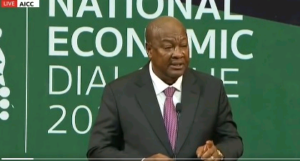
President John Mahama delivering keynote address at the opening ceremony of the National Economic Dialogue 2025
Adnan Adams Mohammed
President John Dramani Mahama has officially opened the maiden National Economic Dialogue 2025 taking place in Accra.
The president, who chaired the opening ceremony and also the keynote speaker, in his address noted that, Ghana is at critical crossroads with its economic growth and needed bold solutions and sacrifices to restore the economy on growth trajectory.
“… Building economy that works for everyone should be our focus”, he intimated.
“NED create a powerful platform where government actors, the private sector, the academia and Civil society organisations meet yo dialogue on national reforms”
President Mahama further urged the participants to examine the restructural reforms that provide the private sector much attention to truly be the engine of growth.
The colorful event is full of hope as participants have expressed their resolve to contribute their part in the resetting of Ghana.
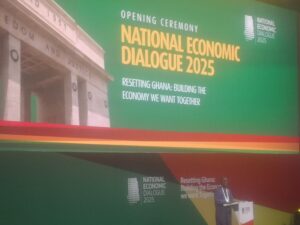
The two-day dialogue event under the theme “Resetting Ghana: Building the Economy We Want Together” aims to tackle the country’s pressing economic challenges and chart a path toward sustainable economic growth.
Consequently, Chairman of the NED Planning Committee, Dr Ishmeal Yamson, in his opening remarks shared that, many Ghanaians are ready to stand and walk with you and you shall succeed.
“It is our hope that the Dialogue will present concrete proposals to help reshape the destiny of Ghana.”
He indicated that there is the need to structure the Dialogue into a permanent institute to help in the revitalisation of economic development.
The dialogue forms part of his commitment to fostering inclusive discussions on economic policies and reforms, ensuring that key stakeholders contribute to shaping the country’s financial future.
President John Dramani Mahama has arrived at the maiden National Economic Dialogue 2025.
The president Mahama chairs the opening ceremony and the keynote speaker.
The maiden National Economic Dialogue (NED) 2025 has successfully been opened today at the Accra International Conference Center.
The colorful event is full of hope as participants have expressed their resolve to contribute their part in the resetting of Ghana.
The two-day dialogue event under the theme “Resetting Ghana: Building the Economy We Want Together” aims to tackle the country’s pressing economic challenges and chart a path toward sustainable economic growth.
President Mahama is expected to deliver his keynote address to outline his administration’s vision for revitalizing the economy.
“Many Ghanaians are ready to stand and walk with you and you shall succeed”, Chairman of the NED Planning Committee, Dr Ishmeal Yamson, in his opening remarks said.
He indicated that there is the need to structure Dialogue into a permanent institute to help in the revitalisation of economic development.
“It is our hope that the Dialogue will present concrete proposals to help reshape the destiny of Ghana.”
The dialogue forms part of his commitment to fostering inclusive discussions on economic policies and reforms, ensuring that key stakeholders contribute to shaping the country’s financial future.
“Gov’t to revitalize Accra Marine Drive Project while protecting coastlines.”
Adnan Adams Mohammed
The government has indicated it is committed to revitalising the Accra Marine Drive Project.
The project, which is a significant urban redevelopment initiative, is designed to transform approximately 241 acres of Accra’s coastline into a vibrant tourism and economic hub.
President John Mahama during the presentation of the State of the Nation Address in parliament last week, disclosed that, the government will put measures in place to safe Ghana’s coastlines threatened by tidal waves.
“Mr Speaker, Ghana’s coastline stretches approximately 550 kilometres. Two thirds of it is threatened by tidal wave erosion, which impacts nearly 30% of our population”, he worriedly shared.
“Rising sea levels have exacerbated vulnerabilities in coastal areas, leading to wetland flooding, habitat loss, and community displacement. Consequently, coastal protection has emerged as a national priority.”
Flooding has become an all-too-frequent occurrence in many urban centres across the country, resulting in tragic losses of life, livelihoods, and property. This scenario underscores the urgent need for sustainable solutions to address these pressing developmental challenges.
Further worsening the plight of the southern part of the country is inadequate drainage systems are inadequate, worsened by careless waterway construction and the relentless encroachment on wetlands and floodplains.
“To tackle these issues, we will explore alternative funding sources to support essential drainage, desilting, flood control, and coastal protection initiatives”, the president said.
“Gov’t boosts fisheries sector with sustainability measures.”
Adnan Adams Mohammed
President John Mahama has reinforced commitment to improving conditions of the fisheries sector.
During the State of the Nation Address, last week, the President indicated that the government will implement strategic interventions to enhance productivity and sustainability.
Key among the initiatives is the continued enforcement of measures to curb illegal, unreported, and unregulated (IUU) fishing, which threatens marine biodiversity and the livelihoods of our hardworking fisherfolk. However, he noted that the Fisheries Commission has intensified surveillance and monitoring operations bolstered by the deployment of modern technology and strengthened collaboration with key stakeholders.
“In the last month, we have expanded the supply of subsidized premix fuel to support artisanal and industrial fishers, ensuring affordability and availability”, President Mahama told parliament. “We will also invest further in modern fish landing sites and cold storage facilities to improve post-harvest handling, reduce losses, and enhance the quality of fish products.”
Also, aquaculture development is a key focus of the current administration.
“We will provide financial and technical support to fish farmers, increasing local fish production and reducing our dependence on imported fish.”
To increase value addition in the sector, the government plans tol encourage the establishment of fish processing facilities, create more jobs and boost exports. Our commitment to supporting women in fisheries remains steadfast as we implement programmes to empower female fish processors and traders with financial resources and capacity-building initiatives.
“IFS urges government to set realistic budget targets for fiscal credibility.”
Adnan Adams Mohammed
As the government prepares to present the 2025 budget statement and economic policies, many stakeholders of the economy have cautioned the government to consider fiscal responsibility.
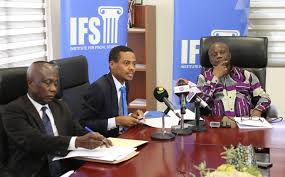
Latest to add its voice is the Institute for Fiscal Studies (IFS) cautioning the government to set realistic budgetary targets to ensure fiscal credibility.
The think-tank believes that effective fiscal policy, among others, results in a credible budget which in effect courts investors’ confidence in the general economy.
“If a budget lacks credibility, its policy intentions are less likely to be achieved”, IFS said at its pre-budget conference in Accra. “Where this is a chronic challenge, it is likely to reduce confidence in fiscal policy, undercutting its effectiveness. An essential feature of a credible budget is realistic revenue targets, since revenue is the cornerstone of any budget.”
In a report, IFS noted that the government of Ghana has a poor track record in this area.
Over the years, the economic policy think tank recounted that budget statements have featured routine over-projection of revenues despite consistently highlighting this shortcoming with regard to the previous fiscal year.
For instance, it said, actual total revenue and grants was below the budget target every year from 2013 to 2023, with an average deviation of -7.4%.
“With respect to the Public Expenditure and Accountability (PEFA) framework, which is a globally recognized standard for evaluating the performance of countries’ public financial management systems, Ghana’s annual revenue deviation was within the framework’s ideal range of -3% to +6% for only 2 out of the 11 years from 2013 to 2023. In fact, Ghana’s average revenue deviation of -7.4% is more than twice the lower limit of the range of -3%, implying under-collection of revenue below the threshold.”
IFS further cautioned the government not to look for the least opportunity to return to the international bond market.
It explained that since 2000, Ghana has suffered two debt crises. The first, the HIPC crisis in 2001, was caused by an excessive build-up of external debt during the 1980s and 90s. Ultimately, it took debt forgiveness under the HIPC Initiative to save the country from a complete meltdown.
The second crisis, which emerged in 2022, resulted from build-up of both external and domestic debts after HIPC, which accelerated over the past decade. However, its trigger was external, because it was precipitated by, as stated earlier, a loss of access to the international bond market in early 2022 after the country’s credit ratings had been downgraded to junk status. Furthermore, during the recent debt restructuring to tackle the crisis, negotiations over external debt were more complex and protracted than those over domestic debt.
“So, while the nation must avert a return to excessive debt build-ups of any form at all costs, past experience shows it is especially imperative to avoid sliding back into another foreign debt entanglement,” IFS said.
“The government should not therefore look for the least opportunity to return to the international bond market. To ensure this: “The government should learn lessons from the past three years in which the country has carried on without borrowing from the international bond market. During this period, the government was compelled to pursue steps to ensure lower fiscal deficits. This stance should be maintained into the future, since low deficits imply low borrowing.
“Since the crisis moved the central bank to more vigorously seek non-debt-creating avenues to increase its international reserves (the Gold Purchase Program), this should teach the government a lesson that the nation’s natural resources can be leveraged for self-reliance.”
Dr. John Kwakye suggests key funding strategies for Mahama’s initiatives.
Adnan Adams Mohammed
As the government is faced with funding constraints to execute its numerous initiatives, an economist, Dr John Kwakye, has made some proposals focusing on four key areas.
Notable among the four key areas proposed by the economist, who doubles as the Director of Research at the Institute of Economic Affairs (IEA), is for the government to consider focusing much on the natural resources sector’s receipts.
The suggestions were made as a contribution towards the attainment of President John Mahama’ economic revitalization and socioeconomic development initiatives as captured in his State of the Nation Address, 2025 SONA.
“If asked how President Mahama’s numerous SONA initiatives will be funded, l will suggest: enhanced revenue mobilization, cutting wasteful expenditure, checking pillage of state funds, and tapping more natural resource receipts,” Dr John Kwakye wrote on his X page.
During the SONA, last week, President Mahama indicated that “Mr. Speaker, the energy sector faces significant financing challenges primarily due to collection and system losses, non-compliance with the Cash Waterfall Mechanism, and legacy debts. The financing shortfall has risen considerably to approximately US$2.2 billion or GH¢34 billion for 2025, and urgent measures will be needed to reduce it to sustainable levels and ultimately eliminate it.”
He added that the financial sector continues to struggle despite the previous government reportedly spending GH¢29.9 billion on the financial sector clean-up exercise to date.
“They also left scant reserves for debt servicing despite implementing what may be considered the most severe and distressing economic policy in the annals of the Fourth Republic, if not in the entirety of our nation’s history—the Domestic Debt Exchange Programme. This is in stark contrast to our actions in 2017, before we left office, when we allocated US$ 250 million to the Sinking Fund to service debt. While there have been claims that buffers were left for debt repayment, the statement of accounts for the Debt Service Reserve Account, also known as the Sinking Fund, shows a balance of only US$64,000 and GH¢143 million in the dollar and Ghana cedi accounts, respectively.
“The repercussions of reckless debt accumulation and economic mismanagement will require extensive work and sacrifice to repair. In the next four years, debt servicing will amount to GH¢280 billion, comprising GH¢150 billion for domestic and GH¢130 billion in external debt servicing. The catastrophic debt position has also severely impacted infrastructure projects that should have been completed. There are fifty-five (55) stalled projects due to the default of debt and subsequent restructuring, with a total amount of US$ 2.95 billion not disbursed. The stalling of these projects is expected to result in a cost overrun of about GH¢15 billion.
“Notwithstanding this gloomy background, I remain committed to leading this government, taking every necessary step to reset our economy, getting things back on track, and working with the good people of our country to build the Ghana we want. We are doubling our efforts to complete all outstanding structural reforms. Through the budget, we will implement corrective measures to restore fiscal discipline and debt sustainability. We are also working towards completing the upcoming fourth review of the IMF-supported Programme.
“The review is scheduled from April 2nd to April 15th, 2025, and the IMF Executive Board is expected to approve it in June 2025. As we have done previously, we are also building buffers in the Sinking Fund and adopting prudent debt management practices to ensure prompt repayment of upcoming domestic and external debt maturities.
“In this respect, the government successfully honoured the matured coupon payment of GH¢6.081 billion (in cash) and GH¢3.46 billion (in kind) due in February 2025 to all Domestic Debt Exchange Programme (DDEP) bondholders. We have also built additional buffers in the Sinking Fund to honour maturing DDEP bonds due in July and August. With the transparent and prudent measures we have implemented since taking over the administration of this country, I urge my countrymen and women, business owners, and foreign investors to trust our competence in turning our economic fortunes around.”
Caption: Government commits to developing Afina-1X, highlighting its substantial gas potential amidst unitization withdrawal.
Adnan Adams Mohammed
Government of Ghana has withdrawn the compulsory unitization directives imposed on ENI Ghana and Springfield in relation to the Afina-1X Discovery and the Sankofa Cenomanian Oil Fields.
This follows President John Mahama’s earlier instructions given to the minister to withdraw the Unitization Directives a fortnight ago during ENI’s President visit at the Jubilee House and further consultations and dialogue with relevant stakeholders.
The Minister of Energy and Green Transition in a statement issued last week indicated that government will explore options for coordinated development within and near the WCTP 2 contract area and continue to support Springfield as an Indigenous Ghanaian Exploration & Production Operator to commercialize the Afina discovery which has proven to have potential to add to Ghana’s reserves of oil and gas. However, the withdrawal of the Directives is without prejudice to the power of the Minister to issue new directives where necessary for the equitable and efficient development of Ghana’s petroleum resources.
“It is also note-worthy that the appraisal of the Afina discovery has revealed the potential for substantial gas resources which would enhance Ghana’s energy security and sustainability”, John Abdulai Jinapor said in the statement.
“The government will work with Springfield and other contractors nearby to monetize these gas resources in an expeditious manner.”
Meanwhile, ENI Ghana has welcomed the decision of the Minister to withdraw the Unitization Directives in relation to the Sankofa oil field issued in 2020.
ENI has further indicated that in line with the Government’s objectives, it remains committed to leverage its portfolio of innovative projects, seizing new opportunities both in the traditional and transition energy sector, while strengthening domestic energy security and sustainability.
Consequently, the government reiterates its commitment to maintaining a conducive environment for investments in the upstream petroleum sector while ensuring compliance with the legal and regulatory framework governing the industry.
The withdrawal decision of the Minister follows a thorough review of the Arbitral Award referenced SCC Arbitration U2021/114 (ENI & Vitol v. Ghana & GNPC) dated 8th July 2024, and the legal opinion provided by the Attorney General and Minister of Justice.
While the Ministry acknowledges the Tribunal’s findings that while the issuance of the Directives breached the Petroleum Agreement due to the specific circumstances of their implementation, the concept of unitisation itself was not deemed inherently unlawful.
“This provides Ghana with the flexibility to determine the most appropriate course of action in the national interest”, the minister noted.
Currently, the Petroleum Commission is evaluating the appraisal report of the Afina 1X well as the government believes that the Afina field has the potential for a future unitization or a development on its own. Government has confidence in Afina’s potential as a future unitized field or a tie back to an existing infrastructure for development.
Although, government acknowledges that the Tama field, which is on the Springfield block, holds 1.2 TCF of gas and can greatly contribute to the country’s energy security. It encourages both ENI & Springfield to keep the door open for negotiations to determine an amicable and commercially optimal solution.
The decision is expected to assuage the worries of international oil companies, many of whom saw the unitization directive as a form of oil nationalism by Ghana since it effectively assigned a large proportion of ENI’s proven reserves to locally owned Springfield before the latter had met international standards in proving that its own discovery is as large as it claims.
The government remains open to dialogue with its partners aimed at charting the best way forward in the sustainable exploitation of its natural resource endowments.
“President Mahama swears in Dr. Asiama and Dr. Mumuni, emphasizing the economy’s pulse in every statistic and market sentiment.”
Adnan Adams Mohammed
President John Dramani Mahama has charged the Bank of Ghana Governor and his 1st Deputy Governor to discharge their mandates in a manner that acknowledges market sentiments and statistics as the pulse of the economy.
He tasked them to go beyond mere technical considerations and act in full recognition that every statistic, every movement on a chart, and every shift in an index is more than just data, but, it is also indeed the pulse of an economy, a measure of resilience or distress.
President Mahama, while swearing the two, Dr. Johnson Pandit Kwesi Asiama as Governor and Dr. Zakari Mumuni as First Deputy Governor of the Bank of Ghana, further indicated that a dip in confidence indices may give a signal that businesses are severely challenged, or may point to evolving market conditions, or changing household prospects.
“Behind these numbers are real human stories—dreams either nurtured or shattered—demanding not just your highly extolled analytical expertise, but empathy and foresight that acknowledge the profound human consequences of every decision”, President Mahama pointed out, emphasizing the effect of the banking sector’s cleanup exercise that had a deep toil on investors in government securities and the Ghanaian economy.
“Our recent banking history has shown us the cost of neglecting this truth.”
“During the supposed banking sector cleanup exercise, thousands of jobs were lost and lives disrupted because decisions were made with a narrow focus rather than considerations of the human impact.”
The President reflected that, the Bank of Ghana had the opportunity to salvage some institutions, to protect livelihoods while ensuring stability, but instead, took an approach that ignored the human consequences that prevailed.
“The test of your patriotism in this solemn duty of economic governance lies in learning from these missteps—recognizing that policies must not only enforce regulations but also safeguard the futures that depend on them.
“The lessons of the past remind us of the dangers of fiscal recklessness and the lasting harm it can inflict on an economy.”
The recent past’s economic downturn faced by the country, where inflation skyrocketed to historic highs, accompanied by a quantum leap in the cedi’s depreciation stemmed from the unsustainable debt have taught government actors and analysts that, when governments resort to unsustainable consumption expenditure, financed by excessive and unregulated printing of money, the consequences are severe— from spiraling inflation and erosion of incomes, driving millions into poverty. Such actions not only weaken public confidence in financial institutions, but also threaten long-term stability.
To safeguard an economy from these risks, the managers must uphold responsible fiscal management, strict adherence to legal and regulatory frameworks and the protection of the independence of the central bank.
Meanwhile, President Mahama assured the Governor and his First Deputy of his resolve to allow the Bank of Ghana to operate independently.
“As President, I am committed to ensuring that the central bank operates free from political interference, guided solely by its mandate. This is the path to building a resilient economy—one where policies are driven by discipline, foresight, and the best interests of the Ghanaian people.
“I encourage you to work closely with key institutions, including the Ministry of Finance, Parliament and the financial industry while maintaining the independence your mandate requires.”
The appointments of the Governor and his deputy are not merely routine exercises to satisfy Article 183(4) of the Constitution. They constitute a deliberate commitment to the Bank of Ghana’s core mandate, outlined under Article 183(1-3)—to regulate currency, ensure monetary stability, and promote sustainable economic development in Ghana.
In full adherence to section 17(1) of the Bank of Ghana Act, 2002 (Act 612), these appointments uphold the legal stipulation that the Governor and Deputy Governors of the Bank of Ghana be individuals of demonstrable financial and banking experience.
“For Dr. Asiama, a distinguished economist with a PhD from the University of Southampton, his ascent to this office is a natural progression from his long and dedicated service to the Bank of Ghana” President Mahama has asserted. “With over two decades at the institution—rising through the ranks from banking supervision and financial markets to leading research and policy implementation—he has played a pivotal role in shaping Ghana’s monetary policy and the efforts towards financial stability.
“As Deputy Governor, he was instrumental in stemming inflation, stabilizing the currency, and strengthening regulatory oversight. His deep expertise in banking supervision, risk management, and digital finance positions him as the right leader at this critical time.
“Ghana’s financial sector is in crisis, and the task ahead demands experience, foresight, and decisive leadership. With Dr. Asiama heading the Bank of Ghana, I am confident that we will rebuild trust, restore stability, and put our economy on a path of sustained growth. I entrust him with this responsibility, knowing he will serve with diligence and excellence.”
On his own part, Dr. Mumuni’s appointment is a recognition of his exceptional expertise, dedication, and distinguished service in banking, financial markets, and economic policy. He also has over two decades of experience at the Bank of Ghana, playing vital roles in shaping monetary policy and strengthening financial stability. His academic credentials, including a Ph.D. from the University of Nottingham and an MPhil from the University of Ghana, reflect his deep understanding of the complexities of our economy.
As First Deputy Governor, he will be a key pillar in supporting the Governor to implement sound policies, reinforce regulatory oversight, and navigate the challenges ahead. His experience and analytical rigor will be crucial in ensuring that the Bank remains steadfast in its mandate to maintain price stability, safeguard the financial sector, and drive sustainable growth.
“Together, Dr. Asiama and Dr. Mumuni bring the leadership, expertise, and vision needed to restore confidence in our economy” President Mahama enthused.