The Agricultural Development Bank’s (ADB) senior officials stormed Cape Coast on an educational drive to increase its clientele base among the Micro Small and Medium-sized Enterprises (MSMEs) segment.
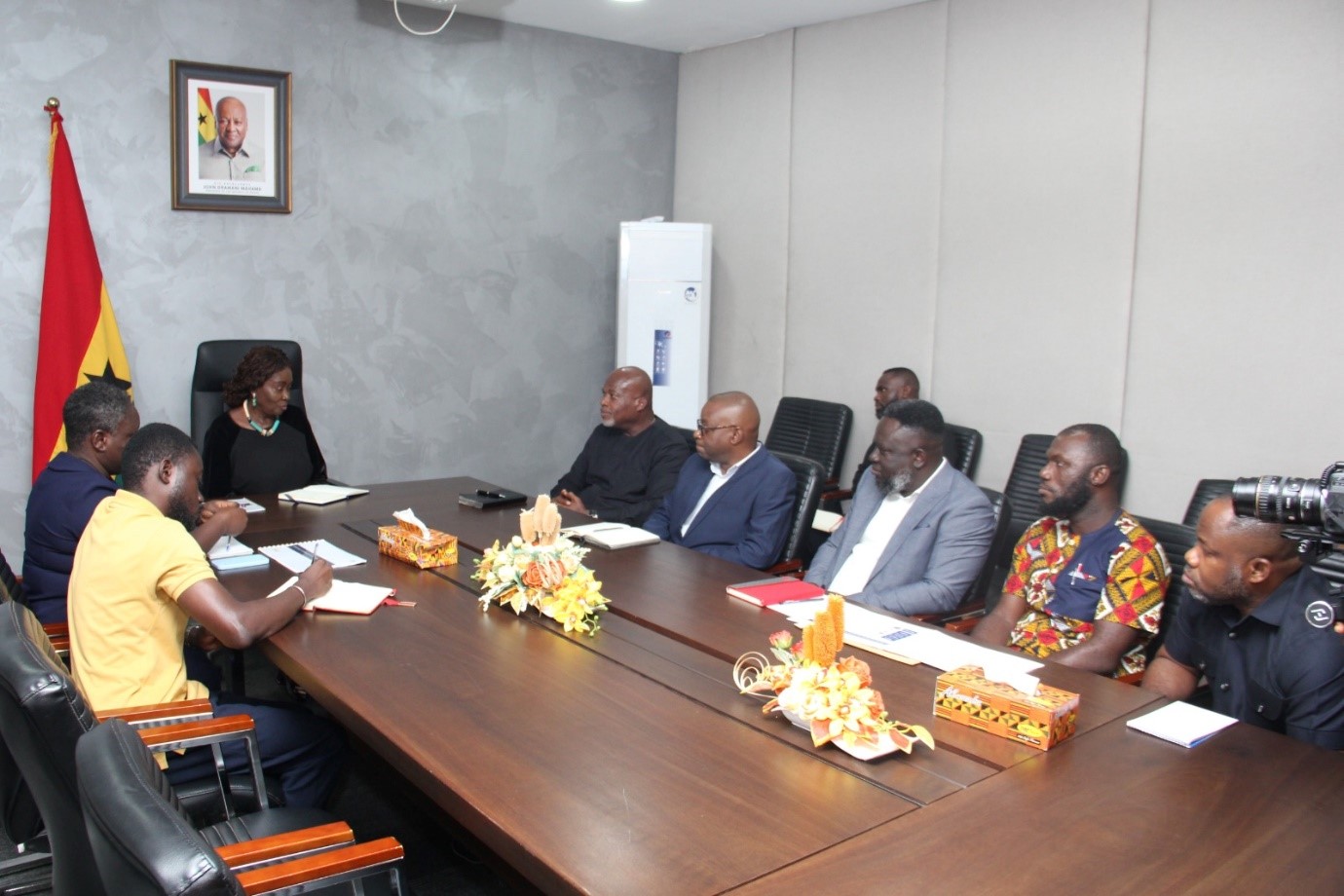
The outreach team led by the Head of Operations (Coordinator) in Charge of MSMEs at ADB, Joseph M. Abakah, enlightened many patrons of this year’s Central Expo ongoing at Cape Coast.
Among some relevant information on initiatives and policies of the Bank shared with the MSMEs business financing opportunities, management training and development and marketing linkages.
Mr Abakah shared to the target market that, the bank has introduced measures to enhance credit access for MSMEs, including increased credit guarantee cover and customized financial products like credit cards for micro-enterprises.
In terms of the training opportunities, he explained that, “Programs like the Entrepreneurship Development Programme (EDP) provide essential skills and knowledge for prospective entrepreneurs.”
The multi-sectorial stakeholders engaged by the Bank of Ghana in effort to draft a framework for the introduction of Non-Interest Banking and Finance in Ghana have commended the approach.
During an engagement with journalists Winneba, Professor John Gartchie Gatsi, an Advisor on NIBF explained that the Securities and Exchange Commission, National Insurance Commission and the Bank of Ghana are working together to develop frameworks needed to regulate Non-Interest Banking and Finance in Ghana.
The Central Bank, an independent regulator of the banking industry and mandated to expand the financial ecosystem, is poised to step up processes to deepen financial inclusion, broaden real sector financing through the NIBF. Also, per its mandate which cannot be tele-guided, the bank adopted the approach of stakeholder engagement to ensure transparency, avoiding religious misconceptions and improving on financial inclusion.
In light of this, the Bank considers the approach adopted by the experts-team as part of the roadmap to draft an operational framework for the introduction of Non-Interest Banking and Finance in Ghana as progressive.
The stakeholder engagement has become necessary as no group of people or an individual has the power nor influence to direct how the Bank of Ghana functions.
The critical stakeholders in and outside Ghana include: the media; Christian leaders and organisations (including; Christian Council, Ghana Pentecostal , Alliance for Christian Advocacy Africa and Charismatic Councils, Catholic Bishops Conference ); and selected professional bodies. The advisor explained that it is impossible to invite the leadership of all religious groups.
On the jurisdictional front, the team had engagement with the various institutions in the United Kingdom virtually. In the UK, the team engagement Bank of England through Prudential Authority of the UK and Financial Conduct Authority of the UK. The also visited Various institutions in Malaysia and Nigeria and is convinced about the non- discriminatory business model of. NIBF
At the engagements with Journalists in Winneba, Prof. Gatsi explained that, the Bank is working hard to open the door for Non-Interest Banking and Finance to the private sector to invest in this banking model based on the commercial benefits and overall contribution to financial sector development. He further explained that it is not the government nor the Bank of who is establishing the NIBF but private individuals who meet the licensing requirements.
Clarifying the aspects of religious misconceptions, he explained that, all those misconceptions are not real and that the reality is that the economy of Ghana is the gainer as the economy will be supported through the new banking and finance model.
Consequently, he advised that no language is a religion and also the Bank of Ghana will not meddle in religious matters and will not show bias to any religious groups or any act underpinning individual or group who has not conducted any empirical study with the conclusion that NIBF is a destroyer of economies and promote a particular religion.
He therefore appealed to all to cherish the interfaith dialogue platform to address religious issues.
The Ghana Industrial Trawlers Association (GITA) has successfully held its maiden Annual General Meeting (AGM) at the Ocean Green Beach Resort, marking a significant milestone in the history of the association.
The meeting brought together trawler owners, directors, and stakeholders to review the progress of the sector and set a new direction for the future. A key highlight of the event was the election of new executives to steer the affairs of the association.
The following members were duly elected:
Mr. Dominic Danquah – President
Mr. Kojo Ampratwum – Vice President
Mr. Danny Quaye – Secretary
Mr. Jerome Deamesi – Financial Secretary
Mr. Ohene Nana Kessie – Treasurer
In his farewell remarks, the outgoing president, Mr. Stephen Adjokatcher, expressed deep gratitude to the members for their unwavering support during his tenure. He assured the newly elected executives of his continuous support to advance the growth of the association.
The Managing Director of the Agricultural Development Bank PLC (ADB), Edward Ato Sarpong, has applauded the University of Education, Winneba (UEW) for unveiling its Strategic Plan (2025–2030).
He described it as a ‘bold and forward-looking’ blueprint that positions the institution at the heart of Ghana’s educational transformation.
Speaking at the launch and as chairman of the event, Mr. Edward Ato Sarpong noted that the new plan goes beyond routine administrative work, stressing that strategic planning is “the heartbeat of institutional growth, innovation, and transformation.”
He indicated that the 2025–2030 plan was not merely a paper exercise but a “visionary roadmap” that would guide the University into a future defined by excellence, resilience, and meaningful impact.
Tracing UEW’s strategic journey over the past two decades, Mr. Sarpong lauded the institution for successfully implementing four earlier plans that expanded its infrastructure, strengthened governance, enhanced academic programmes, and deepened research output.
He highlighted gains in faculty development, student engagement, and international partnerships, describing them as critical building blocks that had transformed UEW into a centre of innovation and learning.
The ADB MD urged stakeholders, faculty, staff, students, alumni, government, and the private sector to rally behind the new plan to ensure its success.
“If this Strategic Plan is to achieve its noble objectives, then it demands our collective commitment and shared responsibility,” he said.
“UEW has proven its capacity to lead in teacher education and research. Now is the time to consolidate those gains and project the University onto the global stage.”
Mr. Ato Sarpong further pledged ADB’s support in strengthening education and human capital development, reaffirming the bank’s belief that higher education remains a powerful driver of national growth.
He also commended the drafting team for their expertise and dedication, noting that the document reflects the collective resolve of the UEW community to adapt and thrive in a fast-changing educational landscape.
The launch of the Fifth Strategic Plan marks a new chapter in UEW’s history as it continues its mission of training competent professional teachers, conducting impactful research, and contributing to national and international education policy.
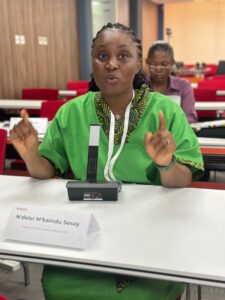
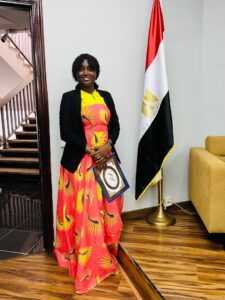
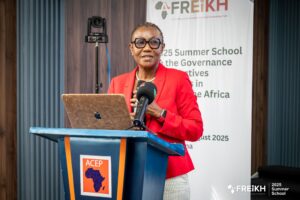
N’Delei M’Baindu Sesay, a mining engineer, has spot-lighted the complex perspective on Sierra Leone’s mining regime at the 2025 Anglophone Africa Extractive Industries Knowledge Hub (AFREIKH) Summer School currently taking place in Accra, Ghana.
Sierra Leone’s rich mineral resources, including; diamonds, rutile, bauxite, gold, iron ore, and platinum plays a significant role in the economy, contributing about 5.7 percent of its GDP, 10% of government revenue, providing significant employment opportunities bagging about US$432 million export earning in the first seven months of 2024.
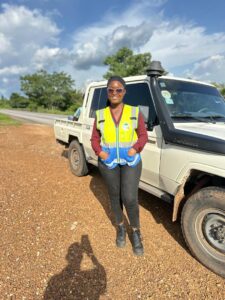
As a Regional Mining Engineer at Sierra Leone’s National Minerals Agency (NMA), Mrs Sesay further highlighted the country’s commitment to sustainable mining practices, with companies like Marampa Mines Limited pioneering innovative technologies like the cyclone deposition system for tailings management. In terms of Community Development; mining companies are expected to contribute to local community development through funds like the Community Development Fund (CDF), which supports initiatives in education, health, and environmental sustainability. However, the mining regime in Sierra Leone is shaped by policies and regulations aimed at promoting transparency, accountability, and responsible resource management.
The AFREIKH Summer School, organized by the Africa Centre for Energy Policy (ACEP) and supported by the Natural Resource Governance Institute (NRGI), provides a platform for stakeholders to discuss critical issues, challenges, and innovations in Africa’s extractive industries.
Currently, Mrs Sessay participates significantly in the governance and administration of Artisanal and Small-scale Mining (ASM) activities in Southern Province ensureing strict compliance with the Mines and Minerals Development Act (2023). Her role involves reviewing license procedures, monitoring mineral trading, and providing technical support to miners in an effort that reinforce regulatory adherence and promote sustainable mining practices. Additionally, she collaborates closely with government agencies, stakeholders, and local communities to implement mining policies and investigate incidents, offering actionable recommendations that support safer and more inclusive extractive sector governance.
The 2025 AFREIKH Summer School, organized by the Africa Centre for Energy Policy (ACEP) and the Natural Resource Governance Institute (NRGI), takes place in Accra. It brings together participants from media, civil society, and state institutions across Anglophone Africa, fostering dialogue on extractive industry governance.
On her academic records, she holds a BSc (Hons) in Mining Engineering from Fourah Bay College, University of Sierra Leone, and a BA (Hons) in Interior Architecture from Limkokwing University of Creative Technology. She further complements her expertise with a Postgraduate Diploma in Occupational Health and Safety, along with certifications in Mineral Processing Technology, Change Leadership, and the implementation of the Mining ESIA Diagnostic Tool.
Also, She is a registered mining engineer at the Sierra Leone Institution of Engineers (SLIE) and co-founder of SCAN 360+ Sierra Leone Limited, an all-in-one ecosystem for creativity, innovation, and growth delivering integrated solutions across media, technology, education, and social impact.
Driven by a passion for sustainability, women in technology, and environmental health and safety, Mrs Sesay is dedicated to enhancing governance and operational efficiency within the extractive industry. Beyond her professional life, she is an adventurous lifelong learner, a proactive team player, and actively engaged in community service, always open to new connections, cultures, and experiences.
The former Chief Executive Officer of MUDI Group, Hajj Abdel-Manan Abdel-Rahman, has launched a strong rebuttal against allegations of financial impropriety and misconduct, describing a disclaimer circulating in the name of the company as fraudulent and defamatory.
In a press statement issued in Accra, Abdel-Rahman insisted the disclaimer, which questioned his role in the handling of Hajj-related funds was “unsigned, unauthorised, and therefore FAKE.”
He warned the public against giving it any credibility, arguing that it was a calculated attempt to tarnish his reputation and undo his contributions to the company.
“I was not only the Chief Executive Officer but also the promoter and major shareholder of the businesses of the MUDI Group, having played a key role in establishing and developing the organization’s operations,” he said.
The embattled former CEO flatly denied claims that he misappropriated funds earmarked for Hajj operations, stressing that every transaction under his watch was duly recorded and verifiable.
Specifically addressing the alleged disappearance of 30,000 US dollars and 300,000 Ghana cedis, Abdel-Rahman maintained the funds had already been refunded and that he was never the recipient. According to him, the individual who actually collected the money for Hajj visa processing confirmed this during investigations at the CID Headquarters.
He also pushed back against insinuations that he was facing a criminal conviction, clarifying that no court had found him guilty of any wrongdoing. “Any ongoing matters remain before the courts, where the principle of due process must be respected,” he emphasized.
Despite his defense, the controversy raises fresh questions about transparency and oversight in the operations of MUDI Group, particularly around the management of Hajj funds, an area that has historically attracted public scrutiny. Analysts note that the very circulation of such a disclaimer, even if unsigned, points to simmering tensions within the organization and possible internal attempts to distance the company from its former executive.
Abdel-Rahman, however, insists his professional record remains untarnished. “My career demonstrates a consistent commitment to accountability, service, and integrity. I remain confident that the truth will prevail through the proper legal channels,” he stated.
He accused faceless detractors of orchestrating a smear campaign and urged stakeholders to disregard what he called malicious propaganda.
The dispute now leaves the reputation of both the former CEO and MUDI Group hanging in the balance. For many, the real test will come in the courts, where Abdel-Rahman says he is prepared to defend himself and prove his innocence.
For now, the saga underscores the fragile trust that surrounds Hajj operations and the urgent need for stricter financial accountability in institutions that handle pilgrim funds.
Adnan Adams facilitating a session at AFREIKH Summer School
By News Desk
The 2025 Anglophone Africa Extractive Industries Knowledge Hub (AFREIKH) Summer School is currently underway in Accra with participants selected from all Anglophone African countries in the media, CSOs and state actors in the extractive industries.
Adnan Adams Mohammed, the Managing Editor of https://newsguideafrica.com/ among the few Resource Governance Ambassadors participating in the 10-day training workshop organised by the Africa Centre for Energy Policy (ACEP) and Natural Resource Governance Institute (NRGI).
Mr Adnan Adams, an accomplished business and financial journalist with over 13 years of experience in the field, has demonstrated expertise in extractives, business and financial reporting, contributing to the development of economic and financial journalism.
His incisive reporting has not only elevated industry discourse but also contributed significantly to the growth of economic and financial journalism, setting a high standard for peers and inspiring a new generation of journalists.
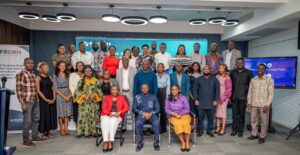
Participants of 2025 edition of the Anglophone Africa Summer School on Extractive Industries Governance
At the center of the training is the emphasis of the energy transition agenda, the African perspective.
The energy transition offers socioeconomic and environmental benefits for countries that can position themselves, leverage their abundant transition mineral resources and foster the development and deployment of innovative technologies. However, corruption risks and governance challenges could potentially threaten these positive outcomes. To seize the opportunities and manage the risks, extractive sector players advocate that resource-rich African countries must adopt appropriate economic policies that integrate the requirements of the energy transition. These policies must ensure a transparent and inclusive governance of the sector.
AFREIKH
The Anglophone Africa Extractive Industries Knowledge Hub (AFREIKH) aims to bridge knowledge gaps in the energy and extractive sectors in Africa through training and capacity building to improve effective extractive sector governance. This year, the Africa Centre for Energy Policy (ACEP) and Natural Resource Governance Institute (NRGI) is hosting the two-week intensive summer school on extractive industries governance in Accra, Ghana.
This intensive summer school convenes extractive sector stakeholders across Anglophone Africa to delve into the critical issues, challenges, and evolving landscape of Africa’s extractive industries, while navigating the ongoing energy transition. Participants will also gain practical insights by attending the Future of Energy Conference (FEC), which offers a platform to explore innovative solutions and strategies for a sustainable energy future for Africa.
Objectives
The training aims to equip stakeholders in the energy and extractive sectors with the knowledge, skills, and tools to enhance the impact of their work and promote transparent, responsible natural resource management in Africa.
Key topics include:
Understanding the Extractive Sector in Africa
The Global Energy Transition and Africa
Diversification Strategies in Resource-Dependent Economies
Strengthening Green Industrialization Regional Value Chains for Critical Minerals & Clean Energy Technologies
Participants
The summer school targets civil society organizations (CSOs), media, and government actors working to promote good governance in extractive industries. Graduates join a vibrant alumni network that offers continued mentorship, professional development, and a platform for learning, collaboration, and collective action across Africa.
To be eligible for selection, applicants must:
Hold a position in an institution engaged in extractive or energy sector governance (e.g., parliament, academia, CSOs, or media).
Have at least three years of relevant experience in the oil, gas, mining, or energy sectors.
Demonstrate strong interest and understanding of policy and governance issues related to natural resources, including energy transition.
Be able to fully participate in the entire program.
Have a good command of written and spoken English.
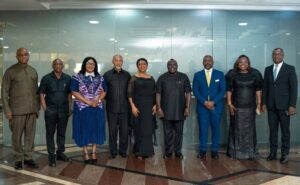
Chief of Staff, Hon Julius Debrah, has formally inaugurated the Board of Directors of the Millennium Development Authority (MiDA), impassioning the newly appointed members to rally behind the organization’s Chief Executive, Alexander Kofi-Mensah Mould, in propelling the authority’s objectives to unprecedented heights.
Lauding Mould as “very innovative and progressive,”Mr. Debrah underscored the crucial role MiDA plays in the government’s overarching development agenda.
The newly constituted board, chaired by the erudite Charles Abugre Akelyira, boasts an impressive array of luminaries, including five ministers of state: Dr. Cassiel Ato Baah Forson (Finance), John Abdulai Jinapor (Energy), Dr. Agnes Naa Momo Lartey (Gender, Children, and Social Protection), Dr. Dominic Ayine (Attorney General and Justice), and Elizabeth Ofosu-Adjare (Trade). Other distinguished members include Alexander Kofi-Mensah Mould, John Awuah (Private Enterprise Foundation), Ralph Mawuenyega Kojo Ayitey (Association of Ghana Industries), and Ing. Dr. William Amuna.
In a stirring address on behalf of the board’s chairperson, Minister of Energy John Abdulai Jinapor avowed the board’s unrelenting commitment to supporting President John Dramani Mahama’s “reset agenda.”
“We are poised to help the President achieve his reset agenda, and we will do everything possible to accelerate the economic growth of the country,” Jinapor declared, underscoring the board’s resolute dedication to expediting initiatives that foster sustainable economic growth.
Ultimately,as the newly formed board embarks on its noble mandate, it is expected to provide visionary leadership and oversight to MiDA, aligning its efforts with the government’s development priorities.
Gleefully, with this inauguration, the stage is set for synergistic endeavors to drive progress and attain the Ghana’s development aspirations.
Participants of 2025 edition of the Anglophone Africa Summer School on Extractive Industries Governance
By Adnan Adams Mohammed
The Natural Resource Governance Institute (NRGI) Africa Director, Nafi Quarshie, has raised critical questions on the efforts on energy transition with the spotlight on Africa’s consideration on the global scale.
Notable among the mind-boggling rhetorics to the participants selected from all Anglophone African countries in the media, CSOs and state actors in the extractive industries was whether Africa “will we be rule-takers or rule-makers” in the global effort and how participants advocacy and policy engagement must be shaped.
Natural Resource Governance Institute (NRGI) Africa Director, Nafi Quarshie
“Will our minerals power prosperity at home or fuel green revolutions elsewhere? Will we seize this moment to confront historical injustices, or will we watch inequalities deepen under new guises?”, she quizzed.
The energy transition offers socioeconomic and environmental benefits for countries that can position themselves, leverage their abundant transition mineral resources and foster the development and deployment of innovative technologies. However, corruption risks and governance challenges could potentially threaten these positive outcomes. To seize the opportunities and manage the risks, extractive sector players advocate that resource-rich African countries must adopt appropriate economic policies that integrate the requirements of the energy transition. These policies must ensure a transparent and inclusive governance of the sector.
Below is the full speech:
It is both a pleasure and a profound honor to welcome you, on behalf of the Natural Resource Governance Institute, to the 2025 edition of the Anglophone Africa Summer School on Extractive Industries Governance, organized in partnership with the Africa Centre for Energy Policy (ACEP).
The urgency of climate change is reshaping the contours of global power and development. The energy transition, long theorized, is now underway—disruptive, inevitable, and complex. For African countries, especially those rich in oil, gas, cobalt, lithium, bauxite, and copper, this moment holds both peril and promise.
The question before us is not whether Anglophone Africa will be affected by this transition, but rather, how we will respond. Will we be rule-takers or rule-makers? Will our minerals power prosperity at home or fuel green revolutions elsewhere? Will we seize this moment to confront historical injustices, or will we watch inequalities deepen under new guises?
At NRGI, these are not abstract questions. They are at the heart of our work and our vision. As a global organization with a deep commitment to the region, we see this transition not only as a technical or economic challenge, but as a governance opportunity—a chance to demand transparency, elevate community voices, confront corruption, and insist on justice.
It is also a test of leadership. For governments, yes. But also for all of us—civil society, media, academia, parliament.
Because make no mistake: critical minerals are fast becoming the new oil. They are redrawing geopolitical alliances. They are generating staggering revenue projections. They are attracting attention from investors, companies, and major powers who see in Africa a source of supply, but not always a partner in shaping the terms. We must not allow the past to repeat itself.
In this region, too many of us know the bitter paradox: countries rich in resources yet burdened by poverty, by pollution, by broken contracts and broken promises.
This Summer School, and the conversations we will have over the next two weeks, must be a space to disrupt that pattern.
We must ask:
How do we ensure that the wealth from transition minerals translates into jobs, infrastructure, education, and public services for our citizens, not just shareholder profits?
How do we safeguard our environment even as demand for minerals intensifies?
How do we empower women and youth in the governance of energy and resources—not as beneficiaries, but as decision-makers and leaders?
This is why NRGI is here. Our mission is to ensure that citizens of resource-rich countries benefit from their natural wealth. And that mission takes on a new urgency in the age of transition.
We are investing in evidence and analysis. We are partnering with local actors to improve contract transparency, revenue tracking, fiscal policy, and civic space. We are asking tough questions about just transitions—and demanding answers rooted in justice, not just in carbon metrics.
But we cannot do it alone. You—today’s participants—are our allies, our critics, our co-creators. What you bring to this space matters.
The knowledge shared here, the relationships built, the ideas generated—these are not academic exercises. They are the building blocks of a more just, more equitable, more sustainable future.
Let us not forget: the energy transition is not only about technology, it is about power. And who holds it? And for what purpose?
As we open this year’s Summer School, I invite each of you to approach the coming days with courage, curiosity, and a fierce sense of purpose.
Let us challenge assumptions. Let us be bold in our ideas. Let us be uncompromising in our pursuit of justice. Because if Africa is to lead in this transition—not just supply it—we must think differently, act decisively, and govern boldly.
AFREIKH
The Anglophone Africa Extractive Industries Knowledge Hub (AFREIKH) aims to bridge knowledge gaps in the energy and extractive sectors in Africa through training and capacity building to improve effective extractive sector governance. This year, the Africa Centre for Energy Policy (ACEP) and Natural Resource Governance Institute (NRGI) will host the one-week intensive summer school on extractive industries governance in Accra, Ghana.
This intensive summer school will convene extractive sector stakeholders across Anglophone Africa to delve into the critical issues, challenges, and evolving landscape of Africa’s extractive industries, while navigating the ongoing energy transition. Participants will also gain practical insights by attending the Future of Energy Conference (FEC), which offers a platform to explore innovative solutions and strategies for a sustainable energy future for Africa.
Objectives
The training aims to equip stakeholders in the energy and extractive sectors with the knowledge, skills, and tools to enhance the impact of their work and promote transparent, responsible natural resource management in Africa.
Key topics include:
Understanding the Extractive Sector in Africa
The Global Energy Transition and Africa
Diversification Strategies in Resource-Dependent Economies
Strengthening Green Industrialization Regional Value Chains for Critical Minerals & Clean Energy Technologies
Participants
The summer school targets civil society organizations (CSOs), media, and government actors working to promote good governance in extractive industries. Graduates join a vibrant alumni network that offers continued mentorship, professional development, and a platform for learning, collaboration, and collective action across Africa.
To be eligible for selection, applicants must:
Hold a position in an institution engaged in extractive or energy sector governance (e.g., parliament, academia, CSOs, or media).
Have at least three years of relevant experience in the oil, gas, mining, or energy sectors.
Demonstrate strong interest and understanding of policy and governance issues related to natural resources, including energy transition.
Be able to fully participate in the entire program.
Have a good command of written and spoken English.
Afriwave Telecom has extended its warm congratulations to the Vice-President of the Republic of Ghana, Jane Naana Opoku-Agyemang.
During a courtesy call on the Vice President, the company took the opportunity to brief Jane Naana Opoku-Agyemang about the benefits and impacts of the Interconnect Clearinghouse in Ghana.
The team also discussed pertinent issues affecting the telecom industry, particularly regarding the Interconnect Clearinghouse (ICH) operations and tariff regime and adjustments.
In his address, the Deputy Chief Executive Officer of Afriwave Telecom, Francis Poku, mentioned that all the Mobile Network Operators (MNOs) in the country are interconnected through the ICH.
Interconnection is the linking of the networks of two or more service providers, thus enabling the subscribers on one network to access the subscribers of the other networks. In a multi-operator environment such as Ghana, seamless interconnection has been one of the contributory factors to the growth of the industry.
The Interconnect Clearing House takes over all the functions relating to the preparation of billing information and reconciliation reports and the reconciliation process itself. The Interconnect Clearing House has access to information from all the operators involved in a particular call and, therefore, discrepancies are more easily identified and resolved.
Additionally, any International Wholesale Carriers (IWCs) licensed by the National Communications Authority (NCA) that routes incoming international calls from outside Ghana are also connected to the ICH.
Mr Poku also highlighted a noticeable growth in national interconnect traffic, noting that traffic volumes which were once at an average of 800 million per month in 2016 have now risen to about more than 1 billion minutes per month as of the second quarter of 2025.
He emphasised that the ICH has simplified the interconnect architecture and standardised interconnect business processes among the telecom operators.
He also pointed out that direct foreign exchange inflows from the IWCLs through the ICH have reduced from approximately 20 million dollars to under one million dollars over the last five years. This, he said, is because of alleged pricing out by the Mobile Network Operators and the impact of WhatsApp calls.
Mr Poku appealed to the Vice President to intervene in resolving the financial and policy bottlenecks to help Afriwave Telecom thrive as a wholly Ghanaian-owned company.
In response, the Vice President, Jane Naana Opoku-Agyemang, acknowledged the critical concerns raised by Afriwave and assured of government intervention.
She also stated that the government will introduce policies that will support the growth of local industries as well as regional expansion.
Afriwave Telecom Ghana Limited is a Ghanaian company which has been licensed by the Government of Ghana through the National Communication Authority to operate and manage Ghana’s Interconnect Clearing House (ICH). The ICH is a single platform which provides access of interconnection to all existing and new network providers.